Short Answer
The best mascarpone cheese substitute is 8 ounces (1 cup) of softened full-fat cream cheese beaten with ¼ cup of heavy cream.
- That blend replaces 1 cup of mascarpone in tiramisu, cheesecake and frosting (starting amounts).
- For risotto and pasta sauce, use crème fraîche 1:1, because its higher fat keeps it smooth over heat.
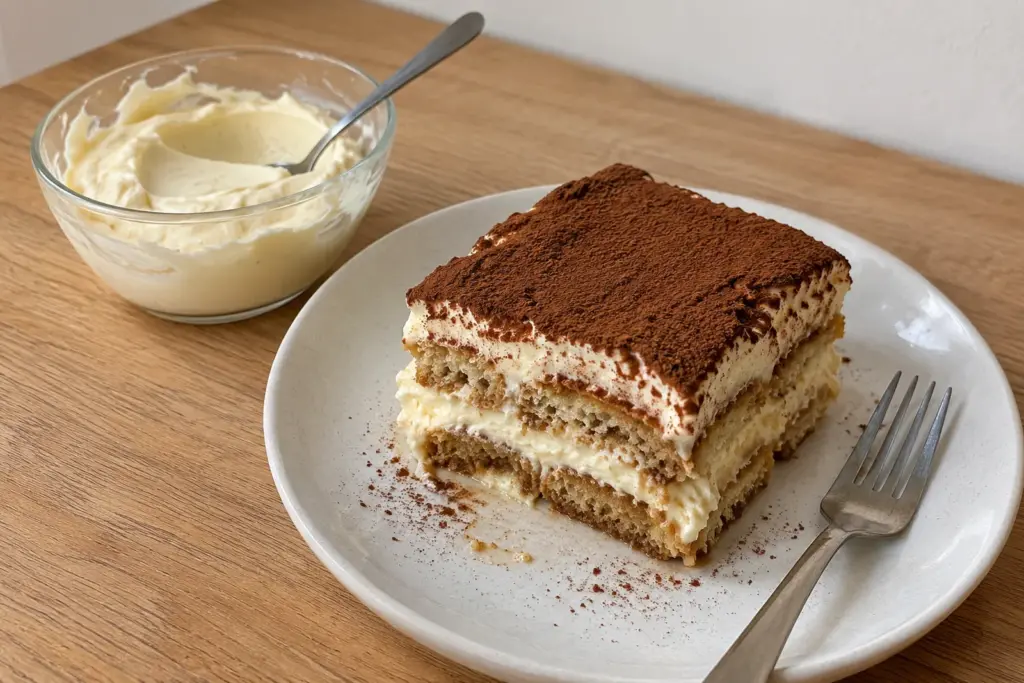
Mascarpone is cream thickened with a little acid, so it is rich and smooth and has almost no tang. Each of the dairy swaps below loses one of those traits: cream cheese adds tang, ricotta adds water and yogurt adds sourness.
A tiramisu layer, a frosting and a risotto each lean on a different trait, so the best swap changes with the dish.
1 What Does Mascarpone Cheese Do in a Recipe?
Mascarpone is made by heating cream and thickening it with acid, with no rennet, and then draining it. The BelGioioso tub lists pasteurized milk and cream plus citric acid. Because cream is the base, it is a high-fat cheese that stays smooth in a sauce and holds its shape in a filling.
Most of the swaps carry less fat. FDA's standard for cream cheese asks for at least 33% milkfat, heavy cream must have at least 36%, and sour cream only 18%, so most of the swaps come in lighter than mascarpone. You notice that gap in three traits of the cheese:
- Fat: it makes a filling taste rich and keeps a frosting thick, so a lean swap needs cream added to it.
- Body: it is thick enough to hold a layer in tiramisu or a swirl on a tart, so a thin swap such as sour cream slumps.
- Mild, slightly sweet taste: it sits quietly under coffee, cocoa and fruit, so a tangy swap shows in the first bite.
Tiramisu and frosting need body, and a hot sauce needs fat that will not curdle, so match the swap to that trait first.

2 Best Substitutes for Mascarpone Cheese
Tip
Every amount here replaces 1 cup of mascarpone, about one 8-ounce tub. They are starting amounts, so taste the mix before it goes into the recipe.
Mascarpone is milder and sweeter than all seven swaps, so each fix either softens a tang or adds fat.
| Substitute | Amount for 1 cup of mascarpone | Best for | What changes |
|---|---|---|---|
| Cream cheese and heavy cream | 8 oz (1 cup) softened block cream cheese plus ¼ cup heavy cream | Tiramisu, cheesecake, frosting | Tangier and lighter in fat |
| Crème fraîche | 1 cup | Risotto, pasta sauce, soup, fruit tarts | Thinner and tangy; too loose to hold layers |
| Heavy cream, whipped | ½ cup cold heavy cream, whipped to stiff peaks (about 1 cup) | Toppings, fruit, trifle layers | No tang, but airy and soft, with no cheese body |
| Ricotta | 1 cup whole-milk ricotta, drained, blended with 2 tablespoons heavy cream | Cannoli-style fillings, stuffed shells, lasagna | Much leaner; grainy unless blended |
| Greek yogurt | 1 cup full-fat yogurt, strained overnight, plus 2 tablespoons heavy cream | Cold dips, parfaits, spreads | Sour; splits when it boils |
| Sour cream | 1 cup | Dips, cold sauces, cheesecake topping | Thin and sharp; 18% milkfat minimum |
| Cottage cheese | 1 cup full-fat, blended smooth with 1 tablespoon heavy cream | Lasagna, baked pasta, dips | Salty and tart; savory dishes only |
Cream cheese with cream comes closest in desserts and crème fraîche in hot sauces, and the other five fit narrower jobs.
1. Cream Cheese and Heavy Cream
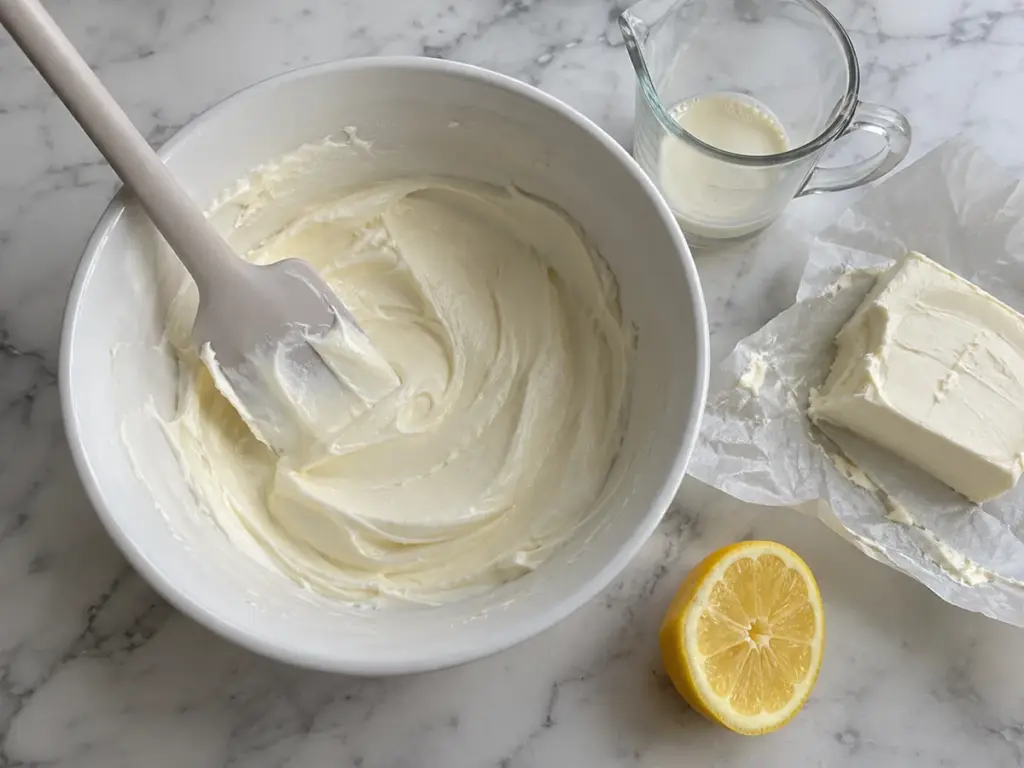
Full-fat block cream cheese is the closest swap for tiramisu, cheesecake and frosting, because it is thick enough to hold a layer and firms up in the fridge. It still lands lighter than mascarpone: cream cheese sits at a 33% milkfat minimum, and heavy cream at 36% only loosens it, so you gain softness but not much fat.
Buy the foil-wrapped block, since whipped tub cream cheese holds air and water and turns your mix runny.
- Soften the cheese. Leave 8 ounces of block cream cheese on the counter for about 30 minutes, until a spoon leaves a dent without effort.
- Beat it smooth. Work it for about a minute with a spatula or a mixer on low until no lumps remain, adding 1 tablespoon of powdered sugar for a dessert.
- Add the cream. Stir in ¼ cup of cold heavy cream for a frosting or thick filling. For a lighter tiramisu layer, whip the cream to soft peaks first and fold it in.
- Taste and chill. Add a little more powdered sugar if the tang is too sharp, then chill the mix for 30 minutes so it firms up.
Half-and-half and milk have too little fat to whip, which matters only when you want the folded, lighter version. A heavy cream stand-in made from milk and butter loosens the cheese just as well, but it will not whip either, so you stir it in.
2. Crème Fraîche
Crème fraîche is cultured cream with enough fat to simmer, and it replaces mascarpone 1 cup for 1 cup. Its tang is mild, and you can warm it gently in a pan sauce without it splitting. That makes it the swap for risotto, pasta sauce and soup, where you stir it in at the end and heat it only until it loosens.
It is thinner than mascarpone, so it will not hold a layer of tiramisu or a piped swirl of frosting. You can spoon it over a fruit tart or into a filling that gets set by something else, such as eggs or gelatin.
3. Heavy Cream, Whipped
Cold heavy cream whipped to stiff peaks gives you a mild, sweet, airy cream with no tang at all. Cream roughly doubles in volume when it is whipped, so start with ½ cup of liquid cream for each cup of mascarpone you replace, and sweeten it with 1 tablespoon of powdered sugar.
Tip
Chill the bowl and the cream first, and stop as soon as the peaks hold, because cream you keep beating turns grainy and then to butter.
It is softer than mascarpone and has no cheese in it, so it suits toppings, berries and trifle layers you serve the same day. For a layer that has to stay put overnight, fold it into the cream cheese blend instead.
4. Ricotta, Drained and Blended
Whole-milk ricotta is a whey cheese, mild and slightly sweet but grainy and full of water, so a straight swap leaves your filling wet.
- Drain. Drain it in a fine sieve until you see no more drips.
- Smooth. Blend it with 2 tablespoons of heavy cream per cup in a food processor until no grain is left.
That gives a spoonable cream for cannoli-style fillings, stuffed shells and lasagna layers.
For pasta, thin the ricotta with starchy pasta water, the way a ricotta and lemon spaghetti sauce does with 1 cup of ricotta for 12 ounces of pasta. Ricotta is far leaner than mascarpone and cannot be whipped into body, so leave it out of frosting and tiramisu.
5. Greek Yogurt, Strained
Full-fat Greek yogurt needs one more step from you before it stands in for mascarpone.
Tip
Strain it overnight in the fridge through a sieve lined with a coffee filter or cheesecloth, until it is as thick as soft cream cheese, then stir in 2 tablespoons of heavy cream per cup for richness.
The tang works against coffee in tiramisu but suits fruit parfaits, spreads and dips. Cold, it works as a creamy dip base, such as a tzatziki sauce, but it splits when it boils, so stir it into hot food off the heat or spoon it on at the table.
6. Sour Cream
Sour cream needs only 18% milkfat under FDA's standard, so it is thin and sharp next to a cheese made from cream. It works 1 cup for 1 cup in dips, cold sauces and as a cheesecake topping. It is too loose to carry a frosting or a tiramisu layer on its own, so whisk it into the cream cheese blend in place of the heavy cream when you want a tangier, lighter mix.
7. Cottage Cheese, Blended
Full-fat cottage cheese turns smooth after a minute or two in a blender with 1 tablespoon of heavy cream per cup, and without that step it stays curdy. It is salty and slightly tart, so you will want it in lasagna, baked pasta and dips, where the rest of the dish balances it, and not in desserts.
3 Which Mascarpone Substitute Should You Use for Your Dish?
A filling that has to hold layers needs body, and a pan sauce that has to survive heat needs fat that resists curdling, so the two best swaps split along that line.
Cream Cheese and Heavy Cream
It holds layers and swirls after a night in the fridge, close to mascarpone's thickness in tiramisu, cheesecake and frosting.
It tastes tangier and has less fat, so you add 1 tablespoon of powdered sugar, and it is too dense to pour into a sauce.
Crème Fraîche
It stays smooth when it simmers in risotto, pasta sauce or soup, and it goes in at 1 cup for 1 cup.
It is too loose to hold a layer of tiramisu or a piped swirl of frosting.
For the dish in front of you, match the swap to its job:
- Tiramisu: the cream cheese blend with its cream whipped to soft peaks and folded in, plus 1 tablespoon of powdered sugar to soften the tang. If you are also out of ladyfingers, strips of sponge or pound cake are the usual ladyfinger stand-ins.
- Cheesecake and frosting: the same blend, since a cheesecake already runs on cream cheese. A no-bake Oreo cheesecake loosens its cream cheese with heavy cream and powdered sugar.
- Risotto and pasta sauce: crème fraîche, stirred in at the end over low heat just until it loosens.
- Cannoli-style fillings, stuffed shells and lasagna: drained ricotta blended with cream, or blended cottage cheese in a baked pasta where the salt is welcome.
- Dips, parfaits and cold toppings: strained Greek yogurt or sour cream for a sharper taste, whipped heavy cream over fruit for a sweet one.

4 How Do You Make Mascarpone at Home?
Cream and a little acid are all you need, and the traditional method heats the cream to about 185°F (85°C) before it is drained. Use pasteurized heavy cream, and start the evening before, because the cheese needs a night in the fridge.
- Heat the cream. Warm 2 cups of heavy cream in a heavy saucepan over medium-low heat, stirring, until a thermometer reads 185°F.
- Add the acid. Stir in 2 tablespoons of lemon juice (a starting amount) and hold the cream near 185°F for about 5 minutes, until it coats the back of a spoon.
- Cool it. Take the pan off the heat and let the cream cool on the counter for no longer than 2 hours (the USDA FSIS limit for perishable food), then drain it in the fridge.
- Drain it. Pour the cooled cream into a sieve lined with cheesecloth or a coffee filter set over a bowl, cover it and chill for at least 6 hours, or overnight for a thicker cheese.
The whey drains into the bowl, and what stays in the sieve is the cheese. Spoon it into tiramisu, cheesecake or risotto at 1 cup for 1 cup, just as you would store-bought mascarpone.
5 Which Mascarpone Swaps Should You Skip?
- Whipped tub cream cheese: it holds air and water, so the tiramisu and frosting layers you build with it slump within hours.
- Fat-free yogurt or reduced-fat ricotta: with so little fat they turn watery, and your filling weeps onto the plate.
- Ricotta or cottage cheese straight from the tub: the grains and the liquid show up in a smooth filling, so you need to drain and blend them first.
Frequently Asked Questions
No. Mascarpone is cream thickened with acid, soft, sweet and nearly free of tang, while cream cheese is tangier and, under FDA's standard, needs only 33% milkfat and may hold up to 55% moisture. That is why cream cheese needs cream added before it can stand in.
Blend 1 cup of cashews, soaked for several hours, with ¼ cup of full-fat coconut cream and 1 teaspoon of lemon juice until completely smooth, adding water by the teaspoon if it is stiff (starting amounts). A thick vegan cream cheese can also take the place of the dairy cream cheese in the blend, with coconut cream instead of the heavy cream.
USDA FoodKeeper has no listing for homemade mascarpone or for a cream cheese and cream mix. Its closest entries are heavy cream at 10 days from purchase and sweetened whipped cream at 1 day, so use a whipped mix the same day, and use a cream cheese and cream mix within the 10 days heavy cream keeps, covered in the fridge.
FoodKeeper does not recommend freezing cream cheese, ricotta, cottage cheese or sour cream, and these cheeses separate and turn grainy when thawed, so mix the substitute fresh for each recipe.
Sources
- FDA, 21 CFR 133.133: Cream cheese
- FDA, 21 CFR 131.150: Heavy cream
- FDA, 21 CFR 131.160: Sour cream
- BelGioioso: Mascarpone product page
- Fine Dining Lovers: What mascarpone is and how to make it
- USDA FoodKeeper
- USDA FSIS: The Danger Zone (40°F to 140°F)

Andrew Gray is a seasoned food writer and blogger with a wealth of experience in the restaurant and catering industries. With a passion for all things delicious, Andrew has honed his culinary expertise through his work as a personal chef and caterer.
His love for food led him to venture into food writing, where he has contributed to various online publications, sharing his knowledge and insights on the culinary world. As the proud owner of CooksCrafter.com, Andrew covers a wide range of topics, including recipes, restaurant reviews, product recommendations, and culinary tips.
Through his website, he aims to inspire and educate fellow food enthusiasts, offering a comprehensive resource for all things food-related.