Short Answer
Replace fresh fennel bulb with an equal amount of thinly sliced celery plus ¼ teaspoon of anise seed per cup, or with sliced onion or leek in dishes that cook for a while. Replace fennel seed with ¾ teaspoon of anise seed or caraway seed for each teaspoon, and taste before you add more.
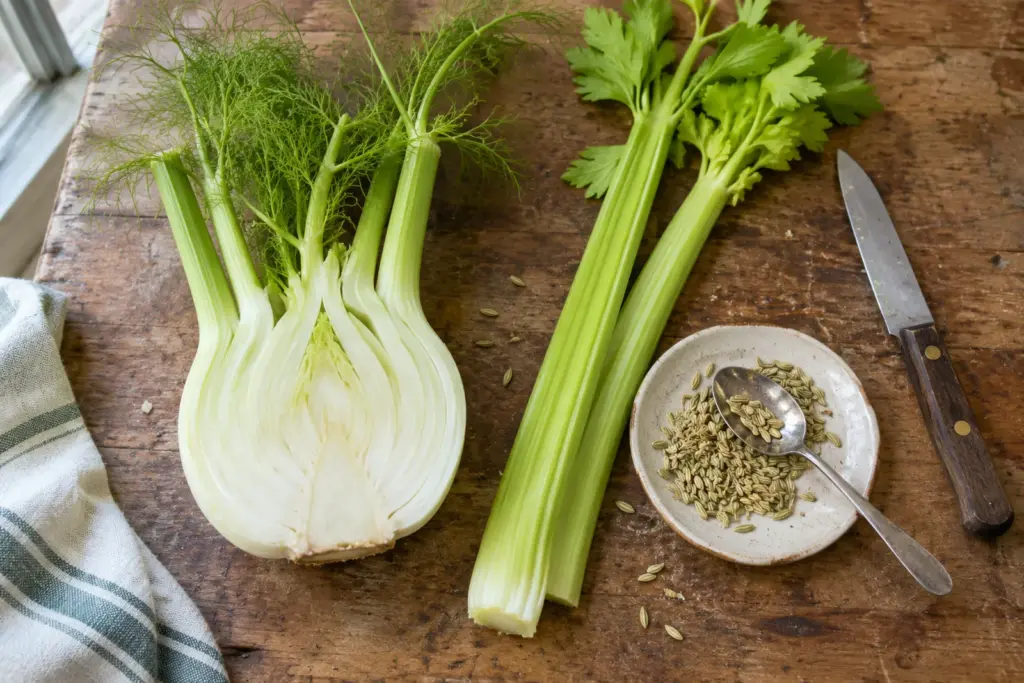
Fennel is unusual among ingredient substitutes because one plant gives you three things: crunch from the white bulb, a fresh herb in the feathery fronds and a warm spice in the dried seeds. Celery works in a raw salad but does nothing for Italian sausage, whose main flavor is fennel seed, so you need to know which part your dish uses before you choose.
1 What Does Fennel Do in a Recipe?
Fennel (Foeniculum vulgare) belongs to the carrot family, and its licorice-like taste comes from anethole, the same compound that flavors anise and star anise. Florence fennel is the variety grown for its swollen white bulb, and cooking mellows its anise flavor. The fronds are a fresh herb, and the dried seeds are a spice.
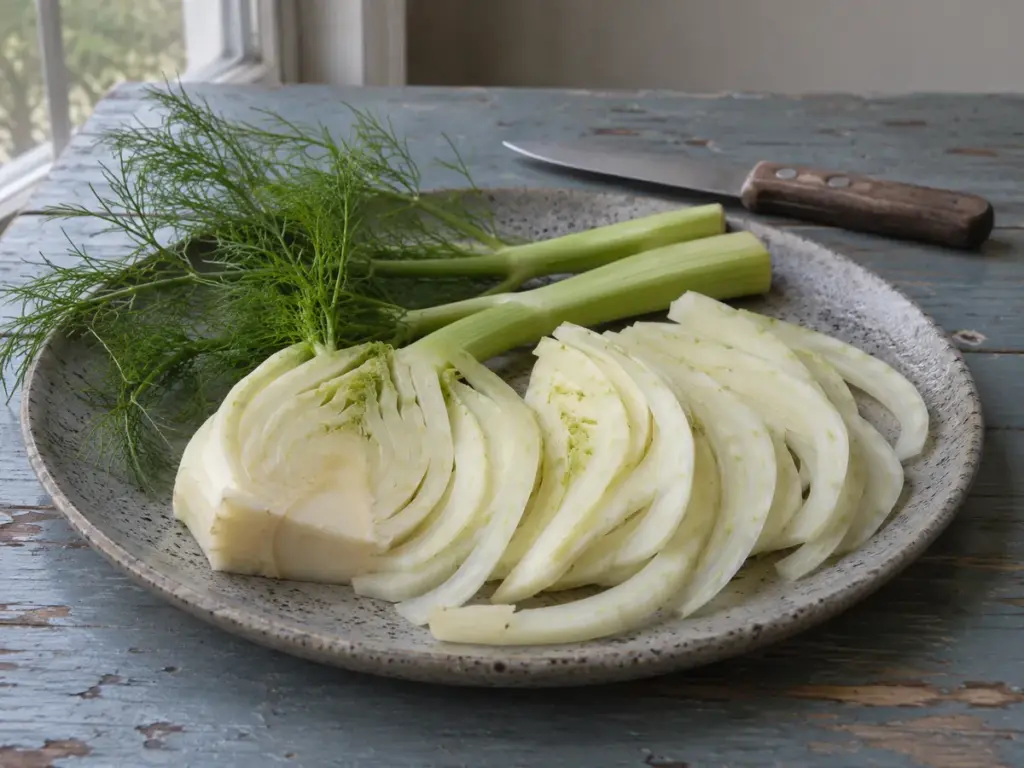
Sliced paper-thin and dressed with citrus, as in a shaved fennel and orange salad, the raw bulb is crisp and lightly sweet. Roasted or braised, it turns soft and mellow, which is the job an onion does in the same pot.
Fennel seed gives a dry, warm sweetness with no texture at all. Celery carries the crunch of the bulb with almost no licorice, and anise seed carries the licorice with no crunch, so check whether your dish needs crunch, sweetness or licorice before you pick a stand-in.
2 Best Substitutes for Fennel
Treat every amount below as a starting point per 1 cup of sliced bulb or herb, or per 1 teaspoon of seed, and taste before you add more. Anise swaps go in lower because fennel tastes milder and less sweet than anise.
| Substitute | Replaces | Amount | What changes |
|---|---|---|---|
| Celery plus anise seed | Bulb, raw or lightly cooked | 1 cup sliced celery plus ¼ teaspoon anise seed | Crunch stays; licorice comes from the anise |
| Onion or leek | Bulb, cooked | 1 cup sliced | Sweet and soft, with no licorice |
| Dill | Fronds | Equal amount | Grassy, with a faint anise sweetness |
| Tarragon | Fronds | Equal amount | Closest herb to licorice |
| Parsley | Fronds | Equal amount | Green and peppery, no anise |
| Anise seed | Seed | ¾ teaspoon | Sweeter and stronger than fennel seed |
| Caraway seed | Seed | ¾ teaspoon | Earthy, with a faint anise note |
| Dill seed | Seed | ¾ teaspoon | Close to caraway, slightly bitter |
| Coriander seed | Seed | 1 teaspoon | Citrusy and mild, no licorice |
| Cumin seed | Seed | ½ teaspoon | Smoky and earthy, no licorice |
Anise seed is the only seed here with a real licorice flavor, and celery is the only bulb swap that stays crisp in a raw dish.
3 Which Substitutes Replace Fresh Fennel Bulb?
The bulb is mostly water and tight layers, so your stand-in has to give crunch when the dish is raw and sweetness when it cooks down.
Celery
Celery shares fennel's family and its clean, watery crunch, so it is the best swap for the bulb in salads and slaws. Raw stalks carry a whole bowl in apple and celery salad, where they add crispness and a mild bitterness against the apples. Slice the pale inner stalks thin on a diagonal and measure them 1:1 against the bulb. Because celery has almost no licorice flavor, crush ¼ teaspoon of anise seed per cup into the dressing. If you have no anise seed, stir in a spoonful of chopped tarragon or a few chopped fronds.
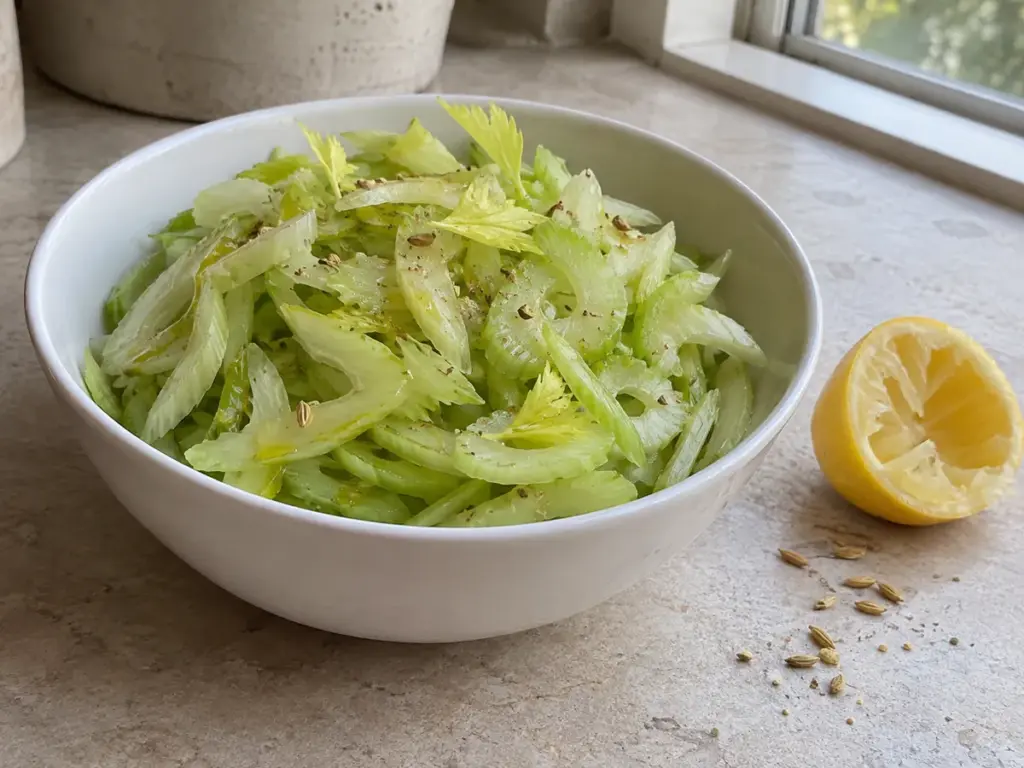
The raw fennel in a white bean and fennel salad is the place to use this swap, since that recipe slices the bulb thin for crunch and folds it in after the beans take the dressing, and celery slices go in the same way. A short sauté, as in a warm fennel and orange salad where the slices cook 3 to 4 minutes, leaves celery crisp-tender too. In soup, celery softens quickly and turns mild, so it covers the bulk of the bulb but gives you less flavor than onion does.
Onion or Leek
Braises, soups and sauces ask fennel for sweetness, and sliced onion or the white and light green part of a leek supplies it once you cook it over medium heat until soft. Use the same volume as the bulb. Leek is gentler, while onion tastes sharp until it softens, so keep onion out of your raw dishes.
Neither one tastes of licorice, which is why the same ¼ teaspoon of anise seed per cup belongs in the pot. A roast gives the same result: the bulb in a warm carrot and fennel salad roasts with the carrots until tender and caramelized, and sliced onion roasted on the same pan turns just as soft and sweet.
4 Which Herbs Replace Fennel Fronds?
Fronds go on top of a finished dish, into the cavity of a whole fish or into a stew such as bouillabaisse, so the replacement is a soft herb used fresh. Chop it and add it near the end, because long cooking dulls any fresh herb.
Dill
Dill leaves are thin and feathery like fronds and taste grassy with a hint of anise sweetness, so an equal amount works as a garnish and with fish. Its anise note is faint, so it suits a creamy dressing or a fish dish better than a dish that leans on licorice.
Tarragon
Tarragon has the most licorice of the three herbs, which makes it the one that tastes most like fennel in a cream sauce or on chicken and seafood. Add chopped tarragon in the same amount as the fronds, and taste after the first spoonful, since its anise note is stronger than dill's.
Parsley
Flat-leaf parsley gives the green color and fresh herb taste, with a peppery edge and no anise. It can stand in for the fronds in a salad, but it adds no crunch, so a salad that needs the bulb's texture should pair parsley with sliced celery.
5 Which Substitutes Replace Fennel Seed?
Fennel seed is a dried fruit with a sweet anise flavor, and recipes use it in small amounts in sausage, breads and spice blends such as Chinese five-spice powder. When a recipe starts from Italian sausage, as sausage and tortellini soup does with pork sausage seasoned with fennel, the seed is already in the sausage and needs no stand-in. Elsewhere you can replace it with other seeds from the same plant family, but only some of them taste like licorice.
Anise Seed
Anise seed is the closest match, since it carries the same anethole, but it tastes sweeter and stronger. Start with ¾ teaspoon for each teaspoon of fennel seed, taste after a few minutes of cooking, and add the rest only if the dish needs it. It does the same job in cookies, sweet breads and sausage.
Caraway Seed
Rye and soda breads, casseroles, braised cabbage and stews are where caraway belongs, since it is earthy and slightly peppery with a faint anise note. Carvone gives caraway its taste, and anethole gives fennel and anise theirs, so caraway never reads as licorice. Start with ¾ teaspoon per teaspoon of fennel seed, because its earthy flavor is more forceful than the mild sweetness of fennel seed.
Dill Seed
Dill seed tastes closer to caraway than to fennel, warm and a little bitter with a grassy dill edge, so it will not give licorice sweetness. It does belong in pickling brines, where dill seed is already a classic spice, and it suits potato salad and fish. Start at ¾ teaspoon per teaspoon of fennel seed, because dill seed turns bitter when you add too much.
Coriander Seed
Your dish loses its licorice note when coriander seed stands in, which matters little in a bean stew and a lot in Italian sausage. What you keep is the warm background that fennel seed gives stews, breads and spice rubs, because coriander seed is mild, nutty and citrusy. Use an equal amount.
Cumin Seed
Reach for cumin when the recipe already has other warm spices, as curries and spice blends do with fennel seed. Cumin is smoky and earthy, has no licorice and tastes more assertive than fennel seed, which is why the starting amount is ½ teaspoon per teaspoon of fennel seed, with a pinch more only after you taste it.
6 How Do You Add a Seed Swap?
Every seed swap above, whether caraway, coriander, cumin, dill seed or anise, smells stronger after a short toast, so the same four steps apply to each one.
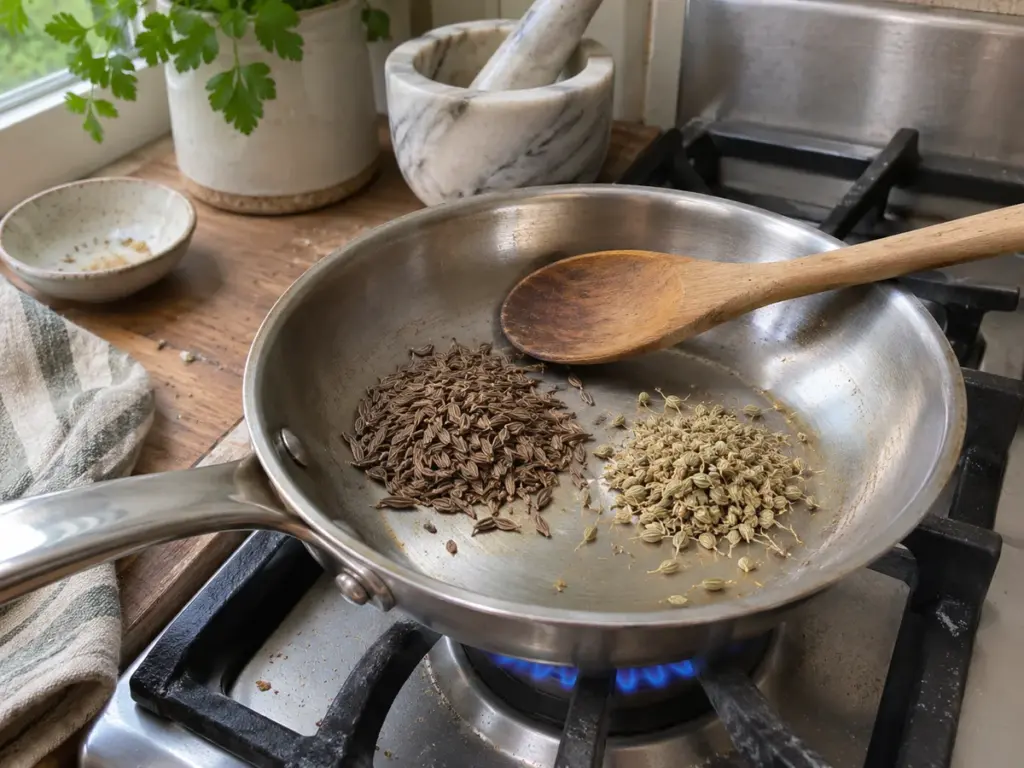
- Toast the whole seeds. Stir them in a dry skillet over medium-low heat until they smell fragrant and darken one shade, then pour them out so they stop cooking.
- Crush them. A mortar or the flat side of a knife breaks the seed coat so the oil is released.
- Add them where the recipe adds fennel seed. That is the oil with the onions, the flour in a dough or the ground meat, so the flavor spreads through the whole dish.
- Taste after a few minutes of cooking. Add a pinch more only if the flavor is still missing.
7 Which Substitute Should You Use for Your Dish?
Raw dishes depend on crunch, while braises and soups depend on sweetness that melts into the liquid, and that difference picks between the two best bulb swaps for you.
Celery plus anise seed
Keeps the crunch in salads, slaws and quick sautes, and the anise puts back a little licorice.
Turns soft and watery in a long braise, where it adds little flavor.
Onion or leek
Cooks down sweet and soft in braises, soups and sauces, the same way the bulb does.
Tastes sharp raw and adds no crunch to a salad.
For seeds, the dish you are cooking chooses the swap:
- Italian sausage, meatballs and meat rubs: anise seed at ¾ of the amount, or caraway if you want an earthier result.
- Rye bread, casseroles and cabbage: caraway seed.
- Pickles and brines: dill seed.
- Curries, stews and spice blends: coriander seed, or cumin at half the amount.
- Cookies and sweet breads: anise seed, which gives the nearest licorice flavor.
8 Which Swaps Do Not Work for Fennel?
Star anise carries the same anethole, but it comes from a different plant, a tree, and it tastes much stronger than anise seed. One whole pod in a quick recipe overwhelms the dish, so use it only in slow simmers and ground blends.
Fennel seed or anise seed alone cannot replace the bulb either, because a seed adds flavor and no volume. If your salad calls for 2 cups of sliced bulb, use 2 cups of celery or another crisp vegetable and keep the seed as seasoning.
Frequently Asked Questions
No. Fennel (Foeniculum vulgare) and anise (Pimpinella anisum) are separate plants that share anethole, and fennel is milder. North American stores sometimes label Florence fennel bulbs as anise, so look for the bulb with fronds attached.
Anise seed at ¾ of the amount gives the closest flavor. Caraway seed at the same ratio gives an earthier sausage with less sweetness.
Sources
- FoodPrint, Real Food Encyclopedia: Fennel (bulb, fronds and seed uses, and how cooking mellows the bulb)
- Wikipedia: Fennel (plant family, anethole, fennel seed in Italian sausage, bulb labeled as anise)

Andrew Gray is a seasoned food writer and blogger with a wealth of experience in the restaurant and catering industries. With a passion for all things delicious, Andrew has honed his culinary expertise through his work as a personal chef and caterer.
His love for food led him to venture into food writing, where he has contributed to various online publications, sharing his knowledge and insights on the culinary world. As the proud owner of CooksCrafter.com, Andrew covers a wide range of topics, including recipes, restaurant reviews, product recommendations, and culinary tips.
Through his website, he aims to inspire and educate fellow food enthusiasts, offering a comprehensive resource for all things food-related.