Short Answer
Use all-purpose flour cup for cup in place of whole wheat flour, and the bread, muffins or pancakes come out lighter, paler and milder. White whole wheat flour swaps 1:1 and keeps the whole grain, while oat, rye and buckwheat flours replace only a share of it.
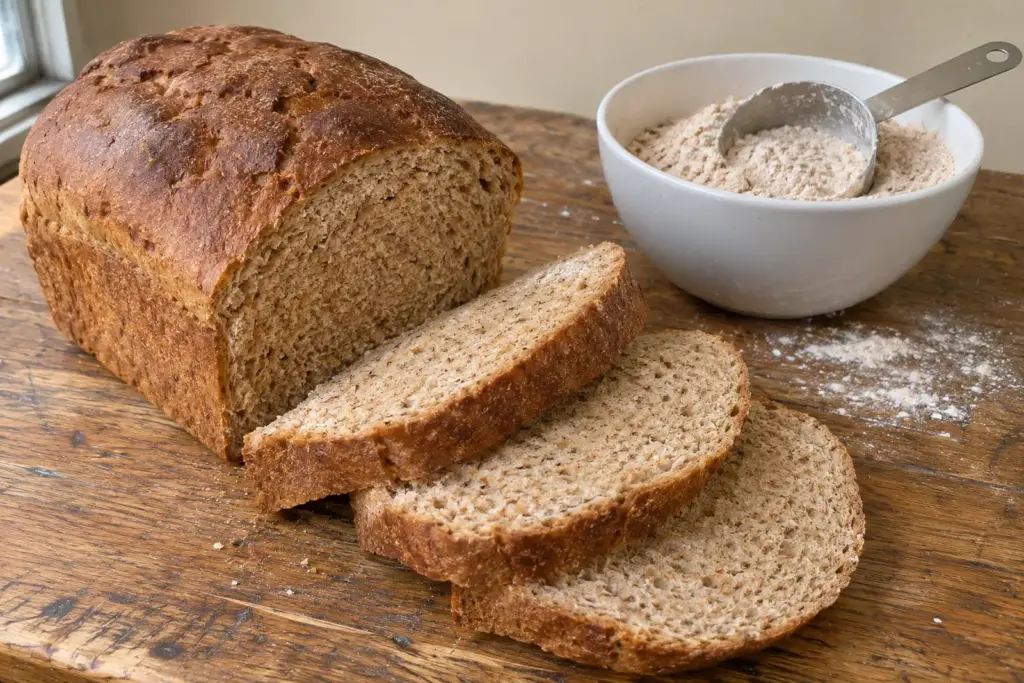
Whole wheat flour keeps the bran and germ that white flour loses, so every swap for whole wheat flour gives something up: the nutty flavor, the extra thirst for liquid, or the fiber. A loaf needs gluten to hold its rise and a pancake mostly does not, which is why one swap can work in a pancake and fail in a loaf.
1 What Does Whole Wheat Flour Do in a Recipe?
Whole wheat flour is the whole kernel ground up, so it carries the bran and the germ along with the starchy center. The bran gives a slightly tannic bite and soaks up liquid. When you move from white flour to whole wheat, King Arthur has you add 2 teaspoons more liquid per cup, and that figure is the one to reverse when you swap the other way.
Structure is the other job. King Arthur puts its whole wheat flour at 13.2% protein, above its bread flour at 12.7% and all-purpose flour at 11.7%, but bran gets in the way of gluten as it forms, so whole wheat loaves bake denser than their protein number suggests. King Arthur has you rest mixed whole wheat dough for 30 minutes before kneading, which gives the flour the time it needs to absorb the liquid fully.
- Flavor goes first when you swap, because white flours and oat flour taste mild where whole wheat tastes nutty.
- Liquid changes next, since a flour with less bran leaves the dough wetter than the recipe expects.
- Rise matters only in yeast dough, where a swap to a gluten-free flour breaks the loaf.
2 Best Substitutes for Whole Wheat Flour
White whole wheat flour is the closest match and all-purpose flour is the one already in most pantries, while spelt, oat, rye and buckwheat flours each suit one kind of recipe. Amounts below are starting points, and the dough or batter tells you whether to adjust.
| Substitute | Starting Amount | Best For | What Changes |
|---|---|---|---|
| White whole wheat flour | 1:1 | Bread, muffins, pancakes, cookies | Milder flavor and lighter color, still whole grain |
| All-purpose flour | 1:1 by volume | Bread, muffins, pancakes, cookies | Lighter, paler crumb. Start by holding back 2 teaspoons of liquid per cup in yeast dough |
| Bread flour | 1:1 by volume | Sandwich loaves, rolls | Chewier, taller loaf. Absorbs slightly more liquid than all-purpose |
| Spelt flour | 1:1 in pancakes, muffins and flatbreads | Pancakes, muffins, flatbreads | Sweeter and nuttier, weaker structure in loaves |
| Oat flour | A quarter of the flour | Muffins, pancakes, cookies | Tender and mild, no gluten, so wheat flour supplies the rest |
| Rye flour | Half of the whole wheat in non-yeast recipes, a quarter of the flour in yeast bread | Quick breads, cookies, rustic loaves | Malty, denser, very little gluten |
| Buckwheat flour | A quarter of the flour in non-yeast recipes, 15% in yeast bread | Pancakes, crepes, quick breads | Earthy, slightly bitter, gray, no gluten |
White Whole Wheat Flour
White whole wheat flour comes from a lighter, milder variety of wheat, so it keeps the bran and germ and loses most of the assertive taste. King Arthur sells it as golden whole wheat and describes it as lighter and milder than traditional red whole wheat. Because it is still whole wheat, it takes the same amount, cup for cup, and you keep the recipe's extra liquid and 30-minute rest as written.
All-Purpose Flour
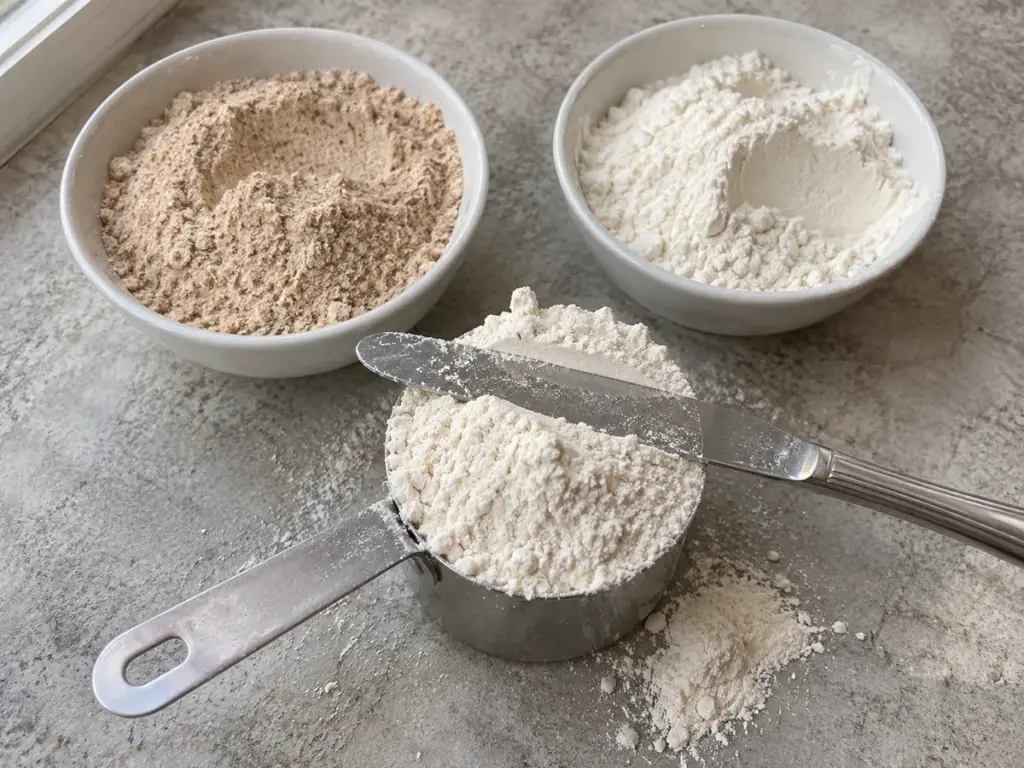
You can replace a cup of whole wheat flour with a cup of all-purpose flour, and the dough or batter gets a few grams more flour, because King Arthur counts 113 grams of whole wheat flour for every cup (120 g) of white flour. With no bran in the way, the gluten forms freely, so the crumb turns softer and lighter and the crust paler. British recipes call whole wheat flour wholemeal, and their plain flour is softer than American all-purpose flour.
A yeast dough made without bran turns wetter, so you start from King Arthur's liquid rule in reverse and adjust by feel. Treat the 2 teaspoons as a starting amount, and let the dough tell you the rest.
- Measure cup for cup. Fluff the flour, spoon it into the cup and level it, since a packed cup can hold up to 160 grams against 120.
- Start by holding back 2 teaspoons of liquid per cup. Pour it in only if the dough looks dry after the first minutes of mixing.
- Skip the 30-minute rest. King Arthur has you rest whole wheat dough so the flour can absorb the liquid fully, and that rest is written for whole wheat dough, so a white flour dough can go straight to kneading.
- Judge the dough by feel. It should be soft and slightly tacky, never loose or stiff, before the first rise.
Bread Flour
Bread flour suits sandwich loaves and rolls where height and chew matter more than whole-grain flavor. Use it cup for cup with the same 2-teaspoon starting hold-back as all-purpose flour, then add water back if the dough feels stiff, because bread flour absorbs slightly more liquid. In muffins and pancakes the extra gluten only makes the crumb chewy, so you are better off with all-purpose flour there.
Spelt Flour
Spelt is a form of wheat, so it contains gluten, and you will taste a nutty hint of sweetness in it. America's Test Kitchen found that spelt has fewer gluten-forming proteins than whole wheat. Its sandwich loaves came out squat and crumbly, while its pancakes and muffins turned out well and its pizza dough stretched easily.
Swap it 1:1 in pancakes, muffins and flatbreads, and replace only part of the flour in a loaf. If your loaf has to rise high, bake it from a recipe written for spelt.
Oat Flour
Oat flour is rolled oats ground fine. King Arthur calls it naturally gluten-free and good at absorbing moisture, with an especially tender result, so you use it alongside wheat flour. Start with about a quarter of the flour as oat flour, and if the batter turns thick, loosen it with milk a tablespoon at a time. A batter that crumbles when you lift it means the oat share was too high.
Rye Flour
Rye adds a nutty, almost malty flavor. King Arthur suggests swapping medium rye for half of the whole wheat in a non-yeast recipe. In yeast bread, keep rye to a quarter of the flour at first, because its low gluten makes a high share bake dense and low.
Rye absorbs liquid differently, so add water a spoonful at a time if your rye dough feels stiff. Rye is a gluten grain, so it is no help if you are avoiding gluten.
Buckwheat Flour
Despite the name, buckwheat has no gluten, and King Arthur says you cannot replace all the wheat flour with it. It tastes earthy, a little grassy and slightly bitter, and it turns baked goods slate gray. Start with 25% of the flour in non-yeast recipes and 15% in yeast bread.
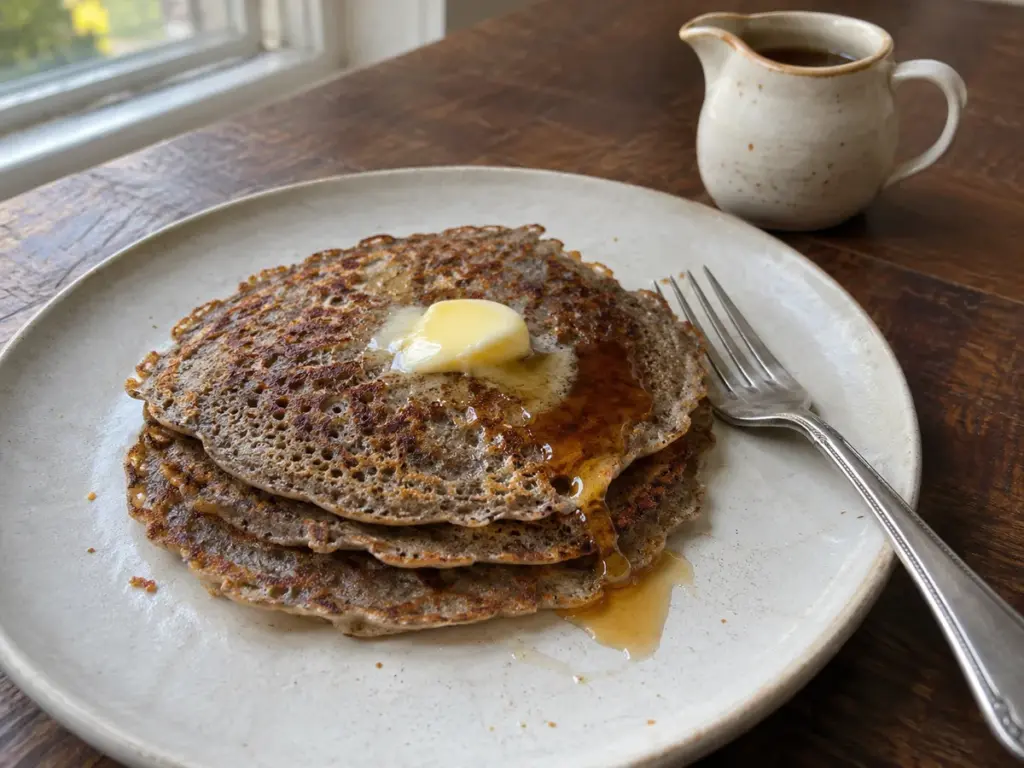
Pancakes are the exception worth trying, since King Arthur's batch used 33% buckwheat and came out fluffy and nutty, only thinner and a little more delicate. The gray color also hides browning, so judge doneness by the time and the feel of the pancake.
3 Which Substitute Should You Use for Bread, Muffins or Pancakes?
Muffins, pancakes and cookies lean on eggs and leavening and tolerate oat, rye or buckwheat, but yeast bread should stay mostly wheat flour, because wheat flours build the gluten that holds the rise. White whole wheat and all-purpose flour are the two that go in at a full cup in muffins, pancakes, cookies and bread alike, and you choose between them by what the loaf keeps and what it loses.
White Whole Wheat Flour
It keeps the bran, germ and whole grain at 1:1, with a milder taste than red whole wheat.
The recipe's extra liquid and rest still apply, and the crumb stays denser than a white loaf.
All-Purpose Flour
It is already in the pantry, swaps cup for cup and bakes a lighter, softer crumb.
The bran and its nutty flavor are gone, and a yeast dough starts with about 2 teaspoons less liquid per cup.
- Yeast bread and rolls: white whole wheat, all-purpose or bread flour go in cup for cup. In a slow dough such as no-knead whole wheat bread, you can use the same swaps and keep the recipe's hours-long rest as written.
- Muffins: spelt goes in 1:1, and you can give oat flour a quarter of the flour. Recipes written for oat flour, such as vegan banana oat muffins, use it as the only flour.
- Pancakes: spelt goes in 1:1, and you can start buckwheat flour at a quarter of the flour, though King Arthur's pancake batch used 33%. King Arthur rests a 100% whole wheat pancake batter for 30 minutes to control spread, so keep that rest if you use white whole wheat.
- Cookies: all-purpose or white whole wheat flour takes the place of whole wheat cup for cup. If you add more rye, drop cookies bake darker and spread more than the all-purpose version.
4 Which Flours Do Not Replace Whole Wheat Flour?
If gluten matters to you, know that whole wheat flour contains it, and so do spelt and rye, which the Celiac Disease Foundation lists among the gluten grains. Oats are not on that list, but the foundation says to look for oats labeled gluten-free. Almond, chickpea and brown rice flour cannot replace whole wheat 1:1 in a wheat recipe, because none of them builds gluten.
Warning
Spelt and rye contain gluten. Oat flour is safe for celiac disease only when it is labeled gluten-free.
- Almond flour is ground blanched almonds, so it brings fat and no gluten. It works in recipes written for it, such as almond flour peanut butter cookies, and in a wheat recipe it can stand in for no more than a small share of the flour.
- Chickpea flour is gluten-free and mellow, and Bob's Red Mill suggests it for cakes and quick breads, where it pairs well with pumpkin and chocolate. It fits batters that need no gluten, like chickpea socca.
- Brown rice flour is a whole-grain flour with no gluten, and Bob's Red Mill says it cannot be swapped cup for cup with wheat flour. It works in a blend with starches such as tapioca or potato starch.
If you have to avoid gluten, use a gluten-free flour blend made for baking. King Arthur says its gluten-free bread flour was designed for yeast baking and is a 1:1 swap for bread flour or all-purpose flour by weight or volume, while its Measure for Measure flour is made for cakes and cookies and not for yeast recipes. Expect a lighter, milder result than whole wheat gives.
5 How Long Does Whole Wheat Flour Keep?
USDA's FoodKeeper lists whole wheat flour for 3 to 6 months in the pantry from the purchase date and 6 to 8 months in the refrigerator once opened. White flour is listed at 6 to 12 months in the pantry, so whole wheat flour goes stale in about half the time. Smell the flour before you bake, and replace a bag that smells sour or like old oil.
Frequently Asked Questions
Yes, cup for cup. The result is lighter, paler and milder, and a yeast dough starts with about 2 teaspoons less liquid per cup than the whole wheat recipe lists. Batters and cookies need no other change.
Only for a small share of the flour. Almond flour has no gluten and adds fat, so it makes baked goods moist and dense, and it cannot hold up a yeast loaf. It works best in recipes written for it.
Yes, for part of the flour. Start with a quarter as oat flour in muffins, pancakes or cookies and keep wheat flour for the rest, since oat flour brings tenderness but no gluten. Use oat flour labeled gluten-free if gluten is a concern.
Spelt is an older form of wheat with a nutty, slightly sweet flavor and gluten that is weaker than whole wheat's. It swaps 1:1 in pancakes, muffins and flatbreads and works for part of the flour in a loaf.
In part. Buckwheat has no gluten, so start with 25% of the flour. King Arthur's pancake batch used 33% and came out thinner and more delicate, with a nutty flavor.
Fluff the flour, spoon it into the cup and level it with a knife. King Arthur counts 120 grams for a leveled cup of all-purpose flour, but a packed cup can hold up to 160 grams, and that extra flour makes a stiff, dry dough.
Sources
- King Arthur Baking: substituting whole wheat for white flour
- King Arthur Baking: how to use whole wheat flour
- King Arthur Baking: protein percentage by flour type
- King Arthur Baking: golden (white) whole wheat flour
- King Arthur Baking: bread flour for all-purpose flour
- King Arthur Baking: baking with oats
- King Arthur Baking: substituting rye flour
- King Arthur Baking: a guide to baking with buckwheat
- King Arthur Baking: gluten-free bread flour
- King Arthur Baking: how to measure flour
- America's Test Kitchen: substituting spelt flour for whole wheat flour
- Celiac Disease Foundation: sources of gluten
- Bob's Red Mill: chickpea flour
- Bob's Red Mill: brown rice flour
- USDA FoodKeeper: flour storage

Andrew Gray is a seasoned food writer and blogger with a wealth of experience in the restaurant and catering industries. With a passion for all things delicious, Andrew has honed his culinary expertise through his work as a personal chef and caterer.
His love for food led him to venture into food writing, where he has contributed to various online publications, sharing his knowledge and insights on the culinary world. As the proud owner of CooksCrafter.com, Andrew covers a wide range of topics, including recipes, restaurant reviews, product recommendations, and culinary tips.
Through his website, he aims to inspire and educate fellow food enthusiasts, offering a comprehensive resource for all things food-related.