
Short Answer
The best side dishes for chicken tikka masala are basmati rice or garlic naan to carry the sauce and cucumber raita to cool it.
- The curry is rich, creamy and a little spicy.
- Add one vegetable side such as aloo gobi if you want a full dinner.
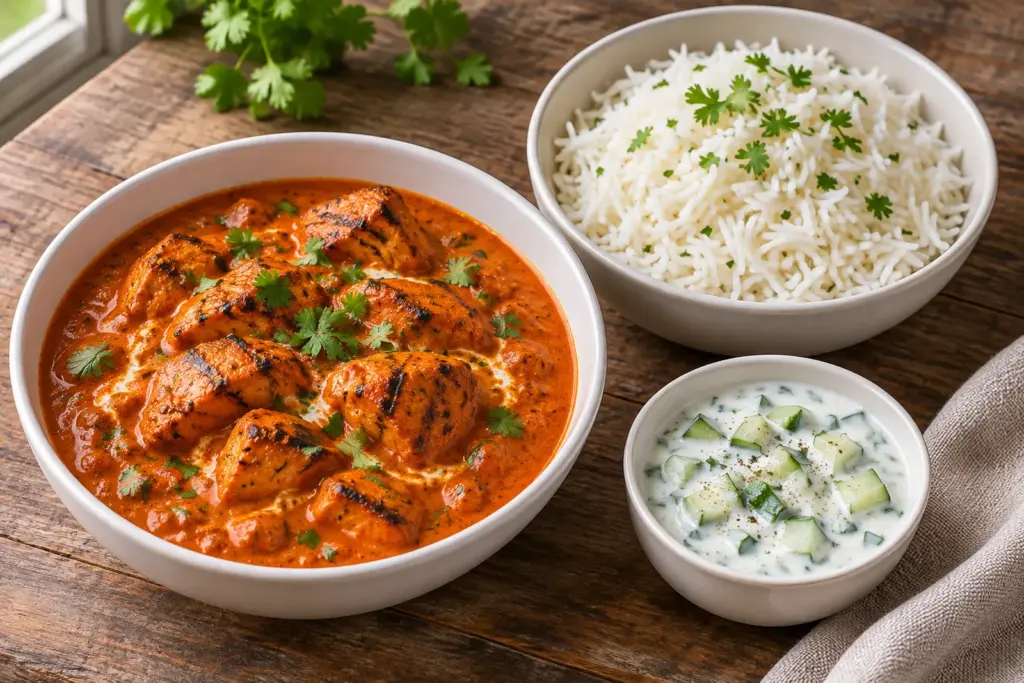
Chicken tikka masala is charred, yogurt-marinated chicken in a tomato and cream sauce, so the plate already has richness, salt and some heat. What it lacks is something to soak up the sauce, something cold to calm the spice and something crisp. Pick one base, rice or naan, and build the rest around it.
1 What Goes Well with Chicken Tikka Masala?
Chicken tikka masala is a British-Indian curry. Pieces of chicken are marinated in yogurt and spices, cooked over high heat until the edges char, and then simmered in a spiced tomato-cream sauce.
You eat more sauce than chicken, so rice or bread has to carry the sauce, and something cold or crisp has to answer it.
Because the chicken is charred and the sauce has a spicy edge, the plate suits cooling sides and tandoori vegetables that echo the char. Butter chicken is milder and more buttery, and it takes many of the same sides.
Heat varies from one pot to the next, so taste the sauce first, and pick raita when it runs hot.
| Side | Role | What it adds to the curry |
|---|---|---|
| Basmati Rice | Base | Separate grains that take the sauce |
| Garlic Naan | Base | Soft bread for scooping the chicken |
| Cucumber Raita | Cool | Cold yogurt against the heat |
| Kachumber Salad | Cool | Lemon and raw crunch to cut the cream |
| Mango Chutney | Sharp | A sweet and sour spoonful |
| Aloo Gobi | Vegetable | A dry, spiced contrast to the sauce |
| Tandoori Grilled Vegetables | Vegetable | Char that echoes the chicken |
| Spiced Lentil Dal | Vegetable | A soft, filling stew with no meat |
| Saag Paneer | Vegetable | Spinach and mild cheese |
| Samosas | Crunch | A crisp pastry starter |
| Papadum with Chutney | Crunch | A light, snappy crisp |
A weeknight plate needs only one base, one cool side and one vegetable. A plate eaten with a fork wants rice under the sauce, while a table where people tear and scoop wants bread.
Basmati Rice Base
Rice takes the sauce into every grain and lets you eat the curry with a fork, so no sauce is left pooled on the plate.
Plain rice adds no texture of its own, so the raita and a crisp side have to supply the contrast.
Garlic Naan Base
Torn bread scoops the chicken and the sauce in one bite, and the garlic butter adds a savory note the sauce lacks.
Naan is best warm, so it is the last thing you cook, and it leaves more sauce behind on the plate than rice does.
Serve both only when you feed a crowd, and then add no potato side.
2 Which Rice and Bread Carry the Sauce?
Whichever base you choose, keep it plain or lightly seasoned, because the sauce already carries the spices.
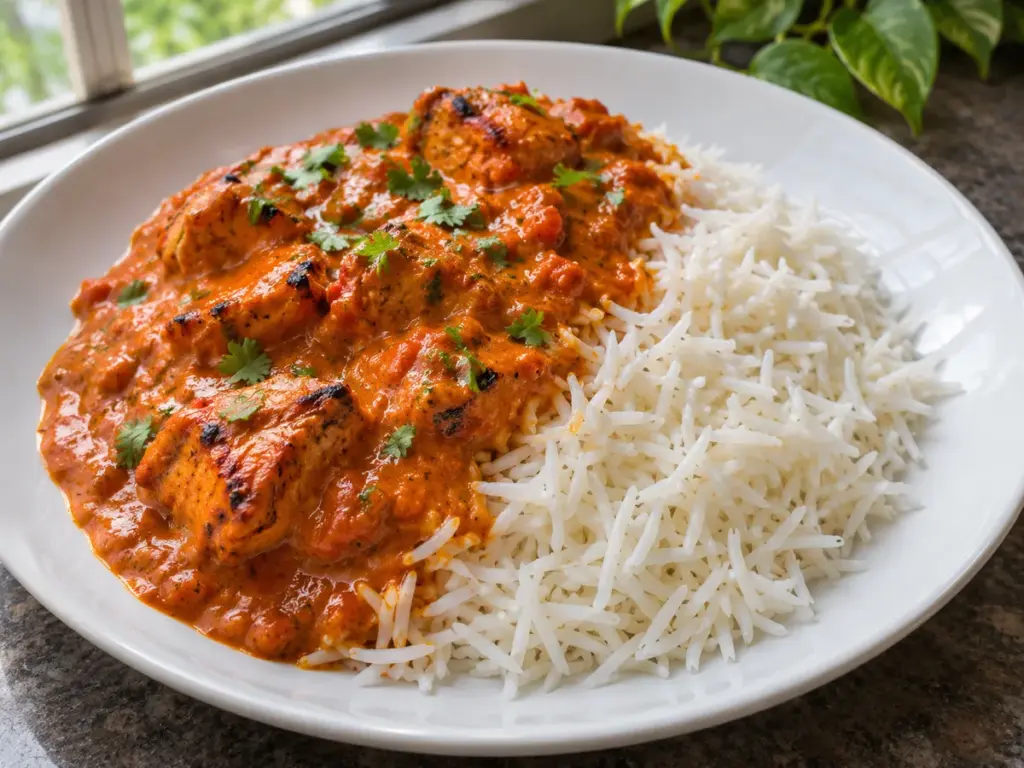
1. Basmati Rice
Basmati is a long-grain rice that cooks up fluffy and separate, so it takes sauce without clumping. If you rinse the rice until the water runs mostly clear, you wash off the surface starch that makes grains stick.
A ratio of 1 cup of rice to 1.5 cups of water, simmered covered for about 12 minutes and then rested off the heat, gives fluffy grains.
A pinch of turmeric turns the grains pale yellow without competing with the sauce.
When the jar is empty, jasmine rice is the nearest of the basmati stand-ins, though it cooks up softer and clings more.
Full recipe: How to Cook Basmati Rice from RecipeTin Eats
2. Garlic Naan
Naan is a leavened flatbread that is baked on the wall of a tandoor in India and usually cooked in a very hot skillet or oven at home.
If you brush the garlic butter on right after the bread comes off the heat, it melts into the surface and the naan stays soft and chewy enough to scoop. Wrap the cooked pieces in a clean towel while you finish the rest. Without naan, pita or roti scoops the sauce the same way.
Fresh minced garlic stirred into melted butter, with a little chopped cilantro, is all the topping it needs.
Full recipe: Buttery Garlic Naan Bread from Cafe Delites
3 Which Cool and Tangy Sides Balance the Spice?
The sauce is creamy and warm, so a cold or sour spoonful resets your mouth between bites.
3. Cucumber Raita
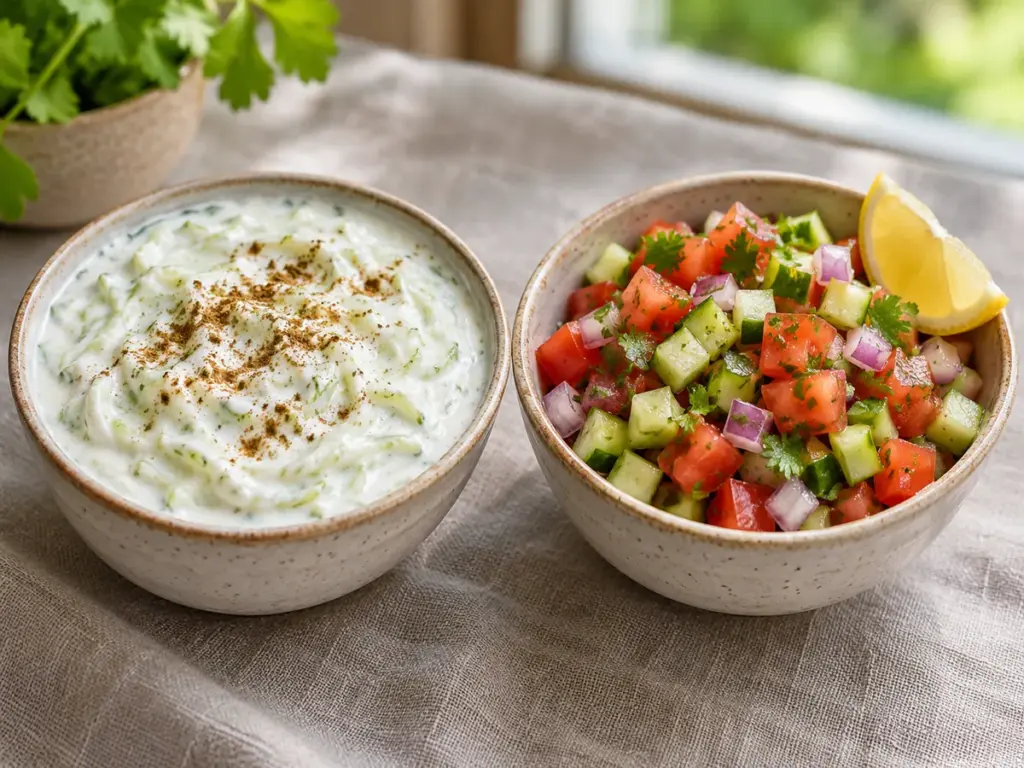
Raita is yogurt mixed with a vegetable and a little spice, and it is the usual cooling partner for curry. If you squeeze the grated cucumber in a clean towel before you stir it in, its water cannot thin the yogurt.
A dusting of ground cumin adds an earthy note, and chopped mint gives it a fresher edge, as in sliced cucumbers dressed with mint yogurt.
The Ministry of Curry recipe uses Greek yogurt, which makes a thick raita. Its author adds the squeezed cucumber just before serving so the bowl does not turn watery.
That version adds a hint of garlic along with the cumin.
Full recipe: Cucumber Raita from Ministry of Curry
4. Kachumber Salad
Kachumber is a chopped salad of cucumber, tomato and red onion with lemon juice and often a pinch of chaat masala, a tangy spice blend. It does the job that raita cannot, because the lemon adds acid and the raw vegetables add crunch against a sauce that is soft and creamy.
Scoop the seeds out of the tomato first, because the watery pulp is what pools in the bowl. Cut all three vegetables to the same small size so every forkful has all of them.
Chopped cilantro and a pinch of chaat masala finish the bowl.
Tip
Salt and lemon pull water out of the cucumber, tomato and onion, so toss the kachumber just before the plates go out.
Full recipe: Kachumber Salad from Swasthi's Recipes
5. Mango Chutney
Mango chutney is a jam-like relish of ripe mango, sugar, vinegar and spices, and it brings a sweet and sour note that the cream sauce does not have. Because it is sweet, one spoonful beside the chicken is enough, and the same spoon works as a dip for samosas and papadum.
Jarred chutney comes sweet or hot, so check the label and match it to your pot. A sweet one balances a spicy curry.
Full recipe: Indian Mango Chutney from The Daring Gourmet
4 Which Vegetable and Lentil Sides Make It a Full Dinner?
Chicken tikka masala brings plenty of sauce but almost no vegetable, so one more dish turns it into a full dinner. Choose one of these four: a dry dish such as aloo gobi or tandoori vegetables adds texture, while a soft one such as dal or saag paneer adds more sauce.
6. Aloo Gobi
Aloo gobi is a dry North Indian stir-fry of potato and cauliflower seasoned with turmeric, cumin and coriander. It has little sauce of its own, so it adds texture next to a curry that is all sauce.
Tip
Cook aloo gobi over medium heat until the potato and cauliflower are tender but still hold their shape.
Swasthi cooks the potatoes until half done, then adds the cauliflower for about 3 minutes, so it keeps its shape.
Full recipe: Aloo Gobi Recipe from Swasthi's Recipes
7. Tandoori Grilled Vegetables
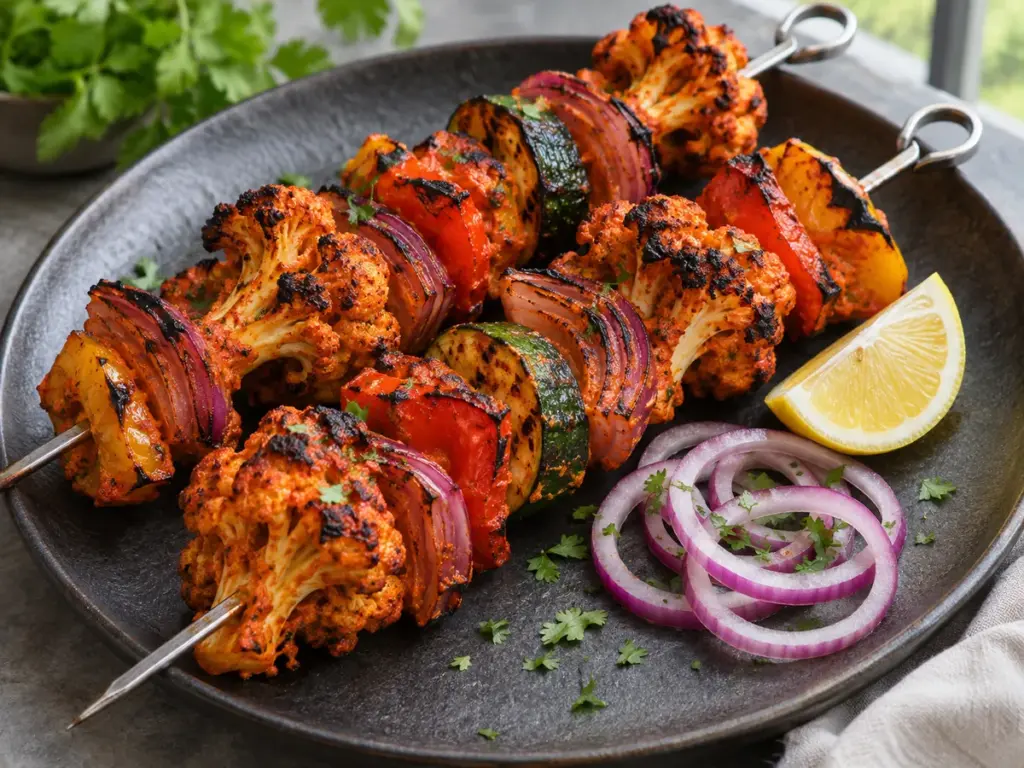
Vegetables such as peppers, onion and cauliflower take a yogurt and spice coating well, and a hot grill chars the edges the way a tandoor does. That char matches the chicken tikka, so the plate reads as one meal.
A squeeze of lemon right before serving brightens the smoke.
- The Curry Guy marinates broccoli, cauliflower and red onion.
- The marinade is yogurt, gram flour, garam masala, chilli powder and lemon.
- The florets are par-boiled for 2 to 3 minutes, then grilled over hot coals.
Full recipe: Tandoori Vegetables from The Curry Guy
8. Spiced Lentil Dal
Masoor dal is red lentils simmered with turmeric, chili and ginger until they break down into a thick stew. It is the vegetarian protein on the table, so dal with rice makes a full meal for a guest who skips the chicken.
- Red lentils need no soaking, so dal fits a weeknight.
- A handful of spinach or chopped tomatoes stirred in at the end adds color, and tomatoes add a little acidity.
- Dal thickens as it sits, so loosen leftovers with a splash of water when you reheat them.
Full recipe: Masoor Dal (Spiced Red Lentils) from NYT Cooking
9. Saag Paneer
Saag paneer is spinach cooked down with spices and cubes of paneer, a fresh Indian cheese that holds its shape in heat instead of melting. It is mild and creamy, which makes it the closest match to the main sauce. Choose it when you want something green and have skipped the dal.
Fresh spinach gives the best flavor, and a pinch of garam masala at the end rounds out the spices. Leave out the chili for a mild pot, or add it for a spicier one.
Full recipe: Saag Paneer Recipe from Cook with Manali
5 Which Crunchy Starters Go with Chicken Tikka Masala?
Crisp snacks open the meal instead of sharing the plate, so set them out with a spoon of chutney while the sauce finishes simmering.
10. Samosas
Samosas are pastry triangles filled with spiced potato and peas, and the crisp shell gives the table the crunch a soft curry lacks. If you would rather not deep-fry, you can bake samosas in the air fryer.
When you fry them, follow the recipe's oil temperature. Oil that is too hot browns the shell before the filling warms, and oil that is too cool leaves greasy samosas.
Tip
Samosas are filled with potato, so serve them as the starter and choose saag paneer, dal or tandoori vegetables, not aloo gobi, for the main plate.
11. Papadum with Chutney
Papadum are thin lentil crisps that puff and turn brittle when fried or toasted, and they cook very quickly. A spoon of tangy red onion chutney or mango chutney on a broken piece gives you a snack to eat while the curry simmers.
Papadum cook in seconds, so make them just before you set them out, and keep the uncooked discs in a dry jar.
Full recipe: Papadum with Red Onion Chutney and Mint Raita from Glebe Kitchen
6 Which Sides Should You Skip with Chicken Tikka Masala?
Keep these off a tikka masala table:
- A potato-only side. Bombay potatoes add more starch to a plate that already has a base.
- A second spiced rice. Pilau and biryani carry whole spices of their own and compete with the sauce.
- Two soft, saucy vegetable dishes. Dal and saag paneer together put a second thick sauce beside the first.
- A heavy fried snack. Onion bhajis or pakoras repeat the fried crunch of the samosas, and papadum is the only other crunch the table needs.
- A second yogurt sauce. A mint yogurt dip beside the raita gives you the same cool taste twice.
7 How Do You Time the Meal?
The curry, the rice and a dal each want a burner, so if you cook the curry in the Instant Pot, which needs 8 minutes at high pressure, the stove stays free for the sides.
- Set out the papadum and chutney. Put them on the table while the curry simmers, so guests have a starter in hand.
- Chill the raita. Grate and squeeze the cucumber, stir it into the yogurt and refrigerate it while everything else cooks.
- Start your vegetable side. Dal simmers on low heat and aloo gobi (leave it out when samosas are on the table) needs only an occasional stir, so either one runs beside the curry.
- Rest the rice. If rice is your base, let it stand covered for 5 minutes off the heat while you plate the curry.
- Cook the naan last. If bread is your base, cook it just before serving, because naan is best warm.
- Toss the kachumber. Mix the cucumber, tomato, onion and lemon right before the plates go out.
8 How Do You Store and Reheat the Leftovers?
Put leftovers in the refrigerator within 2 hours of cooking, or within 1 hour when the room is above 90°F, as the USDA FSIS leftovers guidance says.
Spread the curry and the rice in shallow containers so they cool quickly, and store them apart so the rice does not soak up the sauce.
- Curry, dal, saag paneer and rice: keep 3 to 4 days in the refrigerator.
- Naan: wrap it tightly and warm it in a dry skillet.
Reheat everything to 165°F on a food thermometer, and bring the curry sauce to a rolling boil. Raita and kachumber are served cold, so mix only what you will eat.
Because the curry and dal keep 3 to 4 days, you can cook both a day ahead. Rice, naan and kachumber taste best fresh.
Sources
- Leftovers and Food Safety, USDA Food Safety and Inspection Service

Andrew Gray is a seasoned food writer and blogger with a wealth of experience in the restaurant and catering industries. With a passion for all things delicious, Andrew has honed his culinary expertise through his work as a personal chef and caterer.
His love for food led him to venture into food writing, where he has contributed to various online publications, sharing his knowledge and insights on the culinary world. As the proud owner of CooksCrafter.com, Andrew covers a wide range of topics, including recipes, restaurant reviews, product recommendations, and culinary tips.
Through his website, he aims to inspire and educate fellow food enthusiasts, offering a comprehensive resource for all things food-related.