Short Answer
The best parchment paper substitute for baking is a silicone baking mat, which releases cookies and bars without any grease and washes clean for reuse.
- Without a mat, oiled aluminum foil or a greased pan (floured for cakes) does the same job.
- Wax paper has to stay out of the oven.
Parchment paper is a silicone-coated nonstick liner, and a stand-in has to release the food and survive the oven temperature you set. Among ingredient substitutes this one has no ratio to learn, only a temperature to respect.
1 What Does Parchment Paper Do in Baking?
A recipe that says "line the pan" is asking parchment for up to three things, and you only need a swap that covers the ones your recipe depends on:
- Release. Cookie dough, sticky bars and roasted vegetables lift off the silicone coating without tearing.
- A clean pan. The sheet sits between the batter and the metal, so cleanup is throwing the paper away.
- A handle. A strip of paper hanging over the sides of a brownie pan lifts the whole slab out in one piece.
Heat narrows the choice further. Reynolds rates its parchment up to 425°F and says the paper should not touch the oven racks, walls or any heating element, which already makes paper the wrong liner under a broiler. Foil is the one Reynolds says stands up to broiling and long roasts, so the temperature on your recipe card matters as much as what you are trying to keep from sticking.
2 Best Parchment Paper Substitutes for Baking
Silicone mats, oiled foil and a well-prepared pan all release food at oven heat, and each one fails in its own way, so you choose by the dish in your oven.
| Substitute | How to use it | Best for | What changes |
|---|---|---|---|
| Silicone baking mat | Lay it flat on the sheet, no grease | Cookies, bars | Thicker, chewier cookies; check the label for its temperature limit |
| Aluminum foil | Brush with oil, or use non-stick foil | Roasting, broiling, brownie slings | Cookies spread thin and crisp and can stick |
| Greased and floured pan | Grease, add a spoonful of flour, tap out the extra | Cakes, quick breads | A thin flour film stays on the crust |
| Bare or nonstick sheet pan | Space dough balls on the pan, no liner | Cookies made with plenty of butter | A few cookies may stick and need a spatula |
| Wax paper | Rolling and cold storage only | Rolling dough, wrapping sandwiches | Melts in a hot oven, so it cannot line a pan |
1. Silicone Baking Mat
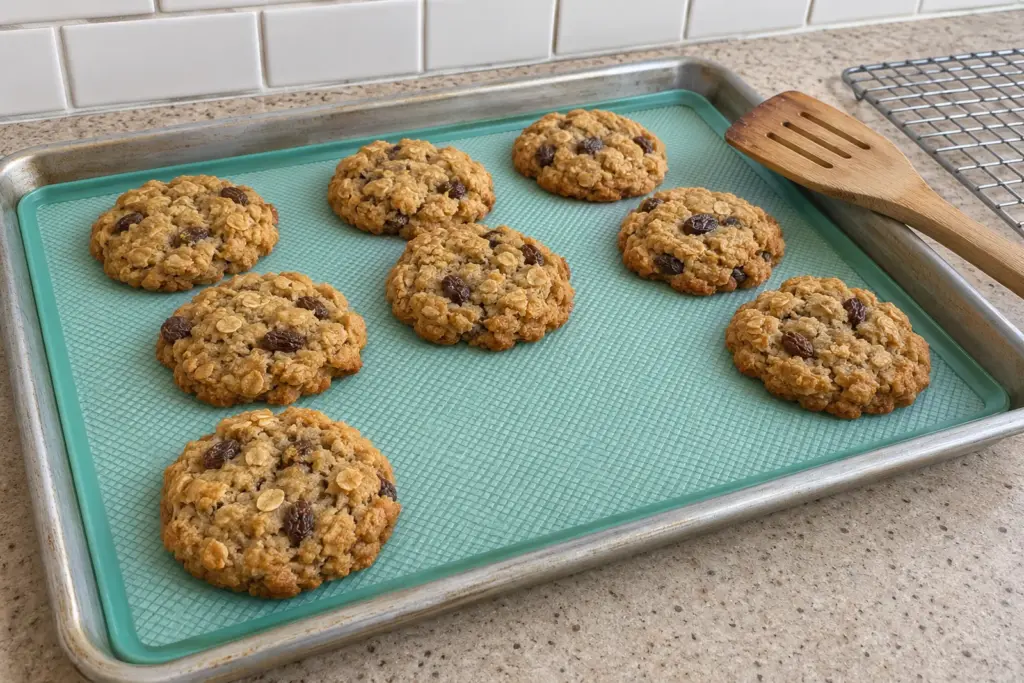
A silicone mat is the closest match because it releases food without grease and you wash and reuse it. In King Arthur's pan-liner test, cookies on a mat came out thicker and chewier with an even spread, and nothing stuck.
Oatmeal raisin cookies are a good fit, because the recipe for classic chewy oatmeal raisin cookies lines the sheet with parchment, so a mat takes the paper's place. Silpat lists its mats for use up to 428°F (220°C), which covers most cookie and bar recipes and a roast up to 425°F.
Warning
A broiler runs hotter than that rating, and other brands print their own limit on the package, so read yours before you set the oven.
2. Aluminum Foil, Oiled
Foil takes oven heat easily, but it has no nonstick coating, so Bob's Red Mill advises greasing it thoroughly. Cookies are where plain foil struggles. King Arthur found they spread the most on foil, baked very thin and crisp, and stuck to it in several cases, which matches Reynolds' remark that cookies baked on foil turn out browner and crispier.
Foil is much easier to use for roasting and bars:
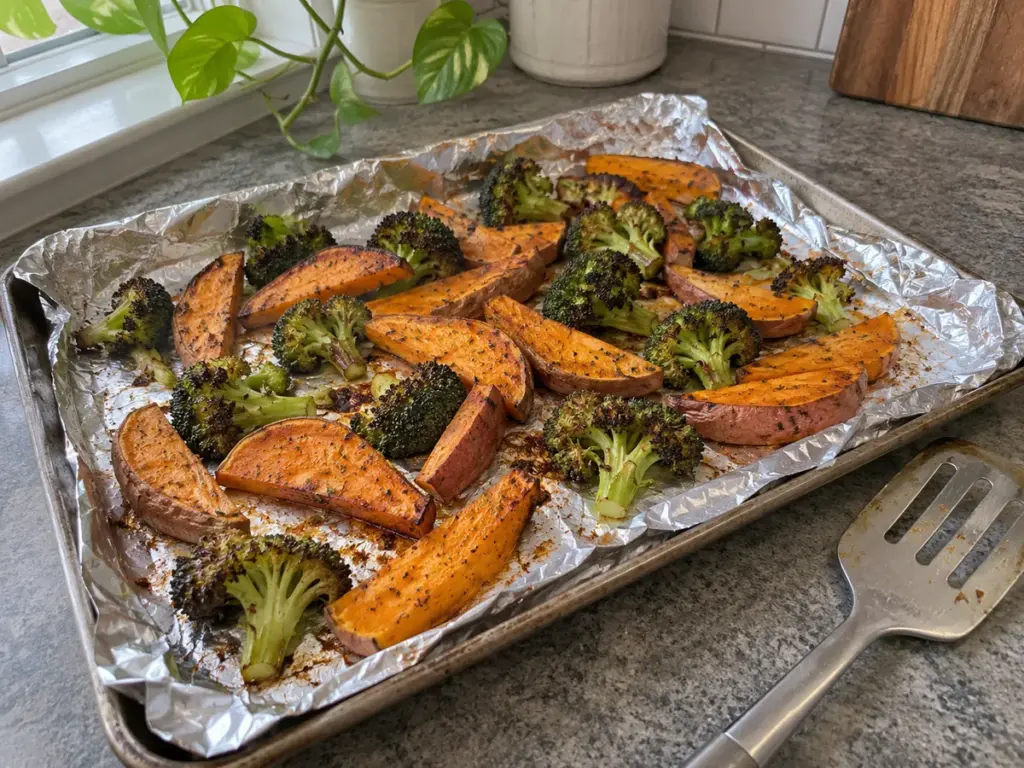
- Vegetables. Toss them in oil so they never sit on bare foil.
- Brownies. Press a greased sheet into the pan with the ends over the edges, then lift the cooled slab out, the same lift a parchment overhang gives S'mores cookie bars.
Reynolds also points to parchment over foil for acidic foods such as citrus or tomato sauce, so if your roast has lemon and tomatoes, an oiled pan is the better choice.
3. Greased and Floured Pan
Cakes and quick breads go back to the oldest method, a greased and floured pan, as Bob's Red Mill describes.
- Grease. Coat the pan with butter, shortening or oil.
- Flour. Sprinkle in a spoonful of flour.
- Tilt. Tilt the pan until the grease is covered.
- Tap. Tap the extra into the sink.
The dry flour gives the batter something to let go of, so your cake slides out when you turn the pan over. A mist of homemade oil-and-water nonstick spray can do the greasing.
Run a knife around the edge once the cake has shrunk slightly from the sides, and the pan will let go.
4. Bare Baking Sheet or Nonstick Sheet Pan
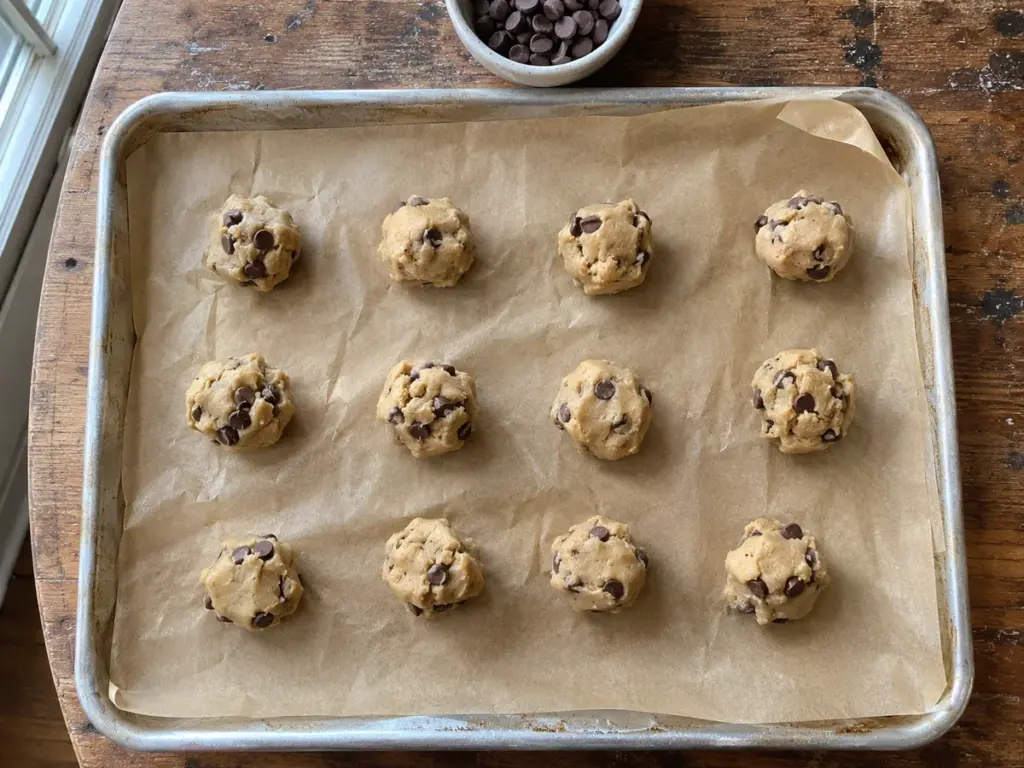
King Arthur called an ungreased bare sheet surprisingly successful: some cookies stuck slightly, but none broke. Cookie dough carries its own butter, which is the likely reason. A nonstick sheet pan lowers that risk further, and you can free any stubborn cookie with a thin metal spatula slid underneath. If you grease the sheet for cookies, the result gets worse: in the same test the edges burnt and fried in the fat, and the cookies still did not release easily.
On a bare pan, roasted vegetables need the oil on the vegetables themselves, and a lightly greased pan is enough even at 425°F, as it is for sheet pan roasted asparagus. Sugary glazes are the exception, because caramelized sugar welds to bare metal, so a sticky glaze belongs on foil or a mat.
3 Can You Use Wax Paper Instead of Parchment Paper?
Wax paper carries a coating of paraffin wax where parchment has silicone, and the wax cannot go in a hot oven. Bob's Red Mill says wax paper is not heat-resistant, so it should not be used for baking at all.
Warning
Reynolds says wax paper "will melt if exposed to excessive heat" and "should never come near the high heat of the oven or broiler."
Reynolds does not recommend wax paper in the oven and mentions it as a liner only where the dough or batter completely covers it, which is why a greased and floured pan is the safer choice here.
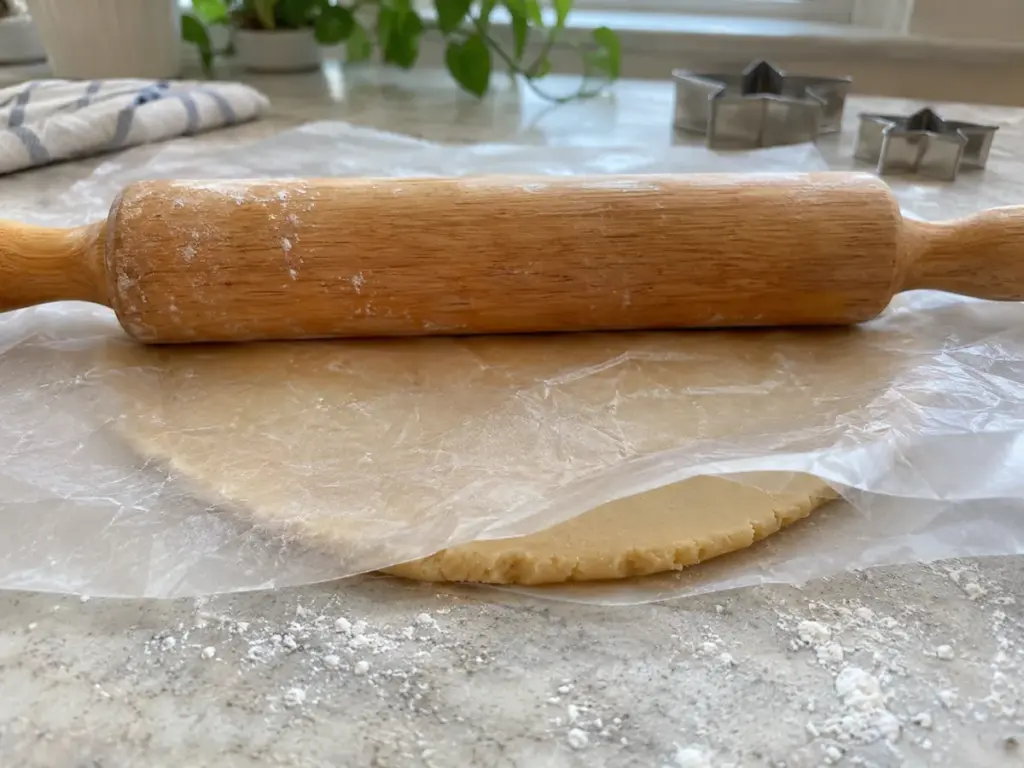
Wax paper earns its place at room temperature and in the fridge. You can roll cookie or pie dough between two sheets so it never sticks to the counter or the pin, wrap sandwiches to keep them from drying out, and separate cold items that would otherwise freeze into a block.
4 Which Substitute Should You Use for Cookies, Cakes and Roasting?
A mat gives thick, chewy cookies with an even spread, while foil gives the thinnest and crispest ones, so the cookie you want picks the liner.
Silicone Baking Mat
Cookies spread evenly and bake up thicker and chewier, and nothing sticks without grease.
You have to own one, and its printed limit (428°F for Silpat) sits below broiler heat.
Oiled Aluminum Foil
Foil stands up to broiling and long roasts, and a roll is already in most kitchens.
Cookies spread thin and crisp, and plain foil can stick to them.
Match the dish to the liner with this short list:
- Drop cookies: a silicone mat first, with a bare ungreased sheet second.
- Brownies and blondies: a greased foil sling, or just a greased pan. A lightly greased 9x13 pan is enough when you cut the slab in the pan, which is how sheet pan brownies can be baked.
- Cookie bars: a greased foil sling lifts them out the way a parchment overhang does.
- Cakes and quick breads: a greased and floured pan, and keep the wax paper in the drawer.
- Roasting vegetables and chicken: oiled foil or an oiled pan. At 425°F, as in sheet pan chicken with sweet potatoes, parchment and foil both work.
- Muffins and cupcakes: silicone baking cups are nonstick and need no extra liner, so they replace the pan and the paper cup together.
- Broiling: foil only, because paper cannot sit that close to the element, and you should keep every liner away from it.
Frequently Asked Questions
No. Reynolds says never to use parchment or wax paper in the broiler, because the element sits too close for paper. Foil is the liner Reynolds says stands up to broiling.
Bob's Red Mill does not recommend it, because foil on the oven floor can damage the oven. A sheet pan on the rack below the food catches drips instead.
Yes, with care. Reynolds says to preheat the air fryer first, then add the liner and the food together, keep the liner flat and away from the heating element, and use a liner made for air fryers (Reynolds rates its own to 400°F). A loose sheet in an empty, preheating basket can lift toward the element.
Sources
- Reynolds: Wax Paper vs. Parchment Paper
- Reynolds: Parchment Paper vs. Aluminum Foil for Baking
- Reynolds: Parchment Paper in an Air Fryer
- Bob's Red Mill: What Can I Use Instead of Parchment Paper?
- King Arthur Baking: Cookies spreading? It might be your pan lining
- Silpat: Full Size Baking Mat

Andrew Gray is a seasoned food writer and blogger with a wealth of experience in the restaurant and catering industries. With a passion for all things delicious, Andrew has honed his culinary expertise through his work as a personal chef and caterer.
His love for food led him to venture into food writing, where he has contributed to various online publications, sharing his knowledge and insights on the culinary world. As the proud owner of CooksCrafter.com, Andrew covers a wide range of topics, including recipes, restaurant reviews, product recommendations, and culinary tips.
Through his website, he aims to inspire and educate fellow food enthusiasts, offering a comprehensive resource for all things food-related.