Short Answer
Fontina is the closest Taleggio cheese substitute for cooking, and you swap it by weight, ounce for ounce.
- For a cheese board, put out Port Salut, which has an orange washed rind like Taleggio and a mild, creamy paste.
- Robiola, Brie, Camembert and Raclette also start at the same weight, and you can add more Brie if the dish tastes flat.
- Gorgonzola is the bold choice, so start at two-thirds of the weight because its blue tang is much stronger.
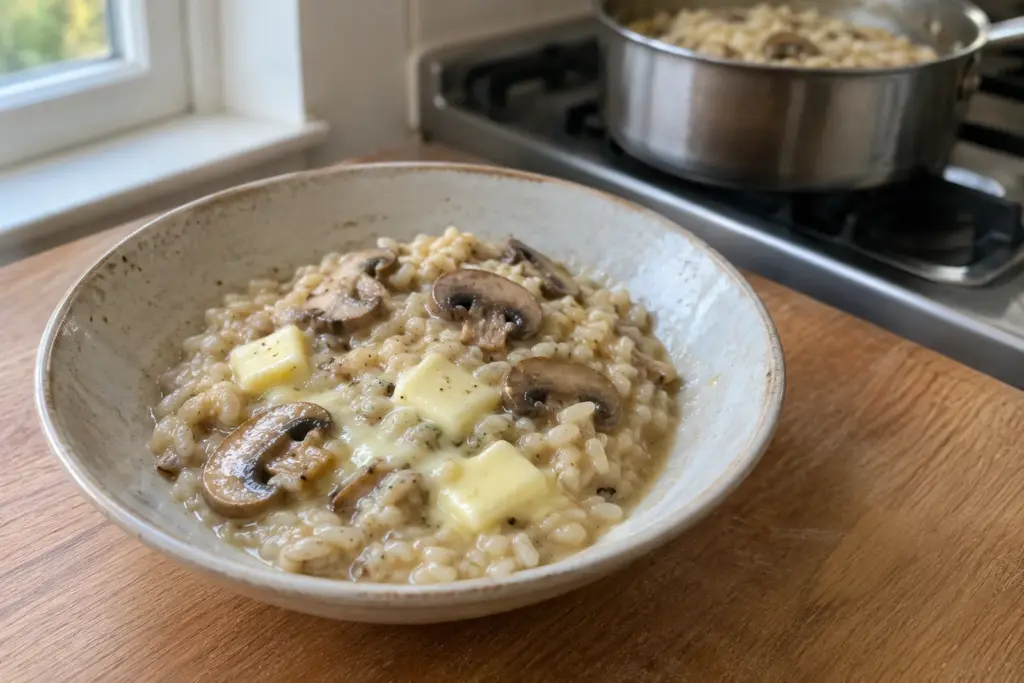
Taleggio smells much stronger than it tastes, so the best creamy cheese swaps keep its soft melt and mild, fruity tang and leave out anything sharp. That gives a swap two possible jobs. In risotto, polenta and pizza it has to melt smooth, and on a cheese board it has to slice clean, carry a rind and stand up next to fruit and nuts.
1 What Does Taleggio Do in a Recipe?
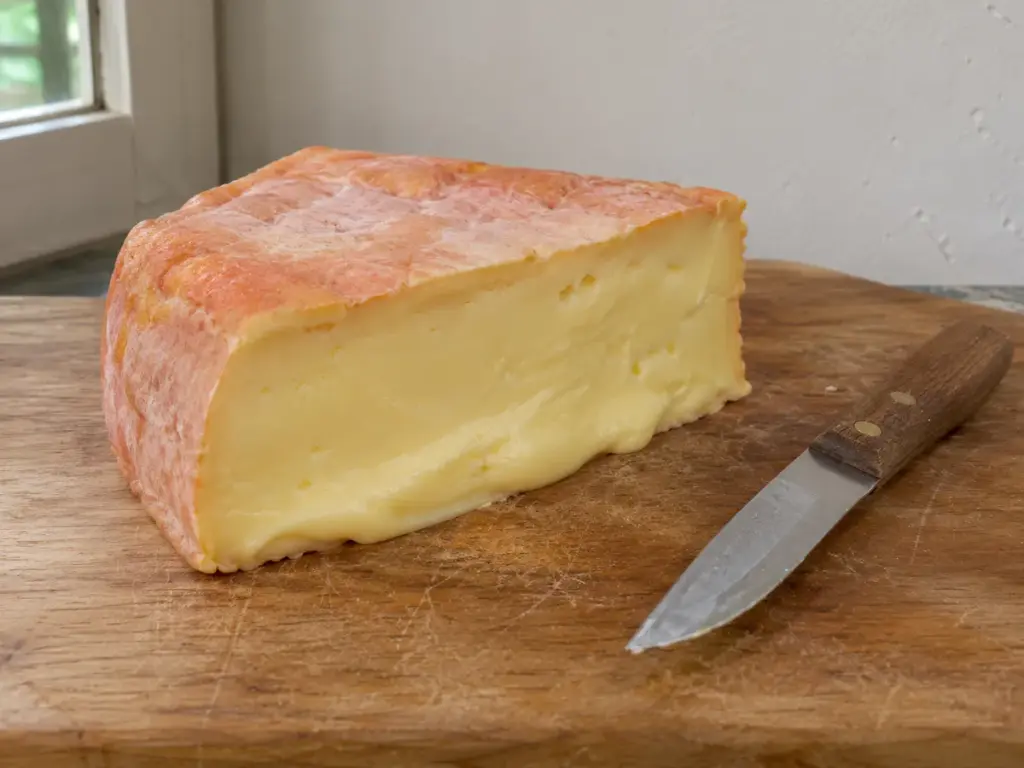
Taleggio is a square Italian cheese made from whole cow's milk in Lombardy, Piedmont and Veneto, and the protected name requires at least 35 days of aging, according to the consortium that guards it. During that time the rind is washed with brine, which gives the cheese its thin pink-orange skin and the funk you can smell from across the kitchen.
Inside, the paste is pale yellow and soft, and it melts well and browns nicely in a hot oven. The taste is milder and fruitier than the smell suggests.
The rind is edible, but it tastes stronger than the paste, so you can leave it on for a rustic melt and cut it off when you want a smooth, mild sauce.
A swap has to cover whichever of these jobs your dish depends on:
- It melts into a creamy pool in risotto, polenta and sauces, so your swap needs a soft paste.
- It adds a mild, fruity tang with a savory edge from the washed rind, which a plain cheese such as mozzarella does not have.
- It slices cleanly on a board and tastes best at room temperature, so a swap for your board needs its own rind and a creamy center.
2 Best Substitutes for Taleggio Cheese
Fontina and Port Salut sit closest to Taleggio, because both are semi-soft cow's milk cheeses with a smooth paste. The other five trade a little melt or tang for what a store near you is likely to carry, and you start every one at the same weight except Gorgonzola.
| Substitute | Start with | Best for | What changes |
|---|---|---|---|
| Fontina | Same weight | Risotto, polenta, soups, panini | Nuttier, and Danish fontina is milder |
| Port Salut | Same weight | Cheese boards, sandwiches | Mild paste, smooth orange rind |
| Raclette | Same weight | Cheese sauces, omelettes, melting over potatoes | Firmer, so shred it |
| Robiola | Same weight | Boards, spreading on bread | Tangier, with a thin rind |
| Brie | Same weight | Soups, sauces, sandwiches | Buttery, with no washed-rind tang |
| Camembert | Same weight | Burgers, soufflés, baked potatoes | Earthier, with mushroom notes |
| Gorgonzola | Two-thirds of the weight | Pizza, salads, polenta, gnocchi | Blue tang, much stronger |
1. Fontina
Fontina is the nearest match for cooking because it is another soft, melting cow's milk cheese. Real Fontina Val d'Aosta is made from raw milk and ages at least 80 days, but the red-waxed Danish fontina sold in many US stores is pasteurized, aged for less time and milder, so taste a cube first.
Replace Taleggio with the same weight, for example 8 ounces for 8 ounces. The swap loses the washed-rind tang, and a spoonful of grated Parmesan brings back some of that savory edge. It works in soups, creamy sauces, panini and grilled sandwiches, risotto and pasta.
2. Port Salut
Port Salut is a semi-soft, pasteurized cow's milk cheese from the Pays de la Loire in France, and its smooth orange rind comes from washing, the same way Taleggio gets its color. The flavor is mild, so it gives your board the right look and a creamy bite but little tang of its own.
Use the same weight for a board or a grilled sandwich. Pair it with something sharp, such as sliced pear or a spoonful of mustard, so your plate does not taste flat.
3. Raclette
Raclette is a semi-hard cow's milk cheese from Switzerland and France, and the Valais version has a washed rind too. It was made to be melted, so it flows over potatoes and bread.
Raclette is firmer than Taleggio, so you should shred or slice it thin, and it will melt evenly into your sauce instead of staying in lumps.
Start at the same weight, and shred it so it melts evenly in these dishes:
- Cheese sauces, stirred in over low heat
- Omelettes, scattered over the eggs
- Boiled potatoes, the way a traditional raclette is served
4. Robiola
Robiola della Langhe, also sold as Robiola Bosina, is a square Piedmont cheese with a thin rind, made from cow's and sheep's milk. It is soft and creamy with a tangy finish, which means you can spread it on bread or serve it as a gentle board cheese.
Look for the square Bosina, because Robiola di Roccaverano is a goat's milk cheese that you will find tangier. Use the same weight as the Taleggio.
5. Brie
Brie is a soft cow's milk cheese from the Brie region east of Paris, with a white bloomy rind and a milder, less earthy flavor than Camembert. The center runs from slightly firm to gooey depending on age, and it tastes buttery rather than funky, so it replaces Taleggio's creaminess but not its tang.
Use the same weight and add a little more if your dish tastes flat. Cut the rind off before melting Brie into soup, so the pot stays smooth.
A whole round also bakes until the center runs, so Brie can open a party table as a baked cheese appetizer. Brie is also at home in these dishes:
- Tartines, spread thin under toppings
- Wraps and sandwiches, sliced cold or melted
- Sauces, with the rind cut off
6. Camembert
Camembert comes from Normandy in a smaller wheel than Brie, with the same white bloomy rind, but its flavor is stronger and earthier, with notes of mushroom. The paste stays creamy when it melts. Use the same weight, and trim the rind for a soufflé so your batter stays smooth.
Camembert suits burgers, where you lay slices on the patty at the end, as well as soufflés and baked potatoes.
7. Gorgonzola
Gorgonzola is an Italian blue cow's milk cheese. The creamy dolce style is the milder one and the piccante style is sharper, so you should buy dolce when it stands in for a cheese as gentle as Taleggio.
Start with two-thirds of the weight, which means 2 ounces of Gorgonzola for every 3 ounces of Taleggio, because the blue tang is much stronger.
In a salad, you crumble dolce over sliced pears, as in a salad of pears and Gorgonzola. It also suits:
- Pizza, dotted on in small pieces
- Polenta and gnocchi
3 Which Taleggio Substitute Fits Your Dish?
A hot dish needs a cheese that melts smooth, and a cold board needs a wedge that slices clean and keeps a rind.
Fontina for hot dishes
It melts smooth into risotto, polenta, sauces and pizza at the same weight as the Taleggio.
It has no orange rind and less tang, so your cold board looks plain with it.
Port Salut for boards
It slices clean and carries a washed orange rind, which gives a board the look of Taleggio.
It has little tang of its own, so your hot dish loses some of the flavor Taleggio brings.
Which Cheese Replaces Taleggio in Risotto?
Fontina is the first pick, at the same weight. When you cook a pot of mushroom risotto, you stir the cheese in after the rice is tender, and cut the rind off so the rice stays creamy. Brie and Port Salut melt in the same way at the same weight once their rinds are trimmed.
Which Cheese Replaces Taleggio in Polenta?
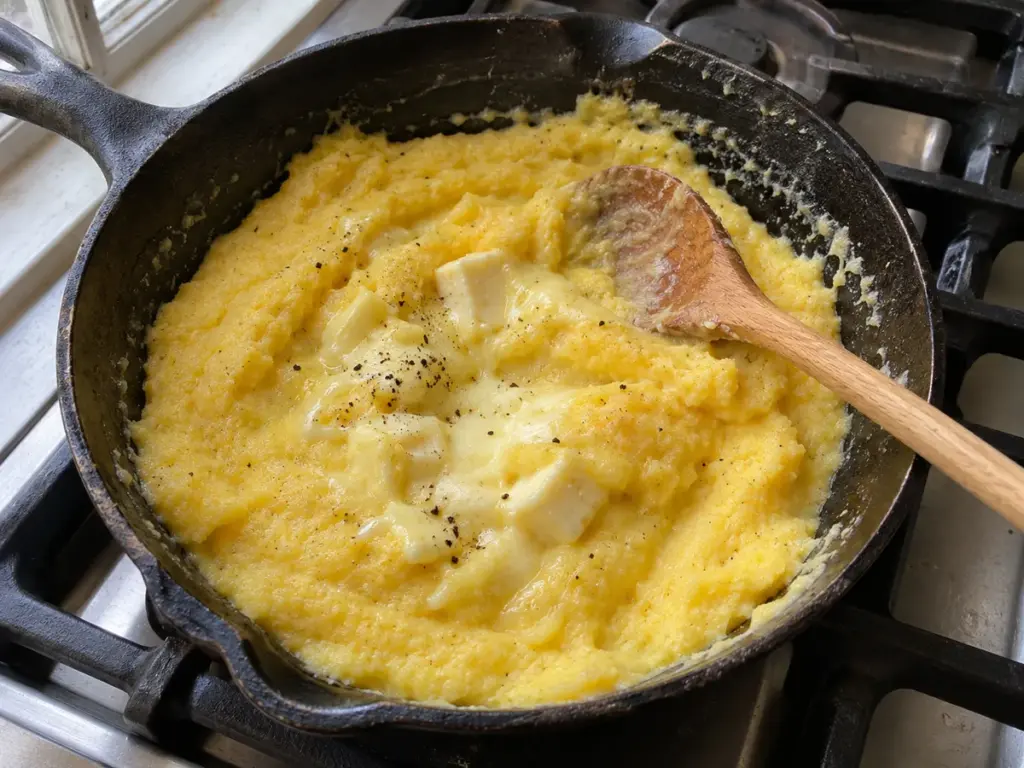
In soft polenta, you stir in Fontina at the same weight or Gorgonzola at two-thirds of the weight just before serving. Fontina also melts over firm polenta slabs, so lay a slice on while they are still hot from the air fryer.
Which Cheese Replaces Taleggio on Pizza?
Shredded Fontina and thin slices of Brie or Camembert melt into a layer at the same weight. You dot Gorgonzola on in small pieces at two-thirds of the weight, because a few pieces already flavor a whole pizza.
Which Cheese Replaces Taleggio on a Cheese Board?
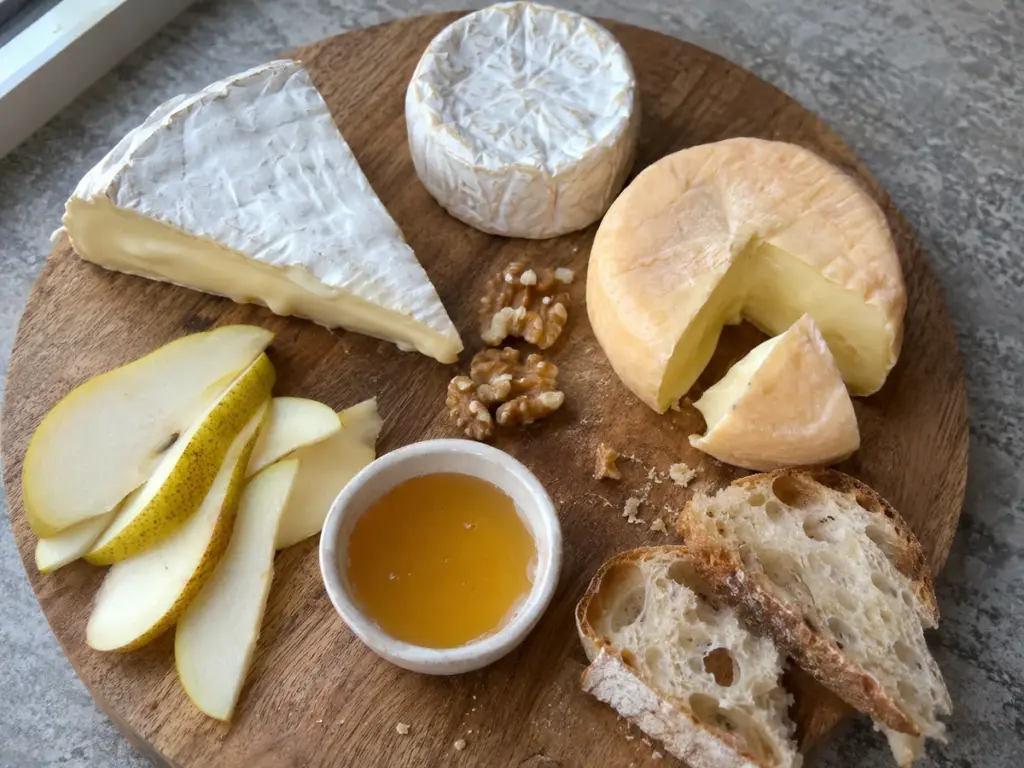
Port Salut gives your board the orange rind, Robiola adds a creamy tang to spread on bread, and Camembert brings the earthy notes. The consortium suggests apples or pears with Taleggio, and honey and nuts also suit Camembert.
Olives and crostini fill out the rest of the charcuterie board.
Warning
Soft cheeses such as Port Salut, Brie, Camembert and Robiola are perishable. Refrigerate them within 2 hours of setting them out, or within 1 hour when the room is above 90°F, and throw out any that sat out longer.
Frequently Asked Questions
Yes, the consortium says the Taleggio rind is edible, and the white rinds of Brie and Camembert are edible too. The rinds taste stronger than the paste, so trim them for smooth soups, sauces and soufflés.
Mozzarella melts, but it tastes plainly milky and has none of the fruity tang. Choose Fontina first, and use mozzarella only when nothing else is available.
Gorgonzola is much stronger and tangier than Taleggio, so you use two-thirds of the weight and buy the creamy dolce style. If you mix it with a milder cheese such as Brie, you balance its intensity.
Yes. Raclette melts well and has a buttery, slightly nutty flavor, which suits grilled cheese sandwiches and baked dishes that call for Taleggio's oozy texture.
Sources
- Consortium for the Protection of Taleggio: Taleggio
- CooksInfo: Taleggio cheese
- Valle d'Aosta tourism database: Fontina PDO
- CooksInfo: Danish fontina cheese
- Wikipedia: Port Salut
- Wikipedia: Raclette du Valais
- culture: Robiola della Langhe (Bosina)
- culture: What's the Difference Between Brie and Camembert?
- USDA FSIS: The Danger Zone (40°F to 140°F)

Andrew Gray is a seasoned food writer and blogger with a wealth of experience in the restaurant and catering industries. With a passion for all things delicious, Andrew has honed his culinary expertise through his work as a personal chef and caterer.
His love for food led him to venture into food writing, where he has contributed to various online publications, sharing his knowledge and insights on the culinary world. As the proud owner of CooksCrafter.com, Andrew covers a wide range of topics, including recipes, restaurant reviews, product recommendations, and culinary tips.
Through his website, he aims to inspire and educate fellow food enthusiasts, offering a comprehensive resource for all things food-related.