Short Answer
Low-sugar cookie recipes get their sweetness from a smaller amount of sugar, from honey, maple syrup or dates, or from a zero-sugar sweetener such as erythritol or monk fruit.
- For the least sugar, start with the keto peanut butter, espresso chocolate chunk or coconut macaroon recipes.
- These use erythritol or monk fruit and no sugar, honey or syrup in the dough.
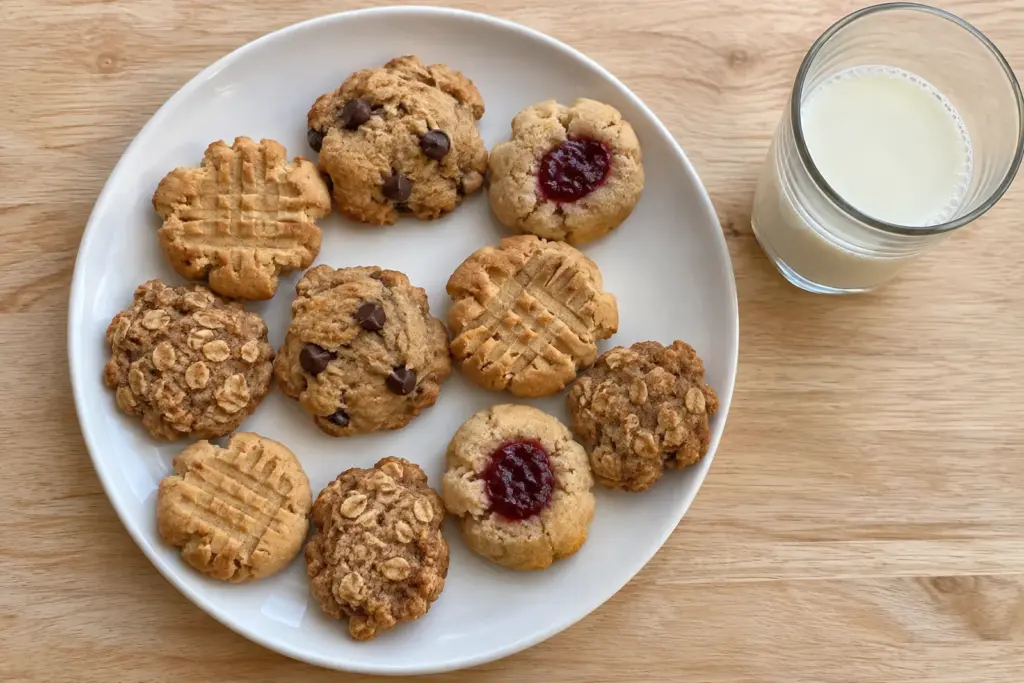
Cookies made with erythritol spread little and bake cakey, so they behave differently from the classic cookies among our dessert recipes, and the baking notes matter as much as the ingredient list. Each recipe names its sweetener and how much of it goes into the batch, and those two facts are what you compare from one cookie to the next.
What Counts as a Low-Sugar Cookie?
The FDA defines three sugar claims:
- “sugar free” means less than 0.5 g of sugars per serving
- “reduced sugar” means at least 25 percent less sugar than a reference food
- “no added sugars” means no sugar or sugar-containing ingredient such as jam or juice concentrate was added.
FDA has no definition for “low sugar,” so the sweetener list in each recipe is the honest measure you have.
On a Nutrition Facts label, added sugars include sugars from syrups and honey as well as table sugar, and the Daily Value is 50 grams a day for a 2,000 calorie diet, so honey, maple syrup and coconut sugar still count as added sugars when a recipe calls them natural. Sugar that comes inside whole fruit, such as the dates in the walnut cookies, counts toward total sugars, not added sugars.
For a yardstick, the original Toll House chocolate chip recipe uses ¾ cup of granulated sugar and ¾ cup of packed brown sugar with 2 ¼ cups of flour and makes about 5 dozen cookies, which is roughly ⅔ cup of sugar for every cup of flour.
Measured that way, every recipe that pairs real sugar or syrup with wheat or almond flour stays under the Toll House line, from about ⅙ cup per cup of flour in the flourless cocoa almond cookies to a little over ½ cup in the zucchini oatmeal cookies.
- Honey and syrup are liquids, so that comparison is approximate, and because the original recipes gave no yield, a grams-per-cookie figure would be a guess.
- That yardstick tells you only that a cookie has less sugar than a classic one.
- The FDA “reduced sugar” claim needs at least 25 percent less than the reference food, which on this rough measure is about ½ cup per cup of flour, so the zucchini cookies, at a little over ½ cup, would not qualify.
- The cranberry cookies sit right at that line before their dried cranberries are counted.
How Do Sugar Substitutes Change a Cookie?
King Arthur baked cookies with two erythritol-based sugar replacements and concluded that the replacements contribute nothing to structure, so its bakers suggested simply reducing the granulated sugar in a regular recipe. With nothing from the sweetener to hold them up, the zero-sugar doughs lean on nut butter, almond flour and eggs, and you press the keto peanut butter cookies flat with a fork before baking.
Without sugar in the dough, you give up some spread and chew, and a cookie that spreads and browns like a regular one needs some sugar, honey or syrup.
Erythritol, monk fruit or stevia blend
Adds no sugar to the dough, so the sweetener amount in the batch is the only number to check.
Little spread, a cakey or dry crumb and a possible cool aftertaste.
A smaller amount of sugar, honey or syrup
Spreads and browns the way cookie dough normally does.
Still counts as added sugars on a label.
You need to read the ingredient list on the bag as well as the sweetener name, because some granulated monk fruit products list erythritol first and some stevia baking blends contain cane sugar.
Honey browns faster than sugar and maple syrup darkens quickly, so when you replace refined sugar with either in a cookie you already bake, check your pan early.
Zero-sugar sweeteners also differ in how sweet they taste and how they brown:
- Erythritol is about 60 percent as sweet as sucrose by BakerPedia’s figure, and a review of the sweetener gives 60 to 80 percent, so a cup-for-cup swap tastes milder.
- It does not caramelize or join the browning reaction, which makes baked goods lighter, so set edges tell you more about doneness than color does.
Erythritol also dissolves less readily than sucrose, and it has a strong cooling effect when it dissolves in water. King Arthur stirred 1 teaspoon of molasses into each sugar-replacement cookie batch to stand in for the flavor of brown sugar, and by FoodData Central weights a teaspoon (about 7 g) holds about 5 g of sugars.
Monk fruit baking blends pair monk fruit extract with a bulk sweetener. Lakanto describes its classic blend as a proprietary formula of monk fruit extract and erythritol that measures 1 cup for 1 cup of granulated sugar, or ¾ cup per cup for a less sweet result (Lakanto baking guide).
Lakanto says dissolving the sweetener in warm butter, coconut oil or the recipe’s liquid before the dry ingredients go in lessens the cooling effect, and that cutting the amount too far changes the texture and structure of the bake. A creamed-butter dough like the lemon poppy seed cookie already dissolves it in fat, so cream the butter and sweetener well before the egg.
The two erythritol-based replacements gave two different doughs:
- Swerve (erythritol, oligosaccharides, natural flavors): deep brown, very little spread, a cakey, dry crumb and a cool mouthfeel the tasters found somewhat unpleasant.
- Truvia Cane Sugar Blend (erythritol, cane sugar, stevia leaf extract): golden brown and speckled, very little spread, a soft, cakey crumb and a good level of sweetness.
Both cookies suit you if you do not need a classic spreading cookie with crisp edges (King Arthur sugar alternatives article). Truvia contains cane sugar, so it is a reduced-sugar choice and not a zero-sugar one.
What Do Carbohydrates and Sugar Alcohols Mean for These Cookies?
The American Diabetes Association says the total carbohydrate line is the one to check when you count carbs, because it includes sugar, starch and fiber, and FDA adds that Total Carbohydrate also includes sugar alcohols (ADA label guide, FDA Total Carbohydrate). A cookie with no sugar can still carry a lot of carbohydrate.
- Flour alone gives the espresso chocolate chunk dough about 95 g of carbohydrate from its one cup (125 g), even though the dough has no sugar.
- With 1 ½ cups of flour, the pumpkin spice dough carries about 143 g of carbohydrate before the pumpkin is counted.
- Even the keto peanut butter dough gets about 57 g of carbohydrate from its cup of peanut butter (258 g), 13 g of it fiber.
- Almond flour runs far lower: the ¾ cup in the lemon poppy seed dough (about 71 g of ground almonds) holds about 15 g, 9 g of it fiber.
Oats stack on top of flour in the oatmeal spice dough: about 55 g from its cup of rolled oats (81 g at 67.7 g of carbohydrate per 100 g) on top of the 72 g in its ¾ cup of flour.
In the walnut and date dough, the cup of chopped Deglet Noor dates (147 g) holds about 110 g of carbohydrate, 12 g of it fiber, and the ½ cup of sweetened dried cranberries in the cranberry walnut dough holds about 66 g.
All six figures come from FoodData Central and cover only the flour, nut or fruit base, so the erythritol grams come on top. Three label facts tell you how to read them:
- Sugar alcohols sit under Total Carbohydrate, and a sugars claim means the label must list their grams (21 CFR 101.9).
- The federal calorie factor for erythritol is 0 calories per gram, so a zero-calorie sweetener can still add carbohydrate grams.
- "Net carbs" is undefined by FDA and not recommended by the ADA, so ask a dietitian how to count fiber and sugar alcohol.
On digestion, a review of erythritol rates its tolerance as high and names flatulence and laxation as the symptoms of overconsumption (PubMed Central review). It gives no gram limit for erythritol, only for other polyols such as sorbitol (osmotic diarrhea above 50 g a day) and lactitol (bloating above 20 g in one dose), and those numbers cannot be borrowed for erythritol.
What Does the Erythritol Heart-Risk Study Say?
Cleveland Clinic researchers reported in 2023 that people with higher blood levels of erythritol had a higher risk of heart attack, stroke or death, in a study of more than 4,000 people in the U.S. and Europe (Cleveland Clinic report). In lab work erythritol also made platelets easier to activate and clot.
- The study is observational, so it shows an association and not that erythritol caused any event.
- After a drinking test with an amount like many processed foods hold, blood levels stayed elevated for days.
- The researchers call for longer safety studies, particularly in people at higher cardiovascular risk.
The study measured blood levels and did not test baked cookies, so it cannot tell you whether baking changes anything.
If you would rather avoid erythritol, it is the named sweetener in the keto peanut butter, espresso chocolate chunk and salted caramel recipes, and some monk fruit and stevia baking blends list it first. The honey, maple syrup and date cookies contain none.
Which Low-Sugar Cookie Should You Bake?
The sweetener sets how a dough bakes, so choose by that first and by oven time second. Most doughs bake at 350°F, a macaroon needs 20 to 25 minutes at 325°F, and the almond butter and peanut butter and jelly cookies are out in 8 to 10.
- 8 to 10 minutes: almond butter chocolate chip and peanut butter and jelly cookies.
- 10 to 12 minutes: keto peanut butter, pumpkin spice, espresso chocolate chunk, oatmeal spice, flourless cocoa almond, chia seed and coconut, cranberry walnut, salted caramel and matcha cookies.
- 12 to 15 minutes: lemon poppy seed, snickerdoodle, walnut and date, zucchini oatmeal and cinnamon roll cookies.
- Longer: maple pecan thumbprints take 12 to 15 minutes plus 2 to warm the filling, and biscotti take 25 minutes, then 12 to 15 minutes more.
Seven recipes use no wheat flour as written: the almond butter, keto peanut butter, flourless cocoa almond, lemon poppy seed, snickerdoodle, macaroon and peanut butter and jelly cookies.
- If you avoid wheat for celiac disease, still check the labels on chocolate chips, espresso powder and baking powder.
- For a wheat-free cookie that still uses sugar, coconut flour shortbread or almond flour peanut butter cookies are the closer fit.
- All 19 recipes use eggs or butter, so none is vegan as written.
When turning on the oven is the problem, berry chia seed pudding and frozen yogurt bark need no baking at all.
How Much Sugar Do the Sweeteners Hold?
USDA FoodData Central lists the sugars in 100 g of each ingredient and the weight of a cup, which together turn any recipe amount into grams.
| Sweetener | Sugars per 100 g | One cup weighs |
|---|---|---|
| Granulated sugar | 99.8 g | 200 g |
| Packed brown sugar | 97.0 g | 220 g |
| Honey | 82.1 g | 339 g |
| Maple syrup | 60.5 g | 315 g |
For a recipe amount, find the weight and multiply by the percentage: ¼ cup of honey is about 85 g, and 82.1 percent of that is about 70 g of sugars.
Other ingredients in the recipes hold this much sugar per 100 g:
- Sweetened dried cranberries: 72.6 g
- Medjool dates: 66.5 g
- Dark raisins: 65.2 g
- Dark chocolate, 60 to 69% cacao: 36.7 g
- Dark chocolate, 70 to 85% cacao: 24.0 g
These are database averages, so the label on your own jar is the number for your kitchen.
For seven of the recipes and the Toll House original, one batch gets this much sugar from its honey, syrup, brown sugar or white sugar. The flourless cocoa almond, maple pecan, salted caramel and cinnamon roll cookies give their own numbers in their sections.
| Cookie | Sweetener | Sugars |
|---|---|---|
| Almond Butter Chocolate Chip | ¼ cup honey | about 70 g |
| Oatmeal Spice with Maple Syrup | ⅓ cup maple syrup | about 64 g |
| Chia Seed and Coconut | ⅓ cup honey | about 93 g |
| Zucchini Oatmeal | ⅓ cup brown sugar, ¼ cup honey | about 141 g |
| Peanut Butter and Jelly | ½ cup brown sugar | about 107 g |
| Raspberry Almond Biscotti | ¾ cup sugar | about 150 g |
| Matcha Green Tea | ¾ cup sugar, 1 tablespoon honey | about 167 g |
| Toll House original | ¾ cup each, sugar and brown | about 310 g |
The Toll House recipe makes about 5 dozen cookies, which is about 5 g of sugars per cookie from the two sugars alone.
The other recipes give no yield, so compare batches and not cookies, and remember that dates, dried fruit, chocolate, preserves and coconut sugar add sugars these batch figures leave out.
To get a per-cookie number, divide the batch figure by the cookies your own batch makes: a batch holding 100 g of sugars that yields 25 cookies gives 4 g each.
FDA treats 5 percent of a Daily Value as low and 20 percent as high (FDA label guide), and the Daily Value for added sugars is 50 g, so 2.5 g of added sugars a cookie is the low mark, 10 g is the high mark, and a Toll House cookie at about 5 g is about 10 percent.
What Happens When You Trade Honey and Maple Syrup?
By the FoodData Central cup weights and sugars figures, honey holds about 17 g of sugars per tablespoon, 70 g per ¼ cup and 93 g per ⅓ cup, while maple syrup holds about 12 g, 48 g and 64 g.
- Maple syrup in place of the honey takes off about 22 g in the ¼ cup recipes, 29 g in the chia seed and coconut cookies and 5 g in the matcha cookies’ tablespoon.
- If you replace maple syrup with honey in the oatmeal spice cookies or the maple pecan thumbprints, the batch gains about 29 g.
Syrup and honey pour differently, so start with the same measure and judge the dough.
CDC says honey given to children younger than 12 months may cause botulism, and tells parents not to add honey to a baby’s food, though its page does not mention baked goods. The almond butter, chia seed and coconut and zucchini oatmeal cookies, and the honey versions of the cocoa almond and matcha cookies, are not for a baby under one (CDC infant nutrition).
Which Cookies Use Erythritol, Monk Fruit or Stevia?
The keto peanut butter, lemon poppy seed, pumpkin, espresso, macaroon and snickerdoodle cookies rely on erythritol, monk fruit or a stevia blend as written, so their doughs carry no sugar, honey or syrup.
The snickerdoodle stays that way only with erythritol, and the pumpkin cookies only with a stevia blend that has no cane sugar. Because these doughs barely spread, you shape each one by hand before it goes in the oven.
1. Keto Peanut Butter Cookies
Peanut butter, one egg and erythritol make up the whole dough, so a jar with added sugar would put sugar back into the cookies. Choose a natural peanut butter with only peanuts and salt on the label, and stir the oil back in before you measure, or your dough turns crumbly.
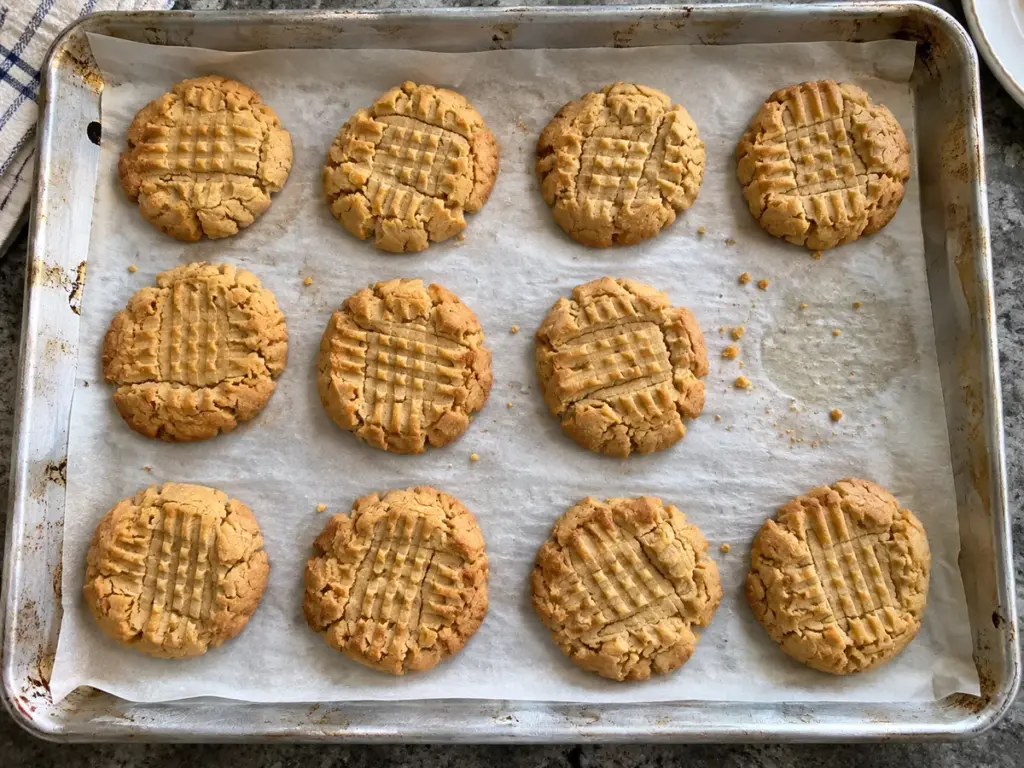
The fork marks stay because erythritol cookies spread very little. You pull the tray when the edges are golden while the centers still look soft, since they firm up as they cool.
Ingredients
- 1 cup natural peanut butter, oil stirred in
- ¾ cup granulated erythritol
- 1 large egg
- 1 teaspoon vanilla extract
- ½ teaspoon baking soda
- ¼ teaspoon salt
Instructions
- Heat the oven to 350°F (175°C) and line a baking sheet with parchment paper.
- Stir everything together in a large bowl until the dough is smooth.
- Scoop tablespoon portions 2 inches apart and press each with a fork in a crisscross pattern.
- Bake 10 to 12 minutes, until the edges turn golden. The centers stay soft until they cool.
- Cool 5 minutes on the sheet, then move the cookies to a wire rack.
Swaps
- Cashew butter or almond butter takes the peanut butter’s place in the same cup and gives you a different nut flavor.
- A monk fruit sweetener that measures cup for cup can stand in for the erythritol, and a blend that lists erythritol first bakes the same way.
- Almond extract can replace the vanilla at ½ teaspoon to start, and the first batch tells you whether to add more next time.
Because ¾ cup of erythritol adds no sugar, the only sugar in this batch comes from the peanut butter.
FoodData Central lists smooth peanut butter at 10.5 g of sugars per 100 g, and a cup weighs 258 g, so the cup in this dough holds about 27 g of sugars. That is a database average for one product, and the Added Sugars line on your own jar gives the real figure.
Sunflower seed butter makes a peanut-free dough, and at the same 10.5 g of sugars per 100 g in FoodData Central, a cup of it holds about 27 g either way.
2. Lemon Poppy Seed Cookies
You get the flavor in these cookies from lemon zest, because ¼ cup of granulated monk fruit sweetener gives only a light sweetness and the oils in the zest fill the gap. If your monk fruit bag lists erythritol first, this dough bakes like the keto peanut butter and espresso cookies, with soft, cakey centers and little spread.
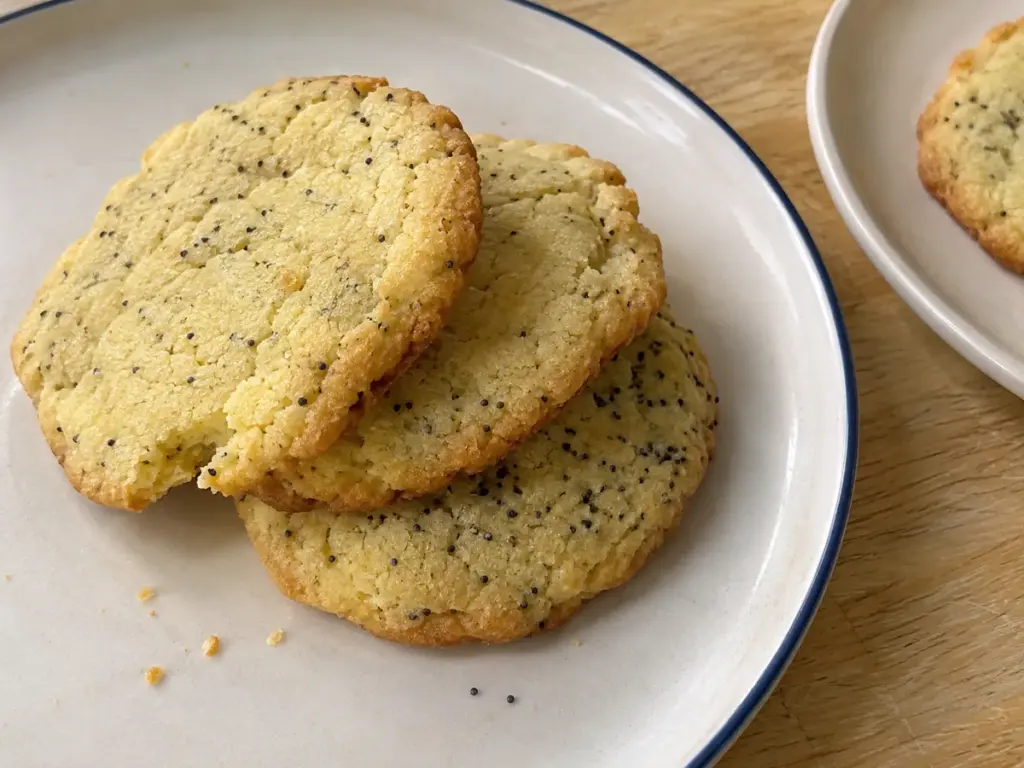
With no gluten in almond flour to hold the dough together, you flatten each scoop with the back of a spoon and let the cookies firm up on the sheet before you lift them.
Ingredients
- ½ cup unsalted butter, softened
- ¾ cup finely ground almond flour
- ¼ cup granulated monk fruit sweetener
- 1 large egg
- 2 tablespoons poppy seeds
- Zest of 1 lemon and 2 tablespoons fresh lemon juice
- ½ teaspoon baking powder
- ¼ teaspoon salt
- 1 teaspoon vanilla extract
Instructions
- Heat the oven to 350°F (175°C) and line a baking sheet with parchment paper.
- Cream the butter and sweetener until smooth and slightly fluffy, then beat in the egg, zest, lemon juice and vanilla.
- Whisk the almond flour, baking powder, salt and poppy seeds together and fold them into the butter mixture.
- Drop tablespoons of dough 2 inches apart and flatten each slightly.
- Bake 12 to 15 minutes, until the edges are lightly golden, then cool 5 minutes on the sheet before moving them to a rack.
Swaps
- Erythritol or a stevia baking blend can replace the monk fruit sweetener, though blends differ in how far a cup goes, so read the cup-for-cup line on the bag.
- Lime zest and juice turn the lemon cookie into a lime one in the same amounts.
At ¼ cup, this dough holds the least sweetener of the six zero-sugar cookies.
A fine grater lets you take only the yellow zest and leave the bitter white pith underneath.
In King Arthur’s tests, cookies made with 100 percent almond flour spread so much that they came out ⅛ inch thick and very fragile (King Arthur almond flour test). This dough is all almond flour too, so the 2 inches between scoops leave room in case yours spreads, and the cookies stay whole if they cool on the sheet.
King Arthur weighs a cup of almond flour at 3 ⅜ ounces against 4 ¼ ounces for all-purpose flour, and for a recipe not built on almond flour it suggests replacing only a quarter of the wheat flour, and warns that cookies and scones may spread more. It also found almond flour bakes stayed moist longer: doughnut muffins were still soft after 3 days while the standard muffins dried out.
3. Pumpkin Spice Cookies with Stevia
When you buy the canned pumpkin that keeps this dough moist, the can must say plain pumpkin puree, because pumpkin pie filling has sugar and spices added and puree has nothing added. The ¾ cup of stevia baking blend is a second label to read.
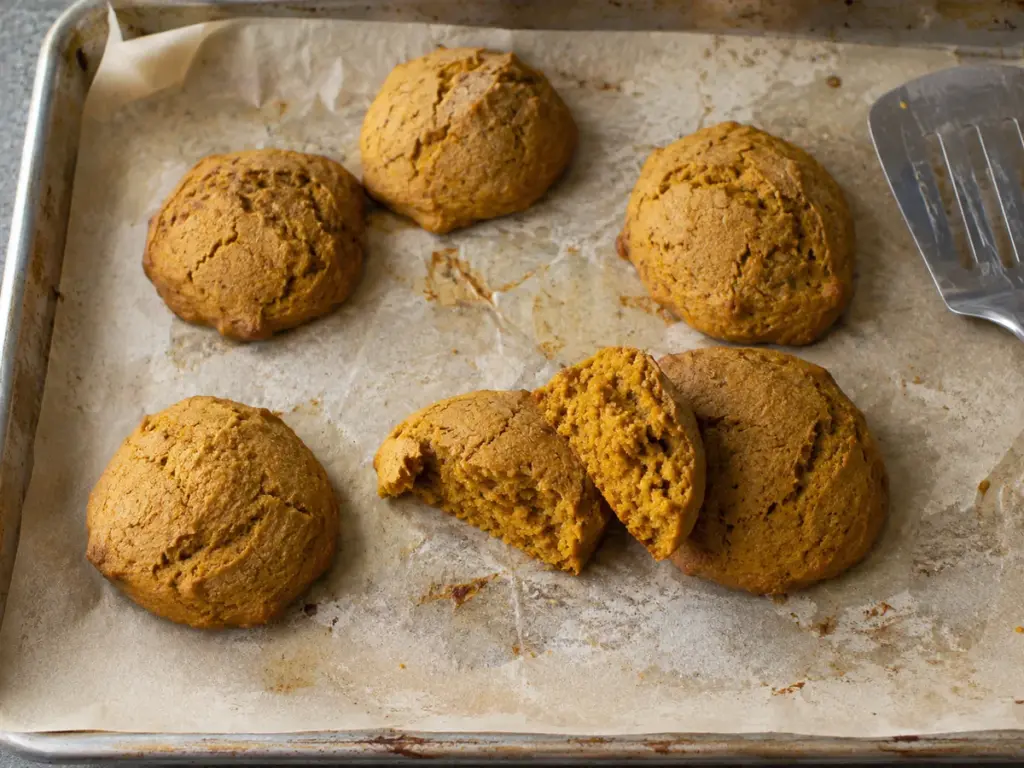
Blends made to replace sugar cup for cup are often bulked with erythritol, and some mix cane sugar into the stevia and replace sugar at half the volume, which changes both the amount you measure and how much sugar is in the dough. Pumpkin makes the crumb soft and cakey, closer to a muffin top than a chewy cookie.
Ingredients
- 1 cup plain pumpkin puree
- ½ cup unsalted butter, softened
- ¾ cup cup-for-cup stevia baking blend
- 1 large egg
- 1 ½ cups all-purpose flour
- 1 teaspoon baking soda
- ½ teaspoon salt
- 1 teaspoon cinnamon, ½ teaspoon ground nutmeg and ¼ teaspoon ground cloves
- 1 teaspoon vanilla extract
Instructions
- Heat the oven to 350°F (175°C) and line two baking sheets with parchment paper.
- Cream the butter and stevia blend until fluffy, then mix in the pumpkin, egg and vanilla.
- Whisk the flour, baking soda, salt and spices together and fold them in until no dry streaks remain.
- Scoop tablespoons 2 inches apart and flatten each ball slightly with your palm.
- Bake 10 to 12 minutes, until the edges are set and the centers are still soft, then cool 5 minutes on the sheets.
Swaps
- Canned butternut squash puree takes the pumpkin’s place for a similar texture, as long as the can lists squash only.
- Granulated erythritol replaces the stevia blend when its bag measures cup for cup, and unlike some blends it holds no cane sugar.
You whisk the nutmeg and cloves into the flour for an even spread, since even ¼ teaspoon of ground cloves is strong enough to taste in one bite.
The puree keeps the dough wet, so you wait until the edges are set before you pull the pan.
Canned pumpkin holds 3.3 g of sugars per 100 g in FoodData Central, so the 1 cup (245 g) adds about 8 g of sugars, the only sugar in a batch made with a cane-sugar-free blend.
4. Espresso Chocolate Chunk Cookies
Two tablespoons of espresso powder make the coffee strong enough to stand next to dark chocolate, and instant espresso is the kind that dissolves into the dough.
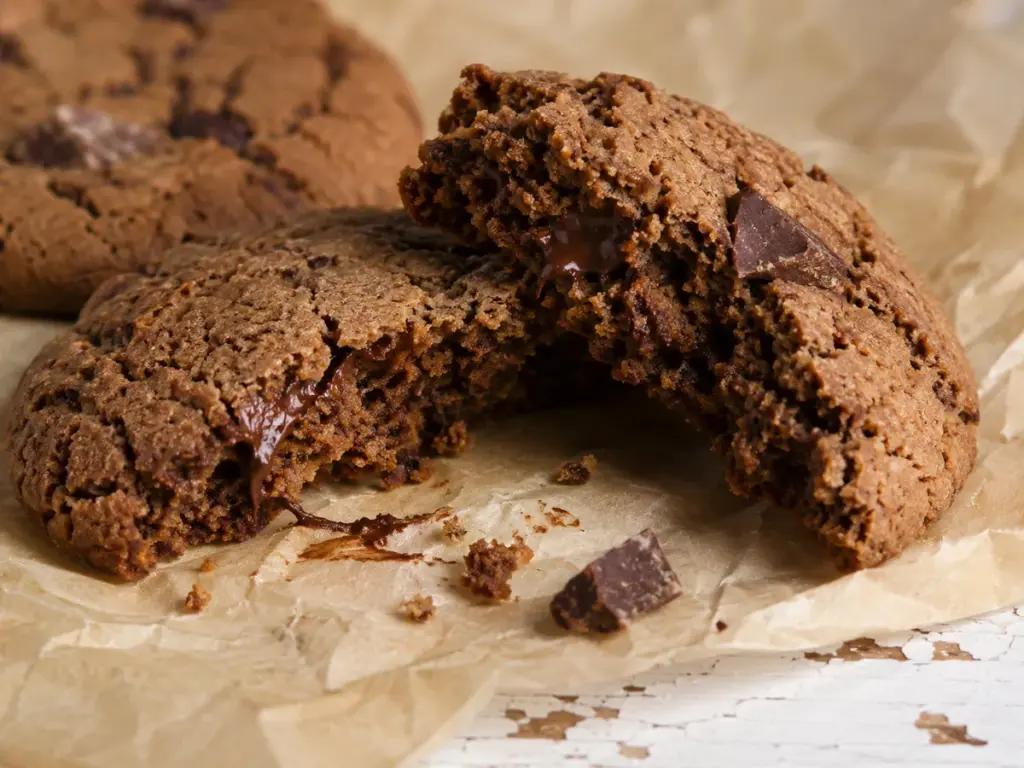
Erythritol replaces all the sugar in the dough, leaving the ¾ cup of chocolate chunks as the only added sugar in the cookie. A bar of 70 percent cacao or darker keeps that amount low, and sugar-free chips remove it.
Fold the chunks in last, and let the cookies cool on the sheet before you move them.
Ingredients
- ½ cup unsalted butter, softened
- ½ cup granulated erythritol
- 1 large egg
- 1 teaspoon vanilla extract
- 1 cup all-purpose flour
- ¼ teaspoon baking soda
- ¼ teaspoon salt
- 2 tablespoons espresso powder
- ¾ cup dark chocolate chunks
Instructions
- Heat the oven to 350°F (175°C) and line a baking sheet with parchment paper.
- Cream the butter and erythritol until light, then beat in the egg and vanilla.
- Whisk the flour, baking soda, salt and espresso powder together and stir them in until just combined.
- Fold in the chocolate chunks and scoop tablespoons 2 inches apart.
- Bake 10 to 12 minutes, until the edges are set and lightly golden, then cool on the sheet and finish on a rack.
Swaps
- Instant coffee granules give a milder coffee flavor than the espresso powder.
- Brown sugar at ½ cup in place of the erythritol puts about 107 g of sugars into the batch.
By FoodData Central’s weight of about 170 g a cup for chocolate chips, ¾ cup of chunks is roughly 128 g. From a 70 to 85 percent bar at 24.0 g per 100 g, that comes to about 31 g of sugars, and from a 60 to 69 percent bar at 36.7 g per 100 g, about 47 g.
Sugar-free chips swap one sweetener for another: the sugar usually moves to the sugar alcohol line, which sits under Total Carbohydrate on the label (FDA Total Carbohydrate). You need to read both lines on the bag before you count the chunks as free.
5. Vanilla Coconut Macaroons
Just 3 egg whites hold 2 ½ cups of coconut and ¾ cup of monk fruit sweetener together, with no flour, no butter and no sugar in the mixture. The coconut bag should say unsweetened.
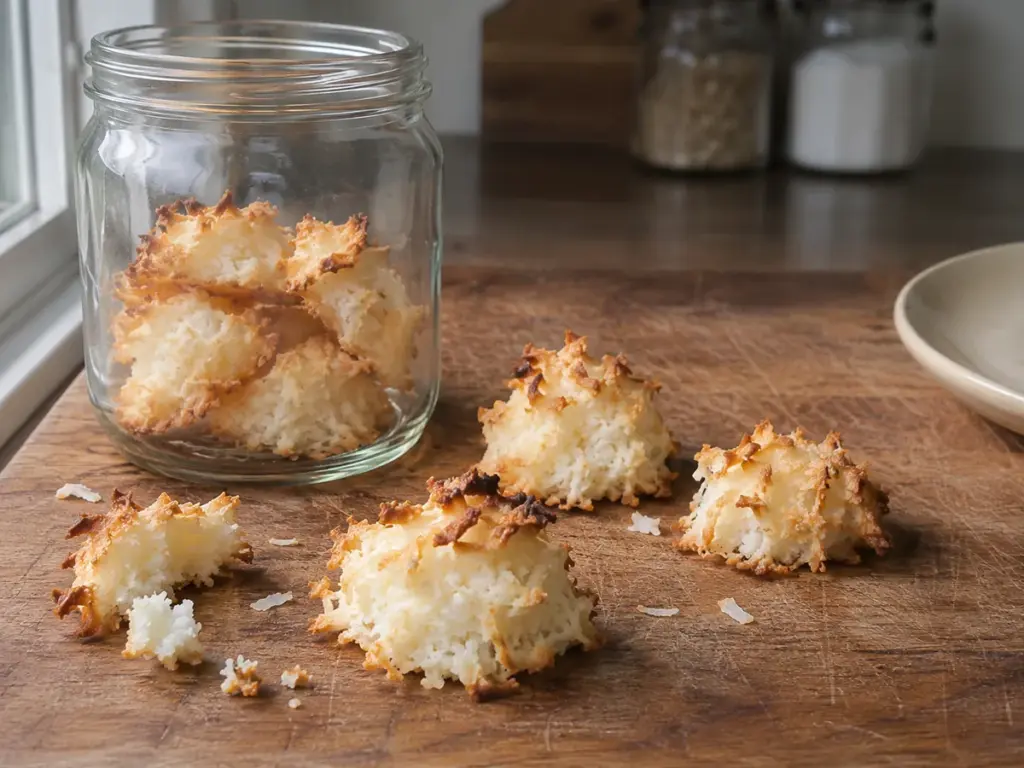
The whites need only a whisk until foamy, enough to coat the coconut and nothing more, and the macaroons bake at 325°F, a lower oven than the other cookies, until the edges turn golden brown.
Ingredients
- 2 ½ cups unsweetened shredded coconut
- ¾ cup granulated monk fruit sweetener
- 3 large egg whites
- 1 teaspoon vanilla extract
- ¼ teaspoon salt
Instructions
- Heat the oven to 325°F (165°C) and line a baking sheet with parchment paper.
- Stir the coconut, sweetener and salt together in a large bowl.
- Whisk the egg whites until foamy but not stiff, then fold them and the vanilla into the coconut.
- Drop level tablespoons 1 inch apart.
- Bake 20 to 25 minutes, until the edges are golden brown, and let the macaroons cool completely on the sheet.
Swaps
- Honey or maple syrup can replace the monk fruit sweetener, but a liquid loosens the mixture, so start with ¼ cup, then judge it. That adds about 70 g of sugars with honey or about 48 g with maple syrup to a cookie that has none.
- Vanilla bean paste gives a more intense vanilla than the 1 teaspoon of extract.
Sweetened shredded coconut is the swap to skip: FoodData Central lists it at 43.2 g of sugars per 100 g, against 7.35 g for unsweetened desiccated coconut. At 93 g a cup, the 2 ½ cups in this recipe would come to about 100 g of sugars.
Each level tablespoon needs a firm press of the spoon as it goes onto the sheet, or the loose mound falls apart there.
6. Snickerdoodle Cookies with Coconut Flour
Because coconut flour soaks up far more liquid than wheat flour, the ½ cup in this dough needs four eggs and half a cup of melted butter, and the dough comes out thick enough to roll into balls.
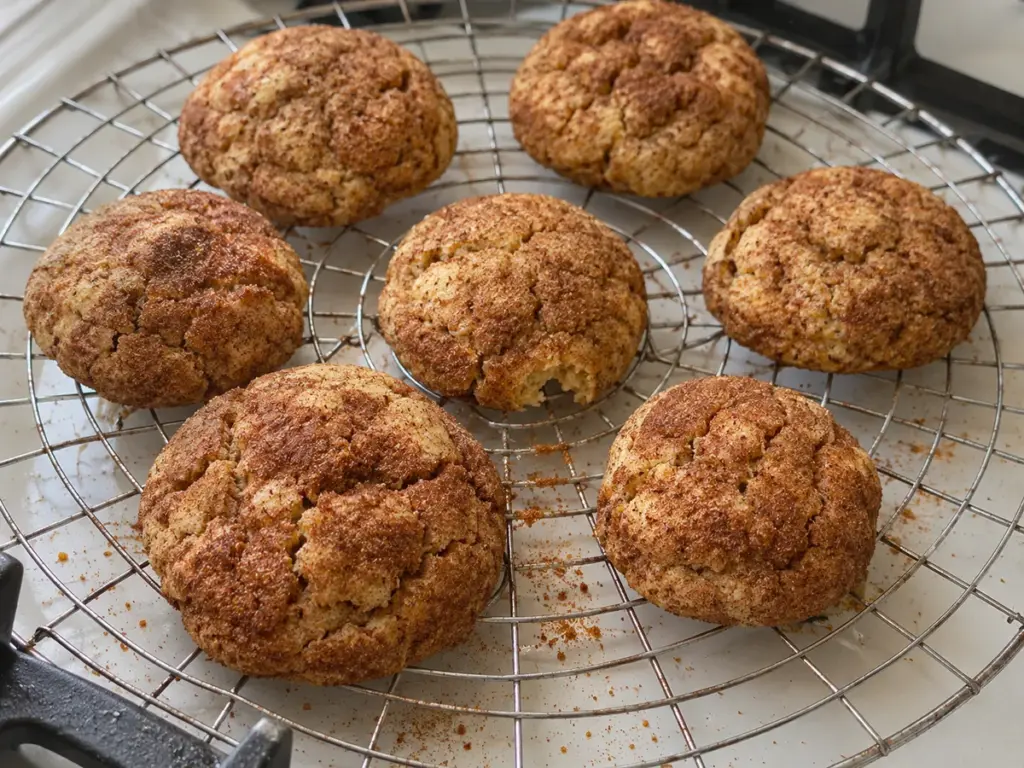
You choose the sweetener, and only erythritol keeps these sugar-free: with granulated sugar or coconut sugar, the dough holds ⅓ cup of real sugar and the coating another 2 tablespoons. Without cream of tartar and baking soda, the cookie loses the tang and lift that make a snickerdoodle.
Ingredients
- 4 large eggs
- ½ cup unsalted butter, melted and cooled
- ½ cup coconut flour, sifted
- ⅓ cup granulated sweetener (erythritol, coconut sugar or sugar)
- 1 teaspoon cream of tartar
- ½ teaspoon baking soda
- ¼ teaspoon salt
- Coating: 2 tablespoons of the same sweetener and 1 teaspoon ground cinnamon
Instructions
- Heat the oven to 350°F (175°C) and line a baking sheet with parchment paper.
- Whisk the eggs and butter, then stir in the sweetener, cream of tartar, baking soda and salt.
- Add the coconut flour a little at a time. The dough is thicker than usual but holds a shape.
- Roll 1-tablespoon balls in the cinnamon coating and set them 2 inches apart, then flatten each with your hand.
- Bake 12 to 15 minutes, until the edges are set and the centers are still soft, and cool on the sheet for a few minutes.
Swaps
- Granulated sugar puts about 67 g of sugars in the dough and 25 g more in the coating, about 92 g a batch by the FoodData Central cup weight and sugars figures.
- A pinch of nutmeg or cardamom in the cinnamon coating changes the spice.
Coconut flour keeps thickening as it sits. If the dough looks loose after you add the half cup, give it a few minutes before you add more.
King Arthur’s coconut flour cupcakes pair ½ cup of coconut flour with 6 eggs, and its author wrote that the flour absorbed liquid "like nothing I had ever seen" (King Arthur coconut flour cupcakes). The 4 eggs in this snickerdoodle dough do the same job, supplying the structure that wheat gluten would.
Which Cookies Use Honey, Maple Syrup or Dates?
Because honey and maple syrup are real sugars, these recipes use a small pour of syrup in place of a bag of sugar. Syrup is a liquid, which makes these doughs softer than sugar doughs and makes the cookies brown faster, so you watch the edges and pull the pan when they turn golden.
The dates in the last recipe bring their sugar along with the fruit.
7. Almond Butter Chocolate Chip Cookies
Only 1 cup of almond butter, ¼ cup of honey and an egg hold this dough together, and the cookies contain no flour or wheat as written. Nothing gives the dough structure, so it barely spreads, and you flatten each scoop yourself and leave the cookies on the hot sheet for 5 minutes before you lift them, or they tear.
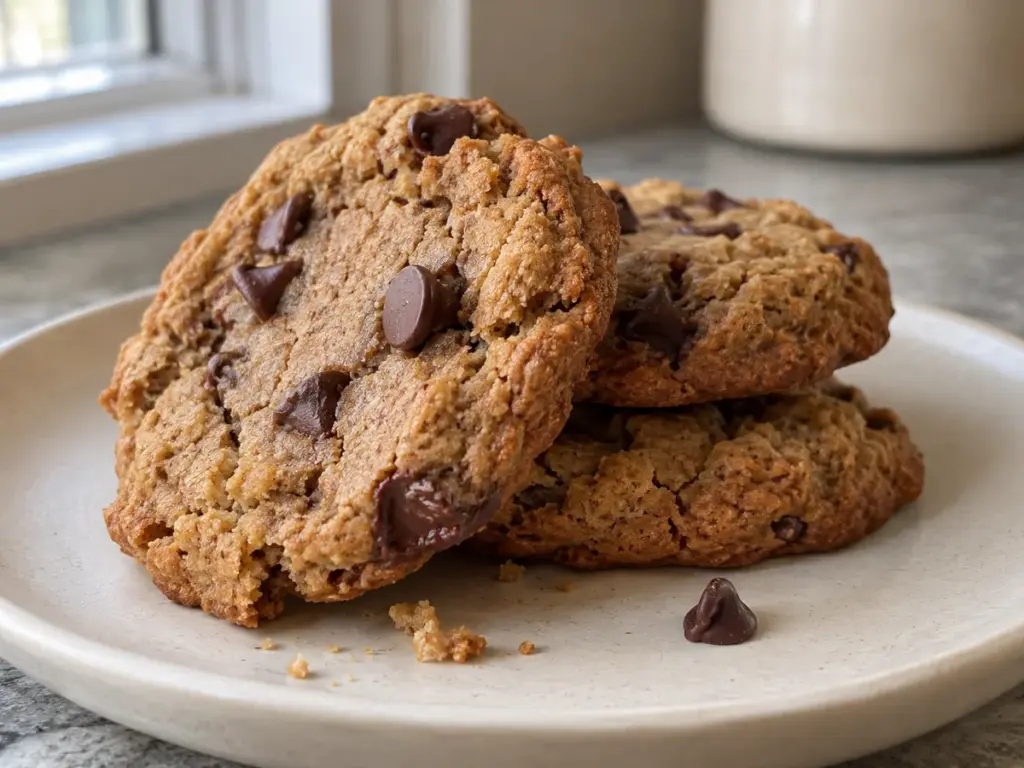
The ½ cup of dark chocolate chips is the second source of sugar.
Ingredients
- 1 cup almond butter, creamy or crunchy
- ¼ cup honey
- 1 large egg
- 1 teaspoon vanilla extract
- ½ teaspoon baking soda
- ¼ teaspoon salt
- ½ cup dark chocolate chips
Instructions
- Heat the oven to 350°F (175°C) and line a baking sheet with parchment paper.
- Stir the almond butter, honey, egg and vanilla until smooth, then mix in the baking soda and salt.
- Fold in the chocolate chips.
- Scoop tablespoons 2 inches apart and flatten each with the back of a spoon.
- Bake 8 to 10 minutes, until the edges are golden and the centers look set but soft, then cool 5 minutes on the sheet.
Swaps
- Peanut butter or cashew butter takes the almond butter’s place, starting with the same cup.
- Sugar-free chips take out the chips’ sugar, and a chopped dark chocolate bar works in their place too.
- Chopped nuts or unsweetened coconut add crunch.
With plain almond butter at only 4.43 g of sugars per 100 g in FoodData Central, the honey and the chips supply nearly all the sugar.
If the dough looks loose or oily, stir the jar well next time and chill the bowl for 20 minutes before scooping.
A cup of almond butter weighs about 250 g in FoodData Central and holds 11 g of sugars, against about 70 g in the ¼ cup of honey. Half a cup of chips weighs about 85 g and adds about 20 g with a 70 percent or darker bar and about 31 g with a 60 to 69 percent bar, so a batch lands near 100 to 112 g.
8. Oatmeal Spice Cookies with Maple Syrup
In this dough, maple syrup works as both sweetener and liquid: ⅓ cup of it, with ⅓ cup of butter and an egg, keeps 1 cup of rolled oats and ¾ cup of flour moist. Pancake syrup is mostly corn syrup with flavoring, so the bottle you buy should say pure maple syrup.
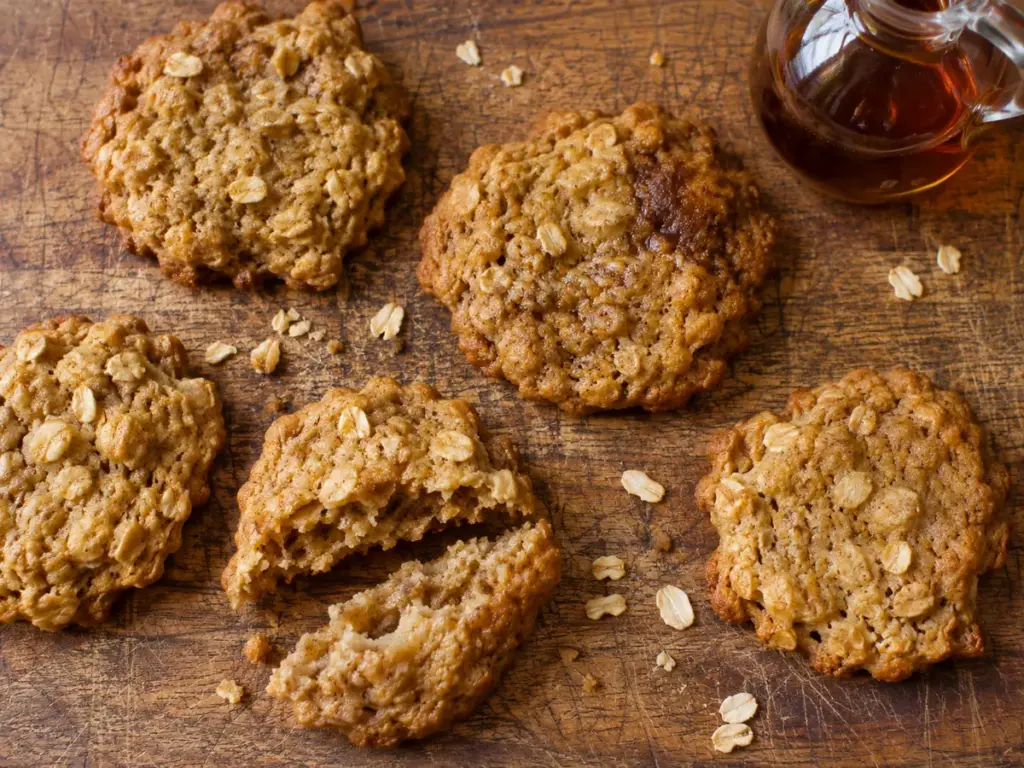
Ingredients
- 1 cup rolled oats
- ¾ cup all-purpose flour
- ½ teaspoon baking soda
- ½ teaspoon ground cinnamon and ¼ teaspoon ground nutmeg
- ¼ teaspoon salt
- ⅓ cup unsalted butter, softened
- ⅓ cup pure maple syrup
- 1 large egg
- 1 teaspoon vanilla extract
Instructions
- Heat the oven to 350°F (175°C) and line a baking sheet with parchment paper.
- Whisk the oats, flour, baking soda, spices and salt together.
- Beat the butter and maple syrup until smooth, then beat in the egg and vanilla.
- Stir the dry mixture into the wet one just until combined, since extra mixing toughens the cookies.
- Scoop spoonfuls 2 inches apart and flatten slightly.
- Bake 10 to 12 minutes, until the edges turn golden, and cool a few minutes on the sheet.
Quick oats replace the rolled oats when you are in a hurry, and the cookies come out softer.
9. Flourless Cocoa Almond Cookies
Almond flour, cocoa and ¼ cup of honey or maple syrup make a fudgy cookie with no wheat flour. Natural cocoa powder is the one to buy, since the dough is leavened with baking soda, which needs acid to react, and King Arthur explains that natural cocoa supplies that acid while Dutch-process cocoa has been alkalized and does not.
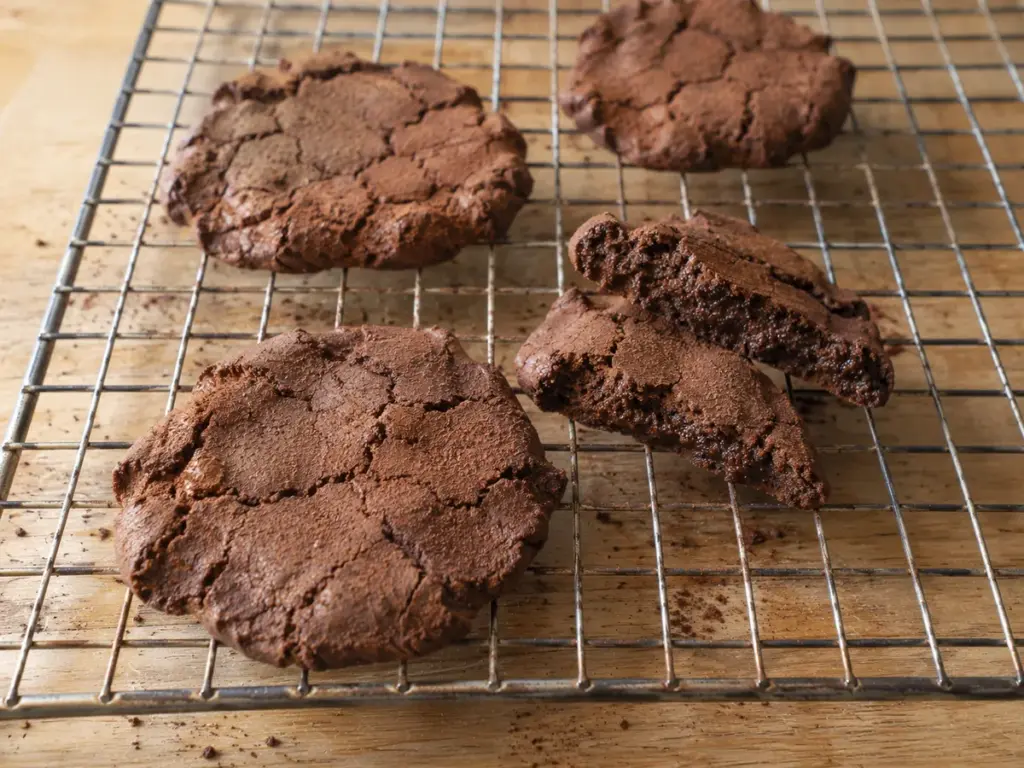
Wet fingers flatten each scoop of this thick, sticky dough without sticking to it. The cookies come out when the edges set and the centers still look soft, then stay on the sheet for 5 minutes because they crumble when hot.
Ingredients
- 1 ½ cups finely ground almond flour
- ⅓ cup unsweetened natural cocoa powder
- ½ teaspoon baking soda
- ¼ teaspoon salt
- ¼ cup honey or maple syrup
- 1 large egg
- ¼ cup almond butter
- 1 teaspoon vanilla extract
- Optional: ¼ cup dark chocolate chips or chopped nuts
Instructions
- Heat the oven to 350°F (175°C) and line a baking sheet with parchment paper.
- Combine the almond flour, cocoa, baking soda and salt.
- In another bowl, whisk the egg, honey, almond butter and vanilla until smooth.
- Fold the dry mixture into the wet one to make a thick, sticky dough, then add the chips or nuts if you use them.
- Scoop spoonfuls onto the sheet and flatten them slightly with your fingers.
- Bake 10 to 12 minutes, until the edges set and the centers stay soft, and cool 5 minutes on the sheet.
Finely ground hazelnut or cashew flour can replace the almond flour in the same measure.
King Arthur’s sugar-reduction tests found that cookies made with cocoa powder or unsweetened chocolate need more sugar: this dough tastes bittersweet by design.
The optional chocolate chips add sweetness back.
With no flour in the dough, the carbohydrate comes from the nut flour, cocoa and nut butter: 1 ½ cups of ground almonds (143 g), ⅓ cup of cocoa (about 29 g) and ¼ cup of almond butter (about 62 g) add up to about 59 g of carbohydrate, roughly 35 g of it fiber, by FoodData Central values. The honey or maple syrup comes on top of that.
10. Chia Seed and Coconut Cookies
The dough needs a 5-minute rest once it is mixed, because chia seeds swell as they absorb liquid and turn a sticky dough into one you can scoop. The 1 cup of coconut should be unsweetened, since sweetened flakes would add sugar to a recipe whose only other sweetener is ⅓ cup of honey.
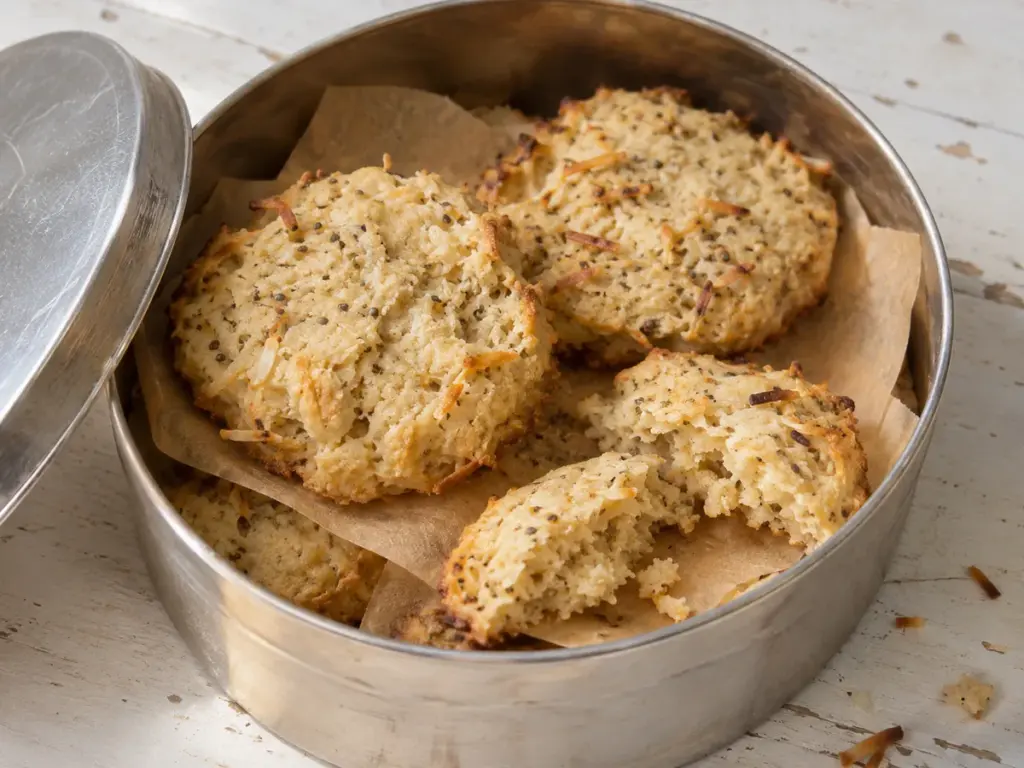
Melted coconut oil keeps the cookies moist, and you pull them when the edges look lightly golden and the centers are still soft.
Ingredients
- 1 cup unsweetened shredded coconut
- 2 tablespoons chia seeds
- 1 cup all-purpose flour
- ½ teaspoon baking soda
- ¼ teaspoon salt
- ¼ cup coconut oil, melted
- ⅓ cup honey
- 1 large egg
- 1 teaspoon vanilla extract
Instructions
- Heat the oven to 350°F (175°C) and line a baking sheet with parchment paper.
- Mix the coconut, chia, flour, baking soda and salt in a large bowl.
- Whisk the coconut oil, honey, egg and vanilla, pour them over the dry mixture and stir into a sticky dough.
- Rest the dough 5 minutes so the chia can absorb moisture.
- Scoop tablespoons 2 inches apart and flatten slightly.
- Bake 10 to 12 minutes, until the edges are lightly golden, and cool 5 minutes on the sheet.
Swaps
- Chopped pecans or almonds give a different crunch than the shredded coconut.
- Ground flaxseed can stand in for the chia seeds at the same 2 tablespoons, with the same 5-minute rest.
None of the other 18 cookies gets more sugar from honey or maple syrup than this one.
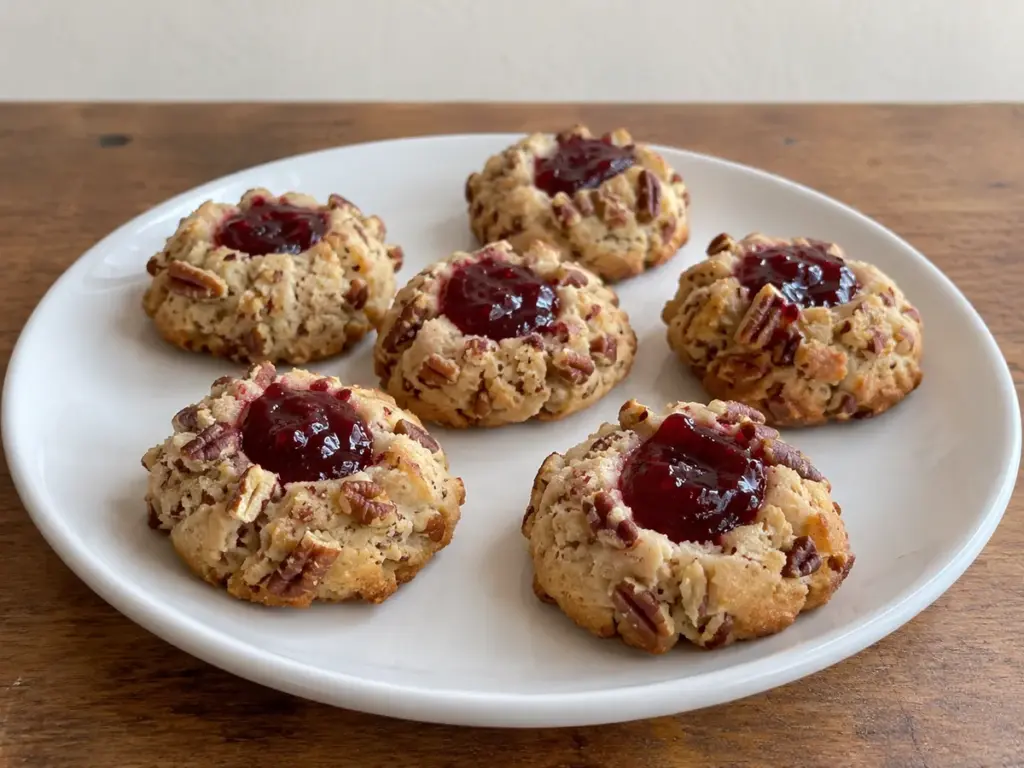
11. Maple Pecan Thumbprints
You sweeten this butter dough with ⅓ cup of maple syrup and nothing else, and finely chopped pecans give it crunch and a sandy crumb. The filling needs a label check, because preserves marked no sugar added can still be sweetened with fruit juice concentrate, and the FDA counts sugars from concentrated juice as added sugars: the ingredient list tells you whether the jar holds concentrate.
Bake the plain wells first, then spoon about ½ teaspoon of preserves into each one and return the pan for 2 minutes, just long enough to warm the filling.
Ingredients
- 1 cup pecans, finely chopped
- ½ cup unsalted butter, softened
- ⅓ cup pure maple syrup
- 1 teaspoon vanilla extract
- 1 ¼ cups all-purpose flour
- ¼ teaspoon salt
- ½ cup no-sugar-added fruit preserves
Instructions
- Heat the oven to 350°F (175°C) and line a baking sheet with parchment paper.
- Cream the butter and maple syrup until smooth, then stir in the vanilla.
- Mix in the flour and salt until just combined and fold in the pecans.
- Roll 1-inch balls, set them 2 inches apart and press a thumb into the center of each.
- Bake 12 to 15 minutes, until the edges are lightly golden, then fill each well with about ½ teaspoon of preserves and bake 2 minutes more.
- Cool 5 minutes on the sheet before moving the cookies to a rack.
Swaps
- Walnuts or almonds replace the pecans, chopped just as fine.
- Raspberry or apricot preserves change the center, and the label check stays the same.
The ⅓ cup of maple syrup holds about 64 g of sugars, the same as in the oatmeal spice cookies. Your filling adds sugars on top of that, even from a jar marked no sugar added.
If the wells crack as you press them, warm the ball in your palm first, and if they close in the oven, press them again as the pan comes out.
FoodData Central lists preserves sweetened with fruit juice at 42.0 g of sugars per 100 g and its no-sugar-added entry at 37.8 g, against 48.5 g for regular preserves, so no sugar added still means fruit sugar. At ½ teaspoon a well, that is about 0.9 g per cookie for the no-sugar-added entry and 1.6 g for regular preserves.
12. Walnut and Date Cookies
What sweetens this dough is 1 cup of pitted dates, chopped fine, and nothing from a bag or bottle. The fruit still brings its sugar, so these cookies are low in added sugars and still carry total sugars.
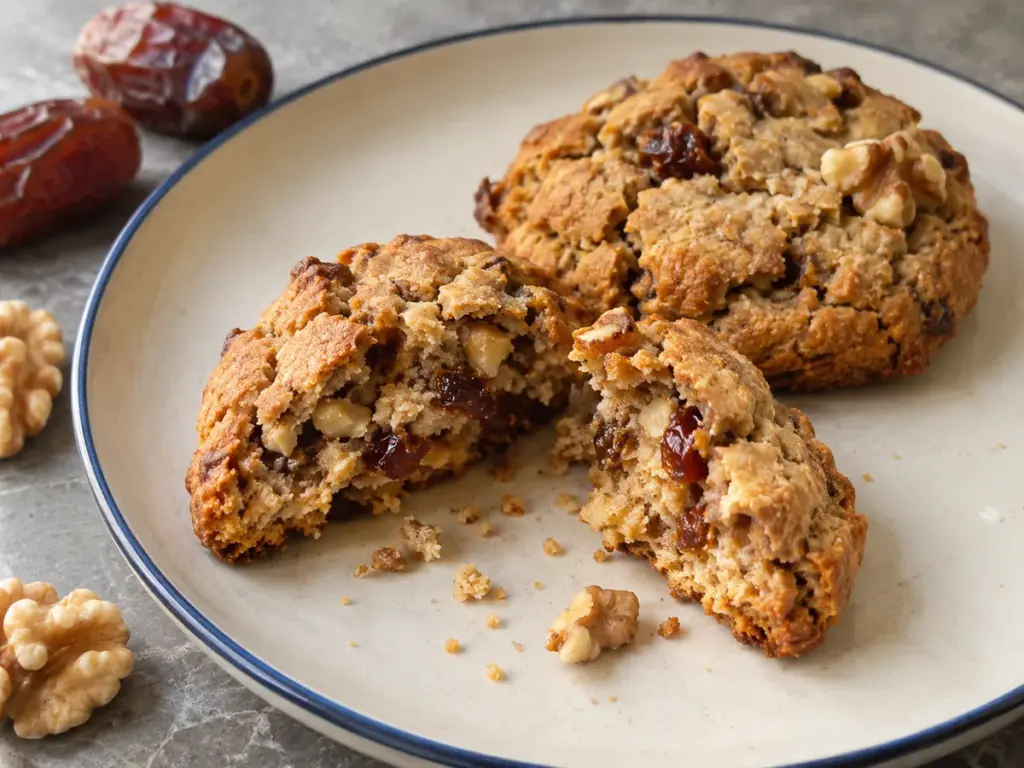
A fine chop keeps the dates from leaving wet pockets in the cookie. If your dates feel dry and stiff, soak them in hot water until they soften and drain them before you stir them into the oil and egg.
The ¼ cup of vegetable oil keeps the crumb soft, and melted coconut oil works too.
Ingredients
- 1 cup pitted dates, chopped fine
- ¾ cup chopped walnuts
- 1 cup all-purpose flour
- ½ teaspoon baking soda
- ¼ teaspoon salt
- ¼ cup vegetable oil
- 1 large egg
- 1 teaspoon vanilla extract
Instructions
- Heat the oven to 350°F (175°C) and line a baking sheet with parchment paper.
- Whisk the flour, baking soda and salt together.
- Beat the egg, oil and vanilla in a large bowl, then stir in the dates and walnuts.
- Add the dry mixture and stir until just combined.
- Scoop tablespoons 2 inches apart and flatten slightly.
- Bake 12 to 15 minutes, until the edges turn golden, and cool 5 minutes on the pan before moving them to a rack.
Pecans or almonds replace the walnuts.
FoodData Central lists Medjool dates at 66.5 g of sugars per 100 g, and one pitted date weighs 24 g, so each date in the dough holds about 16 g of sugars.
The dates carry this batch: a cup of chopped Deglet Noor dates weighs 147 g in FoodData Central and holds about 93 g of sugars (98 g if a Medjool cup weighs the same). How firmly you pack the cup changes that number, so weigh yours once and multiply the grams by 0.63 for Deglet Noor or 0.67 for Medjool.
Which Cookies Use Less Real Sugar?
Seven recipes keep real sugar in a smaller amount than a classic cookie, and a few pair it with a sugar-free sweetener. They suit you if you want a regular cookie texture and are willing to trade it for a few spoonfuls less sugar.
13. Cranberry Walnut Cookies
Cup for cup, coconut sugar for brown sugar saves nothing by itself, because coconut sugar is still sugar, with a mild caramel note. The saving comes from the quantity: ½ cup of coconut sugar for 1 cup of flour is about ½ cup of sugar per cup of flour, against ⅔ cup in the Toll House recipe.
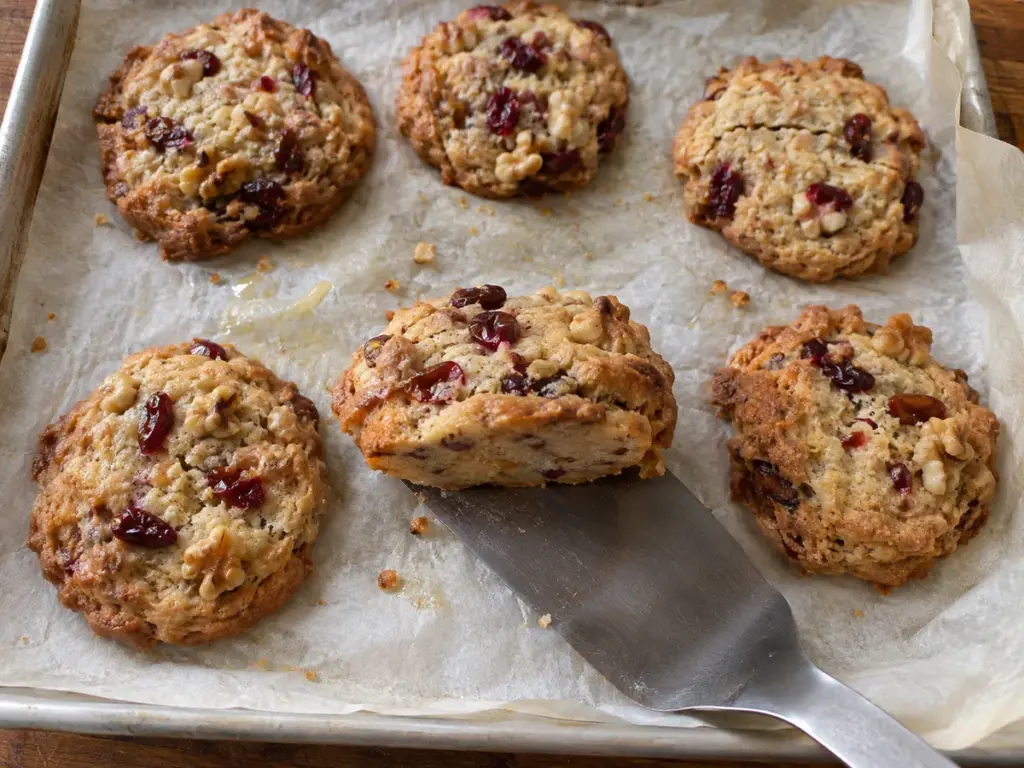
Dried cranberries add more because most are sweetened, unless your bag says unsweetened, and its added sugars line shows how much. Walnuts give you crunch against the chewy fruit.
Ingredients
- 1 cup all-purpose flour
- ½ teaspoon baking soda
- ¼ teaspoon salt
- ½ cup unsalted butter, softened
- ½ cup coconut sugar
- 1 large egg
- 1 teaspoon vanilla extract
- ½ cup dried cranberries
- ½ cup chopped walnuts
Instructions
- Heat the oven to 350°F (175°C) and line a baking sheet with parchment paper.
- Whisk the flour, baking soda and salt together.
- Cream the butter and coconut sugar until smooth, then beat in the egg and vanilla.
- Stir in the dry mixture just until combined, then fold in the cranberries and walnuts.
- Scoop rounded tablespoons 2 inches apart, since they spread.
- Bake 10 to 12 minutes, until the edges are lightly golden, and cool a few minutes on the sheet.
Swaps
- Pecans or almonds replace the walnuts.
- Dried cherries or raisins can replace the cranberries and carry their own sugar: dark raisins hold 65.2 g of sugars per 100 g (FoodData Central), and the label on a bag of cherries gives its figure.
Walnuts taste deeper when you toast them in a dry pan until fragrant and cool them before folding them in.
Sweetened dried cranberries weigh 40 g per ¼ cup in FoodData Central and hold 72.6 g of sugars per 100 g, which puts about 58 g of sugars in the ½ cup, a bigger decision than the walnuts.
14. Zucchini Oatmeal Cookies
Moisture in these cookies comes from grated zucchini, and ⅓ cup of brown sugar plus ¼ cup of honey sweeten 1 cup of flour and 1 ½ cups of oats, a little over ½ cup of sweetener per cup of flour and close to the ⅔ cup of the Toll House recipe.
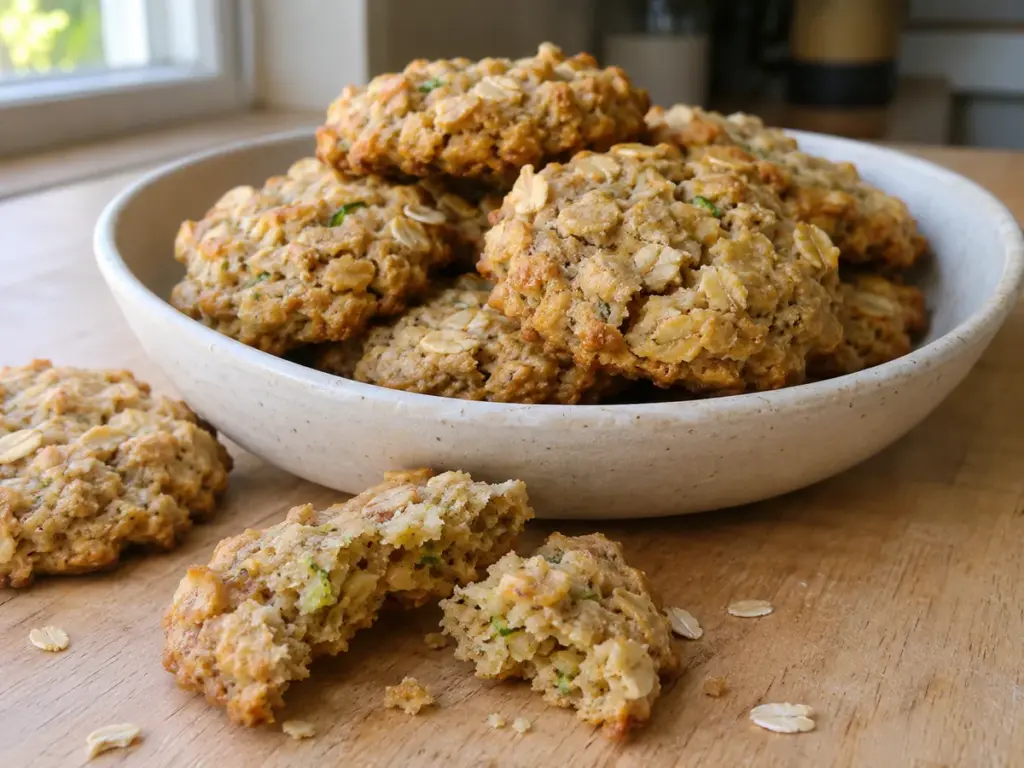
A squeeze in a clean towel before you measure the grated zucchini takes out the water that would loosen the dough and make the cookies pale and cakey. Old-fashioned oats give you the best chew, and the cookies are done when the edges turn golden and the center looks set.
Ingredients
- 1 cup grated zucchini, squeezed dry
- 1 ½ cups old-fashioned rolled oats
- 1 cup all-purpose flour
- ½ teaspoon baking soda and ½ teaspoon baking powder
- 1 teaspoon ground cinnamon
- ¼ teaspoon salt
- ⅓ cup brown sugar
- ¼ cup honey
- ¼ cup vegetable oil
- 1 large egg
- 1 teaspoon vanilla extract
Instructions
- Heat the oven to 350°F (175°C) and line a baking sheet with parchment paper.
- Combine the oats, flour, baking soda, baking powder, cinnamon and salt.
- Whisk the brown sugar, honey, oil, egg and vanilla in a separate bowl, then stir in the zucchini.
- Add the dry mixture a little at a time and mix just until combined.
- Drop spoonfuls 2 inches apart and flatten slightly.
- Bake 12 to 15 minutes, until the edges are golden, and cool 5 minutes on the sheet.
Swaps
- Whole wheat flour gives a nuttier flavor than all-purpose.
- Raisins add about 65.2 g of sugars per 100 g, and dark chocolate chips 24.0 to 36.7 g depending on the cacao percentage (FoodData Central); chopped nuts add crunch.
15. Salted Caramel Low-Sugar Cookies
Although it reads as a candy cookie, this one uses only ⅓ cup of brown sugar for 1 ¾ cups of flour, about ⅕ cup of real sugar per cup of flour, and the caramel in the center is sweetened with ⅓ cup of erythritol and cream.
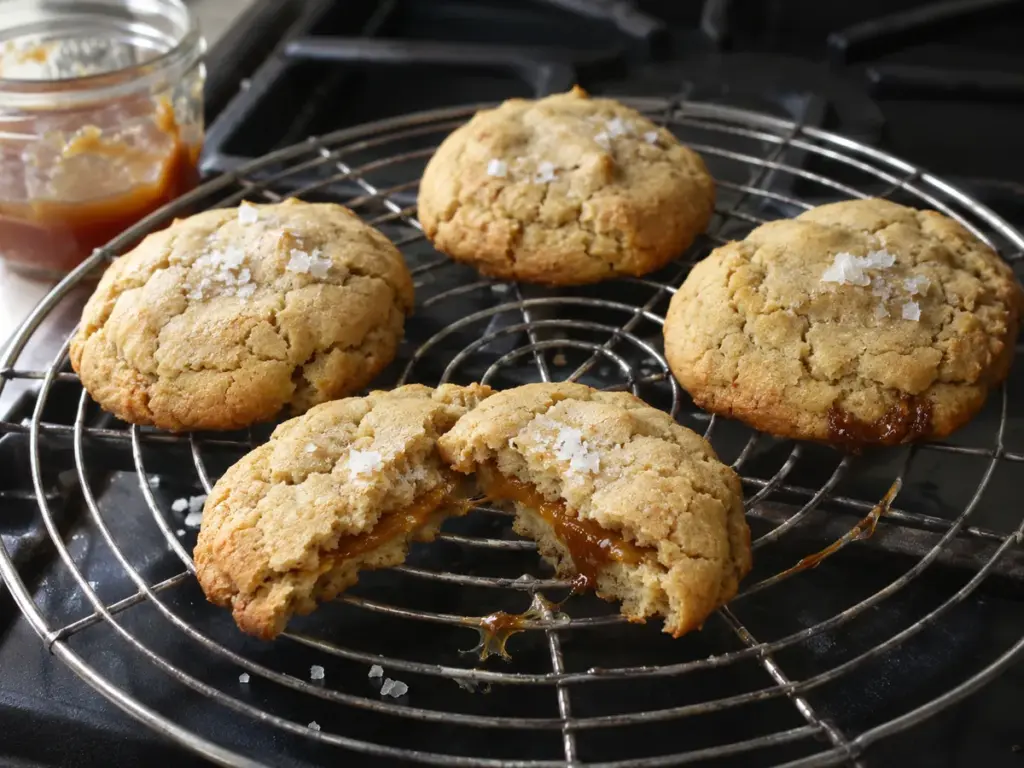
The ⅓ cup of brown sugar holds about 71 g of sugars, and the erythritol in the caramel adds none.
Make the caramel first and let it cool to room temperature before you seal it inside the dough, where warm caramel would leak through. If erythritol turns your sauce grainy as it cools, rewarm it briefly and whisk before filling.
Cream in the centers puts the baked cookies in the refrigerator, where the USDA gives cooked leftovers 3 to 4 days.
Ingredients
- 1 ¾ cups all-purpose flour
- ½ teaspoon baking soda
- ¼ teaspoon salt
- ½ cup unsalted butter, softened
- ⅓ cup brown sugar
- 1 large egg
- 1 teaspoon vanilla extract
- Caramel: ½ cup heavy cream, ⅓ cup granulated erythritol, 2 tablespoons unsalted butter, ¼ teaspoon sea salt plus more for the tops, 1 teaspoon vanilla extract
Instructions
- Heat the oven to 350°F (175°C) and line a baking sheet with parchment paper.
- Make the caramel: melt the erythritol and butter over medium heat, whisk in the cream and salt, simmer 2 to 3 minutes until slightly thickened, then stir in the vanilla and cool to room temperature.
- Whisk the flour, baking soda and salt. Cream the butter and brown sugar, beat in the egg and vanilla, then mix in the flour.
- Flatten 1 tablespoon of dough in your palm, add 1 teaspoon of caramel, cover with a second tablespoon of dough and seal into a ball.
- Set the balls 2 inches apart, sprinkle with sea salt and bake 10 to 12 minutes, until the edges are lightly golden.
- Cool completely on the sheet before moving them to a rack.
Granulated erythritol in place of the brown sugar removes about 71 g of sugars, but King Arthur’s tests with erythritol-based replacements found little spread and a dry, cakey crumb.
Flaky sea salt on top tastes sharper than table salt.
16. Peanut Butter and Jelly Sandwich Cookies
No flour goes into these: 1 cup of peanut butter, ½ cup of brown sugar and an egg bake into small, fragile cookies that need to cool completely before any jelly goes on.
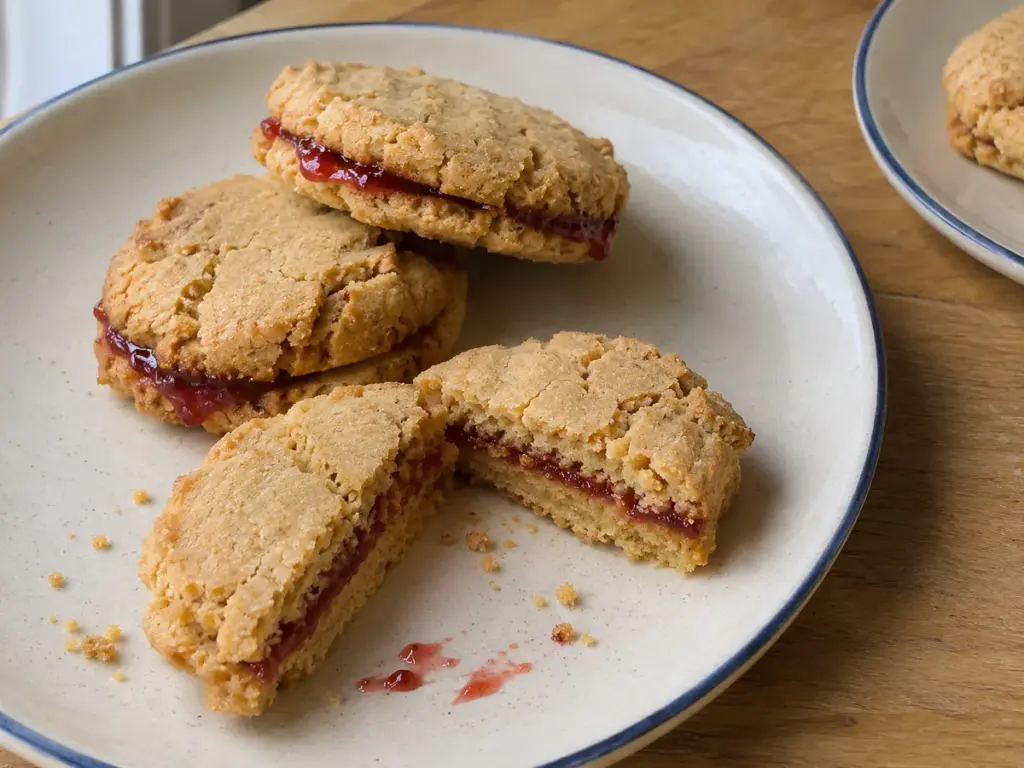
The jelly is the second label to read, because under FDA rules a jar that says reduced sugar has at least 25 percent less sugar than the regular version and has to name what it is compared with. Jelly softens the cookies the longer they sit, so the filling goes on close to serving time.
Ingredients
- 1 cup natural peanut butter
- ½ cup brown sugar, packed
- 1 large egg
- 1 teaspoon baking soda
- ¼ teaspoon salt
- ½ cup reduced-sugar jelly, slightly warmed
Instructions
- Heat the oven to 350°F (175°C) and line a baking sheet with parchment paper or a silicone mat.
- Mix the peanut butter, brown sugar, egg, baking soda and salt until smooth.
- Scoop tablespoons 2 inches apart and flatten each slightly.
- Bake 8 to 10 minutes, until the edges are set and the centers stay soft, then cool 5 minutes on the sheet and finish on a rack.
- Spread a little warmed jelly on the bottom of one cookie and press a second cookie on top.
Swaps
- Almond butter can take the peanut butter’s place in the same cup.
- Regular fruit preserves put about 3.2 g of sugars in each teaspoon against about 1.7 g for reduced-sugar jelly, and a sugar-free jam shows its own figure on the label.
Reduced-sugar jam holds 29.4 g of sugars per 100 g in FoodData Central, about 39 percent less than regular jam, and at 17 g a tablespoon that gives the 1.7 g a teaspoon in the swap list.
In a thin layer, about 1 teaspoon of jelly per sandwich is a fair starting amount, far less than the full ½ cup in the ingredient list, and you add more only if the cookie holds it.
Peanut butter adds sugars too: a cup (258 g at 10.5 g per 100 g) holds about 27 g, which puts the dough near 134 g with the 107 g from the brown sugar.
If you spread all of it, the full ½ cup of reduced-sugar jelly adds about 40 g (136 g at 29.4 g per 100 g), against about 78 g for regular preserves (160 g at 48.5 g per 100 g).
17. Matcha Green Tea Cookies
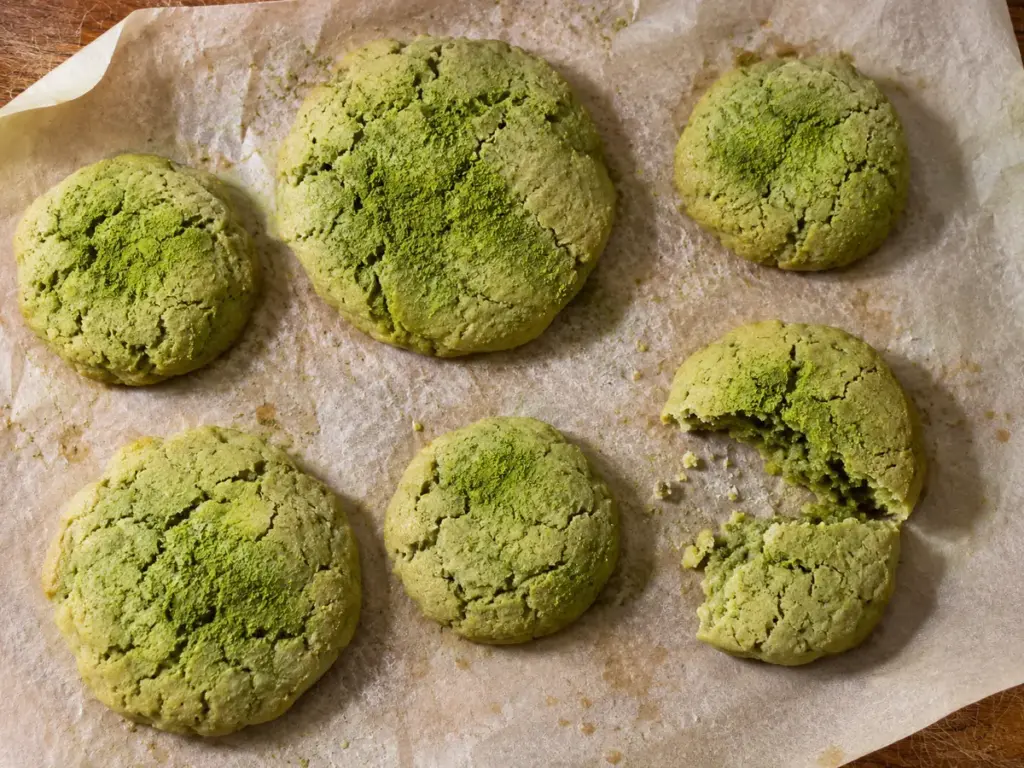
Because matcha tastes grassy and a little bitter, this dough keeps ¾ cup of granulated sugar for 2 cups of flour and adds 1 tablespoon of honey or maple syrup, about ⅜ cup of sugar per cup of flour against ⅔ cup in the Toll House recipe. Sift the matcha with the flour so no green clumps survive baking, and buy culinary-grade powder.
Ingredients
- 1 cup unsalted butter, softened
- ¾ cup granulated sugar
- 1 large egg
- 1 tablespoon honey or maple syrup
- 2 cups all-purpose flour
- 2 tablespoons matcha powder
- ½ teaspoon baking powder
- ¼ teaspoon salt
Instructions
- Heat the oven to 350°F (175°C) and line a baking sheet with parchment paper or a silicone mat.
- Cream the butter and sugar until fluffy, then beat in the egg and honey.
- Sift the flour, matcha, baking powder and salt together and stir them in until a smooth dough forms.
- Roll 1-tablespoon balls, set them 2 inches apart and press each flat with your palm.
- Bake 10 to 12 minutes, until the edges feel firm and the centers are still soft, then cool 5 minutes on the sheet.
Ceremonial-grade matcha works in place of culinary grade, but it costs more and a baked cookie hides its delicate flavor.
Green dough hides browning, so firm edges tell you when the cookies are done.
This dough holds 150 g of sugar against about 250 g of flour, a baker’s percentage of 60 in King Arthur’s measure, which is why 25 percent less is the starting cut.
18. Raspberry Almond Biscotti
Biscotti means twice baked. You bake the log for 25 minutes, then put the slices back for 12 to 15 minutes, flipped halfway, until both cut sides dry out and turn crisp.
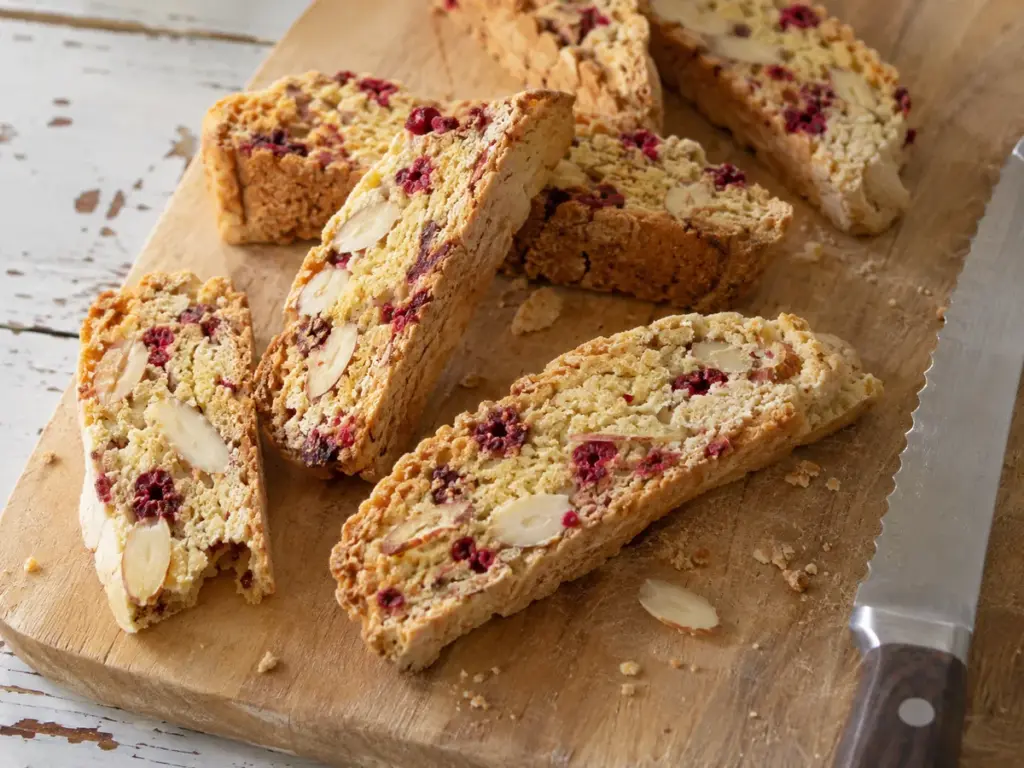
The dough holds ¾ cup of sugar across 1 ¾ cups of almond flour and ½ cup of all-purpose flour, about ⅓ cup per cup of flour, and the dried raspberries add more unless the label says freeze-dried with no added sugar. Let the log cool 10 minutes before you slice it with a serrated knife, or the soft center smears.
If you want a different flavor, the same two bakes work for lemon pistachio, chai and other biscotti flavors, though those recipes use regular sugar.
Ingredients
- 1 ¾ cups almond flour
- ½ cup all-purpose flour
- ¾ cup granulated sugar
- 1 teaspoon baking powder
- ¼ teaspoon salt
- 2 large eggs
- 1 teaspoon vanilla extract
- ½ cup dried raspberries
- ⅓ cup sliced almonds
Instructions
- Heat the oven to 350°F (175°C) and line a baking sheet with parchment paper.
- Mix both flours, the sugar, baking powder and salt, then stir in the eggs and vanilla until a sticky dough forms and fold in the raspberries and almonds.
- Shape the dough into a log about 12 inches long and 2 inches wide and bake 25 minutes, until lightly golden and firm.
- Cool the log 10 minutes, then slice it on the diagonal into ¾-inch pieces.
- Lay the slices cut side down and bake 12 to 15 minutes, flipping halfway, until both sides are crisp.
- Cool completely on a wire rack before storing.
Swaps
- Sweetened dried cranberries can replace the raspberries and hold 72.6 g of sugars per 100 g (FoodData Central).
- Chopped pistachios or walnuts replace the sliced almonds.
Before the biscotti go into the freezer, where USDA FoodKeeper lists crispy cookies at 8 to 12 months, they should dry completely on the rack.
King Arthur suggests misting the baked log with water and waiting 5 minutes, which softens the crust just enough for the knife to cut without resistance (King Arthur biscotti tips). A knife held perpendicular to the board cuts even slices, where a tilted blade leaves them thicker at the top or base.
Large pieces push the knife off course and make the slices hard to cut for the second bake, King Arthur says. Chopped nuts, chopped dried fruit and mini chips avoid that.
After the second bake, press a slice: if it feels soft, like cake, it needs 5 more minutes. A slice that feels firm while the cut crust is still a little damp is done and will crunch all the way through.
19. Cinnamon Roll Cookies
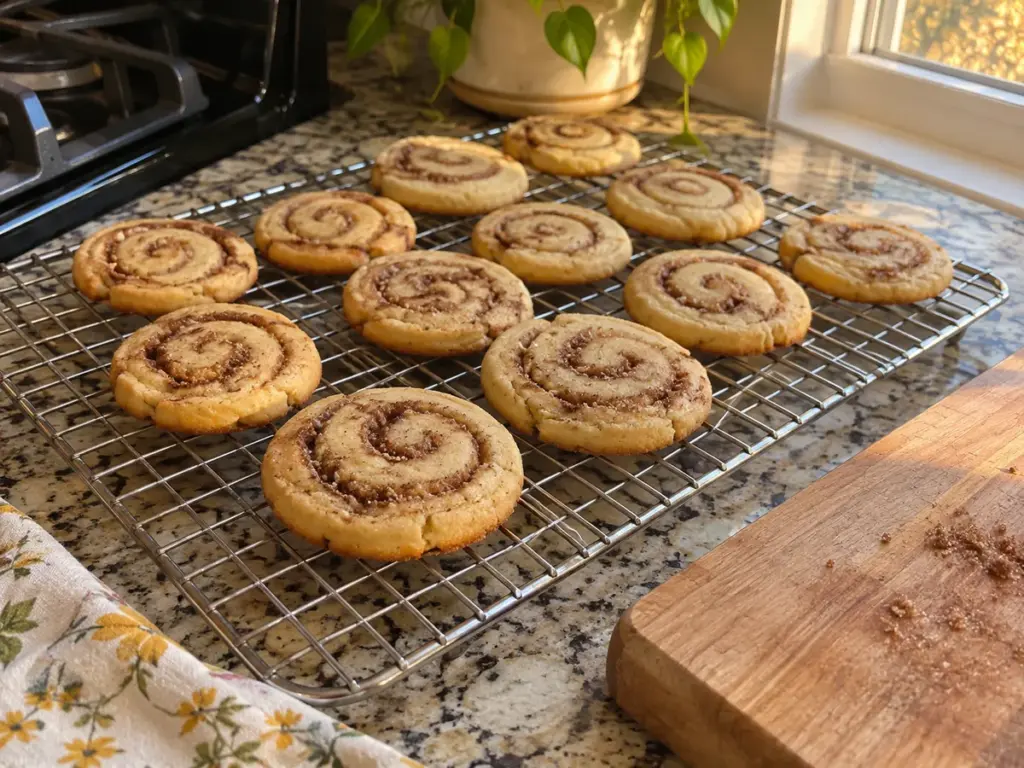
Your swirl of 2 tablespoons of brown sugar and cinnamon goes into a dough that already splits its sweetness between ⅓ cup of brown sugar and ¼ cup of a monk fruit or erythritol blend. Roll the dough between two sheets of parchment to ¼ inch so the filling spreads evenly, and if your butter-rich log feels soft, chill it until firm so the ½-inch slices stay round.
Ingredients
- ½ cup unsalted butter, softened
- ⅓ cup brown sugar, packed
- ¼ cup monk fruit or erythritol blend
- 1 large egg
- 1 teaspoon vanilla extract
- 1 ¼ cups all-purpose flour
- ½ teaspoon baking powder
- ¼ teaspoon salt
- 1 tablespoon ground cinnamon, divided between the dough and the filling
- Filling: 2 tablespoons brown sugar and 1 tablespoon melted butter
Instructions
- Heat the oven to 350°F (175°C) and line a baking sheet with parchment paper.
- Cream the butter, brown sugar and sweetener blend, then beat in the egg and vanilla.
- Whisk the flour, baking powder, salt and part of the cinnamon and stir them in to make a soft dough.
- Roll the dough between parchment to ¼ inch, brush with the melted butter, sprinkle the brown sugar and remaining cinnamon over it and roll it into a log.
- Cut the log into ½-inch slices and set them 2 inches apart.
- Bake 12 to 15 minutes, until the edges are lightly golden, and cool on a rack.
A tight roll leaves no gaps in the swirl, and a sharp knife cuts the log cleanly.
The ⅓ cup of brown sugar in the dough and the 2 tablespoons in the filling hold about 98 g of sugars together, and the monk fruit or erythritol blend adds none.
The 2 tablespoons of filling hold about 27 g of the 98 g, so halving the filling to 1 tablespoon takes about 13 g out of the batch without touching the dough.
How Do You Cut the Sugar in a Cookie You Already Bake?
King Arthur baked eight cookie and bar recipes at several sugar levels and found that the lower the sugar, the less cookies spread and the drier and more crumbly they are.
You can halve the sugar and get “decent (though not stellar) results” when the sugar weighs at least as much as the flour, King Arthur says, and below that, 25 percent less is the place to start.
It also calls sugar a flavor enhancer much like salt, so with less of it, bitter cocoa or harsh spices stand out more.
- Sweet add-ins make lower-sugar cookies more palatable.
- Dough balls rolled in sugar before baking taste sweeter than their total sugar suggests.
- A chill of at least 30 minutes increases caramelization and flavor.
You can see the first two ideas in the snickerdoodle coating and the chunks in the espresso cookies. In the matcha cookies and the biscotti, where the sugar weighs less than the flour, 25 percent less is 3 tablespoons, about 37 g of sugars, off the ¾ cup, and one test cookie tells you whether that cut works.
King Arthur measures sugar as a percentage of the flour’s weight. Toll House holds about 315 g of sugar by weight (¾ cup granulated at 200 g a cup plus ¾ cup packed brown at 220 g a cup), about 310 g of sugars, against about 281 g of flour (2 ¼ cups at 125 g a cup): 112 percent, which is in the range where halving works.
Half the sugars is about 155 g out of the batch, or about 2.6 g of the 5 g in each of 60 cookies.
For your own recipe, a tablespoon of granulated sugar removed takes about 12.6 g of sugars out of the batch (4.2 g a teaspoon in FoodData Central), and a tablespoon of packed brown sugar about 13.4 g.
The right cut depends on the kind of cookie, according to King Arthur’s baking results:
- Cutout cookies hold a texture nearly identical to the original down to a sugar weight of 25 percent of the flour.
- Brownies start at 25 percent less, and a 50 percent cut turns them cakey and crumbly.
- Bars without chocolate keep their flavor down to a sugar weight equal to the flour, though the texture turns cakey and crumbly.
In King Arthur’s chocolate chip tests every reduced version passed, and a 24-hour chill made the cookies darker, richer and about 20 percent more spread. A 30-minute chill also increases spread and crispness.
How Do You Bake and Store Low-Sugar Cookies?
Sugar replacements change how a cookie colors, so judge doneness by set, lightly golden edges and give every batch the 5 minutes on the hot sheet that the recipes call for, because these doughs stay fragile until they cool.
Warning
The FDA says to never eat or taste raw flour, dough or batter: flour is a raw food, and the eggs in every one of these doughs, including the flourless ones, can carry bacteria too. You make the dough safe only by baking it.
An airtight container holds cooled cookies at room temperature, and if you want to bake ahead, USDA FoodKeeper lists cookies at 8 to 12 months in the freezer. The salted caramel cookies are the exception, because you keep them in the refrigerator.
- Warm cookies steam inside a sealed container and soften, so let them cool completely first.
- For dough you bake later, freeze the balls on a tray and then bag them. FoodKeeper gives store-bought cookie dough 2 months in the freezer, a cautious starting point for homemade.
King Arthur keeps its almond flour cookies in an airtight container at room temperature for up to 7 days and freezes them for longer storage (King Arthur almond flour cookies). That is a starting point for the lemon poppy seed and flourless cocoa almond cookies, which are built on almond flour, though their sweeteners differ from the confectioners’ sugar in King Arthur’s recipe.
FoodKeeper lists soft cookies at 2 to 3 months in the pantry and crispy ones, such as the biscotti, at 4 to 6 months. King Arthur noted a somewhat shorter shelf life for scones made with sugar replacements, and although scones are not cookies, the short end of each window is the better plan for these.
What Goes Wrong with Low-Sugar Cookies, and How Do You Fix It?
Sugar replacements and syrups both bring problems that a regular cookie does not have.
- Dry, crumbly cookies: less sugar means drier cookies, so pull the pan while the centers are still soft.
- Little spread: flatten each scoop by hand, because erythritol cookies barely spread (King Arthur).
- A cool aftertaste: taste a pinch of your sweetener in water first.
- Dark bottoms: honey and maple syrup brown faster than sugar, so check the bottoms early.
- Dull flavor: check the salt, vanilla and zest before you add sweetener.
Whenever you change the sweetener, one test cookie baked ahead of the rest shows you the spread and browning before the whole tray commits.
How Do You Make These Cookies Egg-Free, Dairy-Free or Nut-Free?
The swap lists change one ingredient at a time, and a few recipes depend on the ingredient you want to remove.
- Egg-free: Iowa State Extension suggests flax eggs for oatmeal and breakfast cookies, so try them in the oatmeal spice and zucchini oatmeal cookies.
- Iowa State gives the flax egg as 1 tablespoon of ground flaxseed plus 3 tablespoons of water for each egg.
Sixteen of the 19 recipes use one egg or none, and King Arthur’s egg guide says one replaced egg is far less noticeable than three. A flax egg binds without aerating, so the cookie comes out denser, and the macaroons (3 whites), snickerdoodles (4 eggs) and biscotti (2 eggs) are the ones to leave alone (King Arthur egg guide).
For the oatmeal spice, zucchini oatmeal and other one-egg butter doughs, the same guide gives two more cookie-friendly options:
- A starch slurry of 2 tablespoons cornstarch, arrowroot, potato or tapioca starch with 3 tablespoons water, which it warns can leave bakes dry or tender and is not as reliable as the others.
- ¼ cup of mashed banana, about 57 g of pumpkin puree or 64 g of applesauce per egg, which add moisture and make cookies cakey.
For a dairy-free batch, plant-based butter or coconut oil can replace the butter in the same amount to start, though the spread changes because their fat and water differ from butter.
The salted caramel cookies stay dairy because the caramel needs cream.
The FDA lists tree nuts and peanuts among the nine major allergens, and a label must name the specific tree nut.
For a nut-free batch, the recipes built on nut butter, nuts or almond flour need a different recipe.
Ten recipes contain no peanut, tree nut or nut flour as written:
- Pumpkin spice, espresso chocolate chunk, snickerdoodle and vanilla coconut macaroon cookies
- Oatmeal spice, chia seed and coconut and zucchini oatmeal cookies
- Salted caramel, matcha and cinnamon roll cookies
FDA no longer counts coconut as a major food allergen (FDA allergen labeling Q&A, Edition 5), which is why the coconut cookies sit on that list, and anyone at your table who reacts to coconut should ask their allergist. The chocolate, espresso powder and oat labels need the same check you would give them for wheat.
How Do You Make These Cookies Gluten-Free?
The FDA says a food labeled gluten-free must hold less than 20 parts per million of gluten, and oats labeled that way meet the same limit, so look for the words on the oats, the flour blend and the chocolate chips.
Twelve recipes use all-purpose flour: the pumpkin spice, espresso chocolate chunk, oatmeal spice, chia seed and coconut, maple pecan thumbprint, walnut and date, cranberry walnut, zucchini oatmeal, salted caramel, matcha, biscotti and cinnamon roll cookies, and the biscotti pair ½ cup of it with almond flour.
In any of them, a gluten-free blend that measures cup for cup is the usual replacement in the same amount, and you get a different crumb. For the oatmeal spice and zucchini oatmeal cookies, the oats need that gluten-free label too.
Sources
- FDA sugar content claims, 21 CFR 101.60
- FDA: Added Sugars on the Nutrition Facts Label
- King Arthur Baking: Sugar alternatives for baking
- King Arthur Baking: Dutch-process vs. natural cocoa
- Nestlé Toll House: Original Chocolate Chip Cookies
- Libby’s: Ask the pumpkin experts
- FDA: Handling Flour Safely
- USDA FoodKeeper
- USDA FSIS: Leftovers and Food Safety
- King Arthur Baking: How to reduce sugar in cookies and bars
- USDA FoodData Central
- Iowa State University Extension: Baking without eggs, part 2
- FDA: Food Allergies
- FDA: Gluten-Free Food Labeling
- BakerPedia: Erythritol
- Review of erythritol as a sweetener (PubMed Central)
- Lakanto: How to bake with monk fruit sweetener
- American Diabetes Association: How to read nutrition labels
- FDA: Total Carbohydrate on the Nutrition Facts label
- FDA: How to understand and use the Nutrition Facts label
- FDA: Nutrition labeling of food, 21 CFR 101.9
- Cleveland Clinic: Erythritol and heart attack and stroke, 2023
- CDC: Foods and drinks to avoid or limit for infants and toddlers
- FDA: Food allergen labeling questions and answers
- King Arthur Baking: Baking with almond flour
- King Arthur Baking: Vanilla coconut flour cupcakes
- King Arthur Baking: Biscotti tips
- King Arthur Baking: Guide to substituting eggs
- King Arthur Baking: Gluten-free almond flour cookies

Andrew Gray is a seasoned food writer and blogger with a wealth of experience in the restaurant and catering industries. With a passion for all things delicious, Andrew has honed his culinary expertise through his work as a personal chef and caterer.
His love for food led him to venture into food writing, where he has contributed to various online publications, sharing his knowledge and insights on the culinary world. As the proud owner of CooksCrafter.com, Andrew covers a wide range of topics, including recipes, restaurant reviews, product recommendations, and culinary tips.
Through his website, he aims to inspire and educate fellow food enthusiasts, offering a comprehensive resource for all things food-related.