Short Answer
Use all-purpose flour in place of bread flour at the same weight, and the loaf comes out softer, because King Arthur's all-purpose flour has 11.7% protein against 12.7% for its bread flour. Whisk a little vital wheat gluten into the all-purpose flour when you want a chewier crumb.
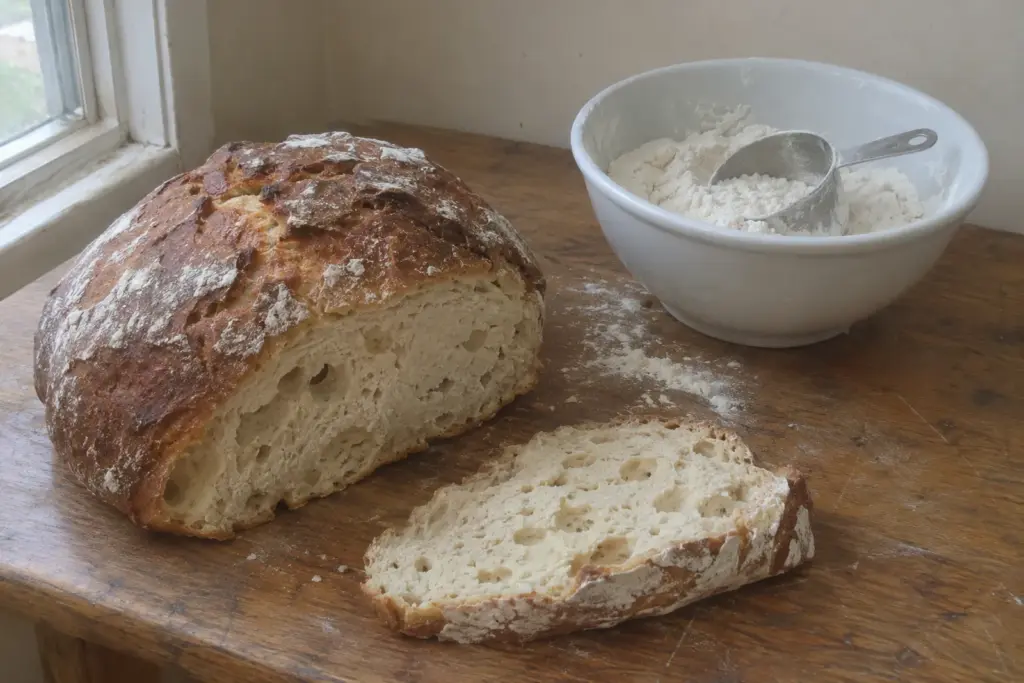
Bread flour is milled from hard wheat with extra protein, and that protein becomes the gluten that traps yeast gas and gives a loaf its chew. A tall sandwich loaf needs plenty of it and a quick bread almost none, so the ingredient substitute you pick for bread flour depends on what is going into the oven.
1 What Does Bread Flour Do in a Recipe?
Water turns flour protein into gluten, and kneading lines those strands up into a stretchy net that holds the gas yeast gives off. The more protein a flour carries, the stronger the net gets, which means a taller rise and a chewier bite. That is why bagels, pizza crust and sandwich loaves are written for bread flour. King Arthur puts its bread flour at 12.7% protein, against 11.7% for its all-purpose flour, 10% for cake flour and 8% for pastry flour.
A dough also drinks more water as the protein goes up. Dough made with bread flour absorbs slightly more liquid, so when you change the flour you change how wet the dough feels as well as how it bakes. Other brands differ from those figures, so check the protein number on your bag when it prints one.
British recipes call the same flour strong white flour, and their plain flour runs softer than American all-purpose flour.
2 Best Substitutes for Bread Flour
All-purpose flour with a small amount of vital wheat gluten comes closest to bread flour, and plain all-purpose flour is the swap that needs nothing extra from your pantry. The other flours change the dough more.
| Substitute | Ratio | Best For | What Changes |
|---|---|---|---|
| All-purpose flour | 1:1 by weight | Rolls, sandwich loaves, no-knead bread, focaccia | Softer, less chewy loaf, so hold back a splash of water |
| All-purpose flour plus vital wheat gluten | 1:1 by weight, with a small amount of gluten | Bagels, pizza crust, crusty loaves | Chewier and taller, with the recipe's full water |
| Whole wheat flour | Start with 25% whole wheat, the rest all-purpose | Hearty sandwich loaves | Denser and nuttier, and a full swap needs 2 teaspoons more liquid per cup |
| Cake flour or pastry flour | A small share, the rest all-purpose | Soft rolls and buns | Weaker dough, less rise and less chew |
| Oat, barley or rye flour | A small share, the rest wheat flour | Flavor in rustic loaves | Slacker, denser dough that rises less |
All-Purpose Flour
All-purpose flour replaces bread flour gram for gram, and most bakers already have it in the pantry. You can technically substitute all-purpose flour if you add less water and mix the dough more gently and for a shorter time, though the loaf will not match one made with bread flour. Hold back a splash of the recipe's water and pour it in only as you see the dough coming together, until it feels slightly tacky instead of loose.
Rolls, sandwich loaves and focaccia lose the least when you bake them with it. A country white bread or a baguette is usually written with all-purpose flour, and bread flour is an optional upgrade for chew. No-knead dough builds gluten during its long rest, so all-purpose flour gives a good loaf in no-knead loaves, and bread flour adds chew.
All-Purpose Flour Plus Vital Wheat Gluten
Vital wheat gluten is wheat protein with most of the starch washed out, and Bob's Red Mill lists it at 70 to 80% protein. King Arthur's all-purpose flour sits only one point under its bread flour, so a small amount is enough to close the gap. Whisk it into your flour before any liquid goes in so it does not clump, and keep the recipe's full amount of water, adding a splash more if the dough turns stiff, because the gluten absorbs moisture.
Neither King Arthur nor Bob's Red Mill prints a per-cup amount for turning all-purpose flour into bread flour. King Arthur's only figure is a tablespoon or two for a whole-grain loaf, and whole-grain dough needs far more help than white flour does, so start well under that and let the dough tell you. After kneading, stretch a small piece between your fingers. If it thins into a see-through sheet before it tears, the gluten is enough, and if it tears early, add a little more to the next batch. Too much gluten makes the loaf tough and rubbery.
Warning
Vital wheat gluten is concentrated gluten, so it is off limits for anyone with celiac disease or a wheat allergy.
Bagels and pizza crust show missing protein first, since chew is the whole point of bagels that are boiled before they bake.
Whole Wheat Flour
King Arthur lists its whole wheat flour at 13.2% protein, yet the bran and germ in it cut through the gluten strands as they form, so whole wheat loaves rise less and bake denser. King Arthur tells bakers to start by replacing 25% of the white flour and raise the share gradually. That swap is by volume, because a cup of whole wheat flour weighs 113 grams against 120 grams for a cup of all-purpose. A full swap lowers the rise significantly and needs 2 teaspoons more liquid for every cup of whole wheat.
Let the mixed dough sit for 30 minutes before you knead it, which gives the bran time to soften. A little vital wheat gluten helps a whole wheat loaf rise higher, which suits a rustic sandwich loaf better than white rolls.
Cake Flour and Pastry Flour
Cake flour (10% protein at King Arthur) and pastry flour (8%) are milled for tender cakes and flaky crusts, so a yeast dough built only on them is weak. It tears when you stretch it, rises less and bakes up crumbly where bread flour would be chewy. Keep either one to a small share of all-purpose flour when you want a softer dinner roll or sweet bun, and leave it out of sandwich loaves and bagels.
Oat Flour
Oat flour is ground from rolled oats and carries no gluten, so it adds a mild, slightly sweet flavor and a soft crumb but nothing to hold the gas in. Replace only a small share of your flour with it and keep wheat flour for the rest. A loaf made mostly from oat flour does not rise or hold together.
Barley Flour
Barley flour tastes nutty and a little sweet, but its proteins do not form the stretchy network that wheat gluten does. Dough with a lot of it turns slack and bakes dense. A small share in a flatbread or rustic loaf adds the flavor without giving up the rise, as long as bread flour or all-purpose flour makes up the rest.
Rye Flour
Rye flour brings an earthy, slightly sour flavor and plenty of fiber, and its dough is sticky and dense because rye builds far less gluten than wheat. Rye breads are normally built on a wheat flour base, so keep bread flour or all-purpose flour for most of the dough and use rye for flavor. If your dough will not hold a shape on the counter, the rye share was too big.
3 Which Substitute Should You Use for Bagels, Rolls and Loaves?
Bagels and pizza crust live on chew, while rolls and focaccia lean on fat, sugar and a long rise, so only the first pair needs the extra gluten you would add.
All-Purpose Flour Alone
It needs nothing extra from the pantry, and rolls, sandwich loaves and no-knead bread bake nearly the same as with bread flour.
The crumb comes out softer and less chewy, and the dough needs a splash less water.
All-Purpose Flour Plus Vital Wheat Gluten
It brings the chew and height back to bagels, pizza crust and crusty loaves.
It means buying vital wheat gluten, the dough may need a splash more water, and too much turns the loaf tough.
Pick by how the loaf should feel in your mouth: add vital wheat gluten only when chew is the point of the recipe, and use plain all-purpose flour everywhere else.
- Bagels, pizza crust and crusty loaves take all-purpose flour with vital wheat gluten, or a whole wheat share when the loaf is meant to be hearty.
- Soft rolls bake well on all-purpose flour alone, because Parker House rolls and other butter-enriched doughs get most of their tenderness from butter and sugar.
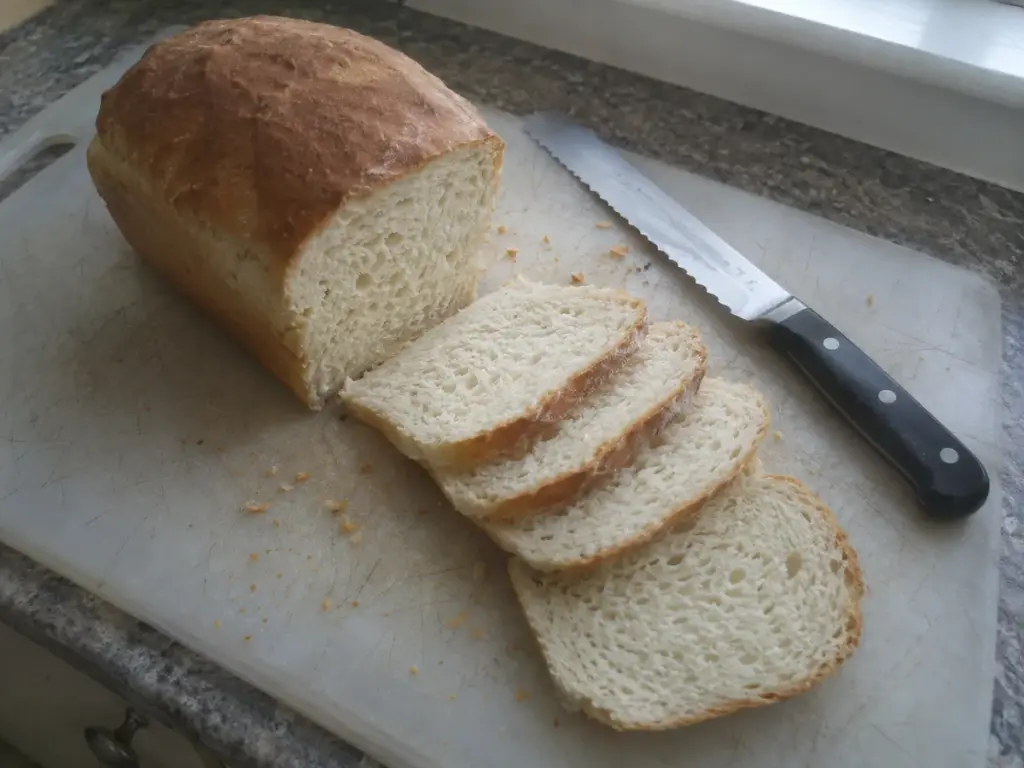
- Sandwich loaves also do fine on all-purpose flour, since the protein gap to bread flour is only 1 point (11.7% against 12.7%) and the loaf comes out a little softer.
- Focaccia keeps its open, airy crumb with all-purpose flour, and a loaf such as rosemary and sea salt focaccia is written with it.
- Quick breads and soda bread raise on baking soda or baking powder, so any wheat flour works, and a lower-protein flour keeps them tender.
4 Which Swaps Do Not Work for Bread Flour?
- Self-rising flour already holds leavening and salt. King Arthur's homemade version is 1 cup of all-purpose flour with 1 ½ teaspoons of baking powder and ¼ teaspoon of salt, so a yeast dough made with it gets extra salt and baking powder the recipe never planned for.
- Almond, coconut, rice and cassava flours have no gluten, so none of them can hold the gas in a yeast dough.
- Cake flour as the only flour gives a weak dough that tears and rises short.
Frequently Asked Questions
Oat flour on its own cannot, because it has no gluten to hold the gas in. King Arthur sells a gluten-free bread flour that swaps 1:1 for bread flour by weight or volume, with 2 to 3 tablespoons more liquid per cup of flour to start. Read the label if you must avoid wheat entirely.
Cake flour has 10% protein at King Arthur against 12.7% for bread flour, so a dough built on it is weak. It makes a soft, delicate crumb but tears when you stretch it and rises short. Keep it to a small share of the flour in tender rolls and buns, and use all-purpose flour for the rest.
Weigh it. A cup of all-purpose flour is 120 grams when you fluff, scoop and level it, but a densely packed cup can hold up to 160 grams, a third more. That extra flour makes a dry, stiff dough, which is easy to blame on the swap.
Sources
- King Arthur Baking: protein percentage by flour type
- King Arthur Baking: bread flour vs all-purpose flour
- King Arthur Baking: substituting bread flour for all-purpose flour
- King Arthur Baking: substituting whole wheat for white flour
- King Arthur Baking: vital wheat gluten
- Bob's Red Mill: vital wheat gluten
- King Arthur Baking: gluten-free bread flour swaps
- King Arthur Baking: how to measure flour
- King Arthur Baking: self-rising flour

Andrew Gray is a seasoned food writer and blogger with a wealth of experience in the restaurant and catering industries. With a passion for all things delicious, Andrew has honed his culinary expertise through his work as a personal chef and caterer.
His love for food led him to venture into food writing, where he has contributed to various online publications, sharing his knowledge and insights on the culinary world. As the proud owner of CooksCrafter.com, Andrew covers a wide range of topics, including recipes, restaurant reviews, product recommendations, and culinary tips.
Through his website, he aims to inspire and educate fellow food enthusiasts, offering a comprehensive resource for all things food-related.