Short Answer
The best side dishes for cold soba noodles are vegetable tempura, cucumber sunomono (a vinegared salad) and salted edamame.
- They add the hot crunch, the sharp bite and the green vegetable that plain noodles lack.
- On a hot day, swap the tempura for tamagoyaki, a rolled omelet that you cook ahead, and the whole plate stays cold.
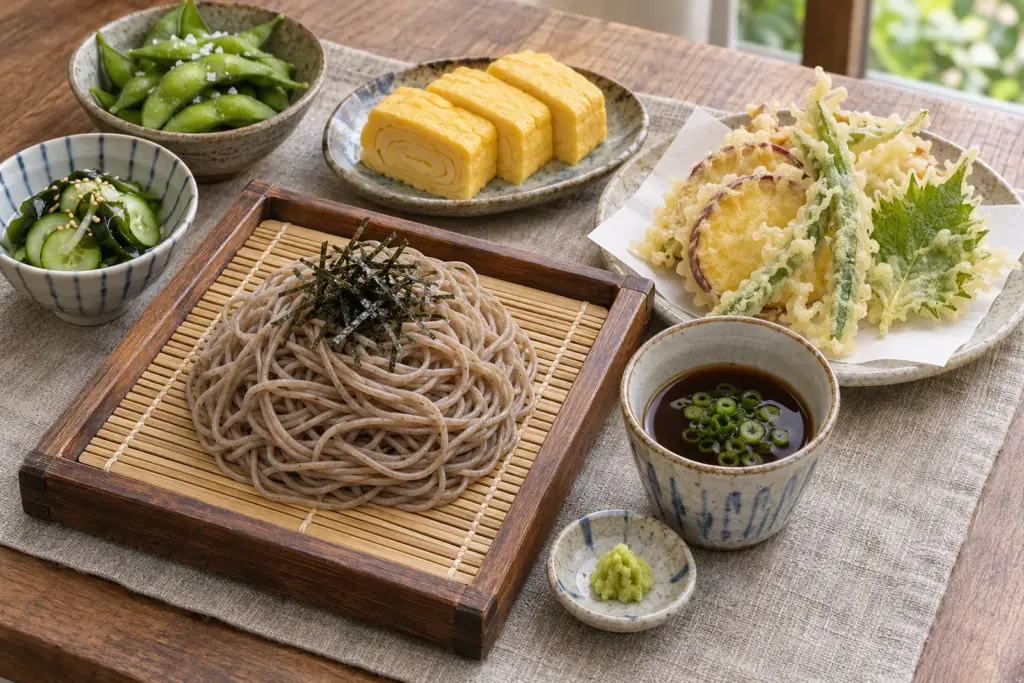
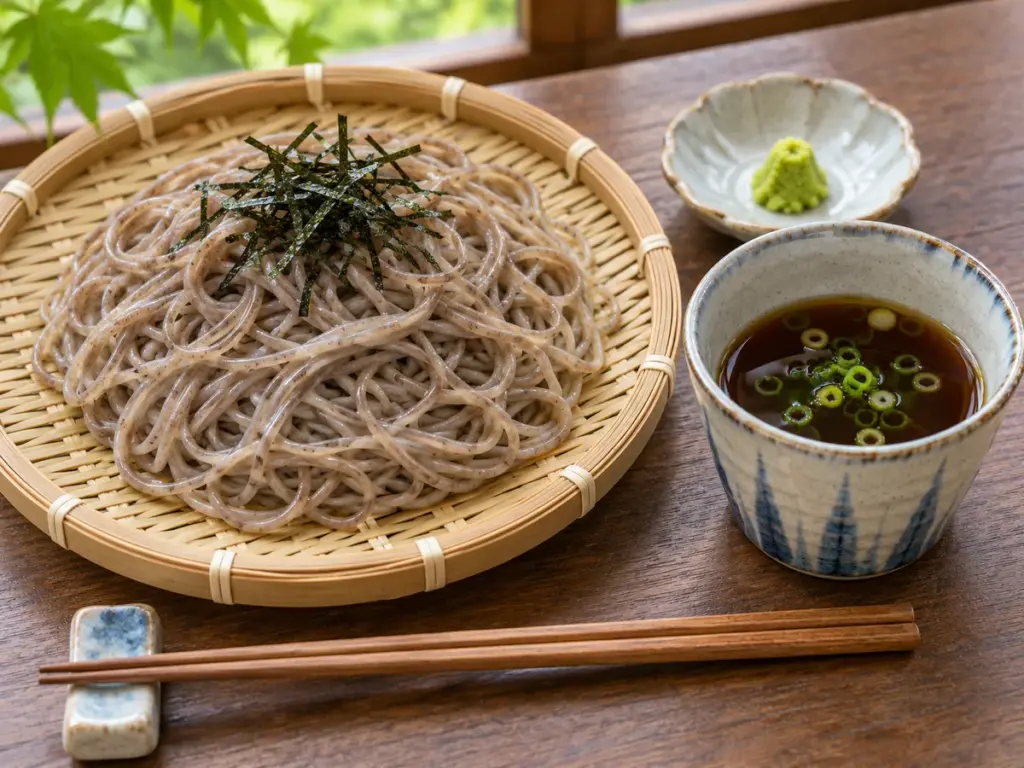
Zaru soba is chilled buckwheat noodles that you lift from a bamboo tray and dip in tsuyu, a cold sauce of dashi (Japanese stock), soy sauce and mirin (sweet rice wine), with scallions and wasabi. The noodles are mild and the sauce is salty, so the plate has no crunch, little protein and nothing sharp unless a side brings it. Small sides with light seasoning fix that without competing with the sauce.
1 What Goes Well with Cold Soba Noodles?
Soba is made from buckwheat flour, which gives the noodles a nutty taste and a firm bite. In Japan the classic partner is tempura, and zaru soba served with tempura is called ten-zaru. Soba restaurants also offer tamagoyaki, edamame, chilled tofu and small vinegared salads, because cold noodles have little fat, salt or protein of their own.
Check the Label
Buckwheat is not wheat, but many dried soba blend buckwheat flour with wheat flour, and most soy sauce is brewed with wheat. If anyone at the table avoids gluten, buy noodles labeled 100% buckwheat and use a gluten-free tamari for the tsuyu and the dressings.
Choose one crisp or rich side, one sharp side and one green side, and the noodles become a full meal:
- Crisp or rich: tempura, tamagoyaki, silken tofu and gyoza.
- Sharp: the cucumber salad, pickled carrots and tsukemono.
- Green: edamame, spinach, shishito peppers, eggplant and asparagus.
Keep the seasoning on every side light, because each dip into the tsuyu adds salt to the noodles.
2 Which Sides Make Cold Soba Filling?
Tempura is at its crispest straight from the heat, while tamagoyaki is served cool or at room temperature, so the cook who wants to sit down with the noodles should make the omelet.
Tempura
The hot, crisp bite against cold noodles is the classic ten-zaru contrast, and every piece can go into the tsuyu.
The batter has to be cooked in batches just before the meal, so someone stays at the stove while the noodles wait.
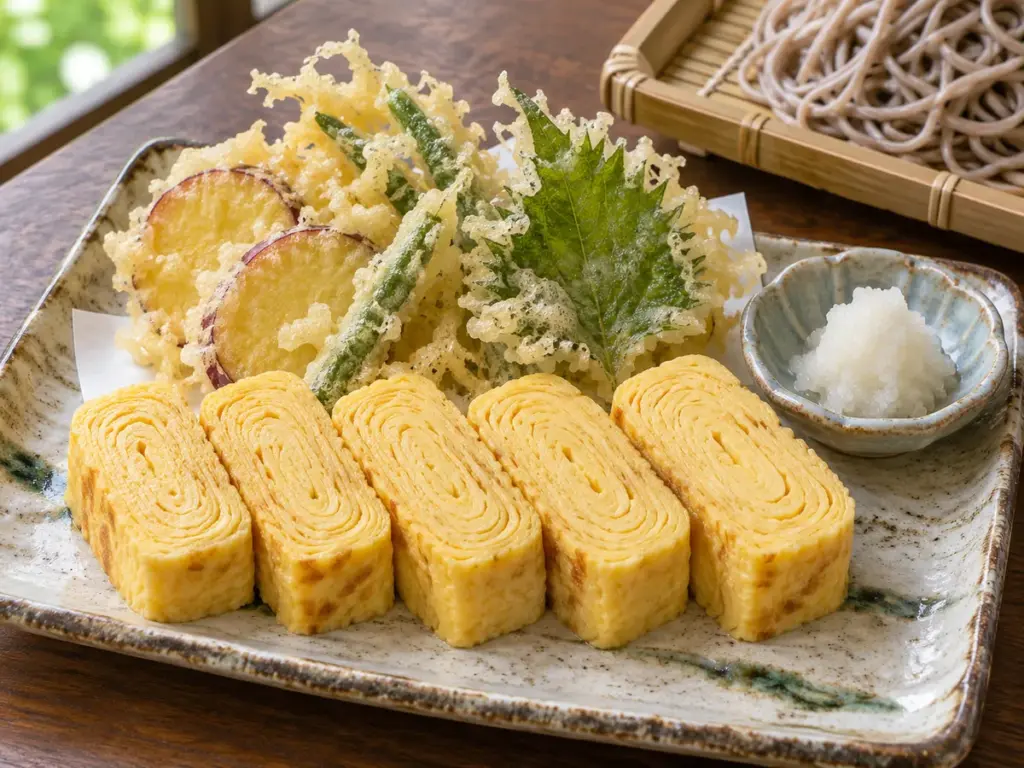
Tamagoyaki
The omelet can be cooked earlier and sliced cold, so the cook eats with everyone else.
It adds sweetness and protein but no crunch, so serve it with the sharp cucumber salad, not with another soft dish.
1. Crispy Tempura Vegetables
Vegetables in a thin batter add the hot crunch that cold soba lacks, and a dunk in the tsuyu is the bite that defines ten-zaru. Ice-cold water keeps the batter light, so mix it only when the oil is ready. If you would rather skip the pot of hot oil, tempura vegetables in the air fryer give a crisp crust with a little less lace.
2. Tamagoyaki (Japanese Rolled Omelet)
You build tamagoyaki in layers: pour a thin layer of seasoned egg into a rectangular pan, roll it up as it sets, and repeat. The egg is flavored with dashi and often with mirin or sugar, so the omelet is sweet and savory against the salty tsuyu. Keep the heat low so the outside stays pale and the layers stay tender. Sweet sake is the nearest of the mirin swaps and keeps the sweetness.
Full recipe: Tamagoyaki (Japanese Rolled Omelette) from Just One Cookbook
3. Tofu with Soy-Sesame Dressing
Silken tofu is soft and mild, so it takes a toasted sesame and soy dressing without any cooking, and it gives you a cold, creamy protein next to the chewy noodles. Chill the block, cut it gently because silken tofu breaks easily, and spoon the dressing over just before you serve it so the dressing stays thick.
Full recipe: Silken Tofu with Roasted Sesame Dressing from I Heart Umami
4. Steamed Gyoza
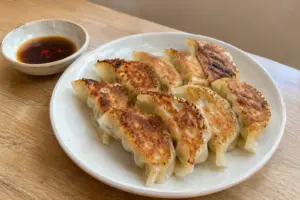
Gyoza are filled dumplings wrapped in wheat dough, so they turn a light noodle lunch into a filling meal. If you steam them, the wrappers stay soft, which keeps the plate gentle next to cold noodles.
Tip
Dip them in soy sauce thinned with a little rice vinegar, not in the tsuyu, so the two sauces stay separate.
Full recipe: Mushi-Gyoza (Steamed Gyoza) from Food52
3 Which Vegetable Sides Suit Cold Soba?
Vegetables with a light dressing fit best, since the tsuyu already supplies the salt, and they add green to a plate of gray-brown noodles.
5. Edamame with Sea Salt
Edamame are young soybeans in the pod, and they add a little protein and a snap that the chewy noodles lack. If you boil or steam the pods, sprinkle the sea salt while they are still wet so it sticks. Squeeze the beans out of the pod with your teeth and discard the pod, which is too tough to eat.
Full recipe: Edamame with Sea Salt from Recipes.net
6. Sesame Spinach Salad (Gomaae)
You make gomaae by tossing blanched spinach in a dressing of ground sesame and soy sauce. Squeeze the cooked spinach dry, because water left in the leaves thins the dressing and stops it from clinging, and serve it cold or at room temperature in a small mound.
Full recipe: Japanese Sesame Spinach Salad (Horenso Gomaae) from Okonomi Kitchen
7. Blistered Shishito Peppers
Shishito peppers are thin-walled, mild Japanese peppers, and an occasional one is hot, which keeps the plate interesting. Spread them in one layer so the skins blister instead of steam, then finish with sea salt and a squeeze of lemon; air-fried shishito peppers get the same blistered skins without a pan. Eat them hot or warm, holding each pepper by the stem.
8. Miso-Glazed Eggplant
Miso-glazed eggplant (nasu dengaku) brings a richness that the other vegetables lack: the flesh turns soft and creamy, and the sweet miso glaze caramelizes under the broiler.
Tip
Brush the glaze on late, so the sugar does not scorch under the broiler.
The glaze is salty, so skip tsukemono and miso soup on the same plate.
Full recipe: Miso-Glazed Eggplant from NYT Cooking
9. Yuzu Ponzu Asparagus
Ponzu is a citrus and soy sauce, and the yuzu version adds the floral, tart flavor of a Japanese citrus. Blanch the asparagus until it turns bright green but still snaps, chill it in ice water, then toss it with ponzu and a sprinkle of sesame seeds. The citrus lifts the plate without any added oil. If you have no bottled ponzu, soy sauce with lemon juice is one of the ponzu stand-ins.
4 Which Pickled Sides Cut Through the Tsuyu?
The tsuyu is salty and a little sweet, and a vinegared side wipes that taste away between dips.
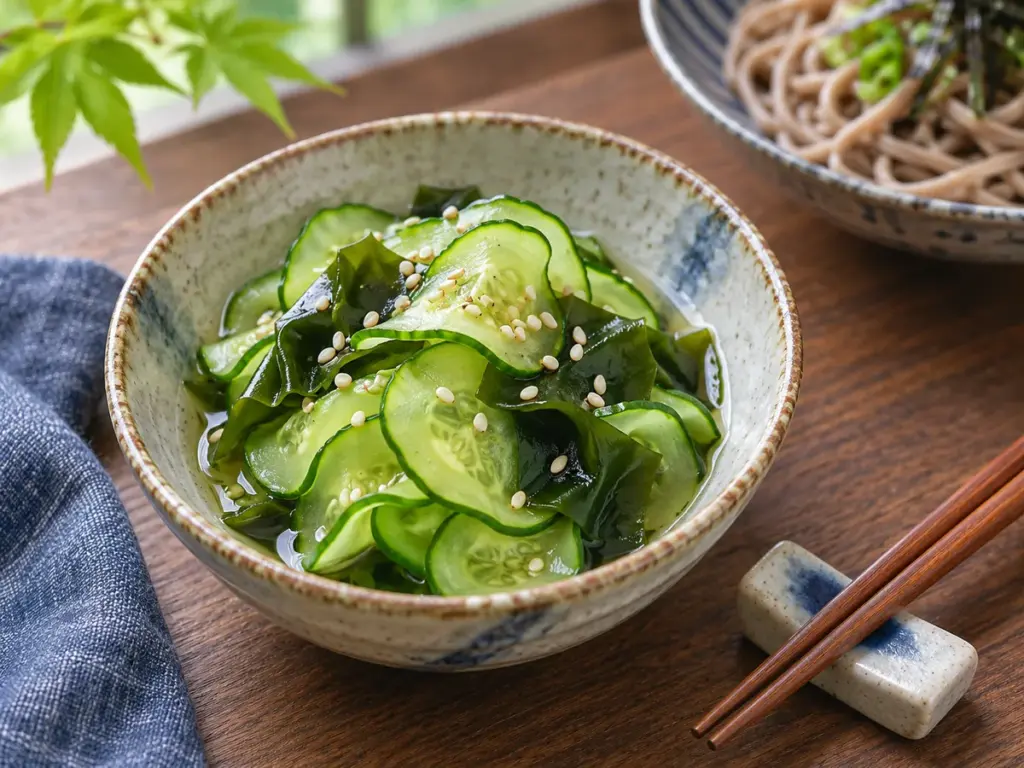
10. Cucumber and Wakame Salad (Sunomono)
Sunomono means "vinegared things", and the cucumber and wakame version is the sharpest, lightest side for soba. Wakame is a dried seaweed that softens in water into silky green ribbons. Slice the cucumber thin, salt it and squeeze out the water, then dress it with rice vinegar and a little sesame oil just before you serve it. If the bottle is empty, lemon juice is one of the rice vinegar stand-ins, though it tastes sharper.
Full recipe: Japanese Cucumber and Seaweed Salad (Sunomono) from The Foodie Takes Flight
11. Pickled Ginger Carrots
When you pickle carrots in a vinegar brine with ginger, they taste sweet, tangy and a little warm, and they add orange to the plate. Make them a day ahead, because the brine needs time to soak in.
Full recipe: Ginger Pickled Carrots from Healthy Seasonal Recipes
12. Japanese Pickles (Tsukemono)
Tsukemono is the general name for Japanese pickles:
- Asazuke are lightly salted quick pickles of cucumber or radish.
- Shiozuke are pickled in salt.
- Shoyuzuke are pickled in soy sauce.
Choose asazuke for soba, since the longer-cured styles are saltier and add to the salt you already get from the tsuyu.
Full recipe: Japanese Pickles 3-Ways (Tsukemono) from No Recipes
5 Does Miso Soup Go with Cold Soba?
Miso soup is the one warm, brothy side, so it makes a cold noodle meal comfortable on a cool evening. Miso is a fermented soybean paste, and the soup is salty, so pair it with the sunomono, not with tsukemono, and let the cucumber salad be your sharp side.
13. Miso Soup
You make miso soup by whisking miso into dashi, then adding tofu and wakame. Stir the miso in off the heat, because a hard boil dulls its aroma, and pour the soup into small bowls beside the noodles.
Full recipe: Homemade Miso Soup from Just One Cookbook
6 Can Cold Soba Be a Full Dinner?
Cold soba works as dinner when you add a main. Onigiri (rice balls), agedashi tofu (fried tofu in warm dashi) and grilled fish suit soba too, and any one of them turns the noodles into a full dinner. If you broil a fillet of cod in a miso glaze, the table has its protein, and you can drop the tamagoyaki and tofu.
For a grilled protein, chicken skewers brushed with a soy glaze, as in yakitori, work beside soba; the glaze and the tsuyu are both salty, so serve the cucumber sunomono and plain edamame with them.
7 Which Sides Should You Skip with Cold Soba?
- A second noodle dish. Yakisoba, udon or ramen beside soba gives you two bowls of starch and chew with nothing to cut either.
- More than one sesame dressing. The spinach and the silken tofu both wear a sesame dressing, so choose one of them. Soba already tossed in sesame dressing, as in a chilled soba salad with sesame, needs the sunomono instead of either.
- Two pickles. The sunomono, the pickled carrots and the tsukemono all play the sharp part, so serve one.
- Salt stacked on salt. The tsuyu, the miso soup, tsukemono and any miso glaze (on the eggplant or the cod) are all salty, so pick only one of the last three to go with the dip.
- Creamy sides. Potato salad or a cheesy gratin covers the nutty buckwheat taste and fights the clean, cold dip.
8 When Do You Make Each Cold Soba Side?
Only the tempura has to wait until the noodles drain; the other hot sides finish while the noodles boil.
- Salt the cucumbers. Salt the thin slices and squeeze out the water, and dress them just before you eat.
- Chill the tsuyu and cook the tamagoyaki. Put the tsuyu in the fridge, and let the omelet cool on a board before you slice it.
- Boil and rinse the soba. Follow the package time, rinse the noodles under cold running water until they are cool, and drain them well so they do not dilute the tsuyu. Keep the pot of cooking water warm on low heat until the end of the meal.
- Fry the tempura last. Batter and cook the vegetables as the noodles drain, and serve them at once. At the end of the meal, stir some of the warm cooking water (sobayu) into the leftover tsuyu and drink it.

Andrew Gray is a seasoned food writer and blogger with a wealth of experience in the restaurant and catering industries. With a passion for all things delicious, Andrew has honed his culinary expertise through his work as a personal chef and caterer.
His love for food led him to venture into food writing, where he has contributed to various online publications, sharing his knowledge and insights on the culinary world. As the proud owner of CooksCrafter.com, Andrew covers a wide range of topics, including recipes, restaurant reviews, product recommendations, and culinary tips.
Through his website, he aims to inspire and educate fellow food enthusiasts, offering a comprehensive resource for all things food-related.