Short Answer
The best Thai basil substitute is sweet basil, used 1:1 with a pinch of fennel or anise seed for the licorice note. Holy basil suits hot pans, and mint suits cold bowls.
- Swap sweet basil 1:1 and add ⅛ teaspoon of crushed fennel seed per ½ cup of leaves.
- Holy basil is a different plant, so start with three-quarters of the amount and taste.
- Use mint 1:1 where the leaves go on raw, in salads, rolls and noodle bowls.
- Keep tarragon at half the amount, and only when the licorice note is all the dish needs.

Thai basil (Ocimum basilicum var. thyrsiflora) has purple stems, a spicy, licorice-like flavor and firm leaves that hold up in a hot curry or noodle bowl. A stand-in has to copy either the flavor or the texture, and the best herb swaps for it rarely manage both.
1 What Does Thai Basil Do in a Recipe?
Thai basil adds a spicy licorice aroma to a dish. NC State Extension describes the 'Siam Queen' variety as tasting of spicy licorice-mint, and Purdue researchers found methyl chavicol to be the main compound in the essential oil of both Thai basil samples they analyzed, the same compound they list for a basil sold under the name 'Licorice'.
You add the leaves in one of two ways. In curries, soups and stir-fries they go in after the heat is off, or in the last minute, so the aroma stays in the pot. For a coconut curry soup, turn off the burner first and then tear the leaves in. In pho and noodle salads the leaves go on raw, where they work as a seasoning.
That gives a substitute two jobs to cover: the licorice flavor and a sturdy leaf. Sweet basil covers the flavor only with a little help, mint covers cold dishes only, and holy basil handles the heat but changes the taste.
2 Is Thai Basil the Same as Holy Basil?
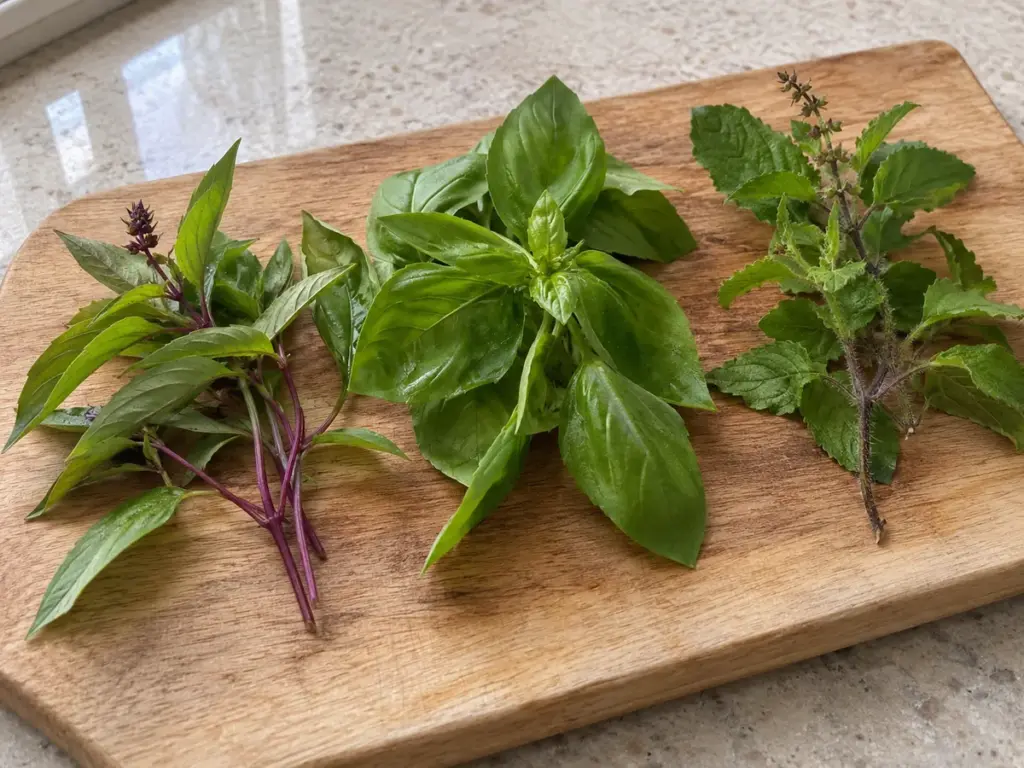
No. Thai basil is a variety of the species sweet basil belongs to, Ocimum basilicum var. thyrsiflora, while holy basil (kaphrao in Thai, tulsi in India) is a separate species, Ocimum tenuiflorum. The Herb Society of America warns that holy basil should not be confused with Thai basil or Thai lemon basil, which are entirely different herbs.
In your kitchen the two behave differently. NC State Extension describes holy basil as a spicy bite of clove, mint and basil, and notes that you will usually heat it or steep it in tea rather than eat it fresh. The best-known holy basil dish is phat kaphrao, a stir-fry of meat or seafood with the leaves.
A recipe that names Thai basil is asking for licorice sweetness, while holy basil gives the same dish a peppery, clove-like edge.
3 Best Substitutes for Thai Basil
Five herbs stand in for Thai basil, each with a starting amount that you adjust by taste, because no maker publishes a standard ratio for these swaps.
| Substitute | Starting amount | Best for | What changes |
|---|---|---|---|
| Sweet basil (Italian basil) | 1:1, plus ⅛ teaspoon crushed fennel or anise seed per ½ cup of leaves | Curries, soups, stir-fries | Milder and sweeter, and the leaves darken fast in heat |
| Holy basil (tulsi) | ¾ of the Thai basil amount | Hot stir-fries | Peppery and clove-like, and astringent when raw |
| Mint | 1:1 | Cold salads, rolls, noodle bowls | Cool and sweet, with no licorice |
| Tarragon | ½ of the Thai basil amount | Dishes that need only an anise note | Strong licorice note, no pepper or sweetness |
| Lemon basil | 1:1 | Soups, salads, seafood | Citrus lift, no licorice |
Sweet basil and holy basil cover hot dishes, mint covers cold ones, and tarragon supplies only the licorice note. Lemon basil fits either kind of dish but brings citrus in place of licorice.
1. Sweet Basil (Italian Basil)
Sweet basil is the same species as Thai basil, Ocimum basilicum, and the bunches sold as Italian basil are sweet basil too. Use it 1:1, and your dish still reads as basil to anyone at the table.
The missing piece is the licorice note. Add ⅛ teaspoon of crushed fennel or anise seed per ½ cup of leaves and taste before you add more, since the seed carries an anise flavor of its own and moves the dish toward Thai basil.
Sweet basil leaves are tender, so you add them at the very end, torn by hand rather than chopped, and you stir them in once the pan is off the burner.

2. Holy Basil (Tulsi)
Holy basil (Ocimum tenuiflorum) is the closest swap in hot dishes, because it is usually cooked. Start with three-quarters of the Thai basil you would use, taste, and add the rest if you want more, since the Herb Society describes its flavor as astringent with a strong aroma.
It goes into the pan at the end of cooking, the way Thai basil does, so stir it into a pork stir-fry with green beans in the last minute for a peppery, clove-like edge in place of licorice.
Cook holy basil in most dishes, because NC State says it is usually heated and the Herb Society calls its taste astringent. You are likeliest to find it at an Asian grocery store. If the stir-fry also calls for Thai chilies you lack, serrano peppers are one of the stand-ins for Thai chilies, and they are milder, so use a few more.

3. Mint
Mint (Mentha spp.) has none of the licorice note, so you can use it where Thai basil would have been a raw herb, in rice-paper rolls, noodle bowls and cold salads. Use it 1:1, tear the leaves, and taste, because the cooling effect grows with every leaf.
In a Thai shrimp salad, skip the basil and add a little extra mint and cilantro in its place.
Warning
Leave mint out of hot curries, because its aroma fades quickly in heat and its cooling note fights the chili.
4. Tarragon
Tarragon (Artemisia dracunculus) comes from a different plant family than basil, but its aroma is anise-like, which makes it the one swap that supplies the licorice note alone. Start with half the amount and taste, because one spoonful too many will take over your dish.
It belongs in dressings, cream sauces and pan sauces for chicken or fish, where an anise note is welcome. In a coconut curry it adds nothing the dish was asking for, so treat it as a last resort there.
5. Lemon Basil
Lemon basil belongs to the citriodorum group, which Purdue's basil survey lists as the lemon-flavored types. Use it 1:1 in soups, salads and seafood, where its citrus lift stands in for the licorice, and add it at the end like the others. You will have better luck at a farmers market or plant nursery than at a supermarket.
4 Which Thai Basil Substitute Should You Use for Your Dish?
Leaves that land in a hot pan need a swap that tastes good cooked, and leaves that go on raw can be anything cool and fresh. If you are cooking the dish, the two best swaps pull in different directions.
Sweet Basil with Fennel Seed
Sold at ordinary supermarkets, swaps 1:1 and keeps the basil flavor most recipes expect.
Milder than Thai basil, and the leaves darken if they hit a hot pan early.
Holy Basil
Holds up in a hot pan and gives stir-fries a peppery, clove-like bite.
Harder to find, and astringent enough in a cold salad to take over the dish.
The dish itself narrows the choice from there.
- Curries and coconut soups take sweet basil with the fennel pinch, stirred in after the heat is off.
- Tear sweet basil over the top at the end of a bowl of red curry broth with dumplings as the garnish.
- Stir-fries take holy basil at three-quarters of the amount, or sweet basil 1:1 with the fennel pinch.
- Pho and noodle bowls with raw leaves take torn mint or sweet basil at the table.
- Cold salads and rolls take mint 1:1 or lemon basil, so use mint in a Thai mango and pepper salad that calls for Thai basil.
- Dressings and cream sauces that need only the licorice note take tarragon at half the amount.
Frequently Asked Questions
Dried basil has lost the fresh anise note and the leaf texture, so it only suits soups and sauces that simmer for a while. Start with a small pinch and taste, because dried basil is far more concentrated than fresh.
Yes, but the dish changes: Thai basil brings licorice sweetness where holy basil brings clove and pepper. Use about a third more leaves than the holy basil amount, and stir them in at the end.
Yes. NC State lists 'Siam Queen' as a Thai basil to grow, transplanted after the last frost, and its leaves can be harvested from the same plant all summer.
Sources
- NC State Extension Plant Toolbox: Ocimum basilicum
- NC State Extension Plant Toolbox: Ocimum tenuiflorum
- Purdue NewCROP: Basil, a source of aroma compounds
- Herb Society of America: Herb of the Month, Holy Basil

Andrew Gray is a seasoned food writer and blogger with a wealth of experience in the restaurant and catering industries. With a passion for all things delicious, Andrew has honed his culinary expertise through his work as a personal chef and caterer.
His love for food led him to venture into food writing, where he has contributed to various online publications, sharing his knowledge and insights on the culinary world. As the proud owner of CooksCrafter.com, Andrew covers a wide range of topics, including recipes, restaurant reviews, product recommendations, and culinary tips.
Through his website, he aims to inspire and educate fellow food enthusiasts, offering a comprehensive resource for all things food-related.