Short Answer
Gyoza go best with steamed rice, miso soup and a cold cucumber salad, because a pan-fried gyoza already brings a crisp bottom, a juicy pork and cabbage filling and a salty dip.
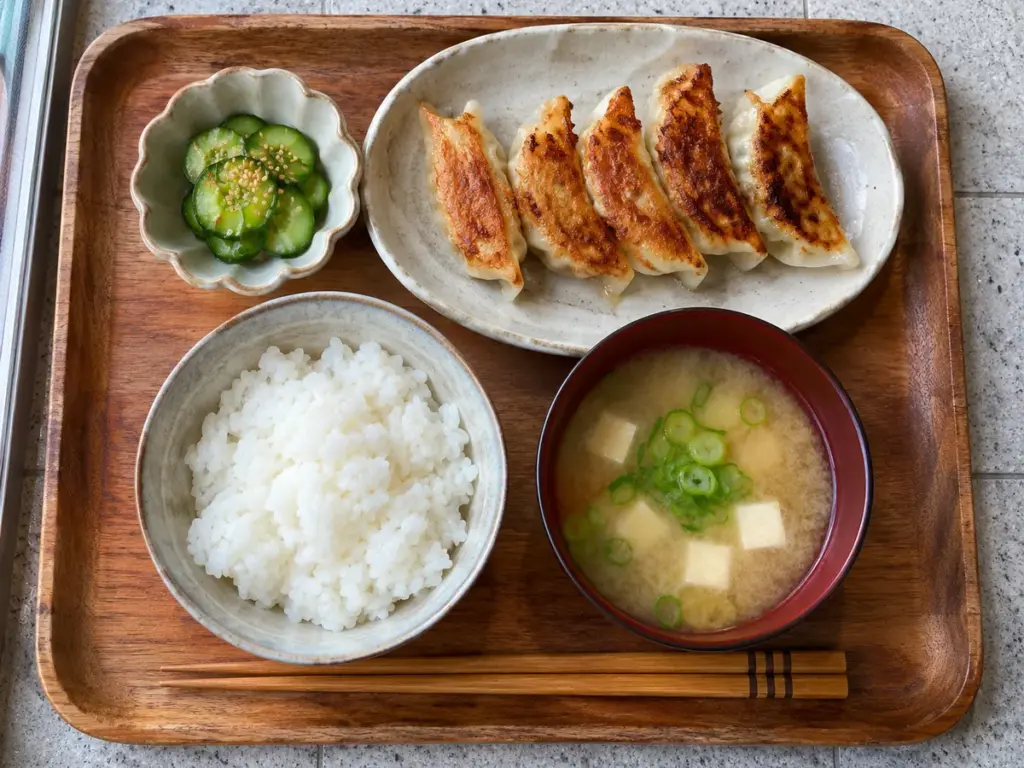
- Pair gyoza with steamed short-grain rice and miso soup when you want a full dinner from one skillet.
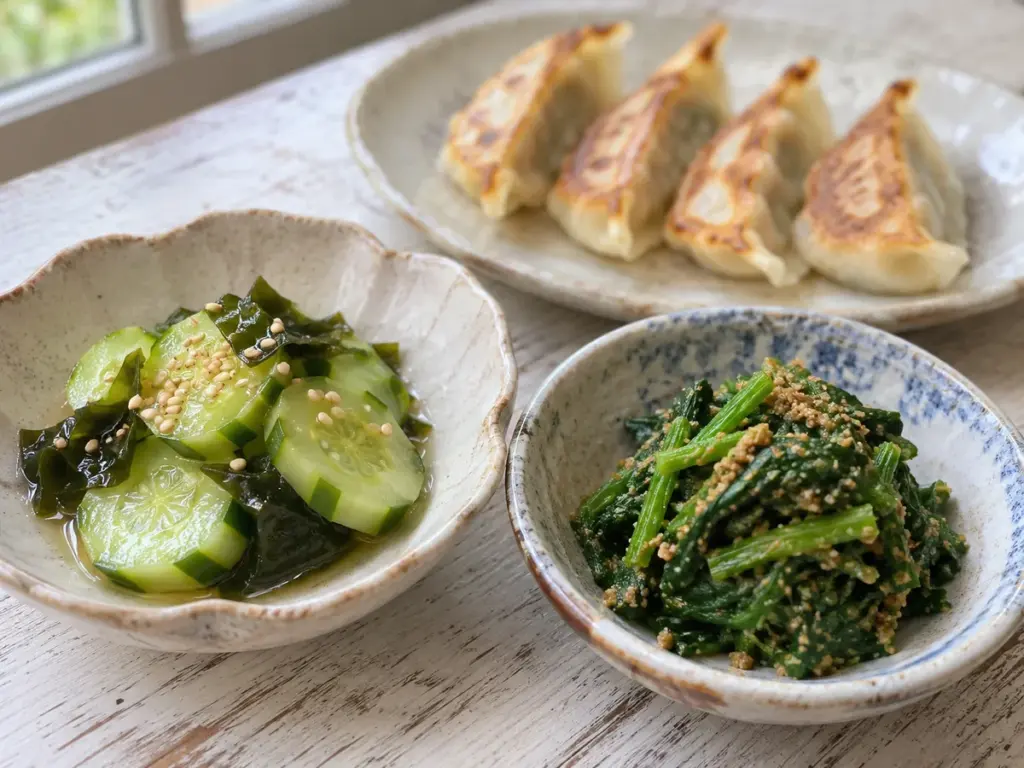
- Add sunomono or spinach gomaae for a cold, tart or nutty bite beside the hot dumplings.
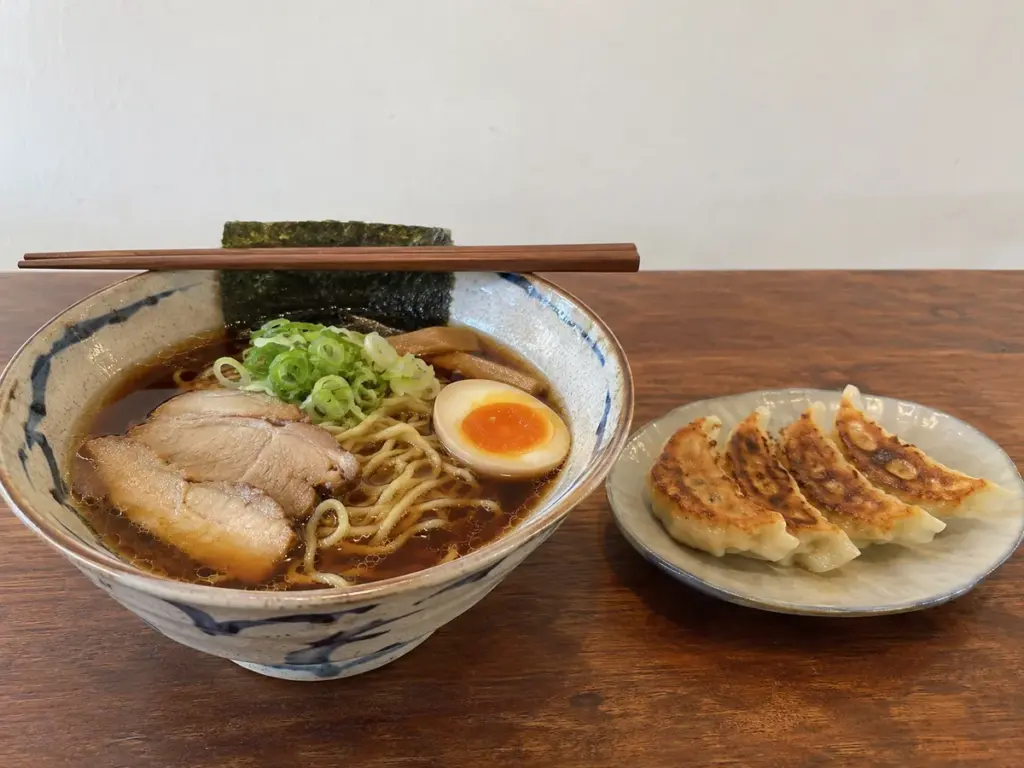
- For a ramen-shop meal, put gyoza next to shoyu ramen or chahan, which is Japanese fried rice.
- Serve each gyoza with a dip of soy sauce and unseasoned rice vinegar, with chili oil if you like heat.
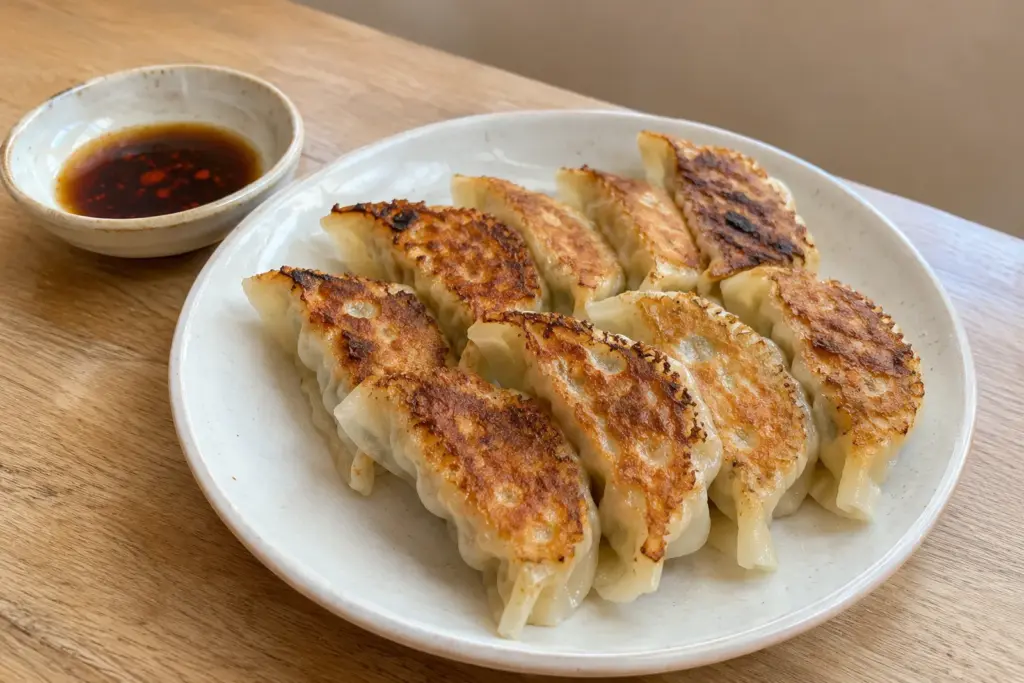
Gyoza are Japanese pan-fried dumplings: a thin wrapper around a pork and cabbage filling, with a bottom fried until crisp. The crunch and the fat are already in the dumpling, so the best side dishes bring starch, broth or a cold sharp bite.
1 What Goes Well with Gyoza?
The filling is mostly cabbage. The Just One Cookbook recipe uses ¾ pound of green cabbage to ½ pound of ground pork, seasoned with ginger, garlic, soy sauce and sesame oil, so each gyoza tastes juicy and mild inside. Much of the salt reaches you through the dip, and the crunch comes from the browned bottom.
A plate of gyoza alone is short on three things, and starch, broth and a cold sharp bite fill them.
- Starch soaks up the dip and the pork juices: steamed rice, chahan, ramen or cold soba.
- Broth washes the pork fat down between bites: miso soup, or the soup under ramen noodles.
- Cold and sharp sides cut the richness: sunomono, spinach gomaae, hiyayakko or quick pickles.
A gyoza already has the crunch that a plate of boiled or steamed dumplings borrows from scallion pancakes or egg rolls, so a fried side is optional here.
| Side | What it adds | Where it fits |
|---|---|---|
| Steamed Short-Grain Rice | Plain, sticky starch | Set meal |
| Miso Soup | Thin, savory broth | Set meal |
| Hiyayakko Cold Tofu | Cold, soft bite with no cooking | Set meal |
| Sunomono | Sweet-sour cucumber | Cold side |
| Spinach Gomaae | Nutty sesame greens | Cold side |
| Shishito Peppers | Blistered char | Hot vegetable |
| Roasted Edamame | Salty pods to eat by hand | Snack |
| Quick Pickled Cucumber and Radish | Rice vinegar crunch that keeps for days | Make-ahead side |
| Chahan | Lightly seasoned egg fried rice | Starch |
| Spicy Shoyu Ramen | Spicy broth and noodles | Full meal |
| Sesame Soba Noodle Salad | Chewy cold noodles | Starch |
| Karaage | Juicy fried chicken | Second hot dish |
One starch and one cold side are enough for a weeknight, and a soup joins them when the gyoza are the whole dinner.
2 What Dipping Sauce Goes with Gyoza?
The Just One Cookbook gyoza recipe serves each person 1 tablespoon each of soy sauce and unseasoned rice vinegar, plus ⅛ teaspoon of la-yu, a Japanese chili oil, when you want heat. Unseasoned rice vinegar is the plain kind, without the sugar and salt of seasoned rice vinegar, so the dip stays sharp and the vinegar cuts the pork fat.
Full recipe: Gyoza Recipe 餃子 from Just One Cookbook
- White wine vinegar replaces the rice vinegar 1:1 and makes the dip a little fruitier.
- Tamari at 1:1 replaces the soy sauce and holds the same salt, 980 mg of sodium per tablespoon against 960 mg for Kikkoman's regular soy sauce.
- La-yu goes in last, a drop at a time past the first ⅛ teaspoon per serving, so each guest sets their own heat.
3 Which Rice, Soup and Tofu Sides Make a Gyoza Set Meal?
Gyoza, rice and soup make a plain, filling dinner, and each bowl adds what the dumplings lack: plain starch, thin broth and a cold, soft bite. One of each is the whole set.
Steamed Short-Grain Rice
Short-grain rice cooks up sticky and mild, sticky enough to lift with chopsticks and mild enough to take the dip's soy and vinegar. Because the dumpling carries all the seasoning on the plate, you cook the rice without salt.
- Use 1 part rice to 1.1 parts water by volume, about 1 ⅛ cups of water for 1 US cup of rice, and soak the rice for 20 to 30 minutes first.
- Take the pot off the heat and leave the lid on for 10 minutes so the grains finish steaming, then fluff with a paddle.
Full recipe: How to Cook Rice in a Pot on the Stove from Just One Cookbook
Miso Soup
Miso soup gives the plate its warm broth, and a few sips between gyoza wash the pork fat from your mouth. Cubes of tofu in the bowl add something soft beside the crisp bottoms.
- RecipeTin Japan calls tofu and wakame the most popular miso soup in Japan, and its pot for 2 takes 10 minutes in all: about 1 ¾ cups of dashi, 1 ½ tablespoons of miso, 80 grams of firm tofu and 2 grams of dried wakame.
- Turn the heat off as soon as the soup returns to a boil with the tofu in, and do not keep it boiling, because the tofu overcooks and the miso loses its flavor.
Full recipe: Miso Soup Basics: Tofu and Wakame Miso Soup from RecipeTin Japan
Hiyayakko Cold Tofu
Hiyayakko is chilled silken tofu with a few toppings and no cooking at all, so it brings a cold, soft bite beside the hot, crisp gyoza. The ginger and scallion you scatter on top give it the same sharp edge that the dip gives the dumplings.
- RecipeTin Japan quarters one pack of silken tofu, about 300 grams, and tops each piece with 1 tablespoon of chopped scallion, 1 tablespoon of bonito flakes and ½ tablespoon of grated ginger.
- Serve it cold with soy sauce to pour on at the table, and use firm tofu instead if you want a harder bite and more soybean flavor.
Full recipe: Chilled Tofu (Hiyayakko) 4 Ways from RecipeTin Japan
4 Which Vegetable and Salad Sides Go with Gyoza?
Hot dumplings sit well beside vegetables that are cold or barely cooked and taste of vinegar, sesame or char. One or two of these are plenty beside a set meal.
Sunomono
Sunomono is a sweet-sour cucumber salad, and its sugar rounds off the salt of the soy dip. Cucumbers lose water to salt before they meet the dressing, so your slices stay crisp and the dressing stays clear.
- About 11 ounces of Persian cucumbers, 3 to 4 of them, are sliced thin, salted with 1 teaspoon of Diamond Crystal kosher salt for 5 minutes and squeezed by hand.
- The dressing starts with 4 tablespoons of unseasoned rice vinegar and 2 tablespoons of sugar, warmed until the sugar dissolves and then cooled, and goes on the cucumbers just before serving.
- Leftovers keep up to 3 days in the fridge, and the dressing thins out as the cucumber gives up water.
Full recipe: Japanese Cucumber Salad (Sunomono) 酢の物 from Just One Cookbook
Spinach Gomaae
Spinach gomaae is a green vegetable dressed with ground sesame, so it adds nuttiness and color while holding only 1 tablespoon of soy sauce for 4 servings. Its sesame dressing has no vinegar, so you can serve it beside a vinegary side without doubling the tang.
- One bunch of spinach, about 8 ounces, goes into salted boiling water for 20 seconds by the stems, then 30 to 45 seconds more with the leaves pushed under.
- Chill it in ice water for 1 minute and squeeze out as much water as you can, so the sesame dressing is not diluted.
- Serve it at room temperature or chilled, and keep leftovers 2 to 3 days in the fridge.
Full recipe: Japanese Spinach Salad with Sesame Dressing (Gomaae) from Just One Cookbook
Shishito Peppers
Shishito peppers blister in the air fryer, and the char on their skins gives the plate a smoky note that the steamed tops of gyoza lack. A handful of peppers is enough beside a set meal, and the whole recipe takes about 13 minutes.
- Shishito peppers in the air fryer take 6 to 8 minutes at 390°F in a single layer, after a toss in olive oil and sea salt, and the basket is shaken halfway.
- Squeeze lemon juice over the top, or add a little soy sauce if you want more salt.
Roasted Edamame
Edamame are young soybeans eaten with the fingers, and a salty, roasted batch turns a gyoza dinner into a sharing table. Edamame need only salt, so they add no new sauce to a plate that already has a dip.
- Frozen pods go straight into the basket, and edamame roasted in the air fryer take 8 to 12 minutes at 350°F, shaken halfway, with a drizzle of olive oil and salt.
- Keep the pods in a single layer and check early, because they go from roasted to charred quickly.
Quick Pickled Cucumber and Radish
A jar of quick pickles is the make-ahead choice, because the sliced vegetables sit in the brine while you cook the gyoza. Peppery radish gives you a different sharp bite from the sweet cucumber salad above.
- You can serve pickled cucumber and radish slices after at least 30 minutes in the fridge, and a few hours or overnight deepens the flavor.
- Keep them chilled and eat them within 5 to 7 days.
5 Which Noodle and Fried Rice Sides Go with Gyoza?
The Just One Cookbook gyoza page suggests spicy shoyu ramen as a set meal, and noodles or fried rice give gyoza the ramen-shop treatment. Ramen, fried rice and cold noodles each work as a meal on their own, so you serve a smaller bowl and leave out the separate rice and soup.
Chahan
Chahan, Japanese fried rice, is seasoned with ½ teaspoon of salt, ⅛ teaspoon of white pepper and 2 teaspoons of soy sauce for 2 servings, a light touch that leaves room for the dip.
- Start with 1 ¾ cups of cooked short-grain rice, about 12 ounces, for 2 servings.
- Day-old rice fries into separate grains because it has dried out slightly.
Full recipe: Easy Japanese Fried Rice (Yakimeshi) 焼き飯 from Just One Cookbook
Spicy Shoyu Ramen
Shoyu ramen is the ramen-shop partner of gyoza. A bowl is a full meal of broth, noodles and toppings, so it takes the place of both the rice and the soup on the plate, and a small plate of gyoza beside it is plenty.
- The Just One Cookbook bowl for 2 takes 30 minutes and gets its heat from 2 teaspoons of doubanjiang, a fermented chili bean paste.
- Pull the noodles just short of done, because they keep cooking in the hot broth.
Full recipe: Spicy Shoyu Ramen ピリ辛醤油ラーメン from Just One Cookbook
Sesame Soba Noodle Salad
A cold soba salad adds a chewy, cool starch with cucumber and carrot crunch, and it is served cold, so only the noodles need a pot of boiling water. Its dressing holds 3 tablespoons of soy sauce for 8 ounces of noodles, so you dip the gyoza lightly when this is on the table.
- A bowl of cold soba tossed with sesame dressing takes 25 minutes in total, and the soba is rinsed under cold water until it is firm and separate.
- When you make the salad ahead, keep the dressing in its own jar until just before serving.
6 Should Gyoza Be the Main Dish or the Starter?
With no other main dish, gyoza need rice and soup under them, and beside ramen or fried chicken a small plate of gyoza works as the starter.
Gyoza as the Main
Rice, miso soup and a cold cucumber side give a full dinner from one skillet of dumplings.
The rice needs a 20 to 30 minute soak and 10 minutes of steaming, so it goes on before the first gyoza.
Gyoza as the Starter
A small plate opens the meal and the second dish brings the starch, so the rice can be skipped.
Two hot dishes share the stove, and with karaage two fried dishes land on one table.
Karaage
Karaage is Japanese fried chicken, and it makes a second hot dish for a starter-sized plate of gyoza. Thigh meat stays juicy through the fry. Two fried dishes make a heavy table, so you add a cold side such as hiyayakko or sunomono.
- RecipeTin Japan marinates about 12 ounces of boneless thigh pieces in soy sauce, sake and grated ginger for 30 minutes to 1 hour, then coats them in cornstarch.
- Fry twice, 2 ½ to 3 minutes at 320°F, a 3 to 4 minute rest, then 30 to 60 seconds at 374 to 392°F, and check with a thermometer that the chicken reaches 165°F, the federal minimum for poultry.
Full recipe: Japanese Fried Chicken (Karaage Chicken) from RecipeTin Japan
7 Which Sides Should You Skip with Gyoza?
- A coleslaw or shredded cabbage salad repeats the filling, which holds ¾ pound of cabbage to ½ pound of pork in the Just One Cookbook recipe.
- Tempura and other battered vegetables put a second fried coating beside the gyoza bottoms, and a plate with karaage already has enough fried food.
- Pork wonton soup, or any soup with dumplings floating in it, puts a second dumpling on the table.
- A teriyaki or sweet-and-sour glaze on the gyoza themselves brings a sweet sauce that fights the soy and vinegar dip.
8 When Do You Start Each Dish So the Gyoza Come Out Last?
Rice is the slowest dish and gyoza are the one dish that cannot wait, so the dumplings go into the pan last of all.
- Soak the rice. Soak it for 20 to 30 minutes, cook it, and let it steam covered for 10 minutes off the heat.
- Salt the cucumbers. Sunomono cucumbers need 5 minutes in salt before the squeeze, and the dressing keeps a day or two, but toss them together just before serving.
- Chill the tofu. Quarter the silken tofu for hiyayakko and keep it cold, with the scallion, bonito flakes and ginger added just before you serve.
- Simmer the miso soup. The soup takes about 10 minutes in all, and the heat goes off as soon as it returns to a boil with the tofu in.
- Brown the gyoza. In a pan over medium heat with 1 tablespoon of oil, give them 3 minutes until the bottoms are golden, add 4 tablespoons of water and cover for 3 minutes, then uncover for about 1 minute until the water is gone. Frozen gyoza need 1 to 2 minutes more of steaming.
9 What Is the Safe Way to Cook, Store and Reheat Gyoza?
Warning
Pork gyoza are done when a food thermometer in the filling of one dumpling reads 160°F, the federal minimum for ground pork, and leftovers must reach 165°F when you reheat them.
- Refrigerate leftover gyoza within 2 hours of cooking (1 hour when the room is above 90°F) and eat them within 3 to 4 days, as the USDA leftovers guidance says.
- To bring back the crisp bottom, reheat the dumplings in a skillet: 2 to 3 minutes bottom side down in oil, then a couple of tablespoons of water under a lid for 2 to 3 minutes more, until the filling is hot throughout.
- The cucumber and spinach sides keep less well than the dumplings: 3 days for sunomono and 2 to 3 days for gomaae, per their recipes, while the quick pickles hold 5 to 7 days.
Sources
- USDA FSIS: Safe Minimum Internal Temperature Chart
- USDA FSIS: Leftovers and Food Safety
- Just One Cookbook: Gyoza Recipe
- RecipeTin Japan: Miso Soup Basics
- RecipeTin Japan: Chilled Tofu (Hiyayakko) 4 Ways
- RecipeTin Japan: Karaage Chicken

Andrew Gray is a seasoned food writer and blogger with a wealth of experience in the restaurant and catering industries. With a passion for all things delicious, Andrew has honed his culinary expertise through his work as a personal chef and caterer.
His love for food led him to venture into food writing, where he has contributed to various online publications, sharing his knowledge and insights on the culinary world. As the proud owner of CooksCrafter.com, Andrew covers a wide range of topics, including recipes, restaurant reviews, product recommendations, and culinary tips.
Through his website, he aims to inspire and educate fellow food enthusiasts, offering a comprehensive resource for all things food-related.