Short Answer
Low-sugar cookies get their sweetness from a smaller amount of sugar, from honey, maple syrup or dates, or from a zero-sugar sweetener such as erythritol or monk fruit.
- For the least sugar, start with the keto peanut butter, espresso chocolate chunk or coconut macaroon recipes.
- These use erythritol or monk fruit and no sugar, honey or syrup in the dough.
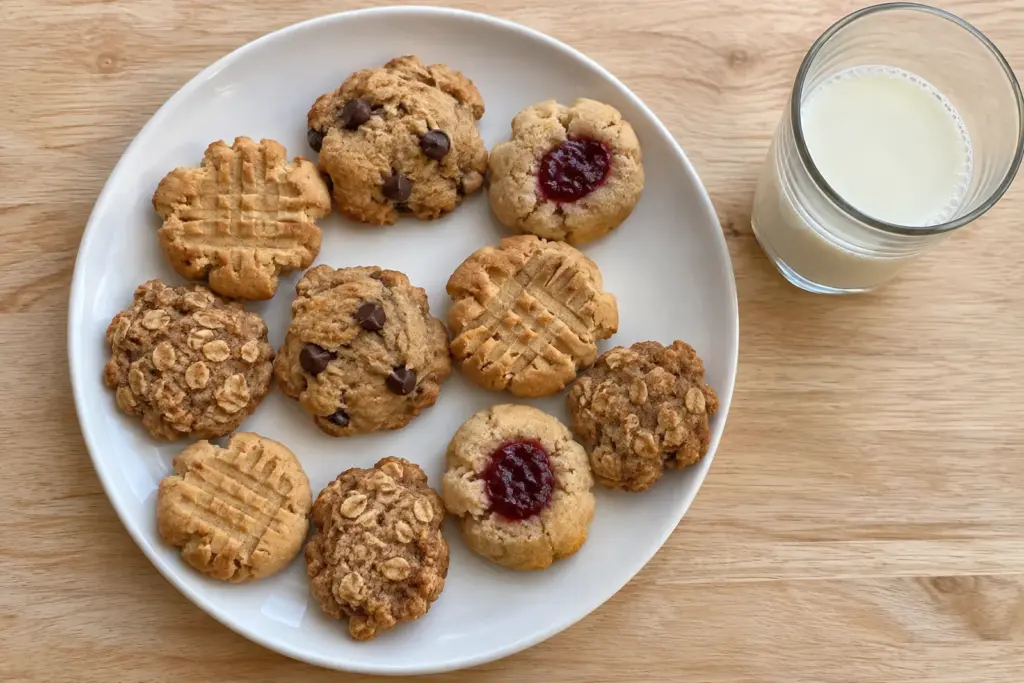
Cookies made with erythritol spread little and bake cakey, so they behave differently from the classic cookies among our dessert recipes, and the baking notes matter as much as the ingredient list. Every recipe here names its sweetener and the amount in the batch, so you can judge each cookie yourself.
1 What Counts as a Low-Sugar Cookie?
The FDA defines three sugar claims:
- “sugar free” means less than 0.5 g of sugars per serving
- “reduced sugar” means at least 25 percent less sugar than a reference food
- “no added sugars” means no sugar or sugar-containing ingredient such as jam or juice concentrate was added.
It has no definition for “low sugar,” which leaves the sweetener list as the honest measure.
On a Nutrition Facts label, added sugars include sugars from syrups and honey as well as table sugar, and the Daily Value is 50 grams a day for a 2,000 calorie diet, so honey, maple syrup and coconut sugar still count as added sugars when a recipe calls them natural. Sugar that comes inside whole fruit, such as the dates in the walnut cookies, counts toward total sugars, not added sugars.
For a yardstick, the original Toll House chocolate chip recipe uses ¾ cup of granulated sugar and ¾ cup of packed brown sugar with 2 ¼ cups of flour and makes about 5 dozen cookies, which is roughly ⅔ cup of sugar for every cup of flour.
The recipes here that pair real sugar or syrup with wheat or almond flour stay under that line, from about ⅙ cup per cup of flour in the flourless cocoa almond cookies to a little over ½ cup in the zucchini oatmeal cookies.
- Honey and syrup are liquids, so that comparison is approximate, and because the original recipes gave no yield, a grams-per-cookie figure would be a guess.
- The yardstick only shows that a cookie has less sugar than a classic one.
- The FDA “reduced sugar” claim needs at least 25 percent less than the reference food, which on this rough measure is about ½ cup per cup of flour, so the zucchini cookies, at a little over ½ cup, would not qualify.
- The cranberry cookies sit right at that line before their dried cranberries are counted.
2 How Do Sugar Substitutes Change a Cookie?
King Arthur baked cookies with two erythritol-based sugar replacements and got very little spread, a dry, cakey crumb and, with one of them, a cool mouthfeel. Their conclusion was that sugar replacements contribute nothing to structure, and they suggested simply reducing the granulated sugar in a regular recipe. That is why you press the keto peanut butter cookies flat with a fork before baking, and why the zero-sugar doughs lean on nut butter, almond flour and eggs to hold together.
A cookie with no sugar in the dough has to give up some spread and chew, and a cookie that spreads and browns like a regular one needs some sugar, honey or syrup.
Erythritol, monk fruit or stevia blend
Adds no sugar to the dough, so the sweetener amount in the batch is the only number to check.
Little spread, a cakey or dry crumb and a possible cool aftertaste.
A smaller amount of sugar, honey or syrup
Spreads and browns the way cookie dough normally does.
Still counts as added sugars on a label.
The bag you buy matters as much as the sweetener name. Some granulated monk fruit products list erythritol first, and some stevia baking blends contain cane sugar: King Arthur’s test included a stevia blend that lists both.
Honey browns faster than sugar and maple syrup darkens quickly, so when you replace refined sugar with either in a cookie you already bake, check your pan early.
3 Which Low-Sugar Cookie Should You Bake?
The sweetener sets how a dough bakes, so choose by that first and by oven time second. Most doughs bake at 350°F, a macaroon needs 20 to 25 minutes at 325°F, and the almond butter and peanut butter and jelly cookies are out in 8 to 10.
- 8 to 10 minutes: almond butter chocolate chip and peanut butter and jelly cookies.
- 10 to 12 minutes: keto peanut butter, pumpkin spice, espresso chocolate chunk, oatmeal spice, flourless cocoa almond, chia seed and coconut, cranberry walnut, salted caramel and matcha cookies.
- 12 to 15 minutes: lemon poppy seed, snickerdoodle, walnut and date, zucchini oatmeal and cinnamon roll cookies.
- Longer: maple pecan thumbprints take 12 to 15 minutes plus 2 to warm the filling, and biscotti take 25 minutes, then 12 to 15 minutes more.
Seven recipes use no wheat flour as written: the almond butter, keto peanut butter, flourless cocoa almond, lemon poppy seed, snickerdoodle, macaroon and peanut butter and jelly cookies.
- If you avoid wheat for celiac disease, still check the labels on chocolate chips, espresso powder and baking powder.
- If you skip wheat but not sugar, you can bake coconut flour shortbread or almond flour peanut butter cookies instead.
- Every recipe here uses eggs or butter, so none is vegan as written.
When turning on the oven is the problem, berry chia seed pudding and frozen yogurt bark need no baking at all.
4 How Much Sugar Do the Sweeteners Hold?
USDA FoodData Central lists the sugars in 100 g of each ingredient and the weight of a cup, which together turn any recipe amount into grams.
| Sweetener | Sugars per 100 g | One cup weighs |
|---|---|---|
| Granulated sugar | 99.8 g | 200 g |
| Packed brown sugar | 97.0 g | 220 g |
| Honey | 82.1 g | 339 g |
| Maple syrup | 60.5 g | 315 g |
For a recipe amount, find the weight and multiply by the percentage: ¼ cup of honey is about 85 g, and 82.1 percent of that is about 70 g of sugars.
Other ingredients in the recipes hold this much sugar per 100 g:
- Sweetened dried cranberries: 72.6 g
- Medjool dates: 66.5 g
- Dark raisins: 65.2 g
- Dark chocolate, 60 to 69% cacao: 36.7 g
- Dark chocolate, 70 to 85% cacao: 24.0 g
These are database averages, so the label on your own jar is the number for your kitchen.
In one batch, the honey, syrup, brown sugar or white sugar adds this much sugar. Seven of the recipes and the Toll House original are listed here; the flourless cocoa almond, maple pecan, salted caramel and cinnamon roll cookies give their own numbers in their sections.
| Cookie | Sweetener | Sugars |
|---|---|---|
| Almond Butter Chocolate Chip | ¼ cup honey | about 70 g |
| Oatmeal Spice with Maple Syrup | ⅓ cup maple syrup | about 64 g |
| Chia Seed and Coconut | ⅓ cup honey | about 93 g |
| Zucchini Oatmeal | ⅓ cup brown sugar, ¼ cup honey | about 141 g |
| Peanut Butter and Jelly | ½ cup brown sugar | about 107 g |
| Raspberry Almond Biscotti | ¾ cup sugar | about 150 g |
| Matcha Green Tea | ¾ cup sugar, 1 tablespoon honey | about 167 g |
| Toll House original | ¾ cup each, sugar and brown | about 310 g |
The Toll House recipe makes about 5 dozen cookies, which is about 5 g of sugars per cookie from the two sugars alone.
The other recipes give no yield, so compare batches and not cookies, and remember that dates, dried fruit, chocolate, preserves and coconut sugar add sugars these batch figures leave out.
5 What Happens When You Trade Honey and Maple Syrup?
By the cup weights and sugars figures above, honey holds about 17 g of sugars per tablespoon, 70 g per ¼ cup and 93 g per ⅓ cup, while maple syrup holds about 12 g, 48 g and 64 g.
- Maple syrup in place of the honey takes off about 22 g in the ¼ cup recipes, 29 g in the chia seed and coconut cookies and 5 g in the matcha cookies’ tablespoon.
- If you replace maple syrup with honey in the oatmeal spice cookies or the maple pecan thumbprints, the batch gains about 29 g.
Syrup and honey pour differently, so start with the same measure and judge the dough.
6 Which Cookies Use Erythritol, Monk Fruit or Stevia?
The keto peanut butter, lemon poppy seed, pumpkin, espresso, macaroon and snickerdoodle cookies rely on erythritol, monk fruit or a stevia blend as written, so their doughs carry no sugar, honey or syrup.
The snickerdoodle stays that way only with erythritol, and the pumpkin cookies only with a stevia blend that has no cane sugar. They show the behavior King Arthur saw, with little spread and a tight, cakey crumb, so you shape each one by hand before it goes in the oven.
1. Keto Peanut Butter Cookies
Peanut butter, one egg and erythritol make up the whole dough, so a jar with added sugar would put sugar back into the cookies. Choose a natural peanut butter with only peanuts and salt on the label, and stir the oil back in before you measure, or your dough turns crumbly.
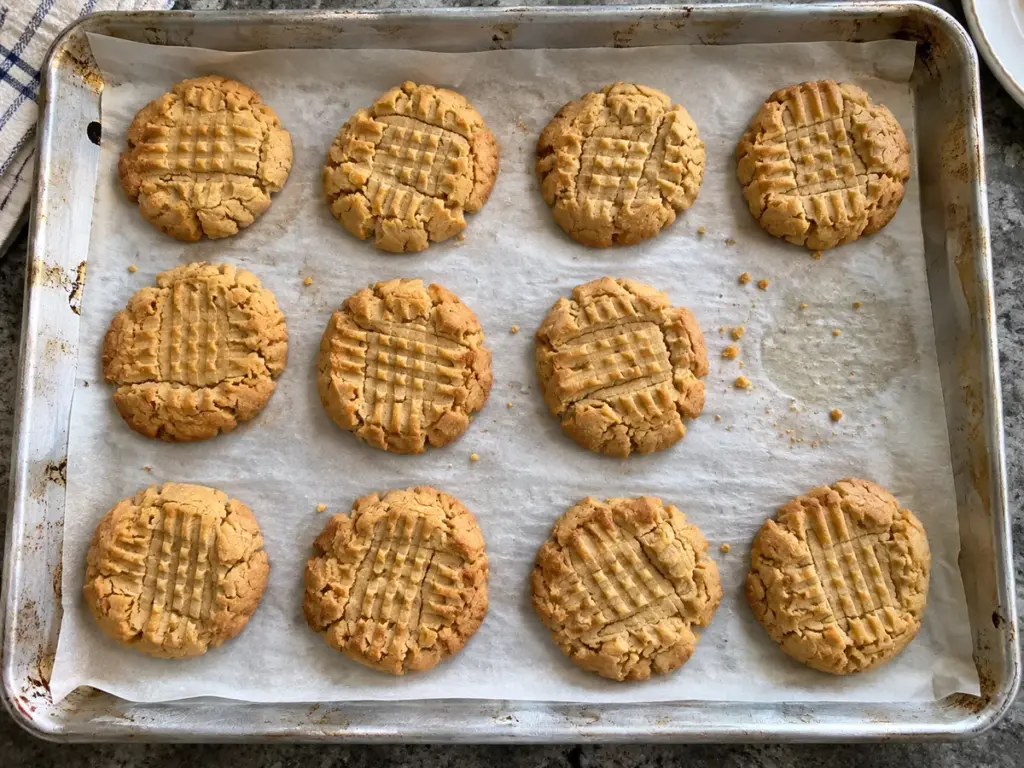
Erythritol cookies spread very little, so the fork marks stay, and you pull the tray when the edges are golden while the centers still look soft, because they firm up as they cool.
Ingredients
- 1 cup natural peanut butter, oil stirred in
- ¾ cup granulated erythritol
- 1 large egg
- 1 teaspoon vanilla extract
- ½ teaspoon baking soda
- ¼ teaspoon salt
Instructions
- Heat the oven to 350°F (175°C) and line a baking sheet with parchment paper.
- Stir everything together in a large bowl until the dough is smooth.
- Scoop tablespoon portions 2 inches apart and press each with a fork in a crisscross pattern.
- Bake 10 to 12 minutes, until the edges turn golden. The centers stay soft until they cool.
- Cool 5 minutes on the sheet, then move the cookies to a wire rack.
Swaps
- Cashew butter or almond butter takes the peanut butter’s place for a different nut flavor; start with the same cup.
- A monk fruit sweetener that measures cup for cup can stand in for the erythritol, and a blend that lists erythritol first bakes the same way.
- Almond extract can replace the vanilla; begin with ½ teaspoon and taste the next batch.
Because ¾ cup of erythritol adds no sugar, the only sugar in this batch comes from the peanut butter, so read the Added Sugars line on the jar.
2. Lemon Poppy Seed Cookies
Lemon zest carries these cookies, because ¼ cup of granulated monk fruit sweetener gives only a light sweetness and the oils in the zest fill the gap with flavor. With a monk fruit blend that lists erythritol first, check the ingredient list on the bag, because this dough then bakes like the other sugar-free cookies here, with soft, cakey centers and little spread.
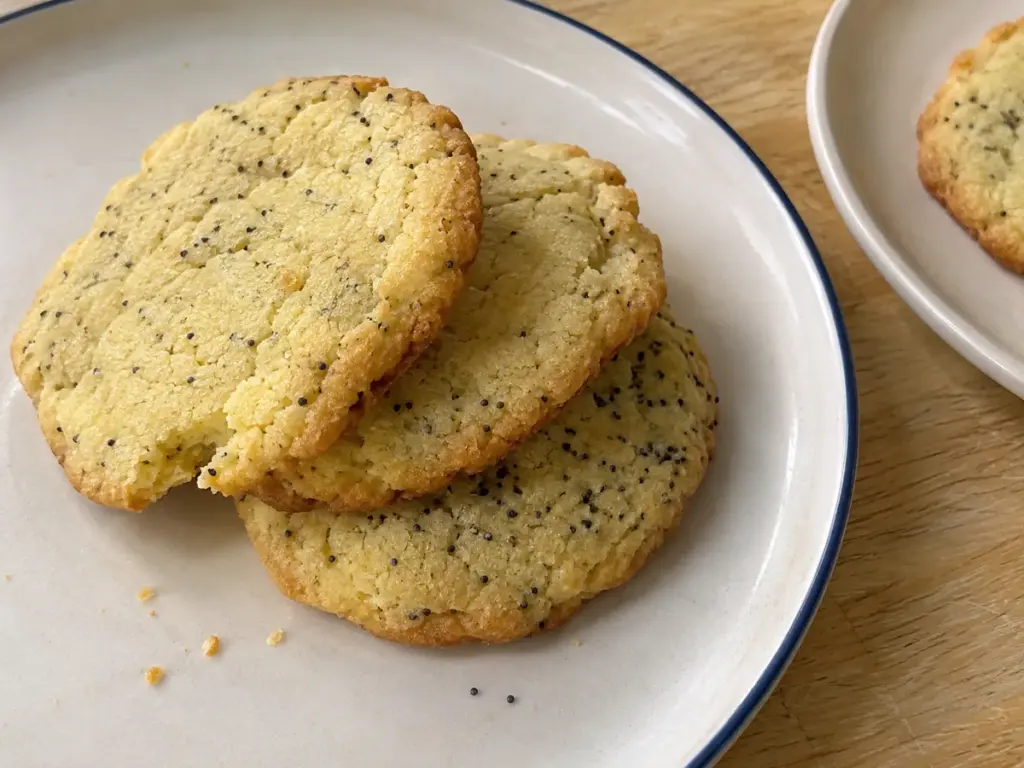
Almond flour has no gluten to hold the dough together, so you flatten each scoop with the back of a spoon and let the cookies firm up on the sheet before you lift them.
Ingredients
- ½ cup unsalted butter, softened
- ¾ cup finely ground almond flour
- ¼ cup granulated monk fruit sweetener
- 1 large egg
- 2 tablespoons poppy seeds
- Zest of 1 lemon and 2 tablespoons fresh lemon juice
- ½ teaspoon baking powder
- ¼ teaspoon salt
- 1 teaspoon vanilla extract
Instructions
- Heat the oven to 350°F (175°C) and line a baking sheet with parchment paper.
- Cream the butter and sweetener until smooth and slightly fluffy, then beat in the egg, zest, lemon juice and vanilla.
- Whisk the almond flour, baking powder, salt and poppy seeds together and fold them into the butter mixture.
- Drop tablespoons of dough 2 inches apart and flatten each slightly.
- Bake 12 to 15 minutes, until the edges are lightly golden, then cool 5 minutes on the sheet before moving them to a rack.
Swaps
- Erythritol or a stevia baking blend can replace the monk fruit sweetener, though blends differ in how far a cup goes, so read the cup-for-cup line on the bag.
- Lime zest and juice turn the lemon cookie into a lime one in the same amounts.
At ¼ cup, this dough holds the least sweetener of the six zero-sugar cookies.
Use a fine grater and take only the yellow zest, because the white pith underneath is bitter.
3. Pumpkin Spice Cookies with Stevia
Canned pumpkin supplies the moisture, and you want plain pumpkin puree, because pumpkin pie filling has sugar and spices added and puree has nothing added. The ¾ cup of stevia baking blend is a second label to read.
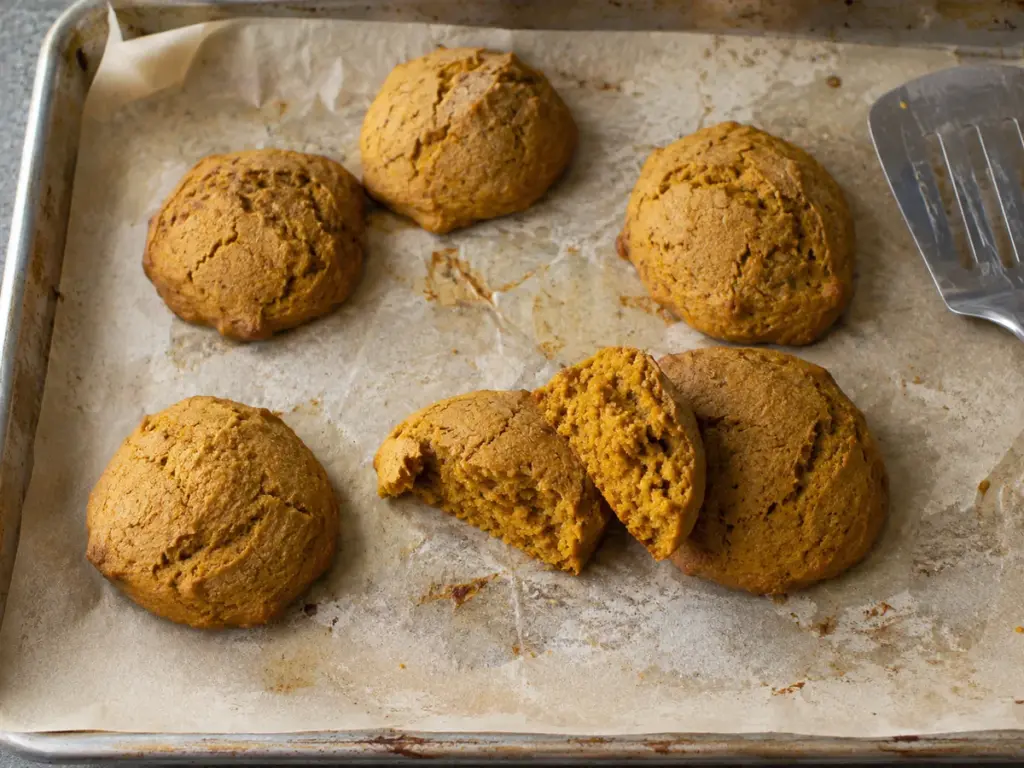
Blends made to replace sugar cup for cup are often bulked with erythritol, and some mix cane sugar into the stevia and replace sugar at half the volume, which changes both the amount you measure and how much sugar is in the dough. Pumpkin makes the crumb soft and cakey, closer to a muffin top than a chewy cookie.
Ingredients
- 1 cup plain pumpkin puree
- ½ cup unsalted butter, softened
- ¾ cup cup-for-cup stevia baking blend
- 1 large egg
- 1 ½ cups all-purpose flour
- 1 teaspoon baking soda
- ½ teaspoon salt
- 1 teaspoon cinnamon, ½ teaspoon ground nutmeg and ¼ teaspoon ground cloves
- 1 teaspoon vanilla extract
Instructions
- Heat the oven to 350°F (175°C) and line two baking sheets with parchment paper.
- Cream the butter and stevia blend until fluffy, then mix in the pumpkin, egg and vanilla.
- Whisk the flour, baking soda, salt and spices together and fold them in until no dry streaks remain.
- Scoop tablespoons 2 inches apart and flatten each ball slightly with your palm.
- Bake 10 to 12 minutes, until the edges are set and the centers are still soft, then cool 5 minutes on the sheets.
Swaps
- Canned butternut squash puree takes the pumpkin’s place for a similar texture, as long as the can lists squash only.
- Granulated erythritol replaces the stevia blend when its bag measures cup for cup, and unlike some blends it holds no cane sugar.
Whisk the nutmeg and cloves into the flour so the spice spreads evenly, because ¼ teaspoon of ground cloves is strong enough to taste in one bite.
The puree keeps the dough wet, so wait until the edges are set before you pull the pan.
4. Espresso Chocolate Chunk Cookies
Two tablespoons of espresso powder make the coffee strong enough to stand next to dark chocolate, so use instant espresso, which dissolves into the dough.
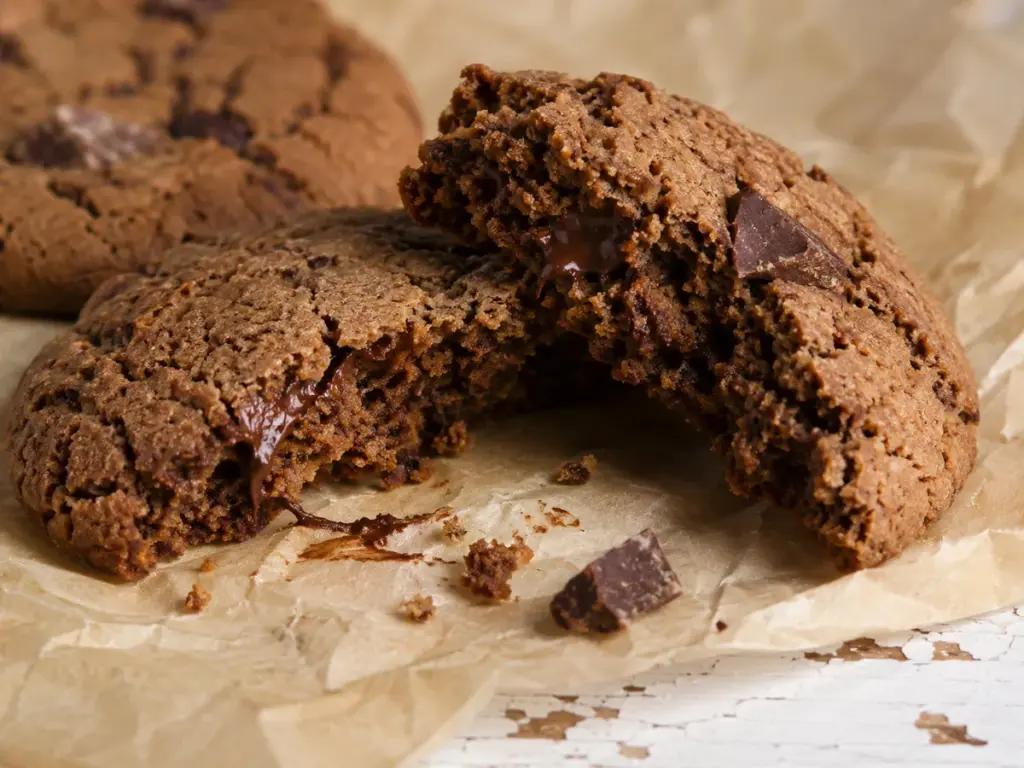
Erythritol replaces all the sugar in the dough, which leaves the ¾ cup of chocolate chunks as the only added sugar in the cookie. A bar of 70 percent cacao or darker keeps that amount low, and sugar-free chips remove it.
Fold the chunks in last, and let the cookies cool on the sheet before you move them.
Ingredients
- ½ cup unsalted butter, softened
- ½ cup granulated erythritol
- 1 large egg
- 1 teaspoon vanilla extract
- 1 cup all-purpose flour
- ¼ teaspoon baking soda
- ¼ teaspoon salt
- 2 tablespoons espresso powder
- ¾ cup dark chocolate chunks
Instructions
- Heat the oven to 350°F (175°C) and line a baking sheet with parchment paper.
- Cream the butter and erythritol until light, then beat in the egg and vanilla.
- Whisk the flour, baking soda, salt and espresso powder together and stir them in until just combined.
- Fold in the chocolate chunks and scoop tablespoons 2 inches apart.
- Bake 10 to 12 minutes, until the edges are set and lightly golden, then cool on the sheet and finish on a rack.
Swaps
- Instant coffee granules give a milder coffee flavor than the espresso powder.
- Brown sugar at ½ cup in place of the erythritol puts about 107 g of sugars into the batch.
Dark chocolate with 70 to 85 percent cacao holds 24.0 g of sugars per 100 g against 36.7 g for the 60 to 69 percent bar, so the 70 percent bar keeps the chunks’ sugar lower than a milder dark bar would.
5. Vanilla Coconut Macaroons
Egg whites alone hold these macaroons together, so the mixture has no flour, no butter and no sugar: 2 ½ cups of coconut, ¾ cup of monk fruit sweetener and 3 egg whites. Look for the word unsweetened on the coconut bag.
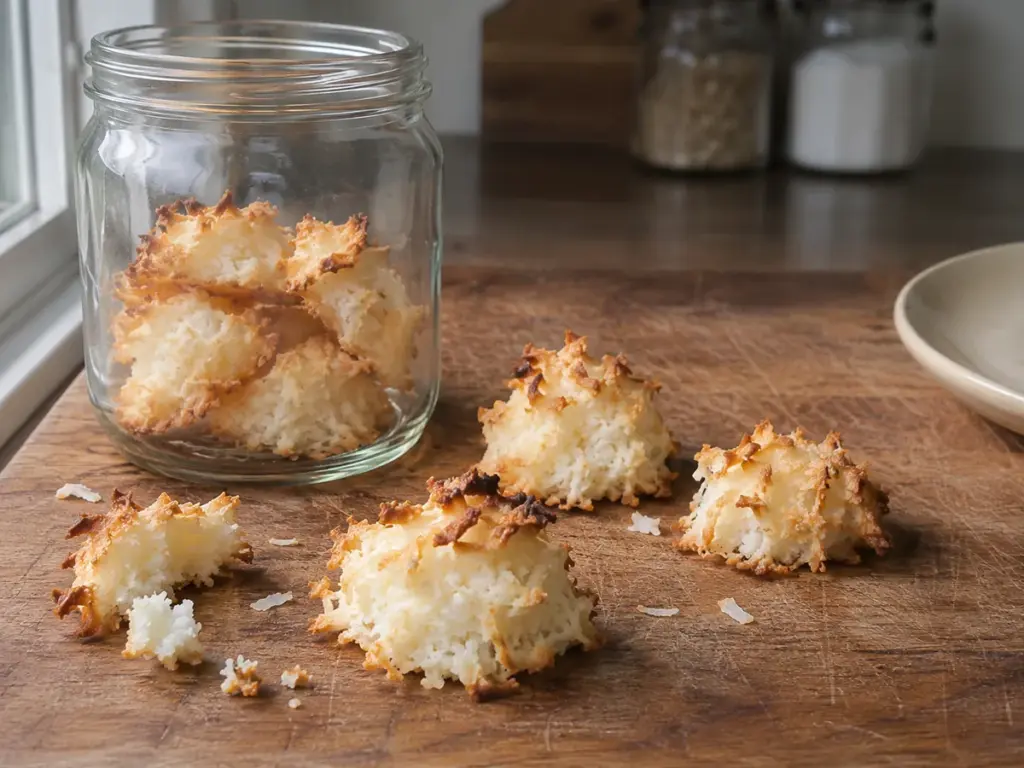
Whisk the whites only until foamy, because they need to coat the coconut and nothing more, and bake at 325°F, a lower oven than the other cookies, until the edges turn golden brown.
Ingredients
- 2 ½ cups unsweetened shredded coconut
- ¾ cup granulated monk fruit sweetener
- 3 large egg whites
- 1 teaspoon vanilla extract
- ¼ teaspoon salt
Instructions
- Heat the oven to 325°F (165°C) and line a baking sheet with parchment paper.
- Stir the coconut, sweetener and salt together in a large bowl.
- Whisk the egg whites until foamy but not stiff, then fold them and the vanilla into the coconut.
- Drop level tablespoons 1 inch apart.
- Bake 20 to 25 minutes, until the edges are golden brown, and let the macaroons cool completely on the sheet.
Swaps
- Honey or maple syrup can replace the monk fruit sweetener, but a liquid loosens the mixture, so start with ¼ cup, then judge the mixture. That adds about 70 g of sugars with honey or about 48 g with maple syrup to a cookie that has none.
- Vanilla bean paste gives a more intense vanilla than the 1 teaspoon of extract.
- Sweetened shredded coconut is the swap to skip: FoodData Central lists it at 43.2 g of sugars per 100 g, against 7.35 g for unsweetened desiccated coconut.
Drop each level tablespoon with a firm press of the spoon, since loose mounds fall apart on the sheet.
6. Snickerdoodle Cookies with Coconut Flour
Coconut flour soaks up far more liquid than wheat flour, which is why half a cup of it needs four eggs and half a cup of melted butter, and why the dough comes out thick enough to roll into balls.
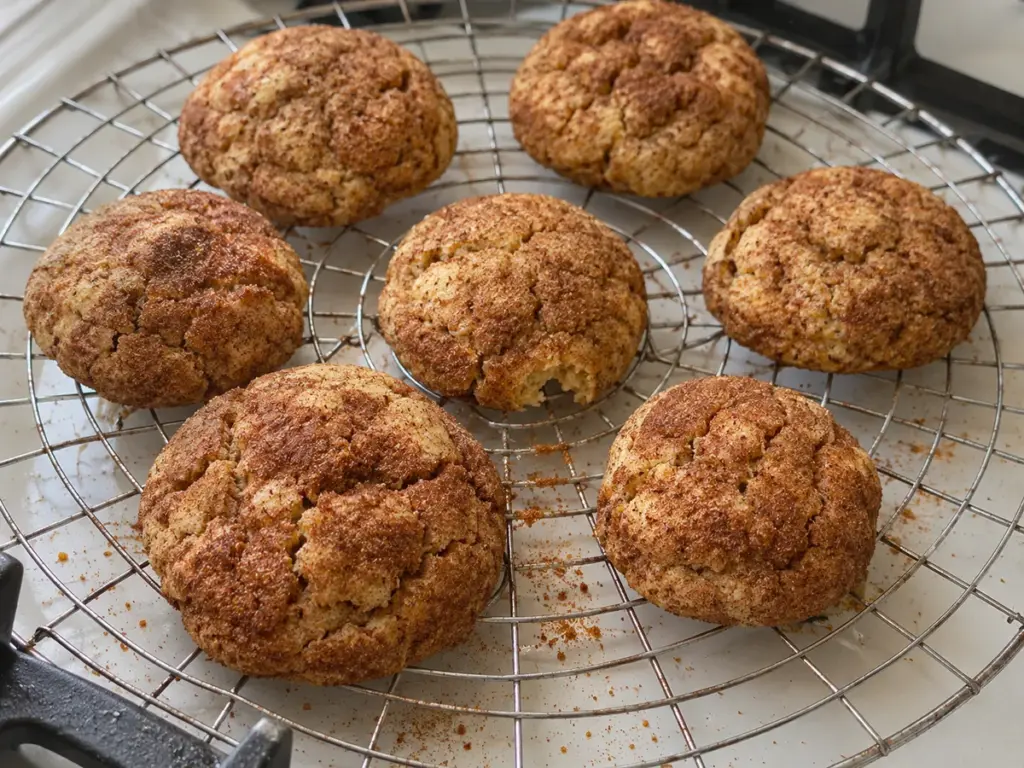
You choose the sweetener, and only erythritol keeps these sugar-free: with granulated sugar or coconut sugar, the dough holds ⅓ cup of real sugar and the coating another 2 tablespoons. Cream of tartar and baking soda supply the tang and lift that make a snickerdoodle, so keep both.
Ingredients
- 4 large eggs
- ½ cup unsalted butter, melted and cooled
- ½ cup coconut flour, sifted
- ⅓ cup granulated sweetener (erythritol, coconut sugar or sugar)
- 1 teaspoon cream of tartar
- ½ teaspoon baking soda
- ¼ teaspoon salt
- Coating: 2 tablespoons of the same sweetener and 1 teaspoon ground cinnamon
Instructions
- Heat the oven to 350°F (175°C) and line a baking sheet with parchment paper.
- Whisk the eggs and butter, then stir in the sweetener, cream of tartar, baking soda and salt.
- Add the coconut flour a little at a time. The dough is thicker than usual but holds a shape.
- Roll 1-tablespoon balls in the cinnamon coating and set them 2 inches apart, then flatten each with your hand.
- Bake 12 to 15 minutes, until the edges are set and the centers are still soft, and cool on the sheet for a few minutes.
Swaps
- Granulated sugar puts about 67 g of sugars in the dough and 25 g more in the coating, about 92 g a batch by the cup weight and sugars figures above.
- A pinch of nutmeg or cardamom in the cinnamon coating changes the spice.
Coconut flour keeps thickening as it sits, so if the dough looks loose after you add the half cup, wait a few minutes before adding more.
7 Which Cookies Use Honey, Maple Syrup or Dates?
Honey and maple syrup are real sugars, so these recipes use a small pour of syrup in place of a bag of sugar. Syrup is a liquid, which makes these doughs softer than sugar doughs and makes the cookies brown faster, so you watch the edges and pull the pan when they turn golden.
The dates in the last recipe bring their sugar along with the fruit.
7. Almond Butter Chocolate Chip Cookies
One cup of almond butter, ¼ cup of honey and an egg make a dough that holds together without flour, so these cookies contain no wheat as written. With no flour to give structure, the dough barely spreads, so flatten each scoop yourself and leave the cookies on the hot sheet for 5 minutes before you lift them, or they tear.
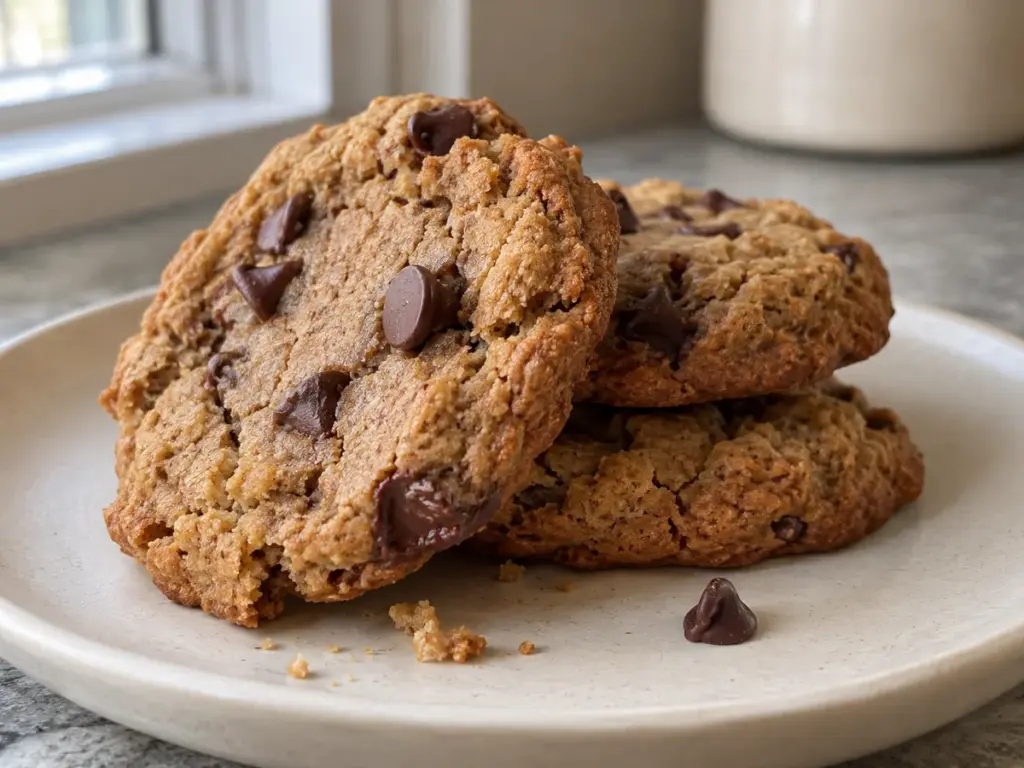
The ½ cup of dark chocolate chips is the second source of sugar.
Ingredients
- 1 cup almond butter, creamy or crunchy
- ¼ cup honey
- 1 large egg
- 1 teaspoon vanilla extract
- ½ teaspoon baking soda
- ¼ teaspoon salt
- ½ cup dark chocolate chips
Instructions
- Heat the oven to 350°F (175°C) and line a baking sheet with parchment paper.
- Stir the almond butter, honey, egg and vanilla until smooth, then mix in the baking soda and salt.
- Fold in the chocolate chips.
- Scoop tablespoons 2 inches apart and flatten each with the back of a spoon.
- Bake 8 to 10 minutes, until the edges are golden and the centers look set but soft, then cool 5 minutes on the sheet.
Swaps
- Peanut butter or cashew butter takes the almond butter’s place, starting with the same cup.
- Sugar-free chips take out the chips’ sugar, and a chopped dark chocolate bar works in their place too.
- Chopped nuts or unsweetened coconut add crunch.
FoodData Central lists plain almond butter at only 4.43 g of sugars per 100 g, so the honey and the chips supply nearly all the sugar.
If the dough looks loose or oily, stir the jar well next time and chill the bowl for 20 minutes before scooping.
8. Oatmeal Spice Cookies with Maple Syrup
Maple syrup is both sweetener and liquid in this dough: ⅓ cup of it, with ⅓ cup of butter and an egg, keeps 1 cup of rolled oats and ¾ cup of flour moist. Buy pure maple syrup, because pancake syrup is mostly corn syrup with flavoring.
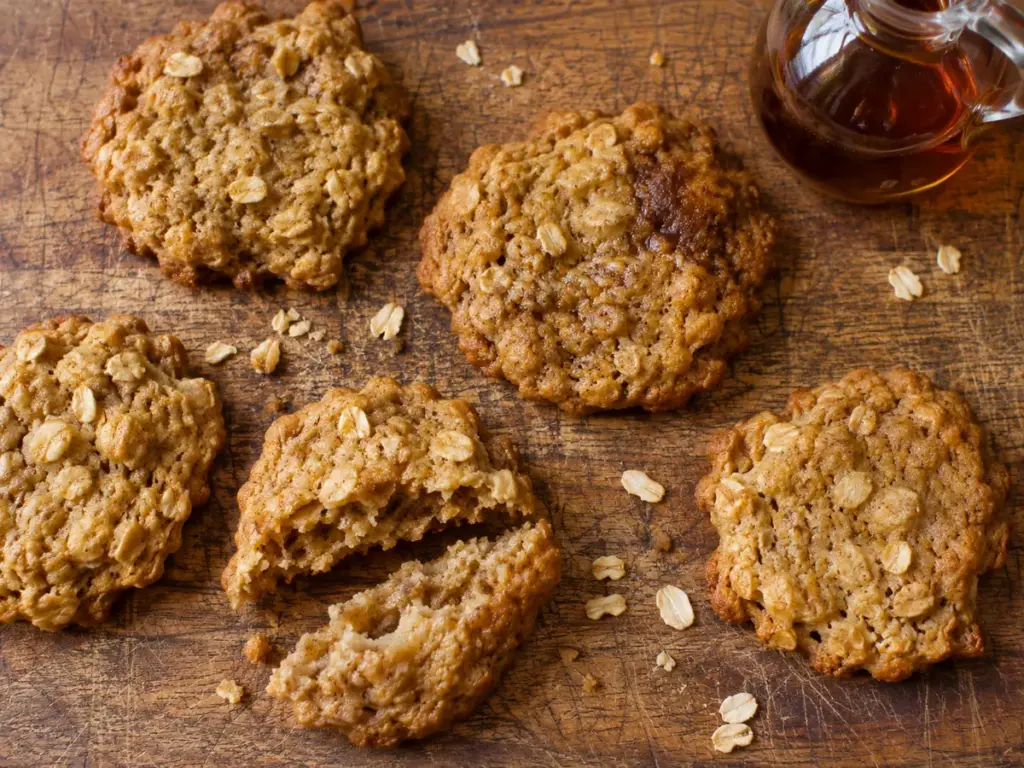
Ingredients
- 1 cup rolled oats
- ¾ cup all-purpose flour
- ½ teaspoon baking soda
- ½ teaspoon ground cinnamon and ¼ teaspoon ground nutmeg
- ¼ teaspoon salt
- ⅓ cup unsalted butter, softened
- ⅓ cup pure maple syrup
- 1 large egg
- 1 teaspoon vanilla extract
Instructions
- Heat the oven to 350°F (175°C) and line a baking sheet with parchment paper.
- Whisk the oats, flour, baking soda, spices and salt together.
- Beat the butter and maple syrup until smooth, then beat in the egg and vanilla.
- Stir the dry mixture into the wet one just until combined, since extra mixing toughens the cookies.
- Scoop spoonfuls 2 inches apart and flatten slightly.
- Bake 10 to 12 minutes, until the edges turn golden, and cool a few minutes on the sheet.
Swaps
- Quick oats replace the rolled oats when you are in a hurry, and the cookies come out softer.
A swap to honey adds sugar, because FoodData Central lists honey at 82.1 g of sugars per 100 g against 60.5 g for maple syrup.
In ⅓ cup that is about 93 g of sugars from honey and 64 g from maple syrup.
9. Flourless Cocoa Almond Cookies
Almond flour, cocoa and ¼ cup of honey or maple syrup make a fudgy cookie with no wheat flour. Reach for natural cocoa powder, since the dough is leavened with baking soda, which needs acid to react, and King Arthur explains that natural cocoa supplies that acid while Dutch-process cocoa has been alkalized and does not.
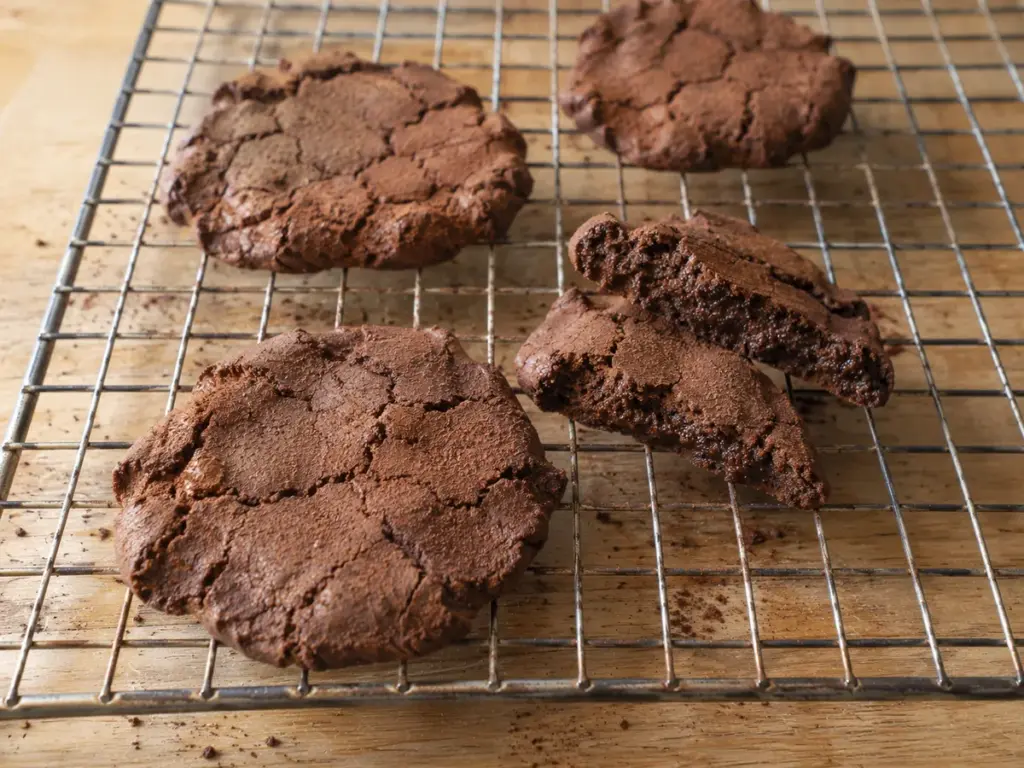
The dough is thick and sticky, so wet your fingers to flatten each scoop. Bake until the edges set and the centers still look soft, then leave the cookies on the sheet for 5 minutes, because they crumble when hot.
Ingredients
- 1 ½ cups finely ground almond flour
- ⅓ cup unsweetened natural cocoa powder
- ½ teaspoon baking soda
- ¼ teaspoon salt
- ¼ cup honey or maple syrup
- 1 large egg
- ¼ cup almond butter
- 1 teaspoon vanilla extract
- Optional: ¼ cup dark chocolate chips or chopped nuts
Instructions
- Heat the oven to 350°F (175°C) and line a baking sheet with parchment paper.
- Combine the almond flour, cocoa, baking soda and salt.
- In another bowl, whisk the egg, honey, almond butter and vanilla until smooth.
- Fold the dry mixture into the wet one to make a thick, sticky dough, then add the chips or nuts if you use them.
- Scoop spoonfuls onto the sheet and flatten them slightly with your fingers.
- Bake 10 to 12 minutes, until the edges set and the centers stay soft, and cool 5 minutes on the sheet.
Swaps
- Finely ground hazelnut or cashew flour can replace the almond flour; start with the same measure.
King Arthur’s sugar-reduction tests found that cookies made with cocoa powder or unsweetened chocolate need more sugar, so this dough tastes bittersweet by design.
The optional chocolate chips add sweetness back.
10. Chia Seed and Coconut Cookies
Chia seeds swell as they absorb liquid, so the 5-minute rest after mixing is what turns a sticky dough into one you can scoop. Buy the 1 cup of shredded coconut unsweetened, because sweetened flakes would add sugar to a recipe whose only other sweetener is ⅓ cup of honey.
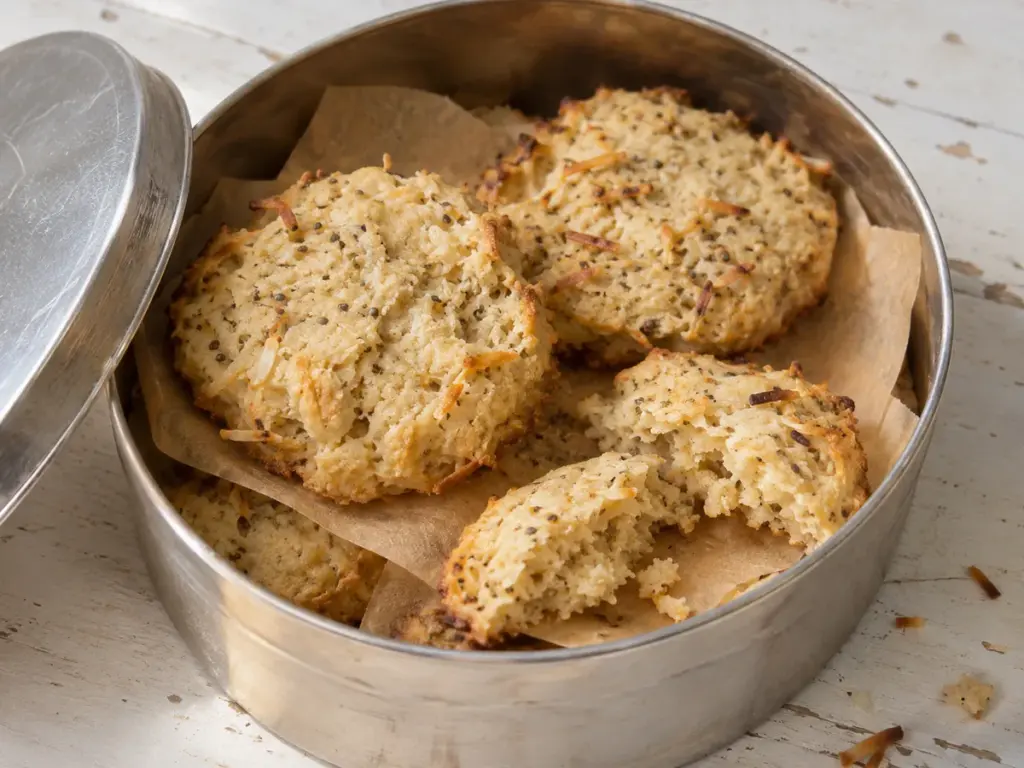
Melted coconut oil keeps the cookies moist, and you pull them when the edges look lightly golden and the centers are still soft.
Ingredients
- 1 cup unsweetened shredded coconut
- 2 tablespoons chia seeds
- 1 cup all-purpose flour
- ½ teaspoon baking soda
- ¼ teaspoon salt
- ¼ cup coconut oil, melted
- ⅓ cup honey
- 1 large egg
- 1 teaspoon vanilla extract
Instructions
- Heat the oven to 350°F (175°C) and line a baking sheet with parchment paper.
- Mix the coconut, chia, flour, baking soda and salt in a large bowl.
- Whisk the coconut oil, honey, egg and vanilla, pour them over the dry mixture and stir into a sticky dough.
- Rest the dough 5 minutes so the chia can absorb moisture.
- Scoop tablespoons 2 inches apart and flatten slightly.
- Bake 10 to 12 minutes, until the edges are lightly golden, and cool 5 minutes on the sheet.
Swaps
- Chopped pecans or almonds give a different crunch than the shredded coconut.
- Ground flaxseed can stand in for the chia seeds; start with the same 2 tablespoons and keep the 5-minute rest. These cookies contain egg, so they are not vegan.
A full ⅓ cup of honey puts about 93 g of sugars in the dough, more honey or maple syrup sugar than any other cookie here.
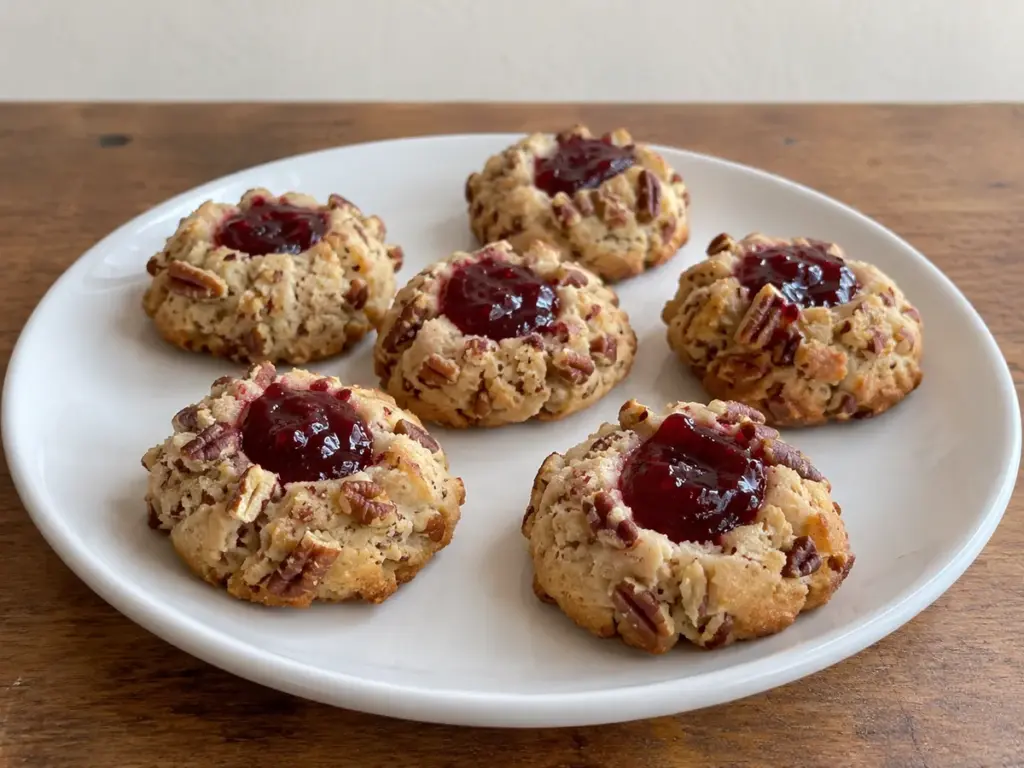
11. Maple Pecan Thumbprints
Finely chopped pecans fold into a butter dough for crunch and a sandy crumb, and ⅓ cup of maple syrup is the only sweetener in the dough. The filling needs a label check, because preserves marked no sugar added can still be sweetened with fruit juice concentrate, and the FDA counts sugars from concentrated juice as added sugars, so read the ingredient list.
Bake the plain wells first, then spoon about ½ teaspoon of preserves into each one and return the pan for 2 minutes, just long enough to warm the filling.
Ingredients
- 1 cup pecans, finely chopped
- ½ cup unsalted butter, softened
- ⅓ cup pure maple syrup
- 1 teaspoon vanilla extract
- 1 ¼ cups all-purpose flour
- ¼ teaspoon salt
- ½ cup no-sugar-added fruit preserves
Instructions
- Heat the oven to 350°F (175°C) and line a baking sheet with parchment paper.
- Cream the butter and maple syrup until smooth, then stir in the vanilla.
- Mix in the flour and salt until just combined and fold in the pecans.
- Roll 1-inch balls, set them 2 inches apart and press a thumb into the center of each.
- Bake 12 to 15 minutes, until the edges are lightly golden, then fill each well with about ½ teaspoon of preserves and bake 2 minutes more.
- Cool 5 minutes on the sheet before moving the cookies to a rack.
Swaps
- Walnuts or almonds replace the pecans, chopped just as fine.
- Raspberry or apricot preserves change the center, and the label check stays the same.
The ⅓ cup of maple syrup holds about 64 g of sugars, the same as in the oatmeal spice cookies. FoodData Central lists regular jams and preserves at 48.5 g of sugars per 100 g, so the filling adds sugars even though the dough uses only maple syrup.
A regular jam at 20 g a tablespoon would add about 1.6 g per ½ teaspoon; a no-sugar-added jar adds less, so read its label.
If the wells crack as you press them, warm the ball in your palm first, and if they close in the oven, press them again as the pan comes out.
12. Walnut and Date Cookies
Dates are the only sweetener here, 1 cup of pitted dates chopped fine, so nothing from a bag or bottle goes into the dough. The sugar is still there, because it comes with the fruit, and sugar that comes inside whole fruit counts toward total sugars, not added sugars.
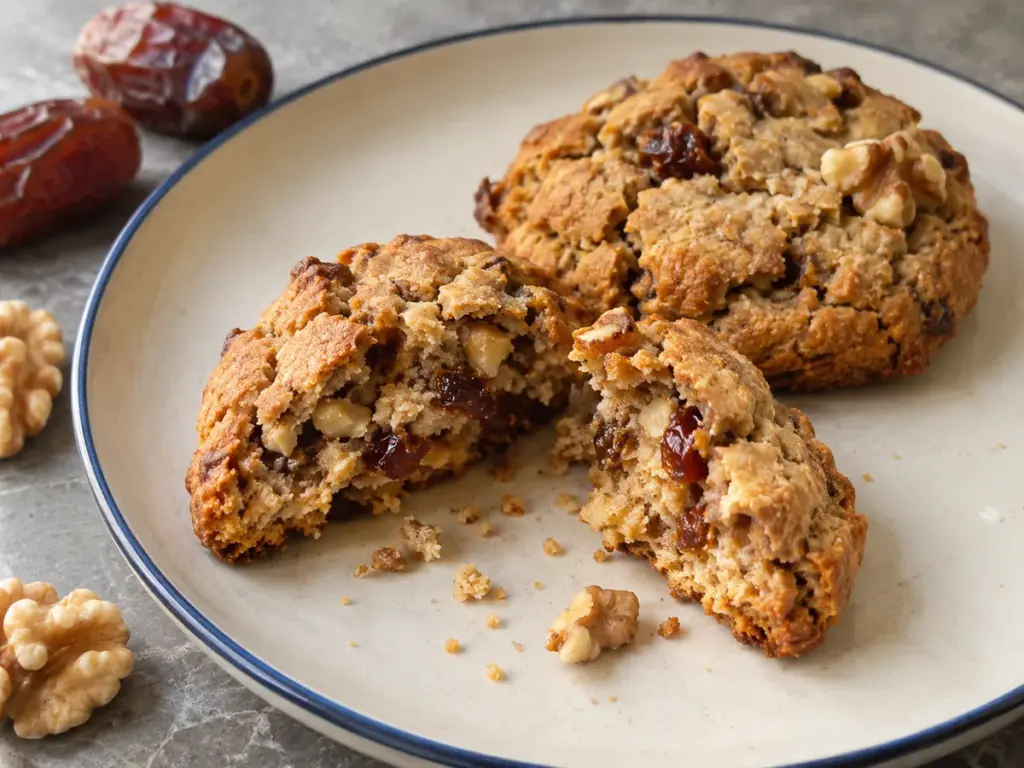
Chop the dates small, since big pieces leave wet pockets, and if yours feel dry and stiff, soak them in hot water until they soften and drain them before you stir them into the oil and egg. The ¼ cup of vegetable oil keeps the crumb soft, and melted coconut oil works too.
Ingredients
- 1 cup pitted dates, chopped fine
- ¾ cup chopped walnuts
- 1 cup all-purpose flour
- ½ teaspoon baking soda
- ¼ teaspoon salt
- ¼ cup vegetable oil
- 1 large egg
- 1 teaspoon vanilla extract
Instructions
- Heat the oven to 350°F (175°C) and line a baking sheet with parchment paper.
- Whisk the flour, baking soda and salt together.
- Beat the egg, oil and vanilla in a large bowl, then stir in the dates and walnuts.
- Add the dry mixture and stir until just combined.
- Scoop tablespoons 2 inches apart and flatten slightly.
- Bake 12 to 15 minutes, until the edges turn golden, and cool 5 minutes on the pan before moving them to a rack.
Swaps
- Pecans or almonds replace the walnuts.
FoodData Central lists Medjool dates at 66.5 g of sugars per 100 g, and one pitted date weighs 24 g, so each date in the dough holds about 16 g of sugars.
8 Which Cookies Use Less Real Sugar?
Seven recipes keep real sugar in a smaller amount than a classic cookie, and a few pair it with a sugar-free sweetener. They suit you if you want a regular cookie texture and are willing to trade it for a few spoonfuls less sugar.
13. Cranberry Walnut Cookies
Coconut sugar is sugar with a mild caramel note, so swapping in coconut sugar for brown sugar, cup for cup, saves nothing by itself. The saving comes from the quantity, since ½ cup of coconut sugar for 1 cup of flour is about ½ cup of sugar per cup of flour, against ⅔ cup in the Toll House recipe.
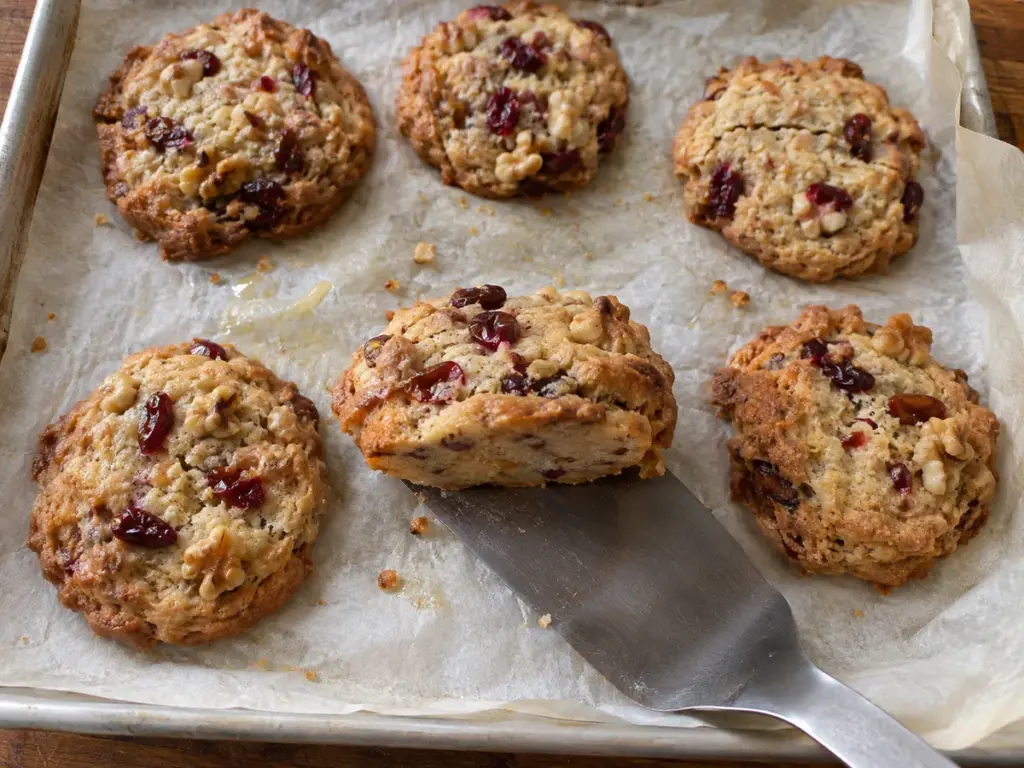
Dried cranberries add more because most are sweetened, so read the label for added sugars or look for an unsweetened bag. Walnuts give you crunch against the chewy fruit.
Ingredients
- 1 cup all-purpose flour
- ½ teaspoon baking soda
- ¼ teaspoon salt
- ½ cup unsalted butter, softened
- ½ cup coconut sugar
- 1 large egg
- 1 teaspoon vanilla extract
- ½ cup dried cranberries
- ½ cup chopped walnuts
Instructions
- Heat the oven to 350°F (175°C) and line a baking sheet with parchment paper.
- Whisk the flour, baking soda and salt together.
- Cream the butter and coconut sugar until smooth, then beat in the egg and vanilla.
- Stir in the dry mixture just until combined, then fold in the cranberries and walnuts.
- Scoop rounded tablespoons 2 inches apart, since they spread.
- Bake 10 to 12 minutes, until the edges are lightly golden, and cool a few minutes on the sheet.
Swaps
- Pecans or almonds replace the walnuts.
- Dried cherries or raisins can replace the cranberries; dark raisins hold 65.2 g of sugars per 100 g (FoodData Central), and the label tells you what a bag of cherries holds.
Walnuts taste deeper when you toast them in a dry pan until fragrant and cool them before folding them in.
14. Zucchini Oatmeal Cookies
Grated zucchini gives these cookies their moisture, and ⅓ cup of brown sugar plus ¼ cup of honey sweeten 1 cup of flour and 1 ½ cups of oats, a little over ½ cup of sweetener per cup of flour and close to the ⅔ cup of the Toll House recipe.
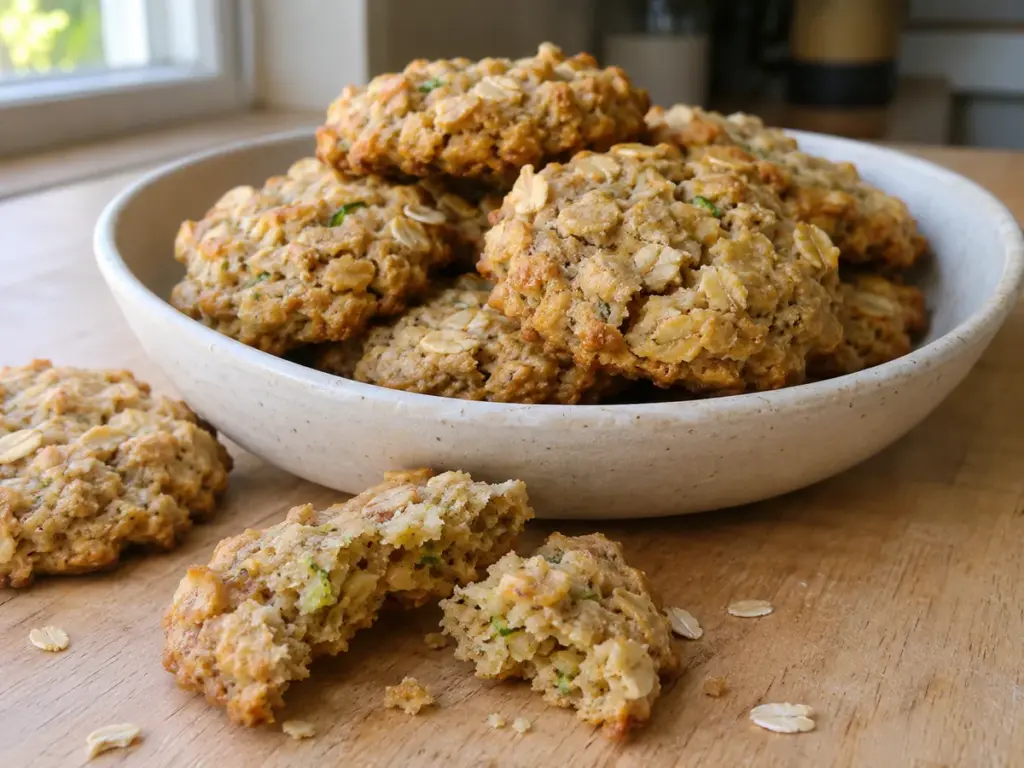
Squeeze the grated zucchini in a clean towel before you measure it, because extra water loosens the dough and makes the cookies pale and cakey. Old-fashioned oats give you the best chew, and the cookies are done when the edges turn golden and the center looks set.
Ingredients
- 1 cup grated zucchini, squeezed dry
- 1 ½ cups old-fashioned rolled oats
- 1 cup all-purpose flour
- ½ teaspoon baking soda and ½ teaspoon baking powder
- 1 teaspoon ground cinnamon
- ¼ teaspoon salt
- ⅓ cup brown sugar
- ¼ cup honey
- ¼ cup vegetable oil
- 1 large egg
- 1 teaspoon vanilla extract
Instructions
- Heat the oven to 350°F (175°C) and line a baking sheet with parchment paper.
- Combine the oats, flour, baking soda, baking powder, cinnamon and salt.
- Whisk the brown sugar, honey, oil, egg and vanilla in a separate bowl, then stir in the zucchini.
- Add the dry mixture a little at a time and mix just until combined.
- Drop spoonfuls 2 inches apart and flatten slightly.
- Bake 12 to 15 minutes, until the edges are golden, and cool 5 minutes on the sheet.
Swaps
- Whole wheat flour gives a nuttier flavor than all-purpose.
- Raisins add about 65.2 g of sugars per 100 g, and dark chocolate chips 24.0 to 36.7 g depending on the cacao percentage (FoodData Central); chopped nuts add crunch.
15. Salted Caramel Low-Sugar Cookies
The dough uses only ⅓ cup of brown sugar for 1 ¾ cups of flour, and the caramel in the center is sweetened with ⅓ cup of erythritol and cream, so the dough holds only about ⅕ cup of real sugar per cup of flour, even though it reads as a candy cookie.
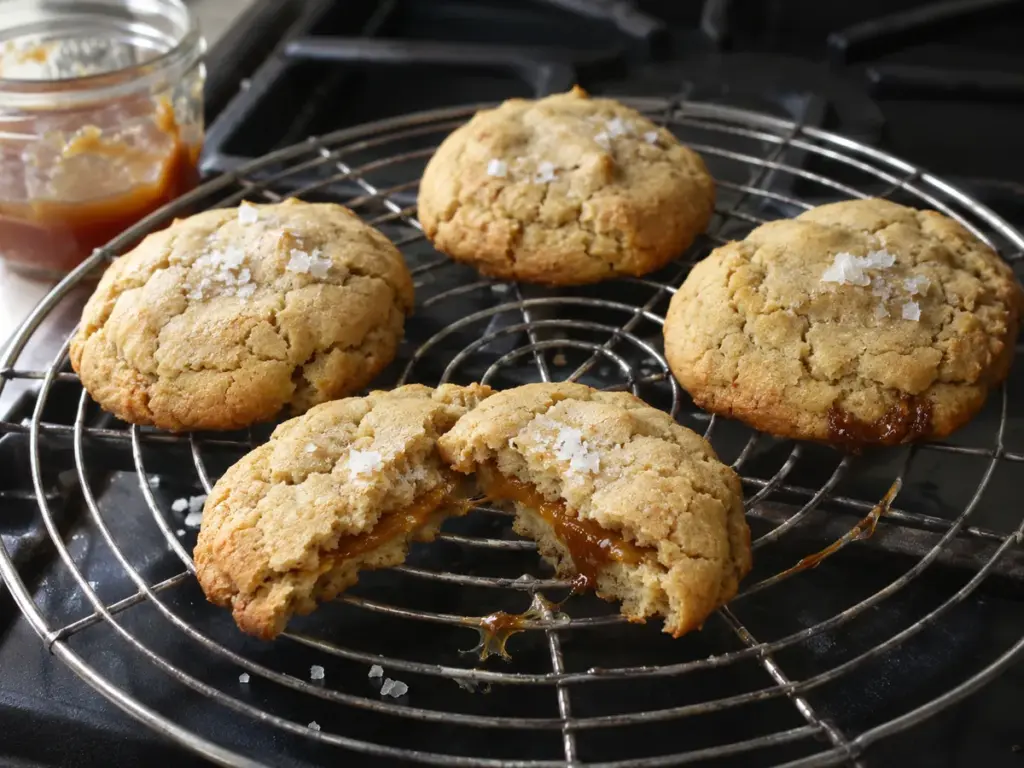
The ⅓ cup of brown sugar holds about 71 g of sugars, and the erythritol in the caramel adds none.
Make the caramel first and cool it to room temperature, because warm caramel leaks through the dough when you seal it. Erythritol can turn grainy as it cools, so if your sauce does, rewarm it briefly and whisk before filling.
Cream in the centers puts the baked cookies in the refrigerator, where the USDA gives cooked leftovers 3 to 4 days.
Ingredients
- 1 ¾ cups all-purpose flour
- ½ teaspoon baking soda
- ¼ teaspoon salt
- ½ cup unsalted butter, softened
- ⅓ cup brown sugar
- 1 large egg
- 1 teaspoon vanilla extract
- Caramel: ½ cup heavy cream, ⅓ cup granulated erythritol, 2 tablespoons unsalted butter, ¼ teaspoon sea salt plus more for the tops, 1 teaspoon vanilla extract
Instructions
- Heat the oven to 350°F (175°C) and line a baking sheet with parchment paper.
- Make the caramel: melt the erythritol and butter over medium heat, whisk in the cream and salt, simmer 2 to 3 minutes until slightly thickened, then stir in the vanilla and cool to room temperature.
- Whisk the flour, baking soda and salt. Cream the butter and brown sugar, beat in the egg and vanilla, then mix in the flour.
- Flatten 1 tablespoon of dough in your palm, add 1 teaspoon of caramel, cover with a second tablespoon of dough and seal into a ball.
- Set the balls 2 inches apart, sprinkle with sea salt and bake 10 to 12 minutes, until the edges are lightly golden.
- Cool completely on the sheet before moving them to a rack.
Swaps
- Granulated erythritol in place of the brown sugar removes about 71 g of sugars, but King Arthur’s tests with erythritol-based replacements found little spread and a dry, cakey crumb.
Flaky sea salt on top tastes sharper than table salt.
Pinch the seam closed all the way round, since a caramel that leaks onto the sheet burns before the cookie is done.
16. Peanut Butter and Jelly Sandwich Cookies
A flourless dough of 1 cup of peanut butter, ½ cup of brown sugar and an egg bakes into small, fragile cookies, so cool them completely before any jelly goes on.
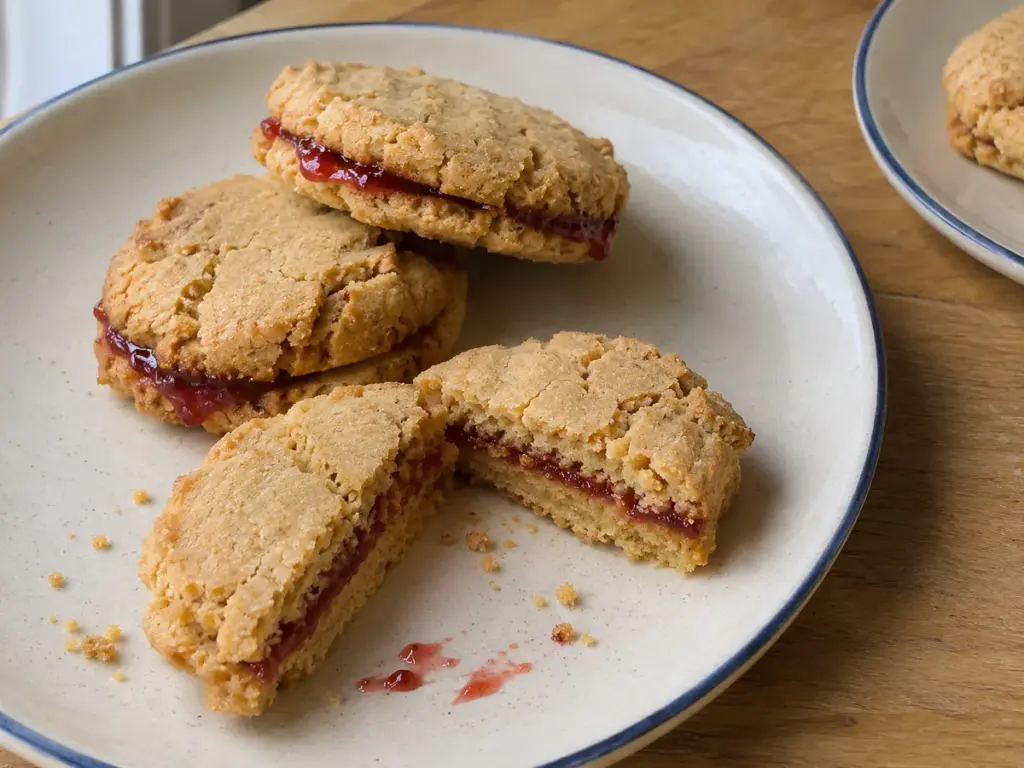
The jelly is the second label to read, because under FDA rules a jar that says reduced sugar has at least 25 percent less sugar than the regular version and has to name what it is compared with. Fill the cookies close to serving time, since jelly softens them the longer they sit.
Ingredients
- 1 cup natural peanut butter
- ½ cup brown sugar, packed
- 1 large egg
- 1 teaspoon baking soda
- ¼ teaspoon salt
- ½ cup reduced-sugar jelly, slightly warmed
Instructions
- Heat the oven to 350°F (175°C) and line a baking sheet with parchment paper or a silicone mat.
- Mix the peanut butter, brown sugar, egg, baking soda and salt until smooth.
- Scoop tablespoons 2 inches apart and flatten each slightly.
- Bake 8 to 10 minutes, until the edges are set and the centers stay soft, then cool 5 minutes on the sheet and finish on a rack.
- Spread a little warmed jelly on the bottom of one cookie and press a second cookie on top.
Swaps
- Almond butter can take the peanut butter’s place in the same cup.
- Regular fruit preserves put about 3.2 g of sugars in each teaspoon against about 1.7 g for reduced-sugar jelly, and a sugar-free jam shows its own figure on the label.
Reduced-sugar jam holds 29.4 g of sugars per 100 g in FoodData Central, about 39 percent less than regular jam. A teaspoon of jelly (about 5.7 g of reduced-sugar jam at 17 g a tablespoon) adds about 1.7 g of sugars, against about 3.2 g for the same teaspoon of regular jam.
Jelly goes on in a thin layer, so start with about 1 teaspoon per sandwich, as a starting amount, well under the ½ cup the whole recipe calls for, and add more only if the cookie holds it.
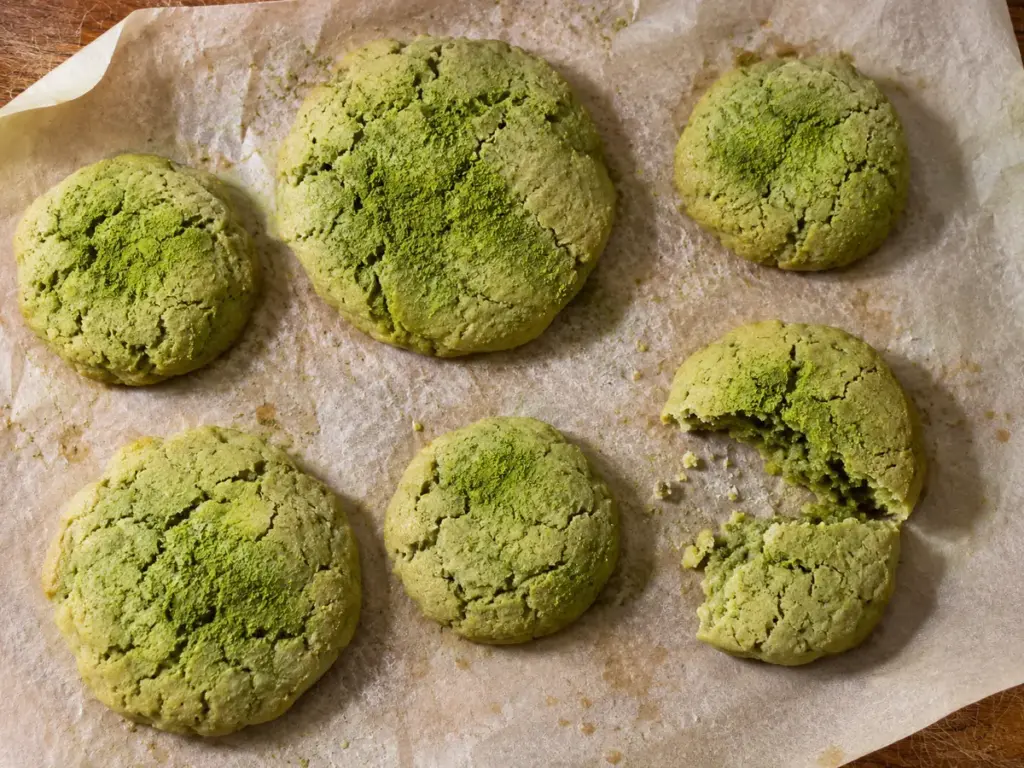
17. Matcha Green Tea Cookies
Matcha tastes grassy and a little bitter, so this dough keeps ¾ cup of granulated sugar for 2 cups of flour and adds 1 tablespoon of honey or maple syrup, about ⅜ cup of sugar per cup of flour against ⅔ cup in the Toll House recipe. Sift the matcha with the flour so no green clumps survive baking, and buy culinary-grade powder.
Ingredients
- 1 cup unsalted butter, softened
- ¾ cup granulated sugar
- 1 large egg
- 1 tablespoon honey or maple syrup
- 2 cups all-purpose flour
- 2 tablespoons matcha powder
- ½ teaspoon baking powder
- ¼ teaspoon salt
Instructions
- Heat the oven to 350°F (175°C) and line a baking sheet with parchment paper or a silicone mat.
- Cream the butter and sugar until fluffy, then beat in the egg and honey.
- Sift the flour, matcha, baking powder and salt together and stir them in until a smooth dough forms.
- Roll 1-tablespoon balls, set them 2 inches apart and press each flat with your palm.
- Bake 10 to 12 minutes, until the edges feel firm and the centers are still soft, then cool 5 minutes on the sheet.
Swaps
- Ceremonial-grade matcha works in place of culinary grade, but it costs more and a baked cookie hides its delicate flavor.
Green dough hides browning, so judge doneness by firm edges and not by color.
18. Raspberry Almond Biscotti
Biscotti means twice baked. You bake the log for 25 minutes, then put the slices back for 12 to 15 minutes, flipped halfway, so both cut sides dry out and turn crisp.
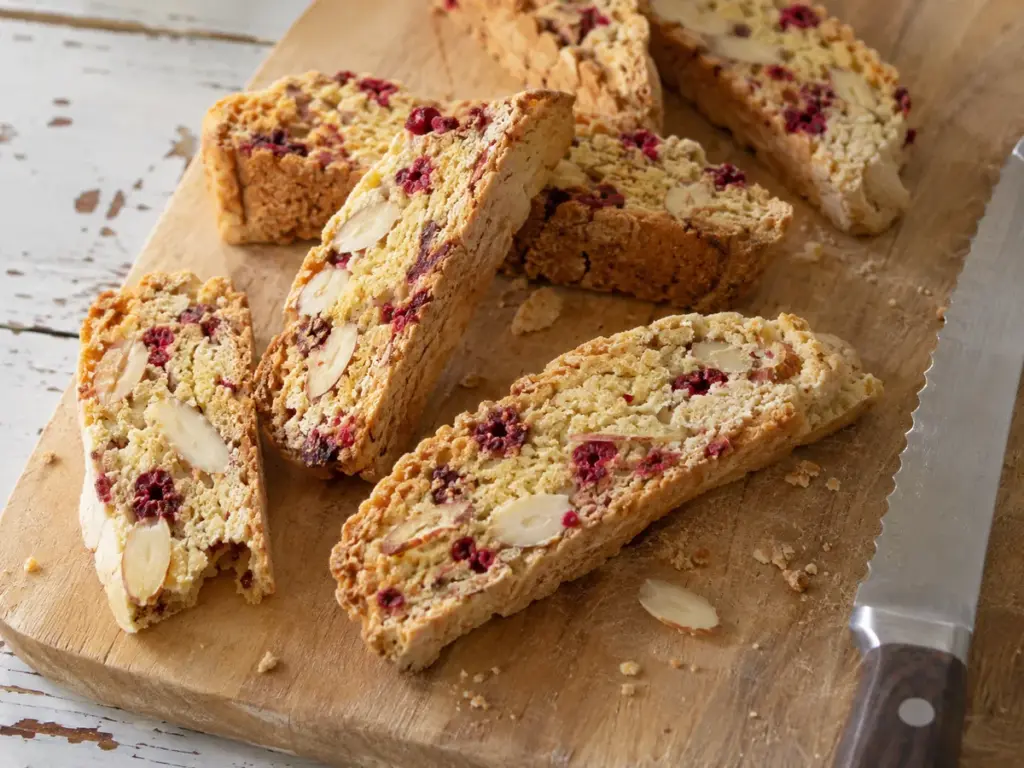
The dough holds ¾ cup of sugar across 1 ¾ cups of almond flour and ½ cup of all-purpose flour, about ⅓ cup per cup of flour, and the dried raspberries add more unless the label says freeze-dried with no added sugar. Let the log cool 10 minutes before you slice it with a serrated knife, or the soft center smears.
The same two bakes work for lemon pistachio, chai and other biscotti flavors, though those recipes use regular sugar.
Ingredients
- 1 ¾ cups almond flour
- ½ cup all-purpose flour
- ¾ cup granulated sugar
- 1 teaspoon baking powder
- ¼ teaspoon salt
- 2 large eggs
- 1 teaspoon vanilla extract
- ½ cup dried raspberries
- ⅓ cup sliced almonds
Instructions
- Heat the oven to 350°F (175°C) and line a baking sheet with parchment paper.
- Mix both flours, the sugar, baking powder and salt, then stir in the eggs and vanilla until a sticky dough forms and fold in the raspberries and almonds.
- Shape the dough into a log about 12 inches long and 2 inches wide and bake 25 minutes, until lightly golden and firm.
- Cool the log 10 minutes, then slice it on the diagonal into ¾-inch pieces.
- Lay the slices cut side down and bake 12 to 15 minutes, flipping halfway, until both sides are crisp.
- Cool completely on a wire rack before storing.
Swaps
- Sweetened dried cranberries can replace the raspberries and hold 72.6 g of sugars per 100 g (FoodData Central).
- Chopped pistachios or walnuts replace the sliced almonds.
USDA FoodKeeper lists crispy cookies at 8 to 12 months in the freezer, so let the biscotti dry completely on the rack before you freeze them.
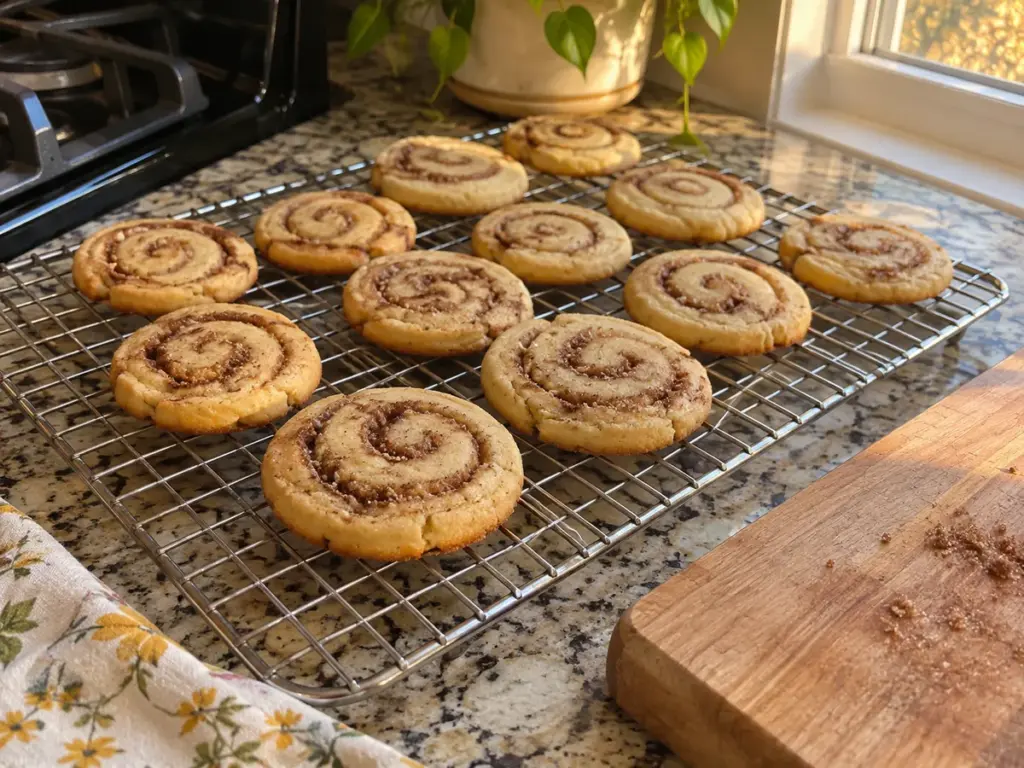
19. Cinnamon Roll Cookies
These cookies swirl a filling of 2 tablespoons of brown sugar and cinnamon into a dough that already splits its sweetness between ⅓ cup of brown sugar and ¼ cup of a monk fruit or erythritol blend. Roll the dough between two sheets of parchment to ¼ inch so the filling spreads evenly, and if your butter-rich log feels soft, chill it until firm so the ½-inch slices stay round.
Ingredients
- ½ cup unsalted butter, softened
- ⅓ cup brown sugar, packed
- ¼ cup monk fruit or erythritol blend
- 1 large egg
- 1 teaspoon vanilla extract
- 1 ¼ cups all-purpose flour
- ½ teaspoon baking powder
- ¼ teaspoon salt
- 1 tablespoon ground cinnamon, divided between the dough and the filling
- Filling: 2 tablespoons brown sugar and 1 tablespoon melted butter
Instructions
- Heat the oven to 350°F (175°C) and line a baking sheet with parchment paper.
- Cream the butter, brown sugar and sweetener blend, then beat in the egg and vanilla.
- Whisk the flour, baking powder, salt and part of the cinnamon and stir them in to make a soft dough.
- Roll the dough between parchment to ¼ inch, brush with the melted butter, sprinkle the brown sugar and remaining cinnamon over it and roll it into a log.
- Cut the log into ½-inch slices and set them 2 inches apart.
- Bake 12 to 15 minutes, until the edges are lightly golden, and cool on a rack.
A tight roll slices into round cookies and a loose one leaves gaps, so chill the log until firm and slice with a sharp knife.
The ⅓ cup of brown sugar in the dough and the 2 tablespoons in the filling hold about 98 g of sugars together, and the monk fruit or erythritol blend adds none.
9 How Do You Cut the Sugar in a Cookie You Already Bake?
King Arthur baked eight cookie and bar recipes at several sugar levels and found that the lower the sugar, the less cookies spread and the drier and more crumbly they are.
King Arthur says you can halve the sugar and get “decent (though not stellar) results” when the sugar weighs at least as much as the flour, and that below that you should try 25 percent less to start.
It also calls sugar a flavor enhancer much like salt, so with less of it, bitter cocoa or harsh spices stand out more.
- Sweet add-ins make lower-sugar cookies more palatable.
- Rolling the dough balls in sugar before baking makes a cookie taste sweeter than its total sugar.
- Chilling the dough for at least 30 minutes increases caramelization and flavor.
The snickerdoodle coating and the chunks in the espresso cookies apply the first two ideas. In the matcha cookies and the biscotti, where the sugar weighs less than the flour, 25 percent less is 3 tablespoons, about 37 g of sugars, off the ¾ cup; treat it as a starting point and bake one test cookie.
10 How Do You Bake and Store Low-Sugar Cookies?
Sugar replacements change how a cookie colors, so judge doneness by set, lightly golden edges and give every batch the 5 minutes on the hot sheet that the recipes call for, because these doughs stay fragile until they cool.
Warning
Never taste the dough. The FDA says to never eat or taste raw flour, dough or batter: flour is a raw food, and the eggs in every one of these doughs can carry bacteria too, including the flourless ones. You make them safe by baking them.
Keep cooled cookies in an airtight container. If you want to bake ahead, USDA FoodKeeper lists cookies at 8 to 12 months in the freezer.
The salted caramel cookies are the exception, since you keep them in the refrigerator.
- Cool completely before you seal the container, because warm cookies steam and soften.
- Fill the peanut butter and jelly cookies near serving time, since jelly softens them.
- Freeze dough balls on a tray and bag them; FoodKeeper gives store-bought cookie dough 2 months in the freezer, so use that as a cautious starting point.
11 What Goes Wrong with Low-Sugar Cookies, and How Do You Fix It?
Sugar replacements and syrups both bring problems that a regular cookie does not have.
- Dry, crumbly cookies: less sugar means drier cookies, so pull the pan while the centers are still soft.
- Little spread: flatten each scoop by hand, because erythritol cookies barely spread (King Arthur).
- A cool aftertaste: King Arthur’s tasters found the Swerve (erythritol) cookie’s cool mouthfeel somewhat unpleasant, so taste a pinch of your sweetener in water first.
- Dark bottoms: honey and maple syrup brown faster than sugar, so check the bottoms early.
- Dull flavor: sugar works like salt as a flavor enhancer, so check the salt, vanilla and zest before you add sweetener.
- Cookies that tear: leave them on the hot sheet for the 5 minutes the recipes give.
Bake one test cookie first when you change the sweetener, because it shows the spread and browning before the whole tray commits.
12 How Do You Make These Cookies Egg-Free, Dairy-Free or Nut-Free?
The swap lists change one ingredient at a time, and a few recipes depend on the ingredient you want to remove.
- Egg-free: Iowa State Extension suggests flax eggs for oatmeal and breakfast cookies, so try them in the oatmeal spice and zucchini oatmeal cookies.
- Iowa State gives the flax egg as 1 tablespoon of ground flaxseed plus 3 tablespoons of water for each egg.
- No egg swap for the macaroons and snickerdoodles, where the egg whites or four eggs carry the structure.
For a dairy-free batch, plant-based butter or coconut oil can replace the butter; use the same amount as a starting point and expect the spread to change, because their fat and water differ from butter.
The salted caramel cookies stay dairy because the caramel needs cream.
The FDA lists tree nuts and peanuts among the nine major allergens, and a label must name the specific tree nut.
For a nut-free batch, the recipes built on nut butter, nuts or almond flour need a different recipe.
13 How Do You Make These Cookies Gluten-Free?
The FDA says a food labeled gluten-free must hold less than 20 parts per million of gluten, and oats labeled that way meet the same limit, so look for the words on the oats, the flour blend and the chocolate chips.
Twelve recipes use all-purpose flour: the pumpkin spice, espresso chocolate chunk, oatmeal spice, chia seed and coconut, maple pecan thumbprint, walnut and date, cranberry walnut, zucchini oatmeal, salted caramel, matcha, biscotti and cinnamon roll cookies. The biscotti pair ½ cup of it with almond flour.
A gluten-free blend that measures cup for cup is the usual replacement; start with the same amount and expect a different crumb. The oatmeal spice and zucchini oatmeal cookies also need oats labeled gluten-free.
Sources
- FDA sugar content claims, 21 CFR 101.60
- FDA: Added Sugars on the Nutrition Facts Label
- King Arthur Baking: Sugar alternatives for baking
- King Arthur Baking: Dutch-process vs. natural cocoa
- Nestlé Toll House: Original Chocolate Chip Cookies
- Libby’s: Ask the pumpkin experts
- FDA: Handling Flour Safely
- USDA FoodKeeper
- USDA FSIS: Leftovers and Food Safety
- King Arthur Baking: How to reduce sugar in cookies and bars
- USDA FoodData Central
- Iowa State University Extension: Baking without eggs, part 2
- FDA: Food Allergies
- FDA: Gluten-Free Food Labeling

Andrew Gray is a seasoned food writer and blogger with a wealth of experience in the restaurant and catering industries. With a passion for all things delicious, Andrew has honed his culinary expertise through his work as a personal chef and caterer.
His love for food led him to venture into food writing, where he has contributed to various online publications, sharing his knowledge and insights on the culinary world. As the proud owner of CooksCrafter.com, Andrew covers a wide range of topics, including recipes, restaurant reviews, product recommendations, and culinary tips.
Through his website, he aims to inspire and educate fellow food enthusiasts, offering a comprehensive resource for all things food-related.