Short Answer
Air fryer kabocha squash takes about 15 minutes at 400°F when you cut it into cubes, and the skin is edible, so peeling is optional.
- Microwave the whole squash for a few minutes first, so the knife does not slip on the hard rind.
- Cut even 1-inch cubes and shake the basket halfway, and give thicker wedges extra minutes.
- Leave the skin on to save the peeling time, or peel for bright orange cubes.
- Cooked kabocha keeps 3 to 4 days in the refrigerator.
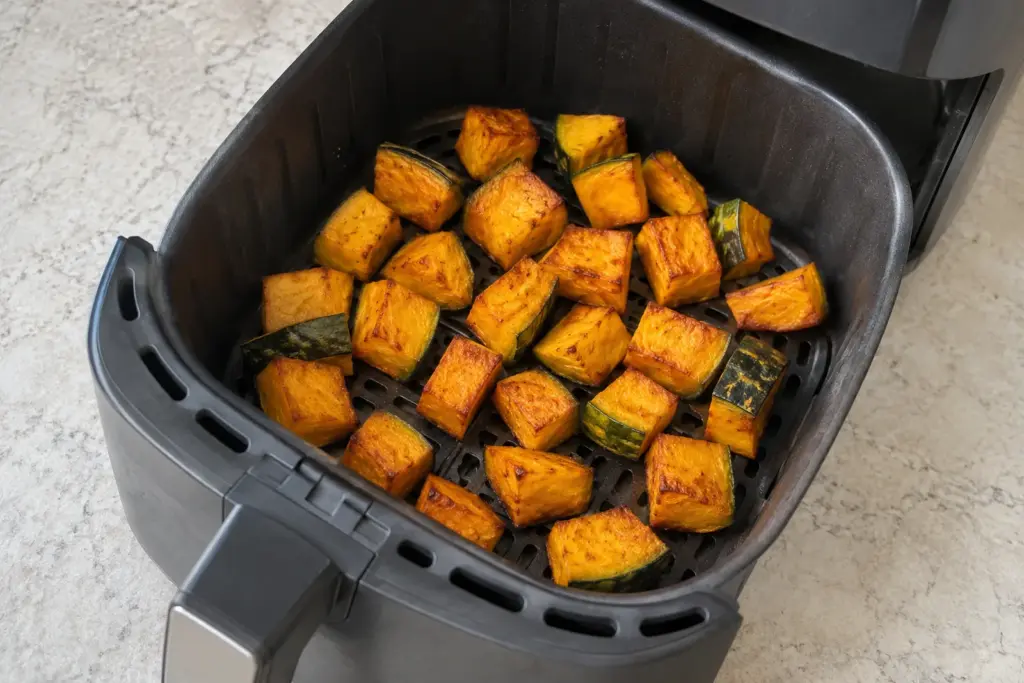
Kabocha is a dense Japanese winter squash with chestnut-like flesh, and in a 400°F basket that flesh browns at the edges while the middle turns creamy. Its rind is hard enough to make a knife slip, so this air fryer vegetable recipe starts with a safe cut.
1 Do You Need to Peel Kabocha Squash?
You can leave the skin on. The skin of kabocha is edible and turns tender as it cooks, and many Japanese recipes, such as tempura and simmered kabocha, keep it on (Just One Cookbook). Scrub the rind under running water and dry it before you cut, because the knife drags surface dirt into the flesh.
Peeled or not, your cubes follow the same steps at 400°F. The card's 15 minutes is written for peeled cubes, so check skin-on ones with a knife tip at the end. Pick by what you plan to do with the cubes next:
- Skin on: you skip the slow peeling, and every cube keeps a thin green edge.
- Peeled: the cubes come out fully orange, which suits mashing and salads, but a peeler is slow on a raw rind, so soften the squash first and trim the rind off with a knife.
2 How Do You Cut a Hard Squash Safely?
A raw kabocha rind is the part that slips, so the first job is to soften it. The University of Hawaii extension says to cook the squash slightly before cutting, either 4 to 5 minutes in the microwave or 20 minutes at 400°F in the oven, then let it cool (UH CTAHR). Just One Cookbook gives 2 to 4 minutes as a microwave starting point, depending on size and wattage.
- Soften the rind. Prick the whole squash in a few places so steam can escape, microwave it for the time above, and stay nearby while it runs. Let it cool until you can hold it.
- Steady the board. Put a damp paper towel or a non-slip mat under the cutting board so it cannot slide, and rest the squash on its flattest side.
- Cut out the stem. Cut around the corky stem with the tip of a large knife and lift it out.
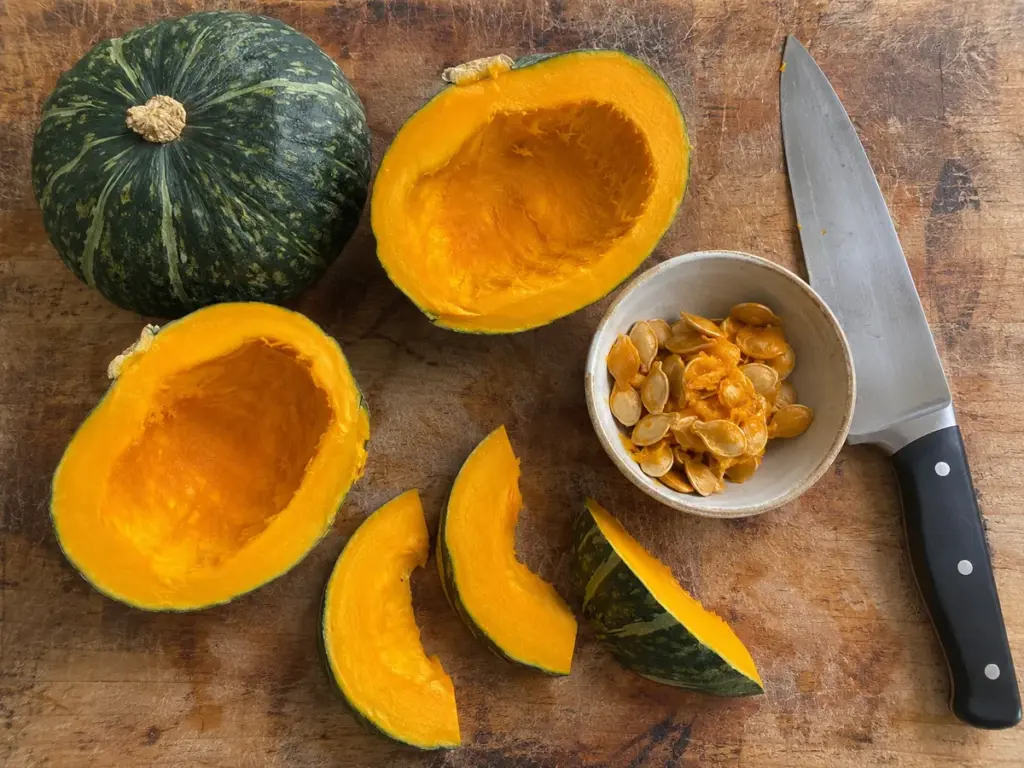
- Halve and scoop. Cut through the center from stem end to bottom, then scrape out the seeds and pith with a large spoon.
- Lay the halves cut side down. A flat side cannot roll, so cut wedges first and then cubes from the wedges.
Use a large, sharp knife for all of it, because a dull blade needs more force and is more likely to slip. If the squash is too big for your microwave, bake it whole at 400°F for 20 minutes instead, as the extension suggests.
3 Should You Cut Kabocha into Wedges or Cubes?
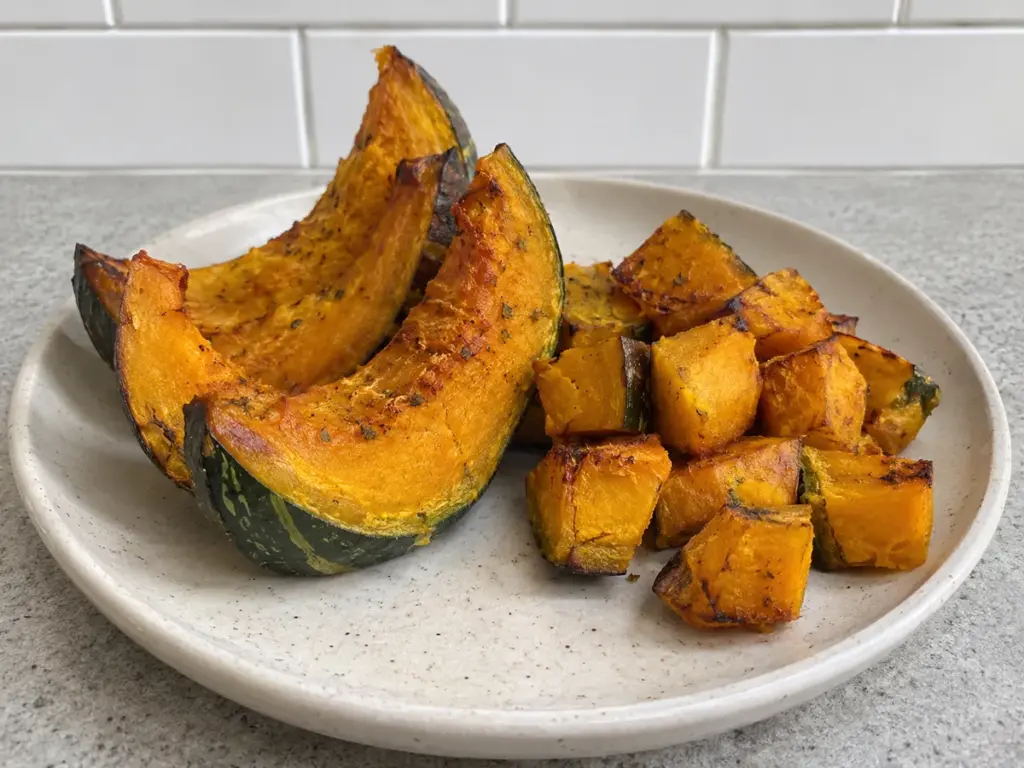
A 1-inch cube is done in 15 minutes at 400°F, the card's time, and anything thicker needs more time after that. Heat has to travel to the center of each piece, so thickness matters more than shape.
1-Inch Cubes
They brown on several sides in the recipe's 15 minutes at 400°F, with one shake halfway.
Pieces under 1 inch cook faster than the rest, so cut evenly and check the small ones early.
Skin-On Wedges
They need no peeling, and each wedge is a handle for dipping.
Wedges thicker than 1 inch need more than 15 minutes, so test with a knife tip and add 3 minutes at a time. A basket may hold fewer wedges than cubes, so you may need a second batch.
A basket that mixes half-inch and 1½-inch pieces ends with scorched corners and hard centers, so cut uniform pieces. Wedges make good finger food beside a bowl of Greek yogurt ranch dip or hummus, whose tang offsets the squash's sweetness.
4 What Do You Need and Why?
At the store, pick a squash that feels heavy for its size with a firm, deep green rind, usually 2 to 4 pounds, so a 3-pound squash is a safe buy. Olive oil is what browns the edges, and you can swap in coconut oil when you want a faint coconut note against the sweetness. Choose one of four seasoning routes, depending on the plate you want:
- Sweet: drizzle maple syrup or honey and dust cinnamon after the cook, because sugar scorches in a 400°F basket. A pinch of nutmeg suits the same plate.
- Savory: toss garlic powder or paprika into the bowl with the oil and salt before the squash goes in.
- Hot: add ⅛ to ¼ teaspoon of cayenne or chili powder, and taste a cube before you add more.
- Cheesy: sprinkle grated Parmesan over the cubes for the last 1 to 2 minutes, or use about three-quarters as much Pecorino Romano, which is sharper and saltier.
Acorn and butternut squash are the usual kabocha stand-ins and replace it cup for cup in most recipes, which helps when your store runs out of kabocha.
Butternut cubes of the same size need 18 to 20 minutes at 375°F, so a swap means resetting both the dial and the timer.
5 How Do You Get Crisp, Evenly Cooked Squash?
Cook in a single layer. A 3-pound squash may make more cubes than your basket holds in one layer, so plan two rounds. Shake the basket at the halfway mark.
Expect the batch to be done when the edges are deep golden and a knife tip slides in with no resistance. A bad batch usually comes from one of four causes, each with a one-step fix:
| Problem | Likely cause | Fix |
|---|---|---|
| Pale, soft cubes | A full basket, or squash still wet from washing, which steams instead of browning | Cook in two rounds and pat the squash dry before you oil it |
| Hard centers | Pieces thicker than 1 inch | Return them to the basket for 3 more minutes, then test again |
| Dark, bitter edges | Sweetener added before the cook, or pieces under 1 inch | Drizzle after cooking and check the small pieces early |
| Dry, shrunken cubes | Left in after the knife slid in | Pull the first batch as soon as the knife slides in |
6 What Goes with Air Fryer Kabocha Squash?
Kabocha's sweetness sits well against heat and salt, so with a spicy main such as Cajun grilled chicken you need no other sweet side, and roasted salmon takes it as the only vegetable. The squash also turns up in Japanese cooking simmered, fried in tempura and roasted, so your cubes sit naturally beside cod broiled under a miso glaze and steamed rice.
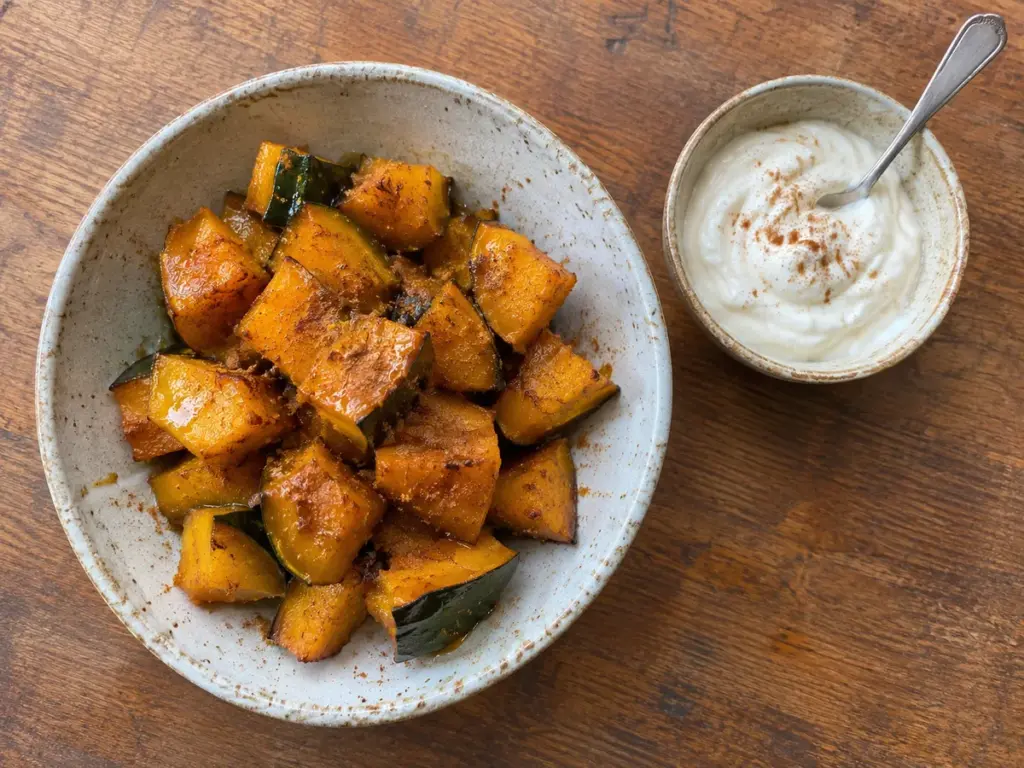
Cooled cubes take the place of roasted delicata in a squash and arugula salad with pomegranate seeds, or they can go over spinach with toasted nuts and a sharp dressing.
7 How Long Does Cooked Kabocha Squash Last?
Refrigerate your cubes in a shallow container within 2 hours of cooking, or within 1 hour when the room is above 90°F. They keep 3 to 4 days, the window USDA FoodKeeper lists for cooked vegetable leftovers (FoodKeeper). A whole raw squash keeps far longer, so you can buy it ahead and cook it as you need it.
| Squash | Where | How long |
|---|---|---|
| Whole, raw | Pantry, from purchase | 2 to 6 weeks |
| Whole, raw | Refrigerator, from purchase | 1 to 3 months |
| Cooked cubes | Refrigerator | 3 to 4 days |
| Cooked cubes | Freezer | 1 to 2 months for best quality |
Reheat leftovers in the 400°F basket, shaking once, until a thermometer in the center reads 165°F, the number USDA gives for reheated leftovers (FSIS). The basket also brings back the browned edges that a microwave leaves soft.
The Best Air Fryer Kabocha Squash
Equipment
- Air-fryer
- Sharp Knife
- Mixing bowl
- Peeler
- Tongs
- Cutting board
Ingredients
- 1 medium kabocha squash about 3 pounds, peeled, seeds removed, and cut into cubes
- 2 tablespoons olive oil
- 1 teaspoon salt or to taste
- ½ teaspoon black pepper or to taste
- 2 tablespoons maple syrup or honey optional
- 1 teaspoon cinnamon optional
Instructions
- Preheat your air fryer to 400°F.
- In a mixing bowl, combine kabocha cubes, olive oil, salt, and black pepper; toss to coat evenly.
- Lay the squash in a single layer in the air fryer basket, cooking in two batches if the cubes do not fit in one layer.
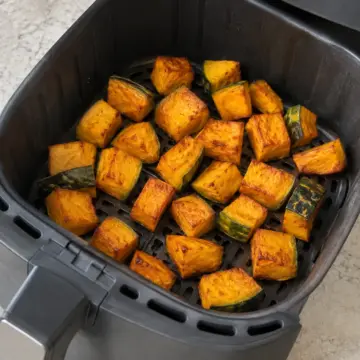
- Cook for about 15 minutes, shaking the basket halfway through to ensure even cooking.
- If using, drizzle with maple syrup or honey and sprinkle with cinnamon before serving.
Notes
- Adjust cook time based on size of cubes; smaller pieces will cook faster!
- For extra sweetness, feel free to add a touch more maple syrup right before serving.
Nutrition
Sources
- University of Hawaii CTAHR: Thanksgiving Kabocha
- Just One Cookbook: Kabocha Squash
- USDA FoodSafety.gov: FoodKeeper
- USDA FSIS: Leftovers and Food Safety

Andrew Gray is a seasoned food writer and blogger with a wealth of experience in the restaurant and catering industries. With a passion for all things delicious, Andrew has honed his culinary expertise through his work as a personal chef and caterer.
His love for food led him to venture into food writing, where he has contributed to various online publications, sharing his knowledge and insights on the culinary world. As the proud owner of CooksCrafter.com, Andrew covers a wide range of topics, including recipes, restaurant reviews, product recommendations, and culinary tips.
Through his website, he aims to inspire and educate fellow food enthusiasts, offering a comprehensive resource for all things food-related.