
Short Answer
Avgolemono Greek lemon chicken soup is chicken and rice in broth, thickened with eggs and fresh lemon juice, ready in 40 minutes.
- Eggs go in only after hot broth, a spoonful at a time, has warmed them.
- Low heat and 160°F on a thermometer finish the soup.
- Extra warm broth loosens a pot the rice has made too thick.
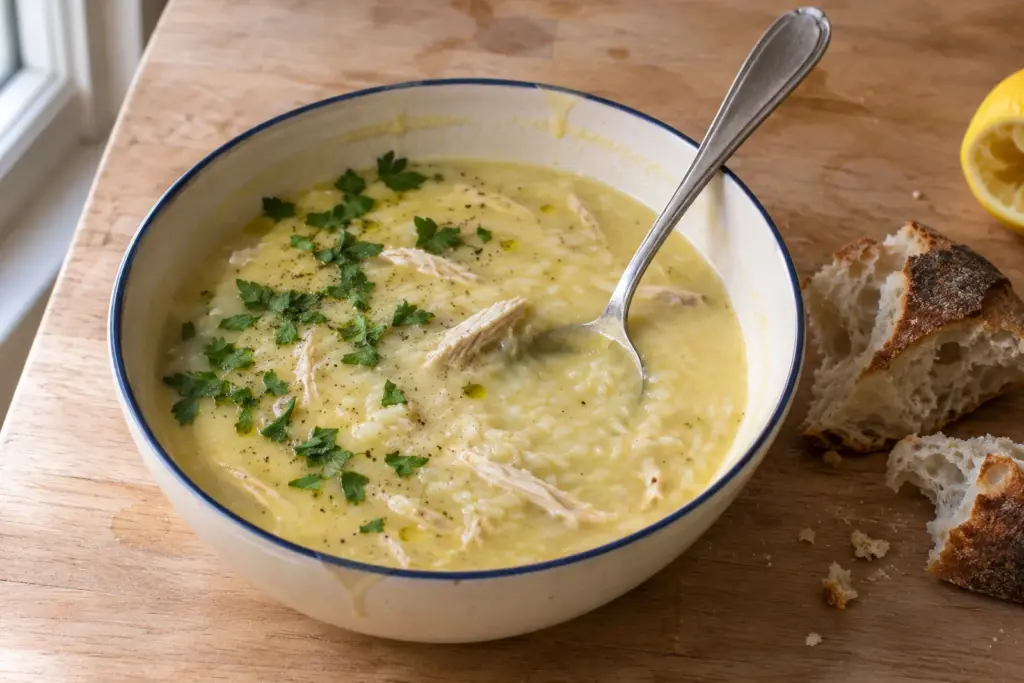
Avgolemono is Greek for egg and lemon, and the eggs take the place of the cream or flour that thickens other soups. You get a silky bowl when the eggs warm up slowly and the pot stays on low heat afterward.
This one takes 10 minutes of prep and a 30-minute simmer, which puts it among the dinner recipes that suit a weeknight.
1 What Do You Need and Why?
Rice supplies all the starch in this soup, and the grain you pick decides how much body the broth ends up with. Ordinary white rice keeps its grains fairly distinct, while short-grain rice cooks softer and gives up more starch.
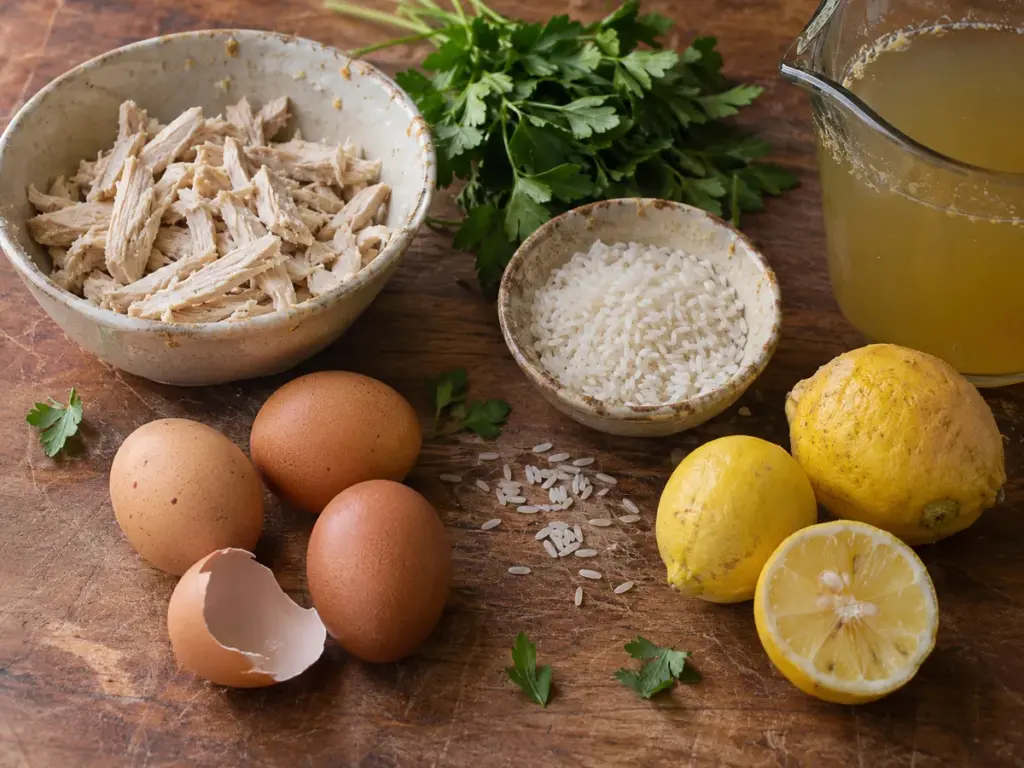
Breast meat keeps the chicken flavor mild so the lemon leads, and thigh meat adds a deeper chicken taste and stays juicier on reheating. You need 1 cup of cooked, shredded chicken either way.
Two large eggs and ¼ cup of fresh lemon juice, which takes one or two lemons, make up the whole egg-lemon mixture. You want the whites fully blended into the yolks before it meets any heat, because stray streaks of white cook into strings.
Low-sodium broth leaves you room to season, and you salt last, after the eggs go in, because the lemon and the olive oil both change how salty the bowl tastes.
2 How Do You Temper the Eggs Without Curdling?
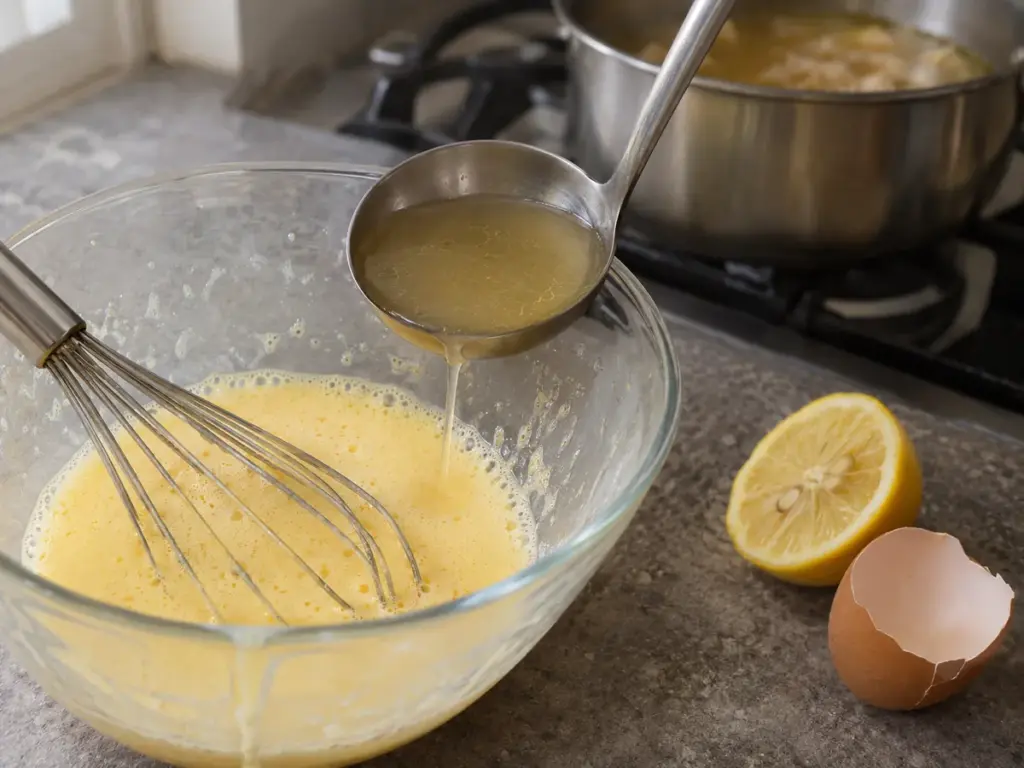
You bring the eggs up to temperature gradually by whisking in a little broth, a spoonful at a time, which lets them reach your pot already warm enough to thicken it. Very hot broth poured in all at once sets the egg proteins into lumps instead.
The chicken goes into the simmering rice first, and it is ready when a thermometer in the meat reads 165°F, the USDA number for reheated leftovers. The eggs wait until the chicken is hot, because the soup cannot go back to a simmer once they are in.
- Whisk the base. Beat the eggs and lemon juice until smooth and a little frothy.
- Warm the eggs. Whisk in about ½ cup of hot broth, a spoonful at a time, until the bowl feels warm.
- Back into the pot. On low heat, pour the mixture in a thin stream while you stir.
- Finish gently. Stir until a thermometer in the broth reads 160°F, then turn the burner off.
Off the burner, an immersion blender breaks up the lumps in a grainy soup within a few seconds, though it comes out a little less silky than before.
Low heat matters because a hard boil can curdle the eggs, and the USDA safe minimum for egg dishes sits well below a boil.
3 How Do You Get the Thickness Right?
The rice and the eggs share the thickening, and the rice is the part you can adjust. More rice or a longer simmer of the rice before the eggs go in makes a thicker soup, and a splash of warm broth at the end loosens one that turned out stodgy.
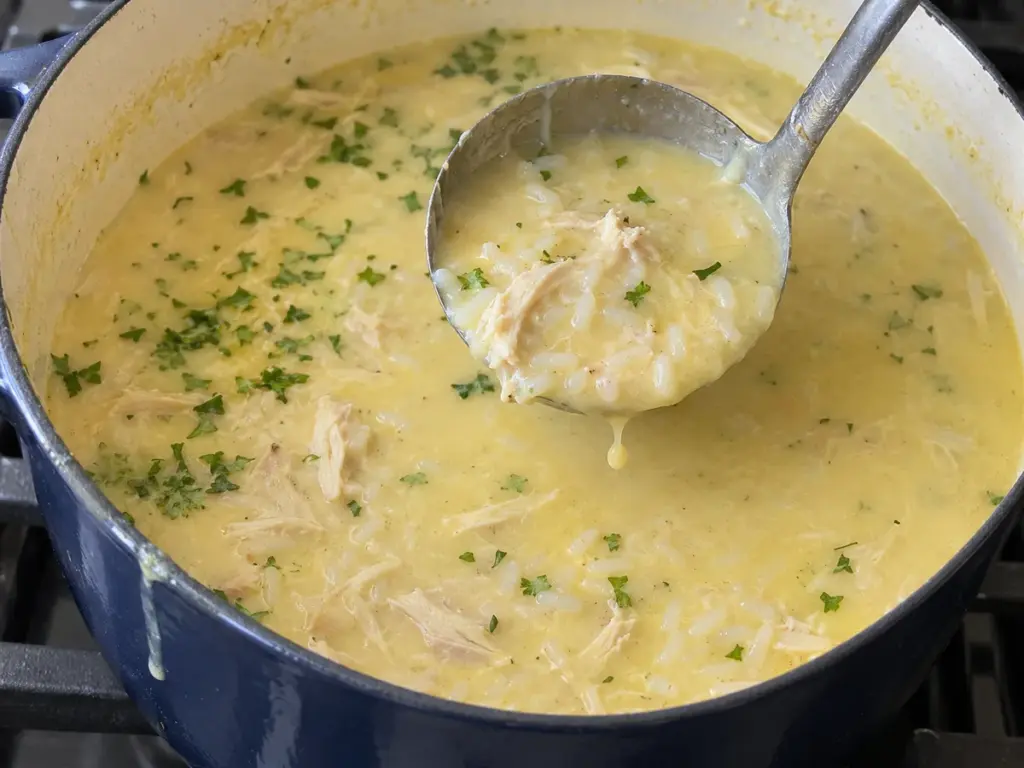
For a soup that tastes right but pours thin, a few pulses of an immersion blender in the rice and broth, before the chicken goes in, release more starch without adding more rice.
- Rice at ½ cup needs about 15 minutes of simmering before the eggs go in.
- Orzo can replace it at the same ½ cup as a starting amount and needs 8 to 10 minutes of simmering, the same as in a lemon chicken soup built on orzo.
4 What Should You Serve with Avgolemono Soup?
Everything in the bowl is soft, which leaves the sides to carry the crunch, salt and scooping power the soup lacks.
| Side | What It Adds to the Bowl |
|---|---|
| Crusty bread | Tears into pieces that soak up the lemony broth |
| Greek salad | Crisp cucumber and tomato with salty feta against the smooth soup |
| Roasted vegetables | Browned edges and a sweetness that softens the lemon |
| Stuffed grape leaves | Herby rice parcels, best as one or two small bites because the soup already holds rice |
| Feta and olive platter | Salt and brine that make the mild broth taste brighter |
| Hummus and pita | A creamy dip and a warm scoop for a lighter dinner |
| Lemon garlic roasted potatoes | Crisp edges and extra starch with a second hit of lemon |
Two picks from a longer list of side dishes for this lemon soup fit a soup this smooth: spanakopita for flaky phyllo and salty feta, and a tzatziki cucumber salad to cool the lemon.
5 How Do You Store and Reheat Leftover Avgolemono?
Shallow containers cool the soup faster, and USDA FSIS wants it in your fridge within 2 hours, or within 1 hour when the room is above 90°F. In your fridge, it keeps 3 to 4 days, the FoodKeeper window for soups and for leftovers with poultry or egg.
The same source gives soups 2 to 3 months in the freezer. You can freeze the rice, chicken and broth before the eggs go in, then thaw it, reheat the base to 165°F, temper in fresh eggs the same way and stop at 160°F, because egg-thickened soup may separate once frozen.
How Do You Reheat It Safely?
- On the stove, low heat and steady stirring bring the soup to 165°F, the USDA reheating number for leftovers.
- In the microwave, half-power bursts with a stir between each get it there with less risk of curdling.
- The rice keeps drinking broth as the soup sits, and a splash of warm broth loosens it as it heats.
FSIS also advises bringing soups to a boil when you reheat them, but a hard boil can curdle the egg-lemon sauce, which is why the thermometer reading is the cue to trust here.
Frequently Asked Questions
Yes, and the soup turns lighter and thinner with the eggs as its only thickener.
Yes, cooked chicken is all the soup needs, and a rotisserie bird supplies it. If you poach raw chicken instead, it needs to reach 165°F before you shred it, and the poaching broth goes back into the pot.
Fresh dill, a drizzle of olive oil or crumbled feta all go well with the lemon, and they work best added at the table. A richer take on the same flavors is a cream-based lemon dill chicken soup, which uses heavy cream, carrots, celery and dill.
Yes. Without the eggs the lemon and chicken make a brothy soup with less body than the egg-thickened one, and a lemon chicken soup with canned artichokes is built that way from the start.
Yes, 10 minutes at high pressure cooks the rice with the chicken, and the eggs still go in last, as in a pressure-cooker avgolemono.

Avgolemono (Greek Lemon Chicken Soup)
Equipment
- Large pot For cooking the soup
- whisk For blending eggs and lemon juice
- Mixing bowl For tempering the eggs
- Ladle For adding broth to the egg mixture
Ingredients
- 4 cups chicken broth low sodium preferred
- 1 cup cooked chicken shredded
- ½ cup white rice uncooked
- 2 large eggs whisked
- ¼ cup lemon juice freshly squeezed
- 1 tablespoon olive oil for added richness
- ½ teaspoon salt adjust to taste
- ¼ teaspoon black pepper freshly ground
- 1 tablespoon fresh parsley chopped, for garnish
Instructions
- In a large pot, bring the chicken broth to a gentle simmer over medium heat.
- Stir in the rice and let it cook for about 15 minutes, until tender. Stir in the shredded chicken and heat until a thermometer in it reads 165°F.
- In a mixing bowl, whisk together the eggs and fresh lemon juice until smooth and slightly frothy.
- Slowly ladle warm broth into the egg mixture while whisking continuously to temper the eggs.
- Turn the heat to low and pour the tempered egg mixture back into the pot in a thin stream, stirring constantly to prevent curdling.
- Stir over low heat, without boiling, until a thermometer in the broth reads 160°F, then turn off the heat.
- Season with salt and black pepper to taste, then stir in the olive oil for extra richness.
- Serve hot, garnished with fresh parsley and an extra squeeze of lemon if desired.
Notes
- For a creamier texture, blend a portion of the soup before adding the chicken.
- Cool leftovers within 2 hours and store them in an airtight container in the fridge for 3 to 4 days.
- Reheat over low heat, stirring, until a thermometer reads 165°F. FSIS advises bringing soups to a boil, but a hard boil can curdle the egg-lemon sauce.
Sources
- USDA FSIS, Safe Minimum Internal Temperature Chart (poultry and leftovers 165°F, egg dishes 160°F)
- USDA FSIS, Leftovers and Food Safety (2-hour rule, shallow containers, reheating to 165°F)
- USDA FoodKeeper (soups and stews 3 to 4 days refrigerated, 2 to 3 months frozen)

Andrew Gray is a seasoned food writer and blogger with a wealth of experience in the restaurant and catering industries. With a passion for all things delicious, Andrew has honed his culinary expertise through his work as a personal chef and caterer.
His love for food led him to venture into food writing, where he has contributed to various online publications, sharing his knowledge and insights on the culinary world. As the proud owner of CooksCrafter.com, Andrew covers a wide range of topics, including recipes, restaurant reviews, product recommendations, and culinary tips.
Through his website, he aims to inspire and educate fellow food enthusiasts, offering a comprehensive resource for all things food-related.