
Short Answer
Creamy Italian sausage casserole bakes penne in a tomato-cream sauce with browned sausage and two cheeses, with 15 minutes of prep and a 20 to 25 minute bake.
- The sausage is done at 160°F and the whole casserole at 165°F.
- The pasta comes out 1 to 2 minutes short of the package time and finishes in the oven.
- Leftovers keep 3 to 4 days in the fridge.
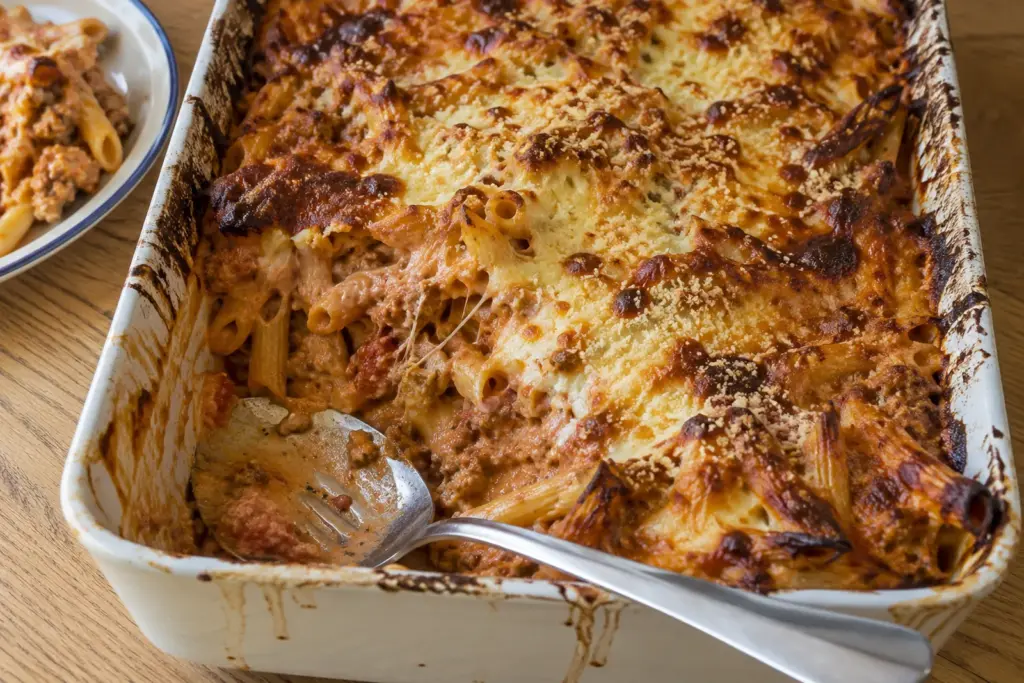
Hot or sweet sausage sets the heat in this bake, and just ½ cup of heavy cream softens a 28-ounce can of tomatoes without hiding them.
Because one 9x13 dish makes 6 servings that keep for days, this bake fits among our dinner recipes for nights when you also want tomorrow's lunch sorted.
1 What Do You Need and Why?
A thermometer settles the sausage question: fresh Italian sausage is ground pork that has to reach 160°F, and chicken or turkey sausage, one of the Italian sausage stand-ins, is ground poultry that needs 165°F.
If the skillet fills with rendered fat, you can spoon most of it out and leave a spoonful or so to carry the onion and garlic, which keeps the sauce from turning greasy.
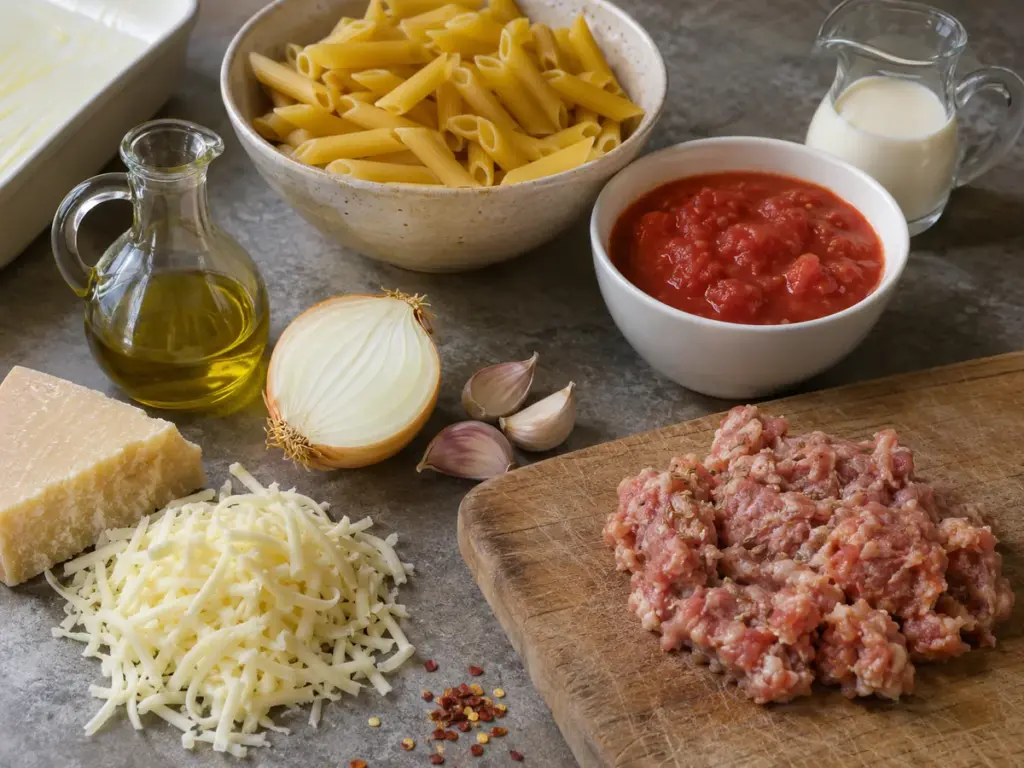
Penne or rigatoni both work, since their hollow centers fill with sauce as the casserole bakes, and 12 ounces of dry pasta suits the 28-ounce can of tomatoes.
Bagged shredded mozzarella melts smoother than fresh balls packed in water, which release liquid into the casserole. Sausage and Parmesan are both salty, which is why you should taste before you salt.
2 How Do You Get It Right?
Your sausage is ready when no pink is left, the crumbles have browned edges and a thermometer reads 160°F in a few spots (165°F for chicken or turkey sausage).
The sauce needs 5 minutes of simmering, and you will know it is ready when a spoon dragged across the pan leaves a trail that stays open for a second.
Pasta that comes out 1 to 2 minutes short of the package time still has bite when it reaches the dish, and it softens fully during the bake. You can save ½ cup of the cooking water when you drain, which loosens a mixture that looks tight before it goes in.
Half of the mozzarella goes through the pasta and half on top, which gives every forkful melted cheese while the top still browns.
At 375°F the casserole needs 20 to 25 minutes to bubble at the edges and spot the top with gold, and 2 more minutes under the broiler browns a pale top if you stay at the oven door.
Safety
A casserole is done at 165°F in the center, the number the USDA safe minimum temperature chart lists for casseroles. Because it heats last, the middle of the dish is the spot to test.
A rest of about 5 to 10 minutes lets the sauce tighten enough for squares to hold their shape on your plate.
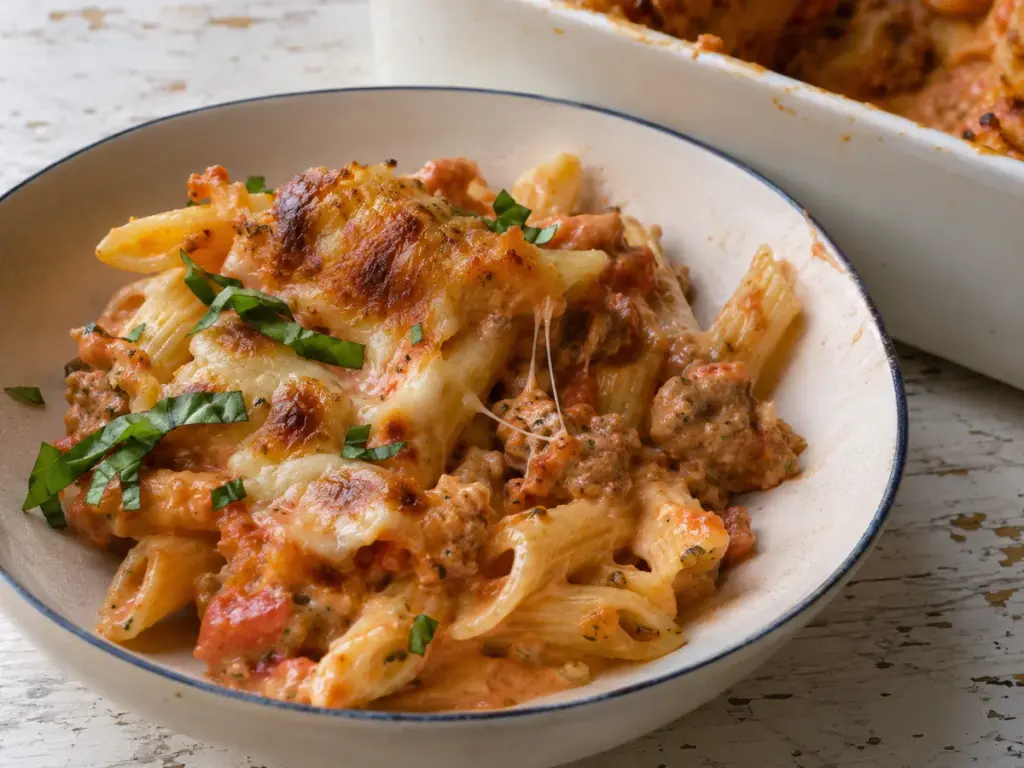
3 Easy Sides to Serve with Italian Sausage Casserole
Tomato, cream and two cheeses make a rich plate, which means your sides work best when they add acid, crunch or something fresh.
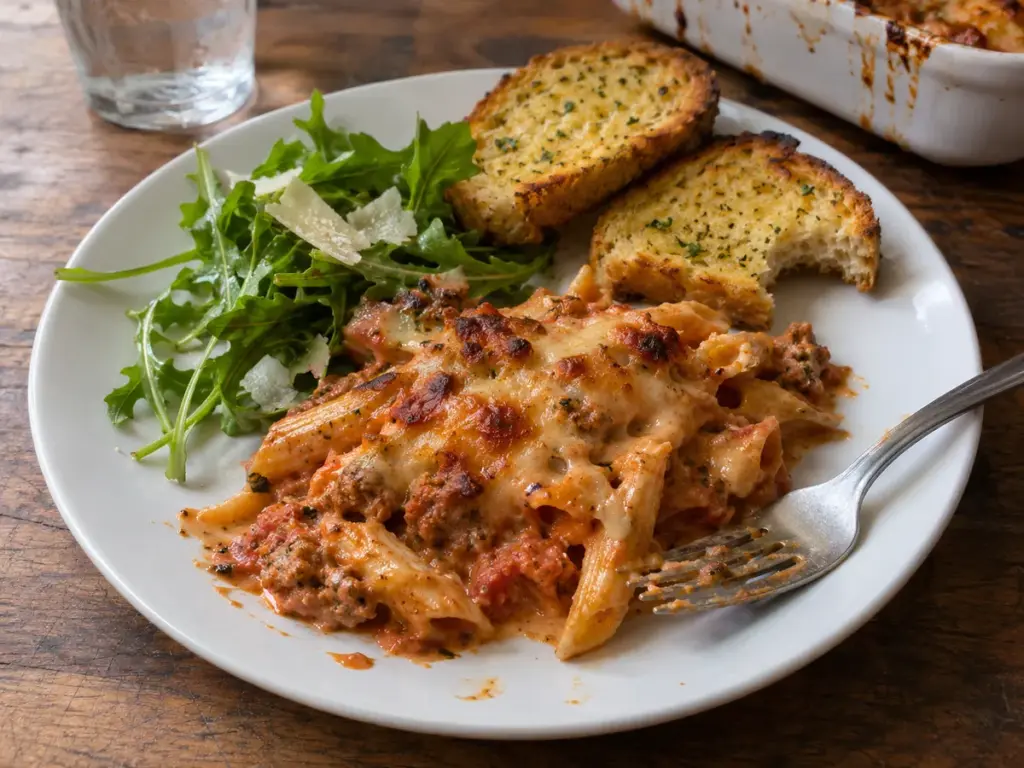
Peppery arugula and lemon cut through the cream, and arugula dressed with a lemon vinaigrette is ready in under 10 minutes, about the length of the casserole's rest. A crisp Caesar salad does the same job with a sharper dressing.
Garlic bread soaks up the sauce left in the dish, and while the casserole holds the oven for 20 to 25 minutes, garlic bread in the air fryer toasts on the counter.
Green beans take a squeeze of lemon well, and air-fried green beans cook in 8 to 10 minutes at 375°F.
Four more sides suit the same plate, depending on whether you want browned vegetables, something fresh, something sweet or something with protein.
| Side | What It Adds |
|---|---|
| Roasted zucchini or broccoli | Browned edges and a plain vegetable taste that sits well next to the cheese |
| Caprese salad | Fresh tomato and basil, with mozzarella that echoes the topping |
| Balsamic roasted carrots | Sweetness that suits hot sausage, plus a little balsamic tang |
| Marinated chickpeas | Protein and chew from the beans, with acid from the marinade |
4 How Do You Store and Reheat Leftovers?
Refrigerator Storage
Leftovers belong in the fridge within 2 hours of coming out of the oven (1 hour if the room is above 90°F), and they keep 3 to 4 days after that. You will cool the center faster in a shallow container than in the baking dish.
How Should You Reheat It?
Each method works as long as the center reaches 165°F again.
- In the oven, covered with foil at 350°F, the dish takes about 20 to 25 minutes.
- Single portions in the microwave heat evenly on medium power with a stir halfway through.
- A skillet works too, with a splash of cream or broth to keep the sauce smooth.
Can You Freeze It?
Yes, for about 2 to 3 months at best quality, either as baked leftovers or as an assembled casserole frozen unbaked once the sauce has cooled. An unbaked casserole can also wait in the fridge for about a day or two, though it needs extra oven time because it starts cold.
- Cool and wrap. Wrap the cooled dish tightly or portion it into containers.
- Thaw overnight. Move it to the fridge the night before.
- Bake covered. Heat at 350°F until the center reads 165°F.
You can bake it straight from frozen too, though it needs much more time, and the center still has to read 165°F.
5 Common Questions About Sausage Casserole
Can I Use Spicy Sausage?
Yes, and hot sausage becomes your main heat source, which is why an even mix of hot and sweet gives you a medium level. The ¼ teaspoon of red pepper flakes is optional either way.
Does It Work Without Cream?
Half-and-half replaces the ½ cup of heavy cream one for one, and the sauce comes out lighter. Half-and-half has less fat to hold its proteins together, which makes a gentle simmer the safer heat for keeping it from splitting in the hot tomatoes.
A few spoonfuls of ricotta stirred into the tomatoes add creaminess too, and other heavy cream stand-ins such as evaporated milk also work in sauces.
What If You Have No Mozzarella?
Provolone is the closest match because it is a stretched-curd cheese like mozzarella, and fontina and Monterey Jack both melt smoothly on top.
Can I Add Vegetables?
Spinach or chopped kale stirs in with the sausage and cooks down into the sauce. You should sauté zucchini and mushrooms until their liquid is gone before they join the dish, because they release water as they cook.
Is This Kid-Friendly?
Sweet Italian sausage with the red pepper flakes left out gives you a mild casserole that still tastes of tomato and cream.
Can You Make It Without the Oven?
Cooked rigatoni tossed into a sausage, tomato and cream sauce makes a stovetop sausage rigatoni in under 30 minutes.
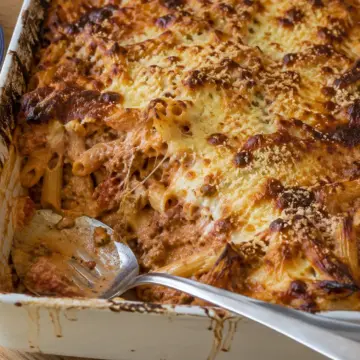
Creamy Italian Sausage Casserole
Equipment
- Large Skillet For cooking sausage and sauce
- 9x13 Baking Dish To bake the casserole
Ingredients
- 1 pound Italian sausage casings removed
- 12 oz short pasta penne or rigatoni, uncooked
- 1 onion chopped
- 3 cloves garlic minced
- 1 can crushed tomatoes 28 oz
- ½ cup heavy cream
- 1 cup shredded mozzarella
- ½ cup grated Parmesan
- 1 tablespoon olive oil
- 1 teaspoon Italian seasoning
- ¼ teaspoon red pepper flakes optional
- salt and pepper to taste
Instructions
- Preheat oven to 375°F. Grease a 9x13 baking dish.
- Cook pasta until just under al dente. Drain and set aside.
- In a large skillet, heat olive oil. Add sausage and break it up while browning with onions and garlic, until no pink remains and a thermometer reads 160°F.
- Stir in crushed tomatoes, cream, Italian seasoning, red pepper flakes, salt, and pepper. Simmer 5 minutes.
- Mix cooked pasta into sauce along with half of the mozzarella and all the Parmesan.
- Transfer to baking dish and top with remaining mozzarella. Bake 20-25 minutes until bubbly and the center reads 165°F. Broil 2 minutes for browning if desired.
- Let cool slightly before serving. Garnish with parsley if you like.
Notes
- Swap heavy cream for half-and-half for a lighter version.
- Add spinach or chopped kale with the sausage for more greens.
- Great for freezing: assemble, wrap and freeze for 2 to 3 months. Thaw overnight in the fridge, or bake from frozen with much more time, until the center reads 165°F.
Sources
- USDA FSIS and FoodSafety.gov: Safe Minimum Internal Temperatures (160°F ground pork and sausage, 165°F poultry, casseroles and leftovers)
- USDA FSIS: Keep Food Safe, Food Safety Basics (refrigerate within 2 hours, leftovers 3 to 4 days)
- USDA FoodKeeper (leftovers with meat: 3 to 4 days refrigerated, 2 to 3 months frozen)

Andrew Gray is a seasoned food writer and blogger with a wealth of experience in the restaurant and catering industries. With a passion for all things delicious, Andrew has honed his culinary expertise through his work as a personal chef and caterer.
His love for food led him to venture into food writing, where he has contributed to various online publications, sharing his knowledge and insights on the culinary world. As the proud owner of CooksCrafter.com, Andrew covers a wide range of topics, including recipes, restaurant reviews, product recommendations, and culinary tips.
Through his website, he aims to inspire and educate fellow food enthusiasts, offering a comprehensive resource for all things food-related.