Short Answer
Air fryer roasted poblano peppers take 25 minutes in all, with 15 minutes of blistering at 400°F, and a short steam afterward lets the skin slide off.
- One flip at the halfway mark browns and tightens the skin on every side.
- Poblanos are mild at 1,000 to 2,000 Scoville units, though a bag from one grower can run hotter than another.
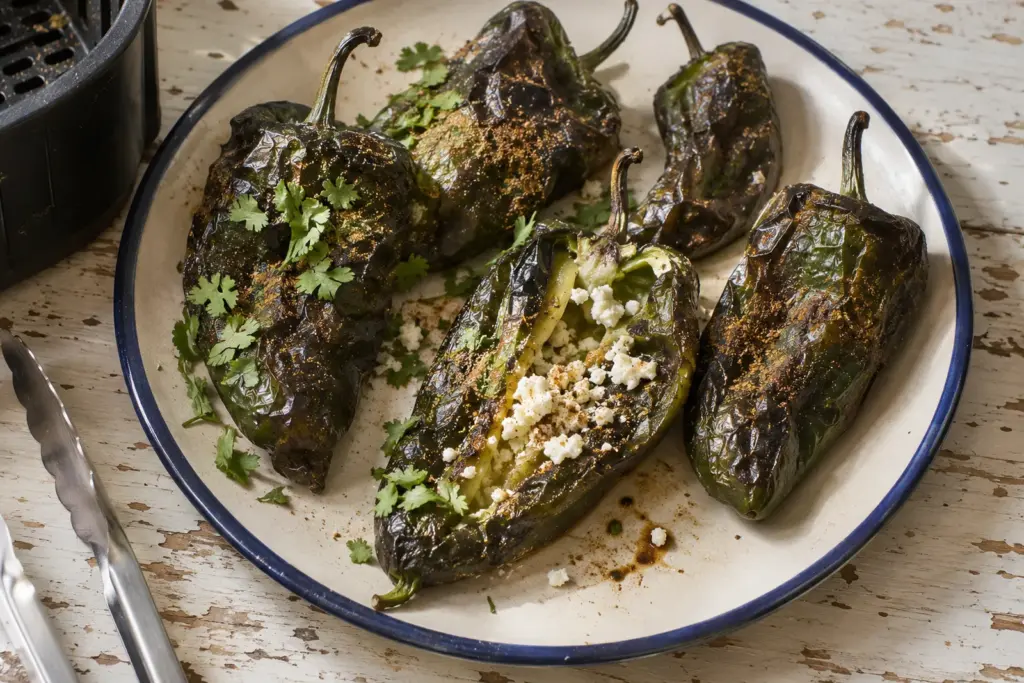
Poblanos have thick walls and a skin that clings to the flesh until heat and steam loosen it. Among the air fryer recipes on this site, this one lets a 400°F basket do the blistering that a gas flame or broiler usually does, and you can turn one batch into stuffed peppers, taco strips, salsa or dip.
1 What Do You Need and Why?
Five medium poblanos make this batch, and the best ones are dark green, glossy and firm with about the same size, because peppers of different sizes blister and soften on different clocks.
Poblanos land at 1,000 to 2,000 on the Scoville scale in the UF/IFAS pepper chart, against 0 for a bell pepper and 2,000 to 8,000 for a jalapeño. New Mexico State University notes that temperature and water change the heat level within one variety, which explains why a bag of poblanos from one grower can taste hotter than the last bag you bought.
If you want less heat than that, Anaheim peppers swap in one for one and run milder.
A tablespoon of olive oil spread over five peppers is a thin coat, just enough to hold the salt, cumin and garlic powder on the skin and help it blister evenly. Dry peppers blister instead of steaming, because water left on the skin has to evaporate first.
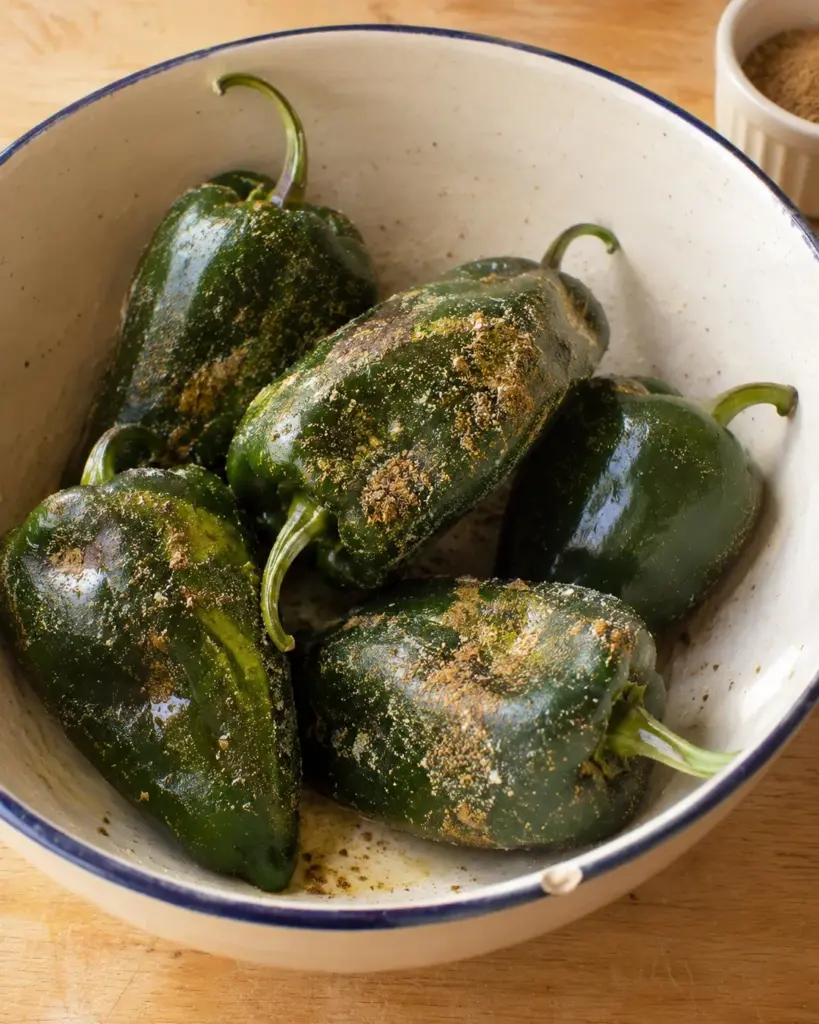
Most of that seasoning sits on the skin and leaves with it at the peeling stage, which makes a light salting of the peeled flesh worth doing for strips and fillings.
The optional queso fresco, cilantro and lime go on after peeling, and feta or cotija can replace the queso fresco, though both taste saltier, which is one more reason to go easy with the salt.
2 How Do You Get Blistered, Tender Peppers?
Your basket needs to reach 400°F before the peppers go in, and they sit in a single layer with a finger of space between them so hot air reaches every side.
At the halfway mark you turn each pepper with tongs onto its paler side, because the skin resting on the basket gets less direct air.
Fifteen minutes is the starting point, and the skin gives you the better cue: tight, wrinkled and bubbled, with brown patches and flesh that gives under the tongs.
An air fryer browns skin in patches instead of charring it black the way a gas flame does, and a pepper with some pale spots can still be done. Machines run hotter or cooler than their dial, which makes minute 12 a good moment for your first look.
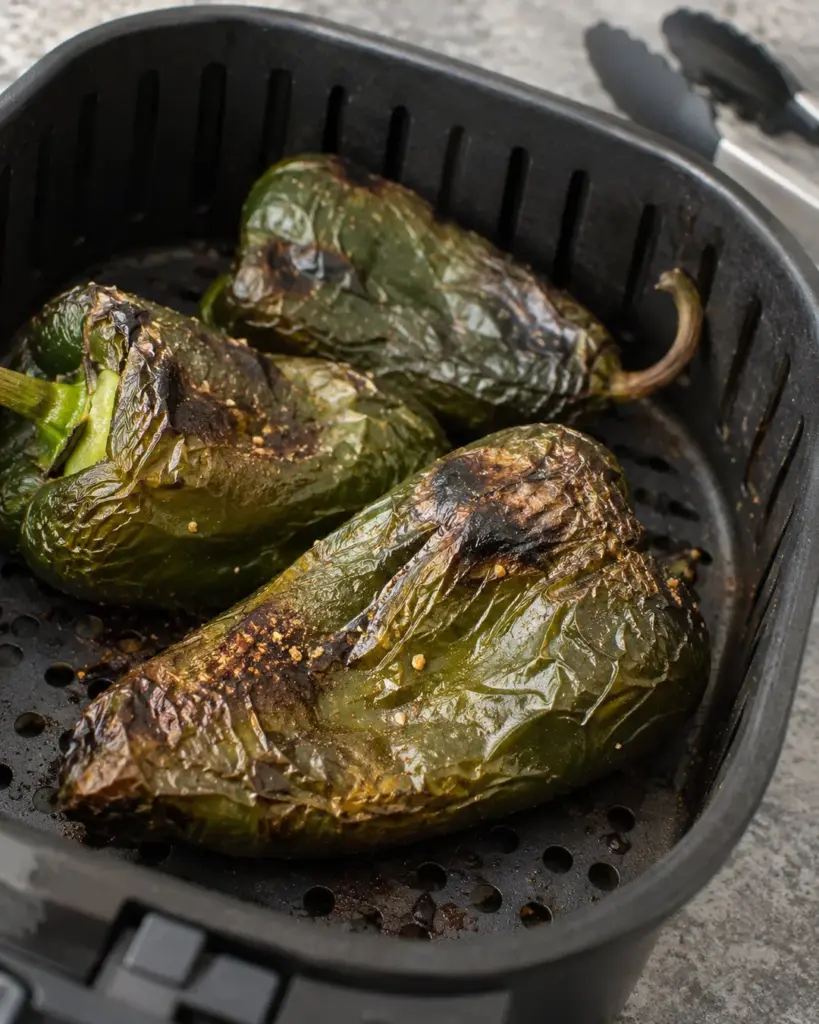
A pepper that misses the mark usually shows one of two signs:
| What You See | Likely Cause | What Fixes It |
|---|---|---|
| Pale skin, no blisters | A crowded basket or damp skin | Dried peppers and two smaller rounds |
| Collapsed, torn flesh | Roasted well past tender | Out of the basket as soon as the flesh gives |
3 How Do You Peel Roasted Poblanos?
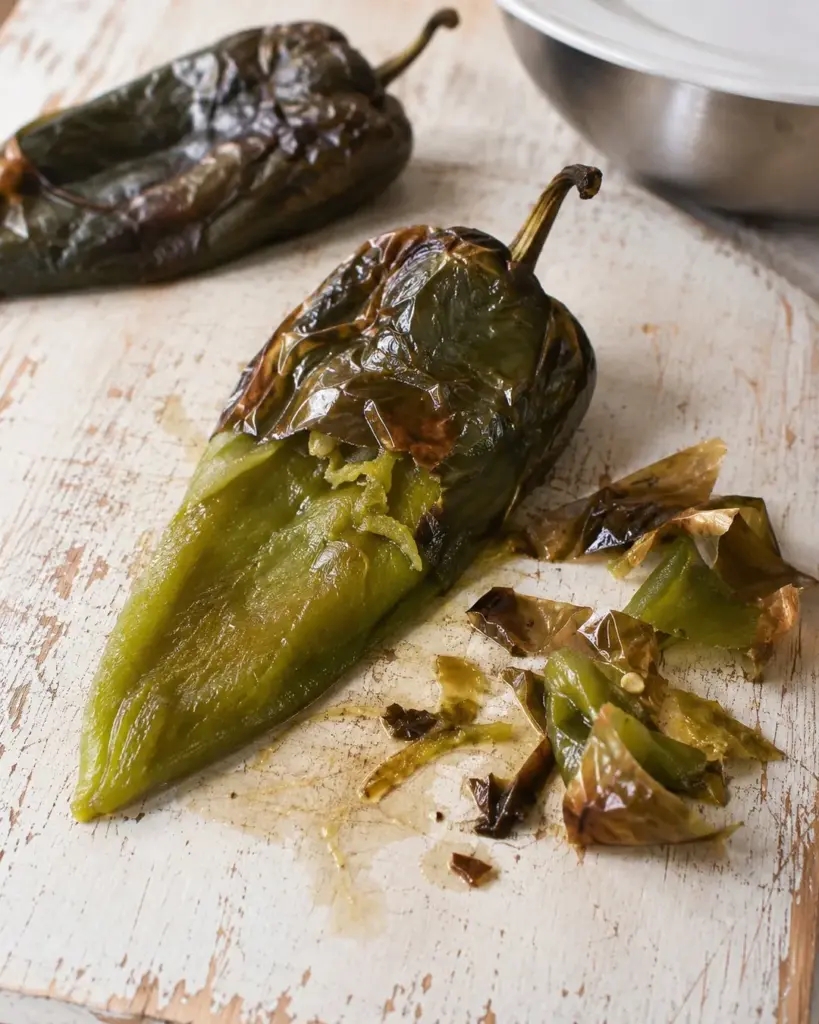
Steam does the loosening, and New Mexico State University's chile guide says to trap it by putting the blistered chiles in a covered heat-safe container or a food-grade bag. You can also lay a damp towel over the pan, although that cooks the peppers a little further.
- Under cover. Hot peppers go into a heat-safe bowl under a plate, or into a food-grade bag.
- Cool to the touch. The skin releases once the peppers are cool enough to hold.
- Skin off. A gentle tug lifts the blistered skin, and a knife or peeler scrapes any patch that stayed stuck.
- Seeds out. A cut from stem to tip lets the seeds and pale ribs come out.
For the peeling itself, the same guide suggests rubber gloves or a thin layer of solid fat on your hands, which matters most when a pepper runs hotter than expected. Flecks that cling come off with an occasional rinse.
We'd peel every pepper that ends up in a filling, a salsa or a dip, where scraps of skin turn tough against a smooth texture. For a quick side, the blistered skin can stay on, and only the seeds need to go.
4 What Can You Do with Roasted Poblanos?
- Stuffed. A peeled pepper opened from stem to tip takes cheese and black beans, and a short return to the basket melts the cheese.
- Rajas. Strips from peeled peppers fit tacos and quesadillas.
- Dip. The flesh blends with cream cheese and sour cream.
For a rice-and-meat filling, the stuffed peppers with rice and meat method cooks the filling first, which leaves a roasted poblano with only heating through to do.
Sliced rajas can join the bell peppers and onion in chicken fajitas and add a mild heat of their own.
For a smokier, hotter batch, ¼ to ½ teaspoon of chipotle powder goes into your oil mixture, starting at ¼ and tasting from there.
5 How Do You Store Leftover Roasted Poblanos?
You have 2 hours to get roasted, peeled peppers into the refrigerator, and New Mexico State University's chile guide says to use or freeze them within 3 days.
For the freezer, the same guide has packaged chile cool to under 40°F first, and it keeps for up to 12 months. Whole chiles can also be frozen unpeeled, and they peel more easily after freezing.
Leftover strips need to reach 165°F according to USDA FSIS, and an instant-read thermometer in the thickest part of a pepper confirms it after a few minutes in the air fryer.
Easy Air Fryer Roasted Poblano Peppers
Equipment
- Air-fryer
- Mixing bowl
- Sharp Knife
- Tongs
- Cutting board
Ingredients
- 5 medium poblano peppers
- 1 tablespoon olive oil for drizzling
- 1 teaspoon salt to taste
- 1 teaspoon cumin to taste
- 1 teaspoon garlic powder to taste
- Optional toppings: ½ cup crumbled queso fresco, ¼ cup chopped cilantro, 1 lime
Instructions
- Wash and dry the poblano peppers, then place them in a mixing bowl.
- Drizzle olive oil over the peppers and sprinkle with salt, cumin, and garlic powder. Give them a good toss!
- Preheat your air fryer to 400°F.
- Arrange the peppers in the air fryer basket, ensuring there's space between them.
- Roast for about 15 minutes, flipping halfway through for even cooking.
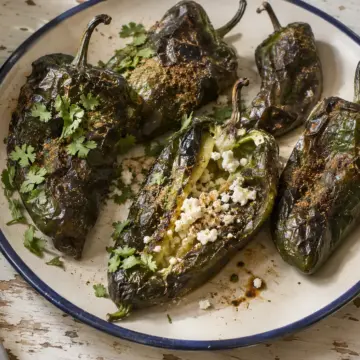
- Once they're blistered and tender, remove from the air fryer and let cool slightly before serving.
Notes
- For a smoky flavor, consider adding a splash of liquid smoke to the olive oil mixture before tossing.
- You can increase the cook time slightly if you prefer them softer; just keep an eye on them!
Nutrition
Sources
- UF/IFAS Gardening Solutions, Peppers by Scoville Units
- New Mexico State University, Measuring Chile Pepper Heat
- New Mexico State University, Processing Fresh Chile Peppers
- USDA FSIS, Leftovers and Food Safety

Andrew Gray is a seasoned food writer and blogger with a wealth of experience in the restaurant and catering industries. With a passion for all things delicious, Andrew has honed his culinary expertise through his work as a personal chef and caterer.
His love for food led him to venture into food writing, where he has contributed to various online publications, sharing his knowledge and insights on the culinary world. As the proud owner of CooksCrafter.com, Andrew covers a wide range of topics, including recipes, restaurant reviews, product recommendations, and culinary tips.
Through his website, he aims to inspire and educate fellow food enthusiasts, offering a comprehensive resource for all things food-related.