Short Answer
Eight of these 20 oven-free dinners cook in one skillet in 15 minutes or less, and four need no heat at all, which makes them the easiest.
- For a filling skillet dinner in about 10 minutes we'd start with the beef and broccoli stir-fry.
- Or start with shrimp tacos at 4 to 6 minutes.
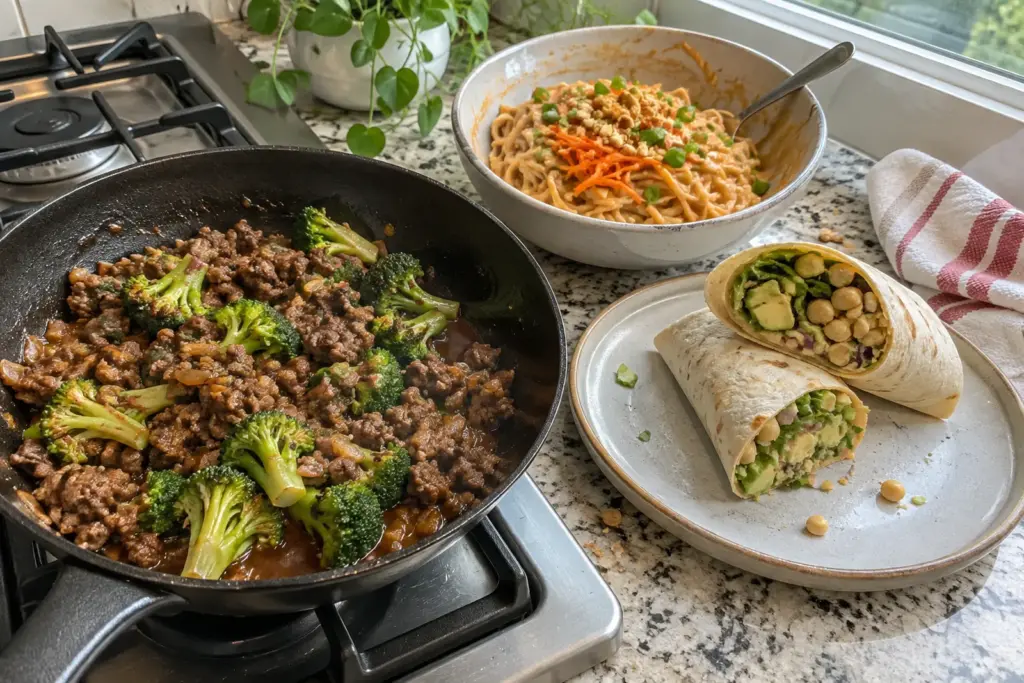
These 20 dinner recipes skip the oven and lean on one of three things: a hot skillet, a pot of water or broth, or no heat at all. Which one suits you depends on how hot your kitchen is and how long you can stand at the stove, and the times run from a zucchini noodle sauté that takes about 3 minutes to a lentil stew that takes about 30.
1 How Do You Choose an Oven-Free Dinner?
Choose the heat before anything else, because it sets the time, the cleanup and how warm the kitchen gets:
- A hot skillet browns meat and cooks vegetables in 15 minutes or less.
- A pot of lentils takes 20 to 35 minutes but leaves you free between stirs.
- A no-cook bowl takes only chopping.
Most of these need a single burner, and only the shrimp with rice and the pasta primavera ask you to run two pans.
Protein is your second choice. Shrimp need only 2 to 3 minutes per side, ground meat and chicken strips take 4 to 7 minutes, and canned tuna, chickpeas and black beans come already cooked, which is why those dinners need no burner.
On a heat-wave night, pick from the no-burner dinners below; rice paper rolls and cold soba salad are the colder options.
If your oven is out of order, other tools still work. A slow cooker needs no oven, though a pot of beef and barley soup takes 7 to 8 hours on low, so it suits a day when you are out.
An electric kettle supplies the boiling water for couscous and rice noodles.
The times count the minutes on the burner; rice, pasta, couscous and noodles follow their package.
| Dinner | What it needs | Time on the heat |
|---|---|---|
| Garlic Butter Shrimp with Spinach and Rice | Large skillet, small pot for rice | 7 to 10 minutes, plus the rice |
| Asian Beef and Broccoli Stir-Fry | Large skillet or wok | 10 to 12 minutes |
| Sesame Chicken Stir-Fry with Bell Peppers | Large skillet or wok | 10 to 12 minutes |
| Turkey and Vegetable Stir-Fry with Hoisin Sauce | Large skillet | 10 to 14 minutes |
| Lemon Garlic Tilapia with Sautéed Green Beans | Large skillet | 12 to 15 minutes |
| Shrimp Tacos with Cabbage Slaw | Skillet | 4 to 6 minutes |
| Egg Fried Rice with Veggies | Large skillet or wok | About 10 minutes |
| Zucchini Noodles with Pesto and Cherry Tomatoes | Large skillet | 2 to 3 minutes |
| Black Bean Quesadillas | Large skillet | 20 to 30 minutes for four |
| Caprese Pasta Salad | Pot for the pasta | Pasta boil only, then cooled |
| Thai Peanut Noodles | Pot or kettle for the noodles | Noodles only, per the package |
| Pasta Primavera with Garlic and Herbs | Pot for the pasta, large skillet | Pasta boil, then about 6 minutes of sauté |
| Creamy Coconut Curry with Quick-Cooking Lentils | Saucepan with a lid | 20 to 26 minutes |
| Curried Lentil and Spinach Stew | Pot with a lid | 25 to 31 minutes |
| Chickpea and Avocado Salad Wraps | Bowl and fork | No heat |
| Tuna and White Bean Salad | Bowl | No heat |
| Black Bean and Corn Salsa Bowl | Bowl | No heat |
| Spinach and Feta Stuffed Pita Pockets | Bowl | No heat |
| Greek Yogurt Chicken Salad Lettuce Wraps | Bowl, plus cooked chicken | No heat if the chicken is already cooked |
| Mediterranean Chickpea Bowls | Pot or kettle for couscous or quinoa | Grain only, per the package |
Four of these dinners need a thermometer: the beef, the turkey, the sesame chicken and the tilapia.
Safe Temperatures
Cook ground beef to 160°F, ground turkey and chicken breast to 165°F, and fish such as tilapia to 145°F, measured with a food thermometer in the thickest part. Shrimp are done when the flesh turns pearly and opaque. Color is not a reliable sign for ground meat, so check the temperature.
2 Which Meat and Seafood Dinners Cook in One Skillet?
All six finish within 15 minutes of the pan going on the burner and need one large skillet or wok, plus a small pot of rice for the shrimp. The ground meat and chicken dinners depend on a thermometer more than a timer, because browned crumbs or sliced chicken look done to you before the center is.
1. Garlic Butter Shrimp with Spinach and Rice
Cook the shrimp first in the large skillet and take them out before you add the spinach, because a shrimp left in the pan keeps cooking and turns rubbery; the rice cooks in a small pot beside it. They are done when they are pink and opaque, usually 2 to 3 minutes per side, and the butter goes in over low heat so the garlic softens for about a minute without browning and turning bitter.
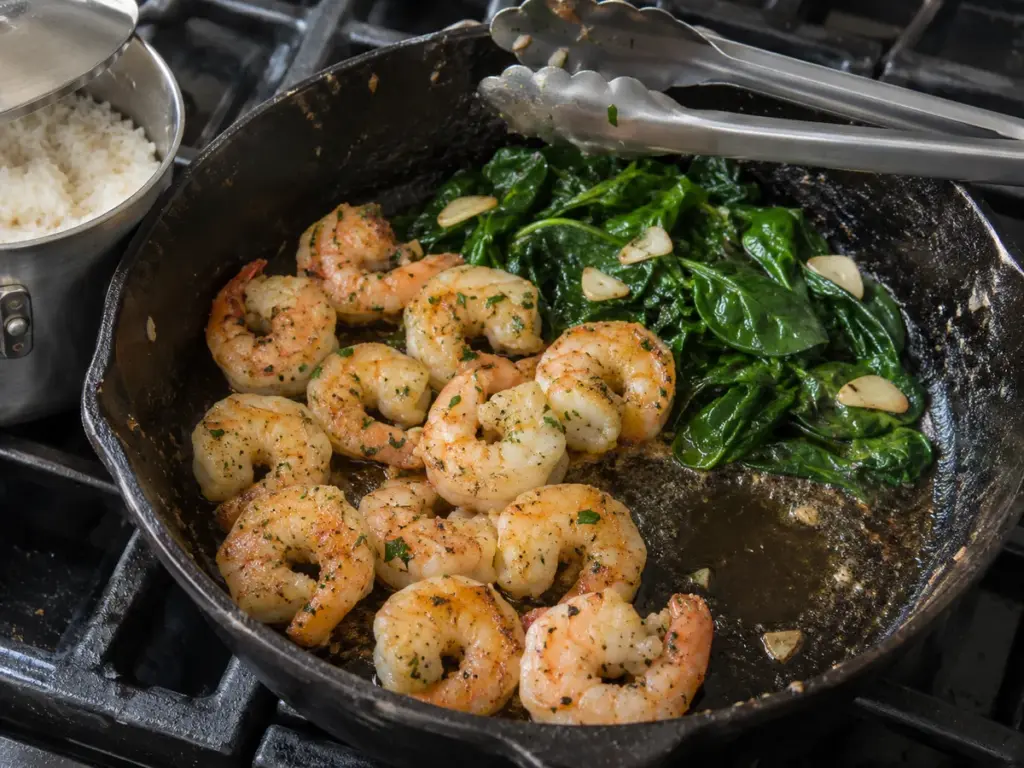
For a bigger plate, serve a Caprese salad alongside, since its acid and tomato juice balance the butter.
Ingredients
- 1 cup quick-cooking white rice
- 1 pound large shrimp, peeled and deveined
- 3 tablespoons unsalted butter
- 4 cloves garlic, minced
- 4 cups fresh spinach
- 1 tablespoon olive oil
- Salt and black pepper
Instructions
- Cook the rice by the package directions and keep it covered.
- Heat the olive oil in a large skillet over medium heat. Cook the shrimp 2 to 3 minutes per side until pink and opaque, then move them to a plate.
- Lower the heat to low, melt the butter and cook the garlic for about 1 minute until fragrant.
- Add the spinach and stir for 2 to 3 minutes until wilted. Season with salt and pepper.
- Return the shrimp to the pan, toss to coat in the garlic butter and serve over the rice.
Pile the spinach in by the handful and let each batch wilt before you add the next; 4 cups of raw leaves fill the skillet and then collapse to a small heap.
A squeeze of lemon at the end cuts the butter.
Swaps
- Scallops can stand in for the shrimp; pull them the moment they turn opaque and firm, since they turn rubbery if left in.
- Quinoa takes the rice's place when you cook it by its package and keep it covered.
- Cauliflower rice makes a lower-carb plate; heat it by its package and spoon off any water it gives up.
2. Asian Beef and Broccoli Stir-Fry
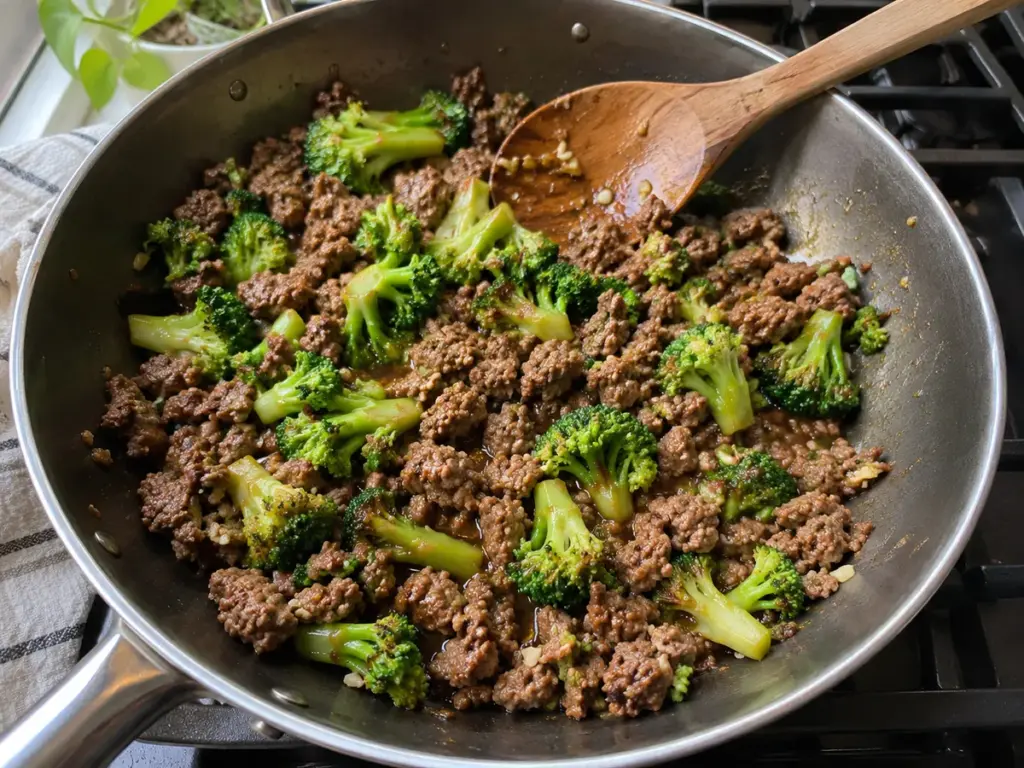
Ground beef makes this the easy beef stir-fry: it needs no slicing or marinating. Brown it in a large skillet or wok over medium-high heat until a thermometer reads 160°F, which takes about 5 minutes.
Pour off the extra fat before you add the garlic and ginger, or the broccoli fries in grease and loses its crunch.
Whisk the cornstarch into the soy sauce and water before it meets the pan, so the sauce thickens evenly in 1 to 2 minutes and does not clump.
Ingredients
- 1 pound ground beef
- 4 cups broccoli florets
- 3 tablespoons soy sauce
- 1 tablespoon grated fresh ginger
- 2 cloves garlic, minced
- 1 tablespoon vegetable oil
- 1 teaspoon sesame oil
- 1 teaspoon cornstarch
- ¼ cup water
- Cooked rice or noodles, for serving
Instructions
- Heat the vegetable oil in a large skillet or wok over medium-high heat. Brown the beef for about 5 minutes, breaking it up, until it reaches 160°F. Drain any extra fat.
- Stir in the garlic and ginger for 30 seconds, stirring constantly so they do not burn.
- Add the broccoli and cook 3 to 4 minutes, stirring, until bright green and crisp-tender.
- Whisk the soy sauce, cornstarch and water, pour it in and cook 1 to 2 minutes until it thickens.
- Take the pan off the heat, drizzle on the sesame oil and serve over rice or noodles.
Cut the broccoli florets to about the same size so they soften together; large ones stay raw in the center by the time small ones go soft. The cornstarch is what turns the thin sauce into a glaze that clings to the beef.
Swaps
- Ground turkey or chicken replaces the beef; cook it to 165°F, a higher mark than beef's 160°F.
- Ground ginger is sharper than the fresh root, so start with ¼ teaspoon for the tablespoon of fresh ginger and taste before adding more.
- Coconut aminos taste sweeter and less salty than soy sauce, so add a pinch of salt at the end.
3. Sesame Chicken Stir-Fry with Bell Peppers
Chicken breast strips cook in 4 to 5 minutes over medium-high heat and are safe at 165°F, so they come out of the pan before the peppers go in and stay juicy. The peppers need 3 to 4 minutes to turn tender while they still have a snap.
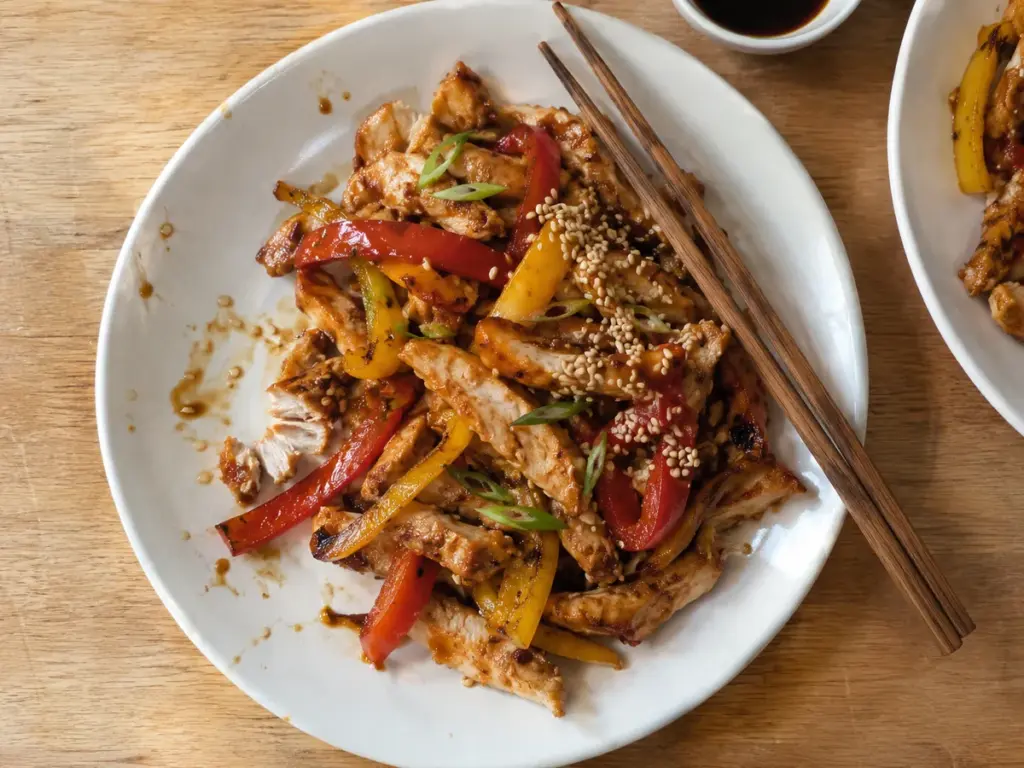
Honey and rice vinegar balance the soy sauce, and the glaze needs only the last 2 minutes in the pan to coat everything.
Strips cut thicker than a finger take longer, so you need a thermometer to check them. Honey garlic chicken and broccoli keeps the chicken in larger pieces, so the thermometer matters even more there.
Ingredients
- 1 pound chicken breast strips
- 2 bell peppers, cut into thin strips
- 2 tablespoons sesame oil
- 3 tablespoons soy sauce
- 2 tablespoons honey
- 1 tablespoon rice vinegar
- 1 tablespoon grated fresh ginger
- 2 cloves garlic, minced
- 1 tablespoon toasted sesame seeds
- ¼ teaspoon black pepper
- Sliced green onions, optional
Instructions
- Heat 1 tablespoon of the sesame oil in a large skillet or wok over medium-high heat. Cook the chicken 4 to 5 minutes until browned and 165°F in the center, then remove it.
- Add the remaining oil and stir-fry the peppers 3 to 4 minutes until tender but still crisp.
- Lower the heat to medium and stir in the garlic and ginger for about 30 seconds.
- Whisk the soy sauce, honey, rice vinegar and pepper. Pour it in, return the chicken and cook 2 minutes.
- Top with the sesame seeds and green onions and serve with rice or noodles.
Pat the chicken strips dry with paper towels instead of rinsing them; FSIS research found that washing raw poultry spreads bacteria around the sink and only cooking destroys them.
Use a separate board for the raw chicken, and wash your board and knife before they touch the peppers.
Swaps
- Chicken thighs cut into the same strips need the same 165°F in the center; start checking at 5 minutes and keep cooking until a thermometer says so.
- Olive oil cooks the chicken and peppers when you have no sesame oil, with a milder nutty flavor, so keep the sesame seeds on top.
4. Turkey and Vegetable Stir-Fry with Hoisin Sauce
Lean ground turkey browns less than beef and tastes milder, so it needs a sauce with body, and hoisin supplies it: sweet, thick and salty, it turns sticky after 1 to 2 minutes on the heat. Cook the turkey 5 to 7 minutes until it reaches 165°F, then add thinly sliced carrots and snap peas for 3 to 4 minutes.
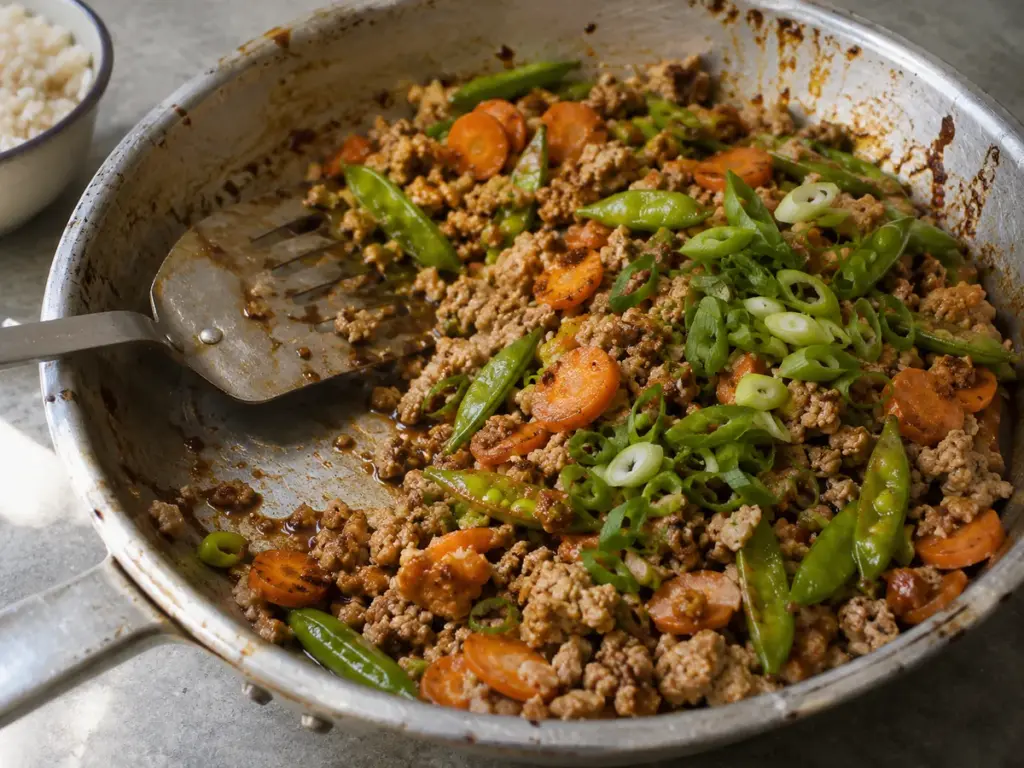
Thick carrot coins stay hard while the peas go soft, so slice the carrots thin.
Ingredients
- 1 pound lean ground turkey
- 1 cup snap peas
- 2 medium carrots, sliced thin
- 3 tablespoons hoisin sauce
- 2 tablespoons soy sauce
- 1 tablespoon vegetable oil
- 2 cloves garlic, minced
- 1 teaspoon grated fresh ginger
- 2 green onions, sliced
- Salt and black pepper
Instructions
- Heat the oil in a large skillet over medium-high heat and cook the garlic and ginger for 30 seconds.
- Add the turkey and cook 5 to 7 minutes until browned and 165°F. Season with salt and pepper.
- Add the carrots and snap peas and stir-fry 3 to 4 minutes until crisp-tender.
- Stir in the hoisin and soy sauce and cook 1 to 2 minutes until sticky.
- Top with the green onions and serve with rice or noodles.
Break the turkey into small crumbles and leave it alone for a minute at a time, so it browns instead of steaming in its own juices. Ground meat has more surface than a whole cut, so your thermometer matters: ground poultry needs 165°F.
Swaps
- Oyster sauce or plum sauce replaces hoisin in equal amounts, and oyster sauce carries its own salt, so taste before you add more soy sauce.
- Ground chicken keeps the same 165°F mark, and ground pork is done at 160°F, the same mark as beef.
5. Lemon Garlic Tilapia with Sautéed Green Beans
The fish and the beans share one skillet. The tilapia goes in first for 3 to 4 minutes per side, and the beans then take the same pan and its leftover oil for 5 to 7 minutes.
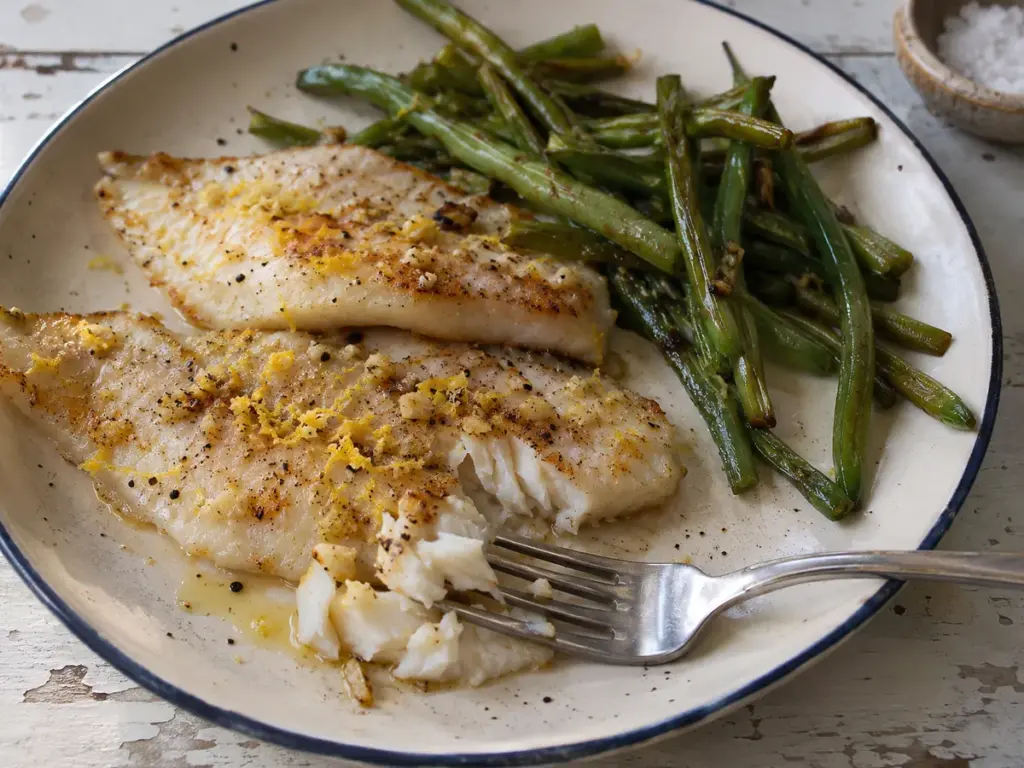
Tilapia is done at 145°F, when the flesh turns opaque and flakes with a fork. The fillets are thin and break if you turn them more than once, so you flip them one time and leave them alone in between.
Lemon zest and juice go in at the end, off the high heat, so the flavor stays bright.
Ingredients
- 1 pound tilapia fillets, skinless
- 2 tablespoons olive oil, divided
- 3 cloves garlic, minced
- 1 lemon, zested and juiced
- ½ pound fresh green beans, trimmed
- Salt and black pepper
- ¼ teaspoon red pepper flakes, optional
Instructions
- Season the tilapia. Heat 1 tablespoon of the oil in a skillet over medium heat and cook the fish 3 to 4 minutes per side until opaque and flaky. Move it to a plate.
- Add the remaining oil and the garlic and cook about 30 seconds.
- Add the green beans, salt and pepper and sauté 5 to 7 minutes until tender-crisp.
- Stir in the lemon zest, lemon juice and red pepper flakes.
- Return the fish to the pan for a moment to warm and coat it, then serve.
Pat the fillets dry and let the oil shimmer before they go in; a wet fillet sticks to the pan and tears when you turn it.
Thin tilapia finishes fast, so check the center at 3 minutes on the second side; it is done when it reaches 145°F and flakes.
Swaps
- Cod, haddock or sole of similar thickness cooks the same way; thicker fillets need more time, so go by 145°F, not the clock.
- Lime zest and juice make a sharper sauce than lemon, and orange makes a sweeter one.
- Garlic powder can replace the cloves at a starting amount of ⅛ teaspoon each (⅜ teaspoon here); stir it in with the beans for the last minute.
6. Shrimp Tacos with Cabbage Slaw
Dress the slaw just before you put the shrimp in the pan, so it sits for only the 4 to 6 minutes they take and keeps some crunch. Wet shrimp steam and never brown, so pat the shrimp dry before the rub.
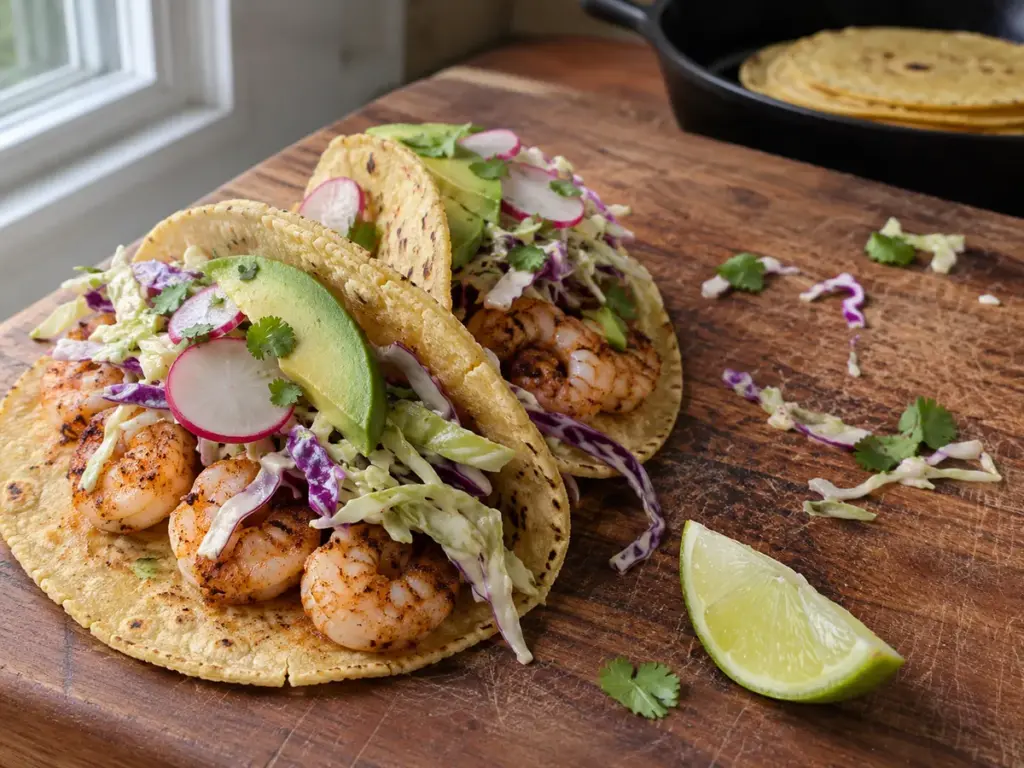
They take 2 to 3 minutes per side in hot oil and are done when the flesh turns pearly and opaque; the chili powder, cumin and garlic powder rub gives them flavor without a marinade.
Corn tortillas crack when they are cold, so warm them in the skillet after the shrimp come out, while the shrimp rest on a plate. A squeeze of lime at the table adds acid to the mayonnaise slaw and the spiced shrimp.
Ingredients
- 1 pound shrimp, peeled and deveined
- ½ head green cabbage and ¼ head red cabbage, finely shredded
- ¼ cup mayonnaise
- 2 tablespoons lime juice
- 1 teaspoon chili powder
- ½ teaspoon ground cumin
- ¼ teaspoon garlic powder
- Salt and black pepper
- 8 small corn tortillas
- 2 tablespoons vegetable oil
- Cilantro, avocado, radishes and lime wedges, optional
Instructions
- Toss the cabbage with the mayonnaise, lime juice, salt and pepper.
- Season the shrimp with the chili powder, cumin, garlic powder, salt and pepper.
- Heat the oil over medium-high heat and cook the shrimp 2 to 3 minutes per side until pink.
- Warm the tortillas.
- Fill them with the slaw and shrimp and serve with lime wedges.
Shred the cabbage as fine as you can; thick shreds stay stiff in the few minutes the slaw sits.
The mayonnaise-lime dressing is mild, so the chili-cumin rub on the shrimp carries most of the flavor.
Swaps
- Firm white fish cut into strips can take the shrimp's place in the same skillet, cooked until opaque and 145°F.
- Chicken breast strips take the same rub and cook 4 to 5 minutes in the pan, until 165°F.
- Flour tortillas warm in the skillet like corn ones, and large lettuce leaves hold the slaw and shrimp with no tortilla at all.
- Bagged coleslaw mix saves the shredding; start with the same volume as the cabbage. For a slaw without mayonnaise, toss it with ¼ cup salsa verde and the lime juice.
3 Which Meatless Dinners Need Only a Skillet?
Eggs, beans, cheese and vegetables carry the egg fried rice, the zucchini noodles and the quesadillas, and each one cooks in a single large skillet. The shortest takes about 3 minutes and the longest about 25, because you cook quesadillas one at a time.
7. Egg Fried Rice with Veggies
Use rice cooked the day before: freshly cooked rice is wet and steams into clumps, while rice chilled overnight has dried enough that the grains separate and brown.
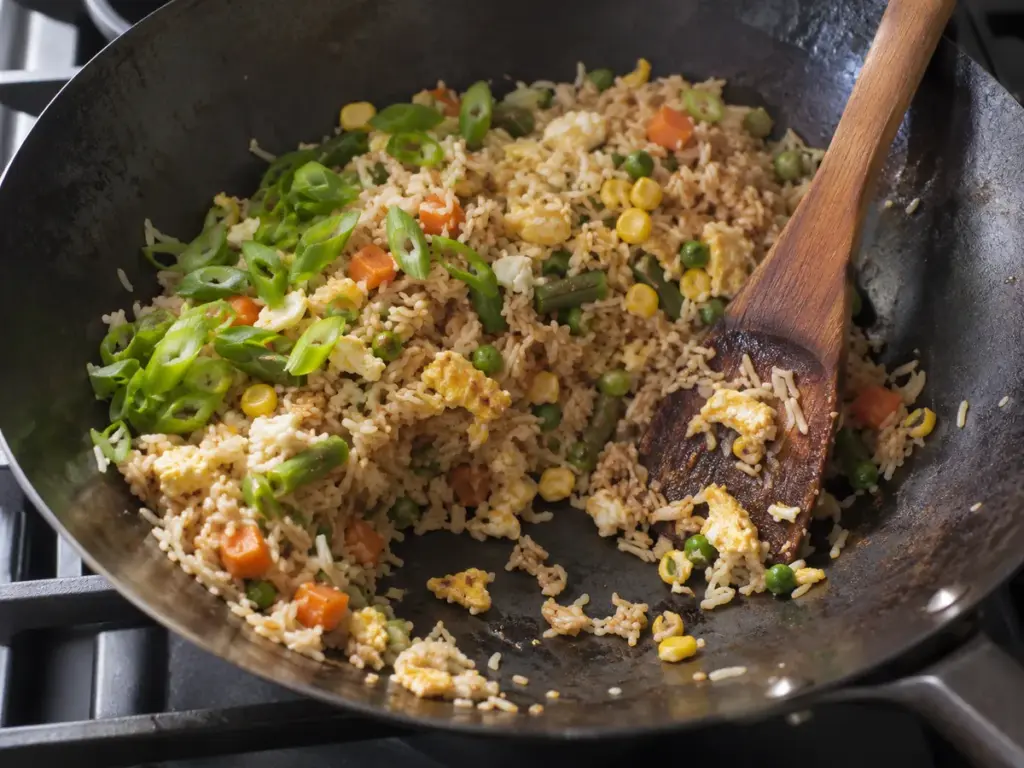
Scramble the eggs first, until set with no liquid egg left, and move them aside.
The frozen mixed vegetables then cook for 3 to 5 minutes and the rice for about 4 more, with a spatula breaking up any clumps.
Soy sauce is salty, so taste before you add extra salt. With no leftover rice, cook a batch, spread it on a tray, refrigerate it within an hour and use it once it is cold.
Cooked rice left out for more than 2 hours is unsafe, as USDA's Food Safety and Inspection Service explains for all cooked food.
Ingredients
- 3 cups cooked white rice, chilled
- 2 large eggs, lightly beaten
- 1 cup frozen mixed vegetables
- 2 green onions, sliced
- 2 tablespoons vegetable oil
- 2 tablespoons soy sauce
- 1 teaspoon sesame oil, optional
- Salt and black pepper
Instructions
- Heat 1 tablespoon of the oil in a large skillet or wok over medium-high heat. Scramble the eggs until set with no liquid egg left and remove them.
- Add the remaining oil and the frozen vegetables and cook 3 to 5 minutes until tender but slightly crisp.
- Add the rice and stir-fry about 4 minutes, breaking up clumps, until hot.
- Return the eggs, add the soy sauce and sesame oil and toss. Season to taste.
- Stir in the green onions, cook 1 minute and serve.
Cook the eggs until no runny egg is left; FSIS puts egg dishes at 160°F, so stir them back into the hot rice to finish.
Swaps
- Fresh vegetables can replace the frozen mix; cut carrots and peppers small, since they cook slower than frozen peas.
- Brown rice or quinoa work with the same overnight chill, so the grains dry out and separate.
8. Zucchini Noodles with Pesto and Cherry Tomatoes
Spiralized zucchini is the quickest of the 20 dinners: 2 to 3 minutes in a skillet and no pasta pot.
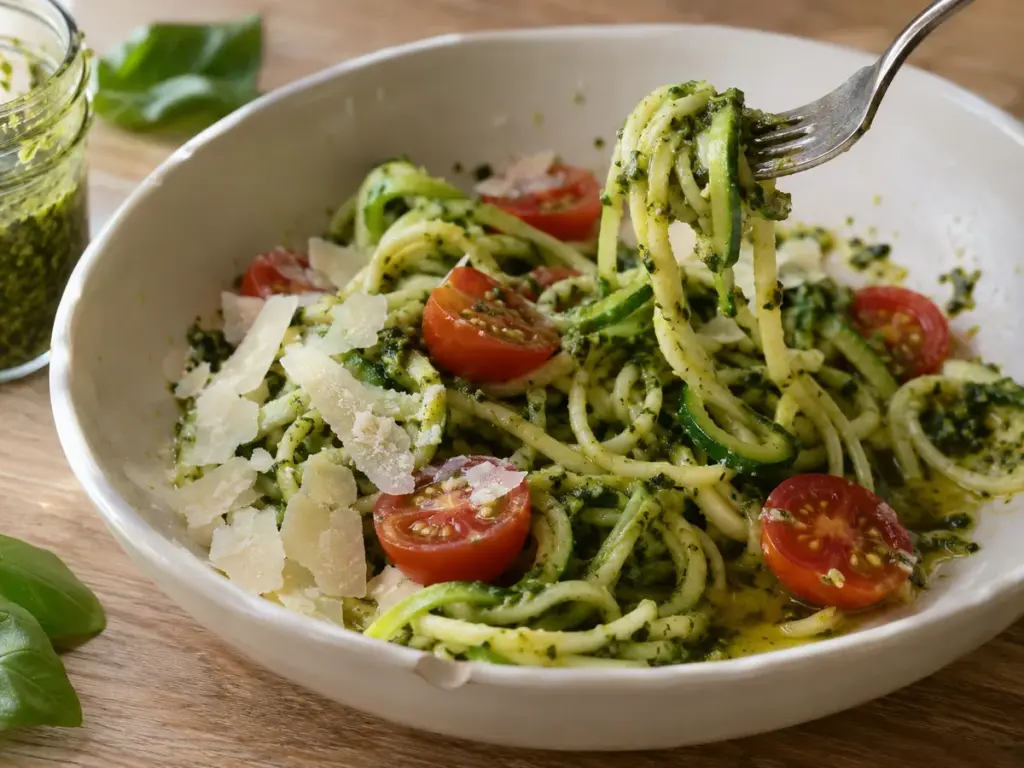
Zucchini releases water as it heats, so you take the pan off the burner while the noodles still have some bite and stir in the pesto off the heat. Longer cooking leaves a puddle on your plate.
The cherry tomatoes are folded in last so they stay whole and add juice without turning the dish watery. Eat these noodles right away: leftover zucchini noodles keep releasing water in the fridge and thin out the pesto.
Ingredients
- 3 medium zucchini, spiralized
- 1 cup cherry tomatoes, halved
- ½ cup basil pesto
- 1 tablespoon extra-virgin olive oil
- ¼ teaspoon salt
- ¼ teaspoon black pepper
- 2 tablespoons grated Parmesan, optional
Instructions
- Heat the oil in a large skillet over medium heat and sauté the zucchini noodles 2 to 3 minutes until they begin to soften but still have a little crunch.
- Take the pan off the heat, season with salt and pepper and stir in the pesto.
- Fold in the cherry tomatoes.
- Serve right away with the Parmesan on top.
Pat the spirals with a paper towel before they hit the pan, so less water ends up on the plate.
Swaps
- Yellow squash spirals replace the zucchini; they are watery too, so keep the 2 to 3 minute cook and pat them dry.
- Carrot spirals stay firm longer than zucchini, so give them an extra minute or two.
- Sun-dried tomatoes, chopped, taste more intense; start with ¼ cup in place of some of the cherry tomatoes.
- Homemade pesto can use spinach or kale for part of the basil and walnuts, almonds or cashews for the pine nuts.
9. Black Bean Quesadillas
A large skillet is the only appliance, and the tortillas cook one at a time, which is why four quesadillas take 20 to 30 minutes in total. Sauté the onion 3 to 4 minutes until translucent, then warm the beans with cumin and chili powder for 2 to 3 minutes.
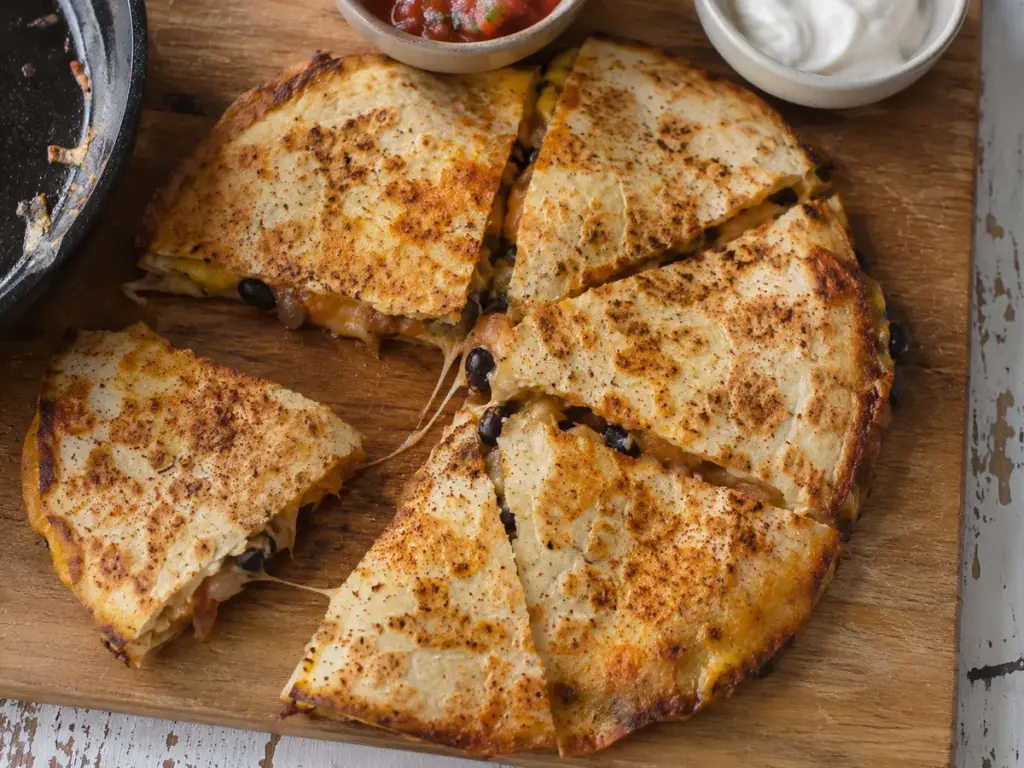
Spread the filling on only half of each tortilla and fold it over, so the cheese seals the edge.
Each quesadilla needs 2 to 3 minutes per side over medium heat. Higher heat browns the tortilla before the cheese melts, and gentle pressure from a spatula keeps the filling in place when you flip it.
Shred a block of Monterey Jack yourself, because you get a smoother melt than from bagged shreds, which carry an anti-caking coating. Salsa, sour cream or guacamole go on the side.
Ingredients
- 4 large flour tortillas
- 1 can (15 ounces) black beans, drained and rinsed
- 1 ½ cups shredded cheese (cheddar, Monterey Jack or a blend)
- 1 small onion, finely chopped
- 1 teaspoon ground cumin
- 1 teaspoon chili powder
- 1 tablespoon olive oil
- Salt and black pepper
Instructions
- Heat the oil in a large skillet over medium heat and sauté the onion 3 to 4 minutes until soft.
- Stir in the beans, cumin, chili powder, salt and pepper and cook 2 to 3 minutes. Remove from the heat.
- Spread a quarter of the beans on half of a tortilla and sprinkle on ⅓ cup of the cheese. Fold it over.
- Cook in the skillet 2 to 3 minutes per side, pressing gently, until golden and the cheese melts.
- Repeat with the other tortillas, then cut into wedges.
Spread the beans thin across half the tortilla; a thick layer squeezes out when you fold it and burns in the pan.
Medium heat melts the cheese before the tortilla scorches. Dairy-free shreds melt more slowly, so do not turn the heat up to hurry them.
Swaps
- Corn tortillas make the quesadillas gluten-free; warm them in the skillet first so they fold without cracking.
- Mild green chilies or cayenne add heat: stir in 2 tablespoons of chopped chilies (a starting amount) or a pinch of cayenne with the cumin.
4 Which Pasta and Noodle Dinners Start With a Pot of Water?
Boiling water is the only heat in the first two, and the third adds about 6 minutes in a skillet, so none of them takes longer than the pasta itself plus a few minutes.
10. Caprese Pasta Salad
A pot of boiling water is the only heat. Cook rotini, penne or farfalle until al dente, then rinse it under cold water so it stops cooking and cools enough that the fresh mozzarella does not melt into the pesto.
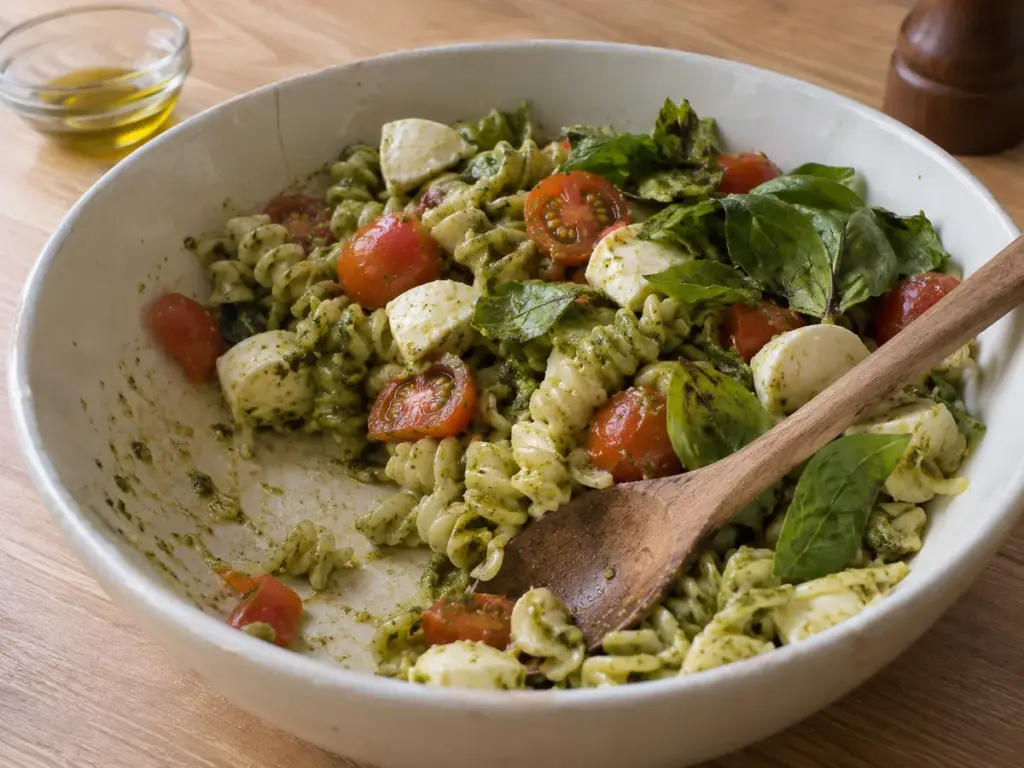
Halve the mozzarella balls and the cherry tomatoes, and tear the basil at the end, because basil bruises and darkens when it is stirred hard.
A 30-minute chill lets the pesto settle into the pasta and the tomatoes release their juice into the dressing. If the pasta soaks up the pesto while it sits, stir in another splash of olive oil before you serve it.
Ingredients
- 8 ounces rotini, penne or farfalle
- 1 cup fresh mozzarella balls, halved
- 1 ½ cups cherry tomatoes, halved
- ½ cup fresh basil leaves, torn
- ⅓ cup basil pesto
- 2 tablespoons extra-virgin olive oil
- Salt and black pepper
Instructions
- Cook the pasta until al dente, drain and rinse under cold water until cool.
- Toss the pasta with the pesto and olive oil until every piece is coated.
- Gently mix in the tomatoes, mozzarella and basil.
- Season with salt and pepper and serve at room temperature, or chill 30 minutes.
Cool the pasta all the way under cold water before you add the pesto; warm pasta turns the pesto oily and wilts the basil.
Swaps
- Grape tomatoes behave like cherry tomatoes, but heirloom wedges release more juice into the dressing.
- Sun-dried tomato pesto takes basil pesto's place at the same ⅓ cup. A dressing of ¼ cup olive oil and 1 minced garlic clove (a starting amount) replaces the pesto and its 2 tablespoons of oil.
11. Thai Peanut Noodles
Rice noodles soften in hot water or a short boil, depending on the package, and a cold rinse stops the cooking so they do not clump. The sauce is creamy peanut butter whisked with soy sauce, rice vinegar, lime juice, honey, ginger, garlic and ¼ cup warm water.
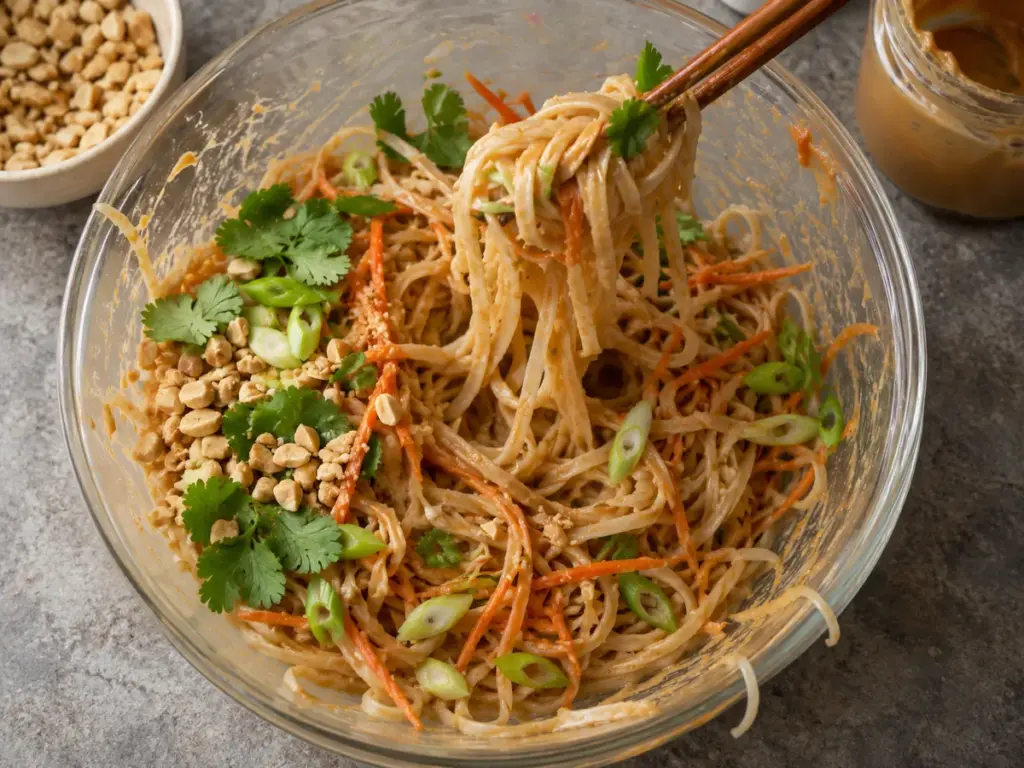
It thickens as it sits, so keep extra warm water nearby and add it a tablespoon at a time until the sauce coats a spoon.
Stir the jar first if the oil has separated. Carrots and scallions add crunch, and chopped peanuts and cilantro finish the bowl.
Ingredients
- 8 ounces rice noodles
- ⅓ cup creamy peanut butter
- 2 tablespoons soy sauce
- 1 tablespoon rice vinegar
- 1 tablespoon lime juice
- 1 tablespoon honey or maple syrup
- 1 teaspoon grated fresh ginger
- 1 clove garlic, minced
- ¼ teaspoon crushed red pepper flakes, optional
- ¼ cup warm water, plus more if needed
- 1 cup shredded carrots
- 3 scallions, sliced
- Chopped peanuts and cilantro, optional
Instructions
- Prepare the noodles by the package directions, drain and rinse under cold water.
- Whisk the peanut butter, soy sauce, vinegar, lime juice, honey, ginger, garlic, pepper flakes and warm water until smooth, adding water if it is too thick.
- Toss the noodles with the sauce, then mix in the carrots and scallions.
- Serve in bowls with the peanuts and cilantro.
Toss the noodles with the sauce just before you serve them; they keep absorbing it as they sit.
If the bowl waits, loosen it with a splash of warm water.
Swaps
- Thin spaghetti works when rice noodles are not on hand; cook it by its package, and note that it adds wheat.
- Bell pepper strips, cucumber or shredded cabbage stand in for the carrots and scallions; add cucumber just before serving, because it gives up water.
- Agave syrup takes the honey's place the way maple syrup does, and keeps the bowl vegan.
12. Pasta Primavera with Garlic and Herbs
Put the pasta water on first; the vegetables need only about 6 minutes in the skillet and finish while it boils.
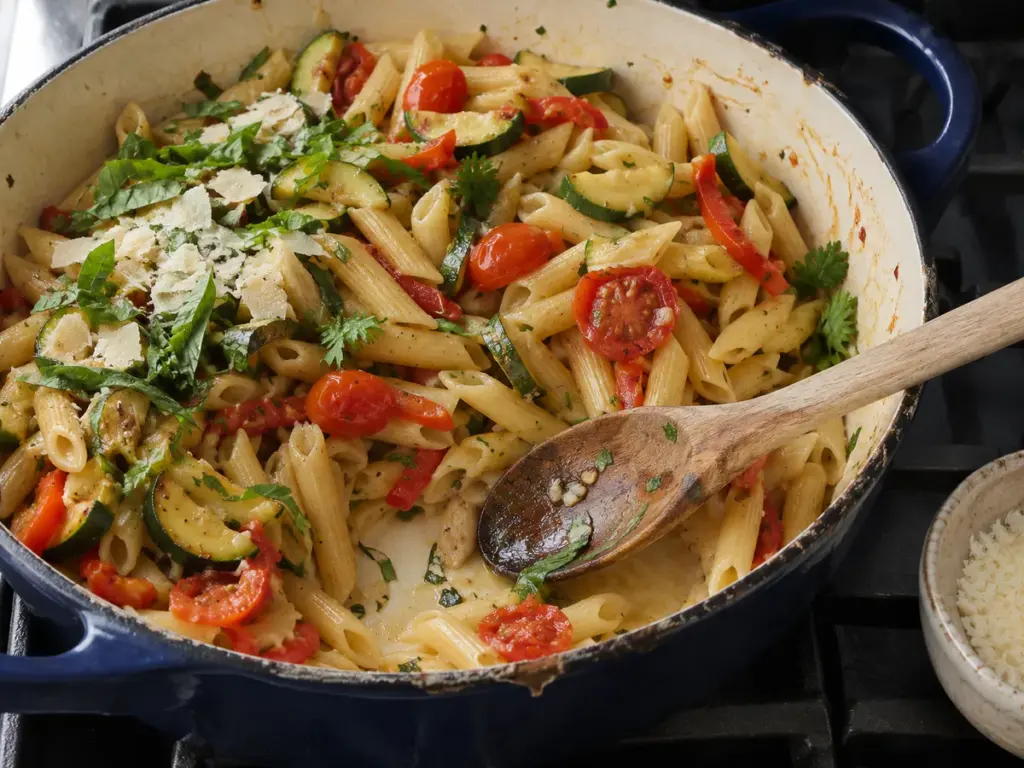
Save ½ cup of the starchy cooking water before you drain, and a few spoonfuls will loosen the olive oil into a light sauce that coats the pasta without cream.
The vegetables go in at different moments. Garlic cooks first for 30 seconds, zucchini and bell pepper follow for 4 to 5 minutes until tender-crisp, and the tomatoes join for the last minute just to warm through, since longer cooking turns them to mush.
Half the basil and parsley goes in with the tomatoes, and the other half goes on top with the Parmesan so you get a fresh herb flavor.
Ingredients
- 8 ounces pasta
- 2 tablespoons olive oil
- 3 cloves garlic, minced
- 1 small zucchini, sliced
- 1 red bell pepper, sliced
- 1 cup cherry tomatoes, halved
- ½ cup fresh basil and parsley, chopped
- ¼ teaspoon red pepper flakes, optional
- ¼ cup grated Parmesan
- Salt and black pepper
Instructions
- Start the pasta in boiling salted water and cook it al dente. Before draining, reserve ½ cup of the cooking water.
- While the pasta cooks, sauté the garlic in the oil for 30 seconds until fragrant.
- Add the zucchini and bell pepper and cook 4 to 5 minutes until tender-crisp.
- Stir in the tomatoes, pepper flakes and half the herbs for 1 minute.
- Toss in the drained pasta, adding cooking water if it looks dry. Season and top with the rest of the herbs and the Parmesan.
Cut the zucchini and the bell pepper to the same thickness so they soften together, and salt the pasta water well, since the pasta carries most of the seasoning.
Save half the herbs for the end; heat dulls their flavor.
Swaps
- Peas go in with the tomatoes for the last minute.
- Tarragon or chives take the parsley's place; add chives with the top half of the herbs, since heat dulls them.
5 Which Dinners Simmer in One Pot?
Red lentils need no soaking and break down in 15 to 25 minutes, which is why both of these dinners finish in under 40 minutes with a saucepan and a lid. They thicken as they stand, so you can fix a pot that has gone too thick with a splash of water or broth.
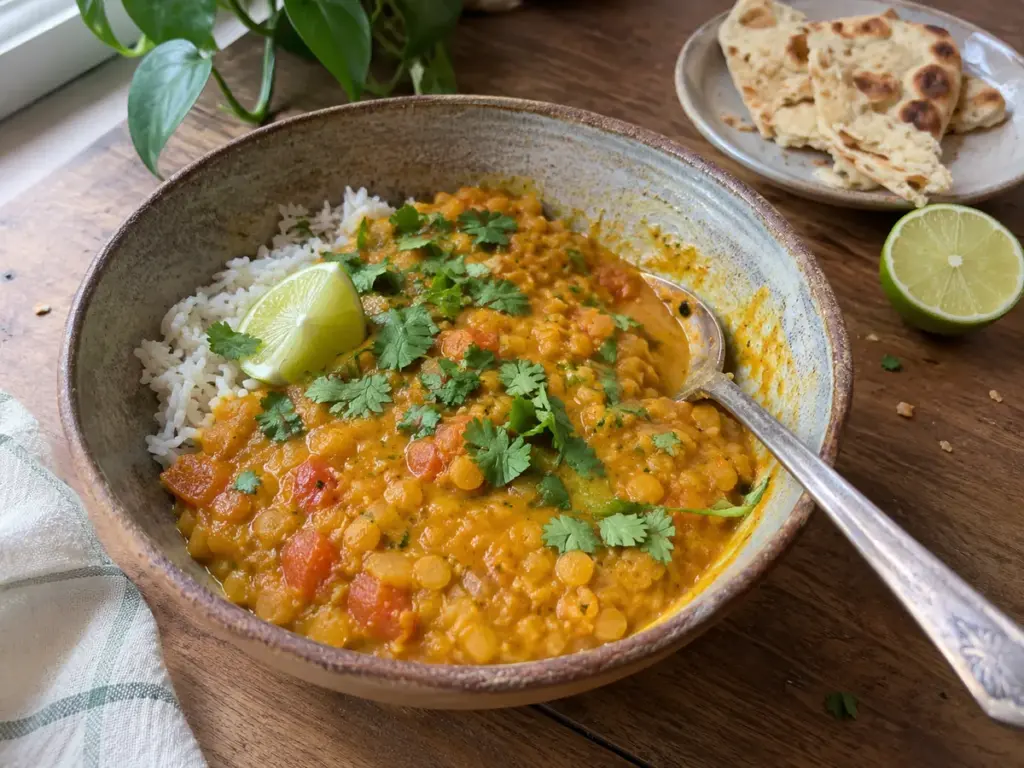
13. Creamy Coconut Curry with Quick-Cooking Lentils
Red lentils are why this curry needs no soaking: they soften and thicken the sauce in 15 to 20 minutes of gentle simmering with the lid on.
Sauté the onion 4 to 5 minutes until translucent, then toast the curry powder, turmeric and cumin in the oil for about 1 minute; hot fat takes the raw edge off spices.
Rinse the lentils before they go in, since the rinse water runs cloudy and carries off dust and loose skins.
Squeeze in the lime juice just before serving; heat dulls it.
Ingredients
- 1 cup red lentils, rinsed
- 1 can (14 ounces) coconut milk
- 1 small onion, finely chopped
- 2 cloves garlic, minced
- 1 tablespoon curry powder
- 1 teaspoon ground turmeric
- ½ teaspoon ground cumin
- 1 tablespoon vegetable oil
- 2 cups vegetable broth
- Juice of ½ lime, salt and cilantro
Instructions
- Heat the oil in a large saucepan over medium heat and sauté the onion 4 to 5 minutes until translucent.
- Stir in the garlic, curry powder, turmeric and cumin for about 1 minute.
- Add the lentils, broth and coconut milk and stir.
- Bring to a gentle simmer, lower the heat, cover and cook 15 to 20 minutes, stirring now and then, until the lentils are tender and the curry has thickened.
- Season with salt, add the lime juice and top with cilantro. Serve with rice or flatbread.
A leftover half can of coconut milk keeps about 4 days in the fridge, according to USDA's FoodKeeper.
Swaps
- Light coconut milk makes a thinner curry, while the full-fat can gives a richer sauce, and either one thickens as the lentils break down.
- Tofu or chickpeas add protein; start with 1 cup of cubed firm tofu or drained canned chickpeas, stirred in for the last 5 minutes.
- No coconut milk: simmer the lentils in the broth alone and stir in Greek yogurt or half-and-half at the end, off the heat, starting with 1 cup, and keep the lentils on the 2 cups of broth; boiling curdles both.
- Garam masala gives a warmer flavor in place of the curry powder; start with 2 teaspoons and add more after tasting.
14. Curried Lentil and Spinach Stew
Four cups of vegetable broth to 1 cup of red lentils simmer for 20 to 25 minutes into a soupy stew. The onion cooks 4 to 5 minutes until soft, the garlic, curry powder and cumin cook for 1 minute, and the lentils and broth follow.
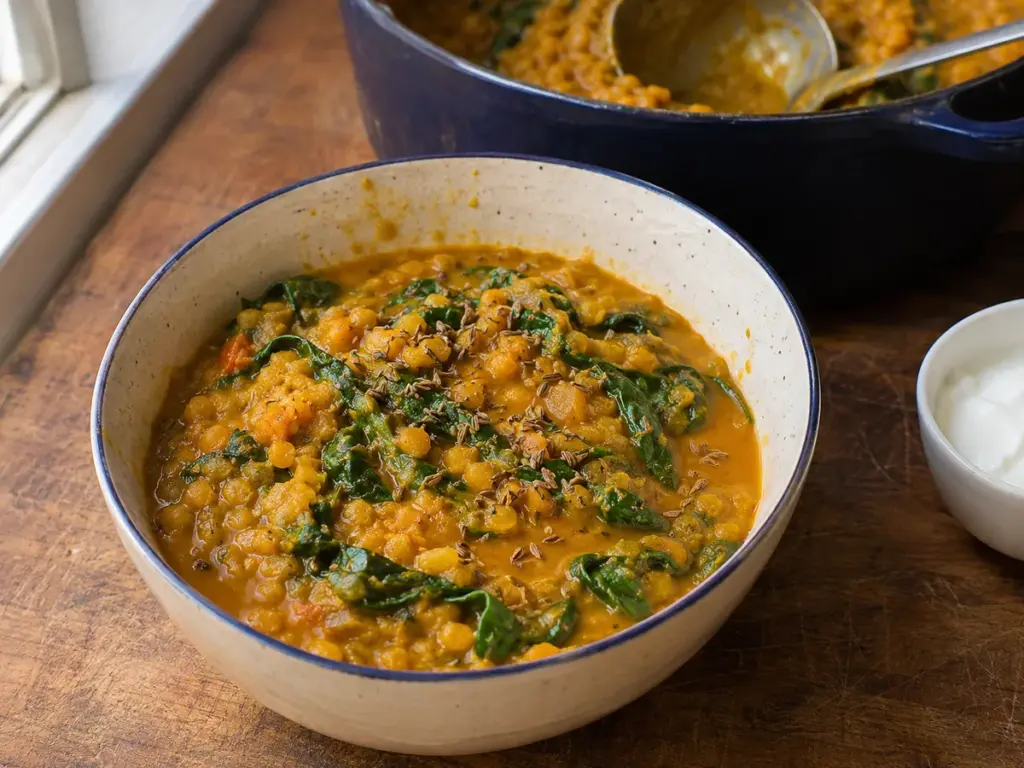
The spinach goes in for the last 2 minutes of the simmer, enough to wilt it without turning it dark and stringy.
Let the pot rest off the heat for a few minutes before serving, because the lentils keep absorbing broth and the stew thickens as it stands. If it tastes flat, a squeeze of lemon adds the acid it lacks, and a spoonful of yogurt stirred in off the heat softens the curry powder.
Ingredients
- 1 cup red lentils
- 4 cups fresh spinach
- 1 medium onion, chopped
- 2 cloves garlic, minced
- 1 tablespoon curry powder
- 1 teaspoon ground cumin
- 4 cups vegetable broth
- 1 tablespoon olive oil
- Salt and black pepper
Instructions
- Sauté the onion in the oil 4 to 5 minutes until soft.
- Add the garlic, curry powder and cumin and cook 1 minute.
- Add the lentils and broth and simmer 20 to 25 minutes, stirring in the spinach for the last 2 minutes.
- Season with salt and pepper and let it rest a few minutes before serving.
This stew thickens as it stands, so keep a cup of broth or water nearby to loosen it when you reheat.
Swaps
- Coconut milk makes the stew creamier; start with ½ cup stirred in with the spinach.
- Chicken broth goes in cup for cup for the vegetable broth, though the stew is then no longer vegetarian.
6 Which Dinners Need Little or No Heat?
Canned chickpeas, beans and tuna, cooked chicken and fresh vegetables are ready to eat, so you assemble these six dinners in a bowl or a wrap. Four need no heat whatsoever, and two borrow a little: the couscous or quinoa in the Mediterranean bowls, and the cooked chicken for the lettuce wraps.
15. Chickpea and Avocado Salad Wraps
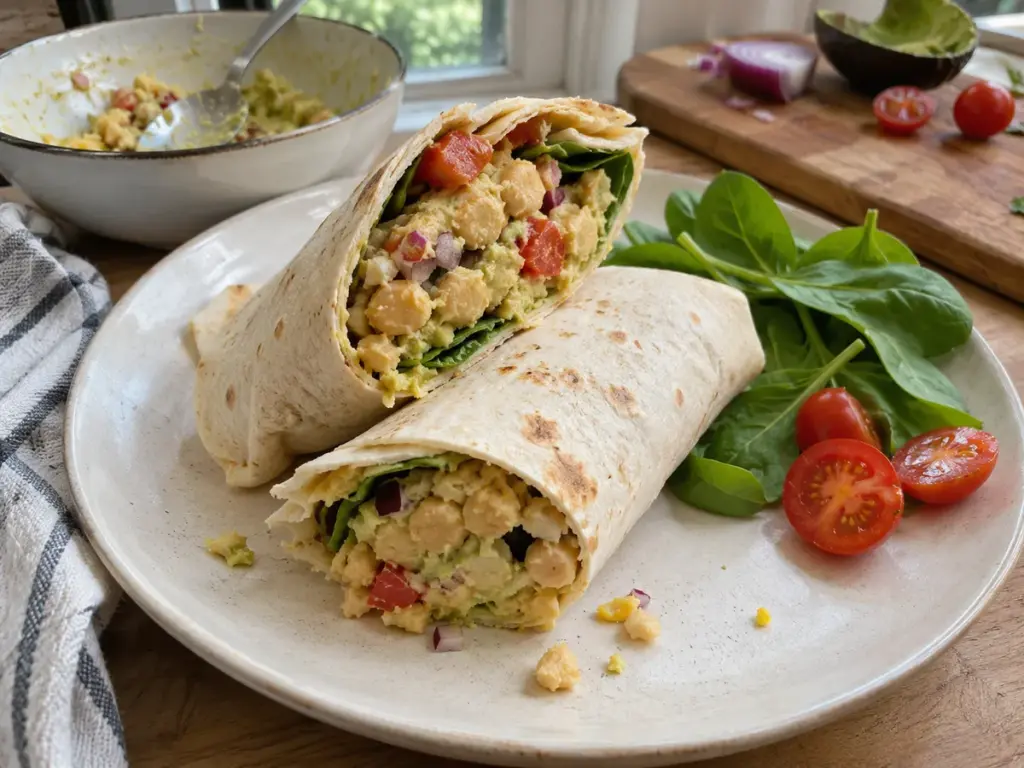
Mash the chickpeas with a ripe avocado and 2 tablespoons of plain Greek yogurt, and stop while the filling is still chunky; a smooth mash turns the wrap pasty.
Lemon juice adds acid and slows the avocado from browning, and the red onion and cherry tomatoes go in after the mashing so they stay whole.
Spread the spinach on the tortilla first, since the leaves keep the filling from soaking into the bread. Warm tortillas roll without cracking.
Ingredients
- 1 can (15 ounces) chickpeas, drained and rinsed
- 1 ripe avocado
- 2 tablespoons plain Greek yogurt or vegan yogurt
- 1 tablespoon lemon juice
- ½ teaspoon ground cumin
- ¼ teaspoon garlic powder
- Salt and black pepper
- ¼ cup red onion, finely chopped
- ½ cup cherry tomatoes, halved
- 4 large flour or whole wheat tortillas, warmed
- Spinach or mixed greens
Instructions
- Mash the chickpeas and avocado with a fork into a chunky, spreadable mix.
- Stir in the yogurt, lemon juice, cumin, garlic powder, salt and pepper.
- Fold in the onion and tomatoes.
- Lay greens down the center of each tortilla and spoon the filling on top.
- Roll tightly, cut on the diagonal and serve or wrap for later.
Roll the wraps tightly and cut them on the diagonal; a loose wrap lets the filling slide out of the open end.
Swaps
- Hummus stands in for the avocado and does not brown; start with ½ cup and taste.
- Diced cucumber or shredded carrot add crunch; fold in ¼ cup of either with the tomatoes, and pat the cucumber dry.
16. Tuna and White Bean Salad
Cannellini beans and canned tuna are both ready to eat, so a bowl and a fork are all this needs. Fold gently so the tuna stays in chunks.
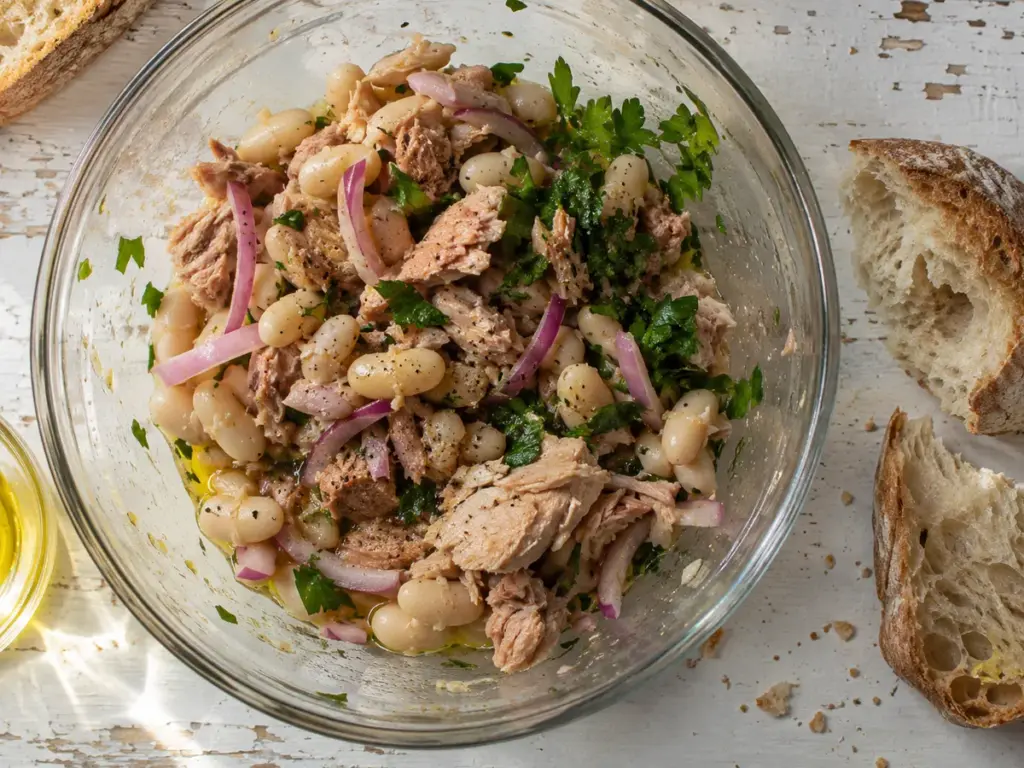
The dressing is the juice of one lemon, about 2 tablespoons, and 3 tablespoons of olive oil, and you adjust it by taste: more lemon if the salad is flat, more oil if it is sharp.
A 15 to 20 minute chill lets the flavors blend and softens the bite of the raw red onion.
Ingredients
- 2 cans (5 ounces each) tuna, drained and flaked
- 1 can (15 ounces) cannellini beans, drained and rinsed
- ¼ cup fresh parsley, chopped
- Juice of 1 lemon (about 2 tablespoons)
- 3 tablespoons extra-virgin olive oil
- 1 small red onion, chopped or thinly sliced
- 1 garlic clove, minced, optional
- Salt and black pepper
Instructions
- Combine the tuna and beans in a large bowl, mixing gently with a fork.
- Add the onion, garlic and parsley.
- Pour on the lemon juice and olive oil and toss.
- Season with salt and pepper and adjust the lemon or oil.
- Serve at once or chill 15 to 20 minutes.
Drain and rinse the beans, then shake them dry, since extra liquid thins your lemon dressing. Tuna packed in olive oil tastes richer, and tuna packed in water gives a lighter salad, so drain either one well.
Swaps
- Cooked salmon or shredded chicken replaces the tuna at about 10 ounces, the weight of the two cans; cook salmon to 145°F and chicken to 165°F first.
- Basil or cilantro can take the parsley's place at the same ¼ cup.
- Red wine or apple cider vinegar stands in for the lemon juice; start with 1 tablespoon and add a teaspoon at a time.
17. Black Bean and Corn Salsa Bowl
One bowl and a spoon are all this needs. A can of black beans and 1 cup of corn kernels form the base, with cherry tomatoes, red onion and cilantro, and the lime juice and cumin act as the dressing.
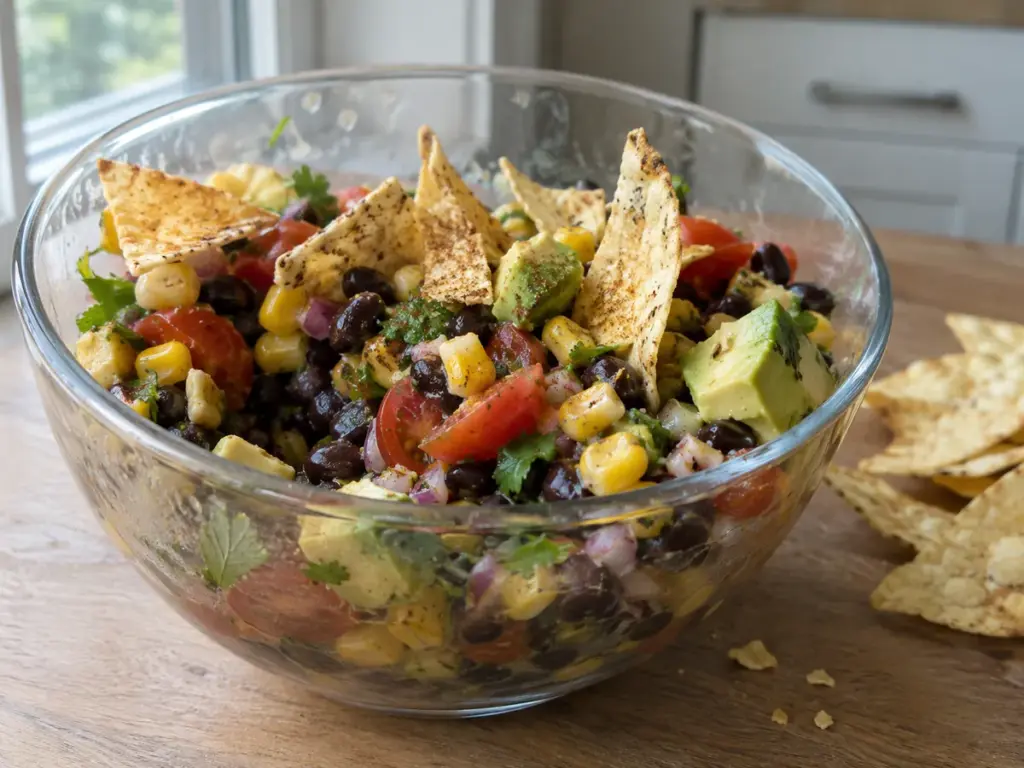
Rinse the beans so the canning liquid does not cloud the bowl.
The avocado is diced last and folded gently, because it turns soft and brown if you stir it hard. Break the tortilla chips on top at the last second so they stay crisp.
Keep the chips separate if you plan leftovers, since the salsa keeps in the fridge but the chips go soft in minutes.
Ingredients
- 1 can black beans, drained and rinsed
- 1 cup corn kernels
- 1 cup cherry tomatoes, halved
- 1 ripe avocado, diced
- ¼ cup red onion, chopped
- ¼ cup cilantro, chopped
- 1 tablespoon lime juice
- ½ teaspoon ground cumin
- Salt and black pepper
- 1 cup tortilla chips, broken
Instructions
- Combine the beans, corn, tomatoes, onion and cilantro.
- Add the avocado, lime juice, cumin, salt and pepper and toss gently.
- Taste and adjust the seasoning.
- Top with the broken tortilla chips and serve.
Rinse and drain the beans and corn well; loose water turns your lime dressing into a puddle at the bottom of the bowl.
Swaps
- Corn can be canned, thawed frozen or fresh kernels, whichever you have.
- Pita chips replace the tortilla chips; a half cup of rinsed canned chickpeas folded in makes a bowl with no chips at all.
- For a creamy bowl without avocado, stir in Greek yogurt or crumbled feta; start with ¼ cup of either.
18. Spinach and Feta Stuffed Pita Pockets
This one needs only a bowl. Toss the spinach with the olive oil, lemon juice, salt and pepper first, because the oil and lemon relax the raw leaves so they pack into the pocket without springing out.
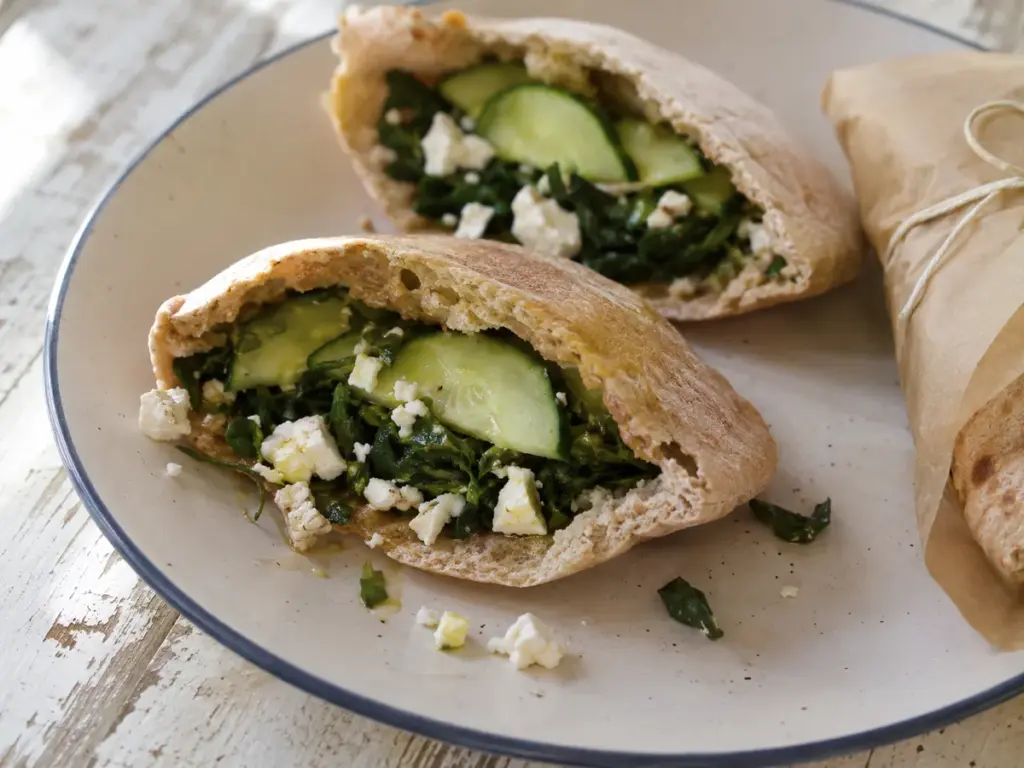
The feta goes in after the dressing, since it is already salty and crumbles into fine bits if it is tossed hard. Cucumber slices go in last against the bread to keep the spinach from soaking it.
A pita that tears when you open it can be cut in half to give two open pockets, and a filled pita wrapped in parchment travels well.
Ingredients
- 4 whole wheat pita pockets
- 3 cups fresh spinach, roughly chopped
- 1 cup crumbled feta
- 1 medium cucumber, thinly sliced
- 2 tablespoons olive oil
- 1 tablespoon lemon juice
- Salt and black pepper
Instructions
- Toss the spinach with the oil, lemon juice, salt and pepper.
- Fold in the feta.
- Open the pita pockets carefully.
- Fill each with the spinach mixture and add the cucumber.
- Serve right away or wrap for later.
Squeeze the sliced cucumber in a paper towel before it goes in; the water it releases soaks the bread first.
Swaps
- Ricotta in place of the feta needs a pinch more salt.
- Thin bell pepper slices or radishes replace the cucumber for more crunch and color.
- Flatbread folded around the filling takes the place of a pocket that will not open.
19. Greek Yogurt Chicken Salad Lettuce Wraps
Cooked chicken breast is shredded here, so a store-bought rotisserie chicken or leftover chicken saves the only cooking step. If you cook the chicken yourself, bring it to 165°F and cool it before it meets the yogurt.
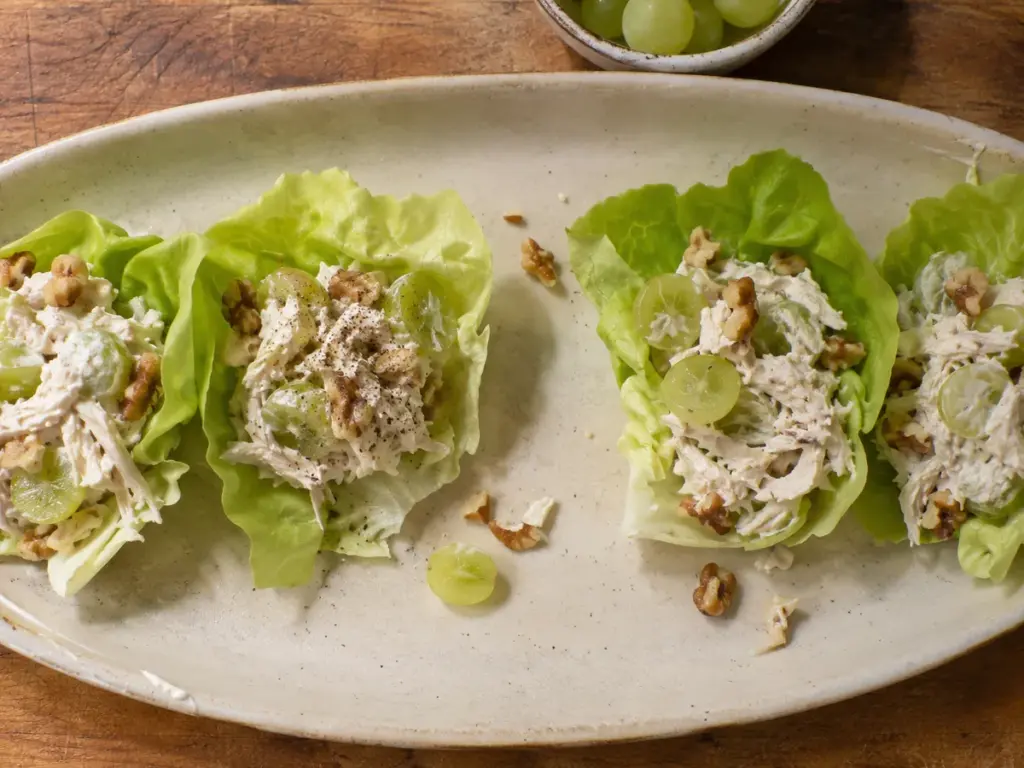
Plain Greek yogurt takes the place of mayonnaise, grapes add sweetness and walnuts add crunch, and 1 tablespoon of lemon juice keeps the salad from tasting flat.
Rinse and dry the lettuce leaves, because wet leaves dilute the filling you spoon in. Rotisserie chicken is the quickest source for 2 cups of shredded meat, and rotisserie chicken tacos use up the rest of the bird.
Ingredients
- 2 cups cooked chicken breast, shredded
- ½ cup plain Greek yogurt
- ½ cup seedless grapes, halved
- ¼ cup walnuts, chopped
- 1 tablespoon lemon juice
- ¼ teaspoon salt
- ⅛ teaspoon black pepper
- 8 large lettuce leaves
Instructions
- Mix the chicken, yogurt, grapes and walnuts.
- Stir in the lemon juice, salt and pepper.
- Rinse and dry the lettuce leaves.
- Spoon the chicken salad into the leaves and serve.
Dice the grapes and chop the walnuts small; large pieces fall out of the lettuce leaf when you pick it up.
Swaps
- Turkey replaces the chicken at the same 2 cups, shredded; if you cook it yourself, bring it to 165°F and cool it before it meets the yogurt.
- Pecans or almonds replace the walnuts; chop them as small as the walnuts so they stay in the leaf.
- Diced apple tossed in the lemon juice, or dried cranberries at a starting ¼ cup because they are sweeter, can replace the grapes.
20. Mediterranean Chickpea Bowls
Couscous steeps in boiling water and quinoa simmers, and either one makes the base, so this is the only bowl here that needs a pot or a kettle. The tahini sauce is ¼ cup tahini, 2 tablespoons lemon juice, 1 garlic clove and 3 tablespoons water.
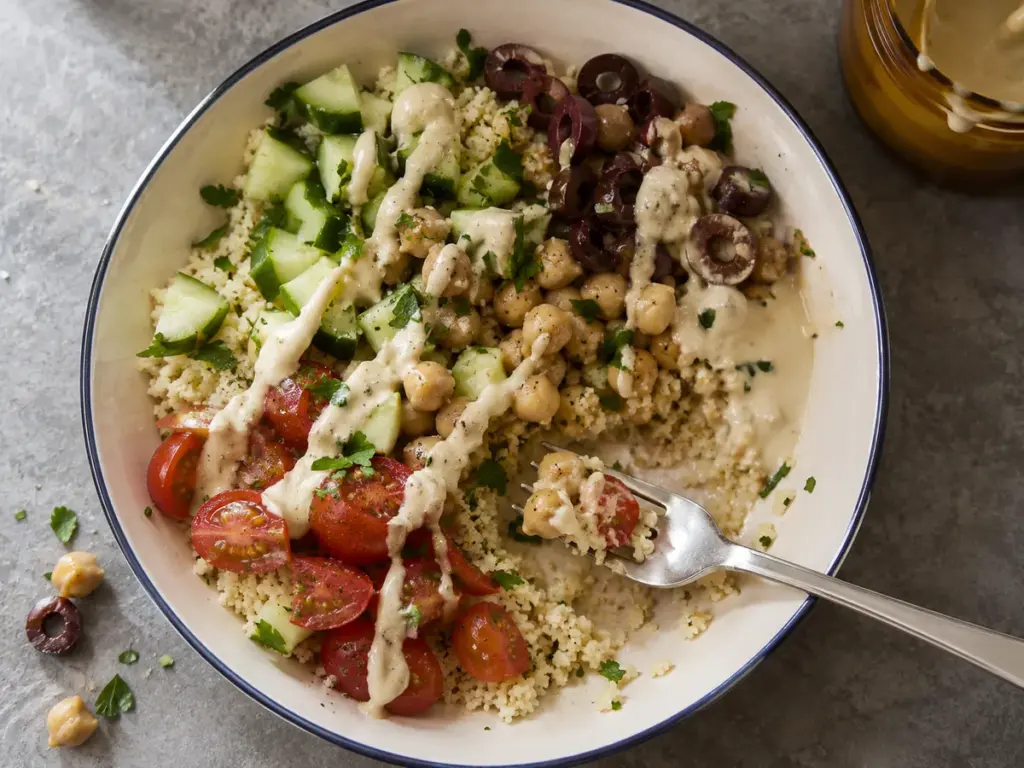
It seizes and goes thick when the water first goes in and then loosens as you keep whisking, so add the water gradually until the sauce pours.
Kalamata olives bring their own salt, so taste before you season the bowl. For a packed lunch, keep the sauce in a separate container and pour it on when you eat.
Ingredients
- 1 ½ cups cooked couscous or quinoa
- 1 can (15 ounces) chickpeas, drained and rinsed
- 1 medium cucumber, diced
- 1 cup cherry tomatoes, halved
- ½ cup Kalamata olives, pitted and sliced
- ¼ cup fresh parsley, chopped
- ¼ cup tahini
- 2 tablespoons lemon juice
- 1 garlic clove, minced
- 3 tablespoons water
- Salt, pepper and olive oil
Instructions
- Prepare the couscous or quinoa by the package directions and divide it among bowls.
- Whisk the tahini, lemon juice, garlic and water, adding water until it pours. Season.
- Arrange the chickpeas, cucumber, tomatoes and olives over the grain and sprinkle on the parsley.
- Drizzle with the tahini sauce and a little olive oil.
Cut the cucumber and tomatoes just before you assemble; cut vegetables release water that thins your tahini sauce.
Swaps
- Brown rice works in place of couscous or quinoa, but by its package it takes far longer, so use leftover rice if you have it.
- Roasted red peppers, artichoke hearts or baby spinach add vegetables; start with ½ cup of the peppers or hearts, drained, or a handful of spinach.
- Hummus or plain yogurt replaces the tahini sauce at a starting ¼ cup, thinned with water until it pours.
7 Can You Use Frozen Shrimp, Fish or Vegetables?
Yes, as long as seafood is thawed safely first. FSIS lists three safe ways to thaw: in the refrigerator, in a sealed bag in cold water, and in the microwave.
Refrigerator thawing is the slowest, since small packages need overnight and larger ones a day or two, while a sealed 1-pound bag in cold water takes about an hour if you change the water every 30 minutes.
Food thawed in cold water or the microwave must be cooked right away, and it is never thawed on the counter or in hot water. Frozen vegetables, such as the mixed vegetables in the egg fried rice, go into the pan straight from the freezer.
8 Why Do Skillet Dinners Turn Out Watery or Gray?
Most skillet problems come from moisture that cannot escape, and two fixes cover most of it:
- Crowded pan: meat and shrimp steam instead of browning, so cook in two batches when they do not fit in one layer.
- Watery vegetables: add zucchini and tomatoes last, since they release water as they heat.
A food thermometer settles doneness for the ground meat and chicken dinners, because color is an unreliable guide, as the FSIS chart explains.
9 Which Ingredients Can Trade Places Between These Dinners?
A handful of swaps fit more than one dinner, so each is written once here, with the cooking time it changes. The numbers in brackets are the dinners above.
- Broccoli florets, snap peas and thin bell pepper strips all take 3 to 4 minutes in the stir-fries (2, 3, 4), so they trade places without changing the clock.
- Green beans cut small need a minute or two longer than snap peas; whole, they take 5 to 7 minutes in the tilapia skillet (5).
- Bok choy cooks faster than broccoli: stems go in with the garlic, leaves in the last minute.
- Asparagus cut into 1-inch pieces keeps pace with the 4 to 5 minutes the zucchini and bell pepper slices need in the pasta primavera (12); in the tilapia skillet, taste it at 4 minutes.
- Kale or Swiss chard can replace the spinach in the shrimp (1) and the lentil stew (14). Chard needs a few extra minutes in the shrimp pan; in the stew, add either with the lentils for the last 5 minutes so the stems soften.
- Arugula gives the pita pockets (18) a peppery bite; chop kale small and dress it first, since raw kale is tougher.
- Any canned bean in the same 15-ounce can can trade places: pinto or kidney beans for black beans (9, 17), white or black beans for the chickpeas in the wraps (15), chickpeas for the white beans in the tuna salad (16), and white beans or cooked lentils for the chickpeas in the bowls (20).
- Great Northern beans swap 1:1 for cannellini.
- Yellow or split green lentils take longer than red, so test one at 20 minutes (13, 14).
- Whole green or brown lentils hold their shape and need longer, so follow the package and keep broth nearby.
- Whole wheat pasta replaces white pasta in the Caprese salad and primavera (10, 12); bite a piece before you drain, since its package time differs.
10 How Do You Make These Gluten-Free, Dairy-Free or Vegan?
Soy sauce, tortillas, pasta, butter, cheese and pesto are where these dinners pick up gluten, dairy or nuts. Change the ingredient in the middle column and the times above hold, except for pasta and noodles, which follow their package.
| You need | What to change | Dinners it applies to |
|---|---|---|
| Gluten-free | Tamari or coconut aminos for soy sauce; check the hoisin label, because many brands contain wheat | Beef and broccoli, sesame chicken, turkey stir-fry, egg fried rice, Thai peanut noodles |
| Gluten-free | Gluten-free tortillas, pita or pasta; corn tortillas are already gluten-free | Chickpea wraps, quesadillas, stuffed pitas, Caprese pasta salad, pasta primavera |
| Dairy-free | Olive oil or dairy-free margarine for the butter | Garlic butter shrimp |
| Dairy-free | Dairy-free cheese, mozzarella, yogurt and pesto, or leave out the Parmesan | Quesadillas, Caprese pasta salad, zucchini noodles, pasta primavera, chickpea wraps, chicken salad wraps |
| Vegan | Tofu scramble for the eggs, maple syrup for the honey, plant-based ground meat for the beef | Egg fried rice, Thai peanut noodles, beef and broccoli |
| Vegan | Already vegan with vegetable broth; check the broth and chip labels | Coconut lentil curry, lentil and spinach stew, black bean and corn salsa bowl, Mediterranean chickpea bowls |
| Nut-free | Sunflower seed butter for the peanut butter, pesto made with sunflower seeds, pumpkin seeds for the walnuts | Thai peanut noodles, zucchini noodles, Caprese pasta salad, chicken salad wraps |
| Other swaps | Ground chicken or pork for turkey, yellow squash for zucchini, white fish for shrimp, pinto or kidney beans for black beans, goat cheese for feta, farro or bulgur for couscous (they cook longer, so follow the package), Pecorino for Parmesan | Turkey stir-fry, zucchini noodles, shrimp tacos, quesadillas, stuffed pitas, Mediterranean chickpea bowls, pasta primavera |
11 How Long Do Oven-Free Dinners Keep?
Put leftovers in the fridge within 2 hours of cooking, or within 1 hour when the room is above 90°F, and eat most cooked leftovers within 3 to 4 days, as USDA's Food Safety and Inspection Service advises. USDA's FoodKeeper gives the same 3 to 4 days for cooked fish and shellfish, chicken salad and tuna salad, and 3 to 5 days for pasta salad.
Reheat the hot dinners to 165°F; the salads, wraps and bowls are eaten cold.
- Shrimp and tilapia dinners, tuna and white bean salad, and the chicken salad filling for the lettuce wraps keep 3 to 4 days.
- Caprese pasta salad keeps 3 to 5 days as a pasta salad, and pasta primavera keeps 3 to 4 days like other cooked leftovers.
- Stir-fries, egg fried rice, lentil curry, lentil stew and peanut noodles are cooked leftovers, so they keep 3 to 4 days.
Wraps, tacos, pita pockets and the salsa bowl go soggy long before they become unsafe, so store the fillings apart from the tortillas, pitas, leaves and chips and put them together at the table.
12 Which Oven-Free Dinners Can You Freeze?
Cooked soups and stews freeze for 2 to 3 months, according to USDA's FoodKeeper, so the lentil curry and the lentil stew are the ones to batch. Cooked pasta freezes for 1 to 2 months and cooked fish for 1 to 2 months, but the pasta primavera and the tilapia lose texture, so freeze only if you must.
Chicken salad and tuna salad are not recommended for the freezer, and the wraps, tacos and bowls that hold fresh avocado, lettuce or tomatoes do not freeze well either.
13 How Do You Pack These for Lunch?
Pack the cold dishes in an insulated bag with a frozen gel pack, because FSIS says perishable food should stay at 40°F or below. The same 2-hour limit applies, shortened to 1 hour above 90°F, so a lunch that sat out longer than that should be thrown away rather than reheated.
Sources
- USDA FSIS safe temperature chart
- USDA FSIS, Keep Food Safe
- USDA FoodKeeper
- USDA FSIS, The Big Thaw
- USDA FSIS, Washing Food

Andrew Gray is a seasoned food writer and blogger with a wealth of experience in the restaurant and catering industries. With a passion for all things delicious, Andrew has honed his culinary expertise through his work as a personal chef and caterer.
His love for food led him to venture into food writing, where he has contributed to various online publications, sharing his knowledge and insights on the culinary world. As the proud owner of CooksCrafter.com, Andrew covers a wide range of topics, including recipes, restaurant reviews, product recommendations, and culinary tips.
Through his website, he aims to inspire and educate fellow food enthusiasts, offering a comprehensive resource for all things food-related.