Short Answer
Fuji replaces Honeycrisp apples one for one in raw eating and salads.
- Braeburn replaces them one for one in pies, crisps and baked apples.
- Granny Smith also holds its shape in the oven, but its lemon-like acidity is sharp, so pick it only when the recipe can use the sharpness.
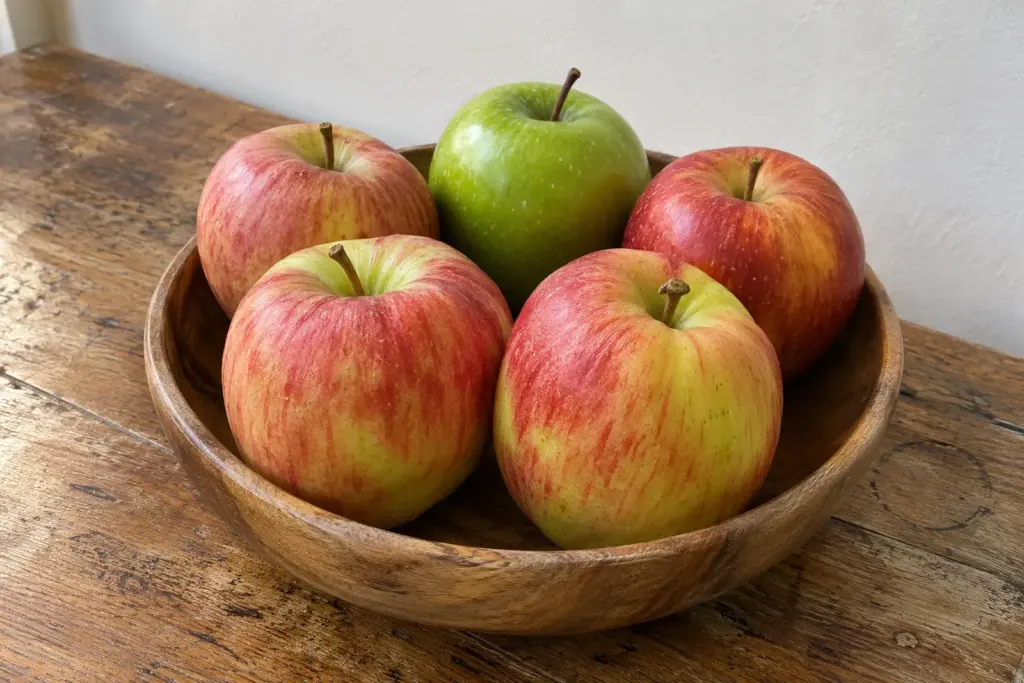
Honeycrisp is prized for its crunch, so the best apple swaps match what your dish asks of that crunch: a clean bite when the apple is raw, firm slices when it bakes, or only sweet apple flavor when it cooks down into sauce. Which of those three you need narrows your choice to two or three apples.
1 What Does a Honeycrisp Apple Do in a Recipe?
Honeycrisp came out of the University of Minnesota's Horticultural Research Center and was released to nurseries in 1991. The flesh is crisp and juicy, the flavor is honey-sweet with a touch of tart, and Iowa State Extension says its crisp texture holds firm when baked or caramelized. That mix is why one apple works in a lunchbox, a salad and a pie, and why you judge a swap against the dish you are making.
Start with whether you will eat the apple raw or cook it, because crunch only counts raw. In a sauce the flesh breaks down anyway, so almost any sweet apple fits.
In a salad, the bite is the whole reason the apple is there. A pie filling needs slices that survive the oven.
New York growers list the Honeycrisp season as September through February, so outside those months check what your store carries.
2 Best Substitutes for Honeycrisp Apples
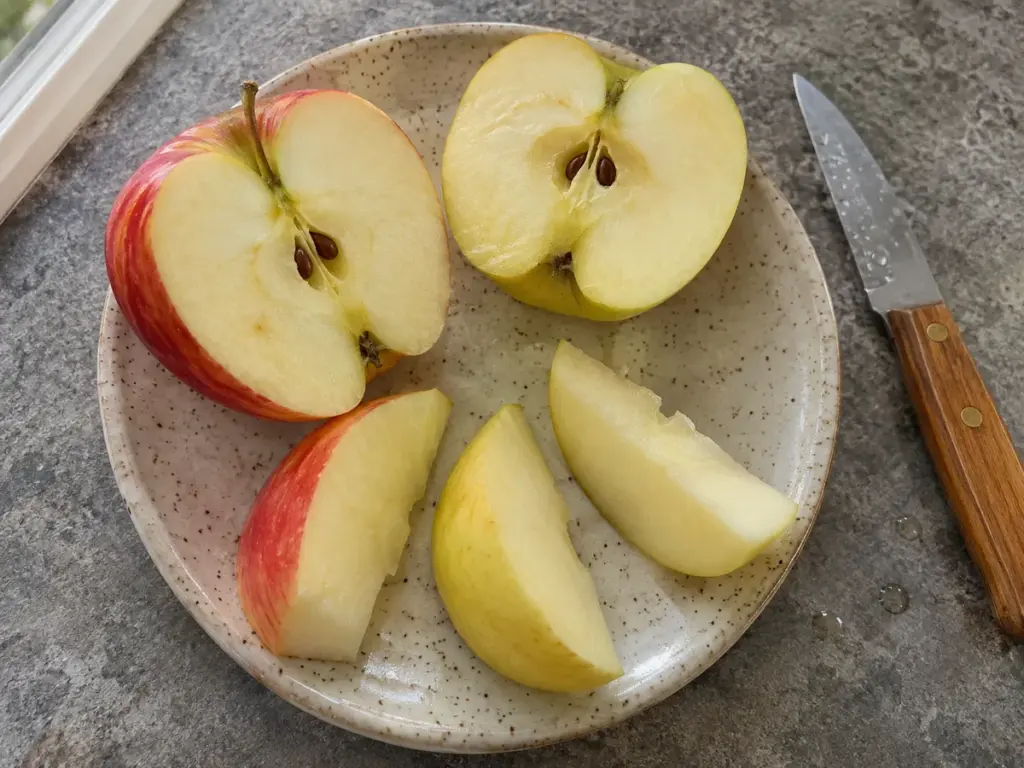
Start every swap at one apple for one Honeycrisp, matched by size or by weight, and adjust for the taste and firmness differences you see here.
| Substitute | Start with | Best for | What changes |
|---|---|---|---|
| Fuji | 1:1 | Snacking, salads, pies with a tart partner | Sweeter, with less tartness |
| SweeTango | 1:1 | Snacking, salads, baking | Half sweet and half tangy, with a loud crunch |
| Zestar! | 1:1 | Raw eating | Brown-sugar note, in season from late August |
| Braeburn | 1:1 | Pies, crisps, baked apples | Spice note, sweet but not sugary |
| Pink Lady | 1:1 | Baking, snacking | High acid with a firm bite |
| Granny Smith | 1:1 | Pies, sauce, baking | Lemon-like acidity |
| Jazz | 1:1 | Snacking, baking | Descriptions vary from mellow to a strong bite |
| Gala | 1:1 | Snacking, salads, sauce with a firm partner | Milder, with a hint of vanilla |
| Envy | 1:1 | Sliced into salads | Very sweet with little acid |
1. Fuji
Fuji was bred in Japan from Red Delicious and Ralls Janet and named for the town of Fujisaki, as the Washington Apple Commission records. Arkansas Extension files it as a multi-purpose apple for baking and fresh eating.
UC ANR also puts Fuji with the apples best eaten fresh, so give your pie filling a tart, firm partner for Fuji, the way a Fuji and Granny Smith pie does.
2. SweeTango
- SweeTango is a University of Minnesota cross between Honeycrisp and Zestar!, so it is half Honeycrisp by parentage.
- Washington growers describe it as one part sweet and one part tangy with a loud crunch, and they list it for snacking, salads and baking.
- It is a club variety, sold through specific companies, so where you can buy it depends on its licensed growers.
3. Zestar!
Zestar! arrives early, late August through October in New York, with a sweet-tart taste and a hint of brown sugar. The New York Apple Association rates it excellent for eating, so keep it for raw slices and the lunchbox.
4. Braeburn
Braeburn tastes sweet but not sugary, with a hint of nutmeg and cinnamon, and the flesh is crisp without being hard. Both UC ANR and Arkansas Extension list it for baking, so use it in a pie or a crisp.
In whole apples baked in the air fryer, firm flesh like Braeburn's keeps the shell standing around the filling.
5. Pink Lady
Pink Lady is the retail name of the Cripps Pink apple, which came from Australia as a cross of Golden Delicious and Lady Williams. The Washington Apple Commission describes high sugar and high acid in a firm, crisp bite, and lists snacking, baking, salads and sauces.
Tip
Iowa State Extension adds that diced Pink Lady keeps a distinct shape in coffee cake and muffins, so you can bake it in small pieces without it turning to mush.
6. Granny Smith
Granny Smith has lemon-like acidity with just enough sweetness, a firm crunch and plenty of juice. Iowa State Extension calls it the go-to baking apple, and Kansas State Extension says it works as a snack or in pies and sauce, which covers most of what Honeycrisp does, and you get a sharper taste.
- In a filling, start with the recipe's sugar, taste, and add more a teaspoon at a time.
- Because it holds its shape, Granny Smith also stands in for Braeburn in a pie written around that apple.
- In a raw salad, you can offset the sharpness with a sweet dressing or a handful of dried fruit.
7. Jazz
Descriptions of Jazz differ. Kansas State Extension calls it mellow and great for snacking and baking, while Washington growers write of a strong bite and an almost floral aroma. Taste one before you commit a whole recipe to it.
Jazz is also a club variety, patented and sold through specific companies, which limits where you can buy it.
8. Gala
Gala tastes mildly sweet with a hint of vanilla, and Kansas State Extension calls it crisp, juicy and ideal for snacking. It works in salads.
For cooking, the sources split: UC ANR files Gala and Fuji with the apples best eaten fresh that do not cook well, while the Washington Apple Commission lists both for baking and sauces.
Use Gala for sauce or pie only with a firm partner such as Braeburn or Granny Smith.
9. Envy
Envy is very sweet with low acid and, in the Washington Apple Commission's words, perfect for slicing, which suits a salad where the apple is cut thin and sits in dressing. Add a little lemon juice or a tart apple, because a very sweet, low-acid apple can taste flat in your salad if the dressing is mild.
3 Which Honeycrisp Substitute Should You Use for Each Dish?
A raw apple has to deliver crunch and a balanced sweetness, while a baked apple has to stay in slices.
Fuji for Raw Eating
Sweet and juicy, and listed for snacking and salads, so it carries a raw dish without help.
It has less tartness than Honeycrisp, so a salad may want lemon juice or a tart apple beside it.
Braeburn for Baking
Listed for baking by UC ANR and Arkansas Extension, with a spice note that suits a pie.
The spice note comes with the apple, so taste a raw slice before you add cinnamon to a pie.
Salads
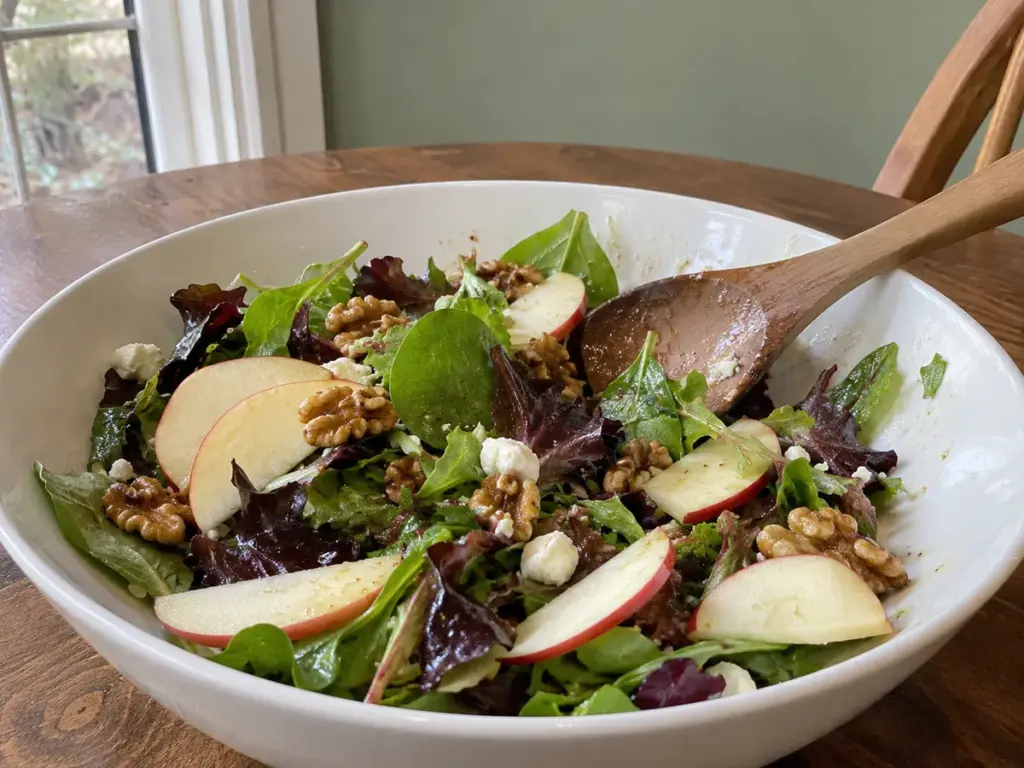
Fuji, Envy and SweeTango suit raw slices. Fuji works in an apple, cranberry and pepita salad, where the apple sits against dried fruit and a lemon dressing and has to stay sweet and firm. Cut apples brown as they sit, so toss the slices in lemon juice or dressing right after you cut them.
For diced apple in a grain salad such as farro salad with apples and dates, cut the apple last and dress it at once, since diced apple loses its crunch quickly once it sits.
Pies, Crisps and Baked Apples
Braeburn, Granny Smith and Pink Lady all appear on UC ANR's list of apples for pies and baking, along with Honeycrisp itself. You get the best pie from one sweet apple and one tart one, such as Fuji with Granny Smith, because the tart apple keeps its slices while the sweet one softens.
Applesauce and Cooked Apples
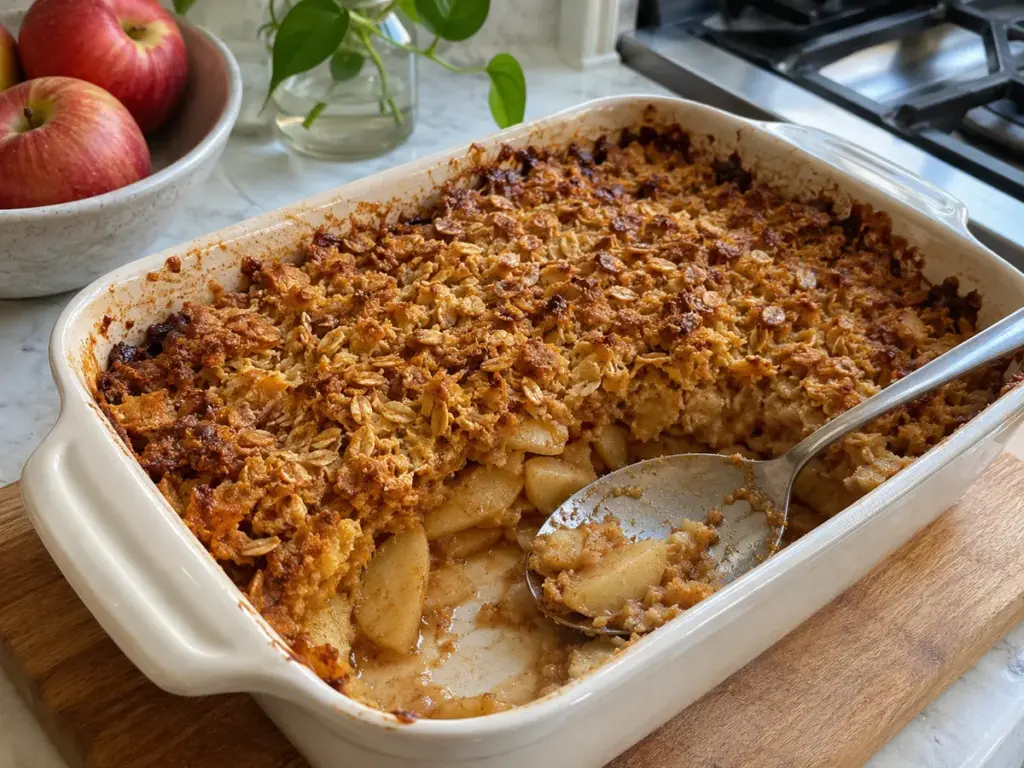
Sauce is the most forgiving job, because the flesh breaks down anyway. Kansas State Extension lists Honeycrisp for sauce, and the Washington Apple Commission lists sauces for Gala, Fuji, Granny Smith, Braeburn, Jazz and Pink Lady as well.
Because UC ANR files Fuji and Gala with the apples that do not cook well, let a firm apple lead: Granny Smith or Braeburn with Fuji or Gala keeps the sauce balanced, for example in pressure-cooked applesauce.
4 Which Apples Should You Not Use?
Two apples are easy to grab by mistake and do poorly in an oven.
- Red Delicious in a pie. Arkansas Extension says it does not hold up well to cooking, and Iowa State Extension calls it unsuitable for baking. Keep it for the fruit bowl.
- McIntosh in whole baked apples or a firm pie. UC ANR lists McIntosh for applesauce and apple butter, so it belongs in the sauce pot.
Frequently Asked Questions
Fuji tastes sweeter. The Washington Apple Commission calls it one of the world's sweetest apples, while the New York Apple Association describes Honeycrisp as a complex, sweet-tart apple. A one-for-one swap therefore gives a sweeter flavor, and a squeeze of lemon or a tart apple brings some of the balance back.
They can, with care, because the sources disagree. The Washington Apple Commission lists Gala for baking, but UC ANR places it with the apples that do not freeze or cook well. Pair Gala with a firmer apple such as Braeburn so the slices hold their shape.
Washington growers list Jazz for snacking, salads, sauces and baking, so you can use it where you would use Honeycrisp, and Kansas State Extension calls it great for snacking and baking. Because it is a club variety, availability is the limit more than flavor.
The sources we checked give no acid measurement for either apple, so neither can be called tarter. Braeburn is sweet but not sugary with a nutmeg and cinnamon note, and Honeycrisp is honey-sweet with a touch of tart. Taste a raw slice of each before you bake with one for the other.
Sources
- Minnesota Historical Society, Honeycrisp apple
- UC ANR, Apples Every Which Way
- University of Arkansas Extension, Arkansas Fresh Series: Apples
- Iowa State Extension AnswerLine, Which Apple to Use?
- Kansas State Research and Extension, Apple Varieties Guide for Taste and Cooking
- New York Apple Association, Honeycrisp and Zestar!
- University of Minnesota, SweeTango
- Washington Apple Commission variety pages: Fuji, SweeTango, Braeburn, Cripps Pink, Granny Smith, Jazz, Gala and Envy

Andrew Gray is a seasoned food writer and blogger with a wealth of experience in the restaurant and catering industries. With a passion for all things delicious, Andrew has honed his culinary expertise through his work as a personal chef and caterer.
His love for food led him to venture into food writing, where he has contributed to various online publications, sharing his knowledge and insights on the culinary world. As the proud owner of CooksCrafter.com, Andrew covers a wide range of topics, including recipes, restaurant reviews, product recommendations, and culinary tips.
Through his website, he aims to inspire and educate fellow food enthusiasts, offering a comprehensive resource for all things food-related.