
Short Answer
Rice side dishes work best when the rice supplies what the main dish lacks. Start with cilantro lime rice, with 1 cup of jasmine rice to 2 cups of water, 15 minutes of simmering and 5 minutes of resting.
- Match lime and herbs to grilled meat, fish and tacos, and a toasted pilaf to roasts and braises.
- Match coconut or turmeric rice to curries and spicy food, and fried rice to leftover rice.
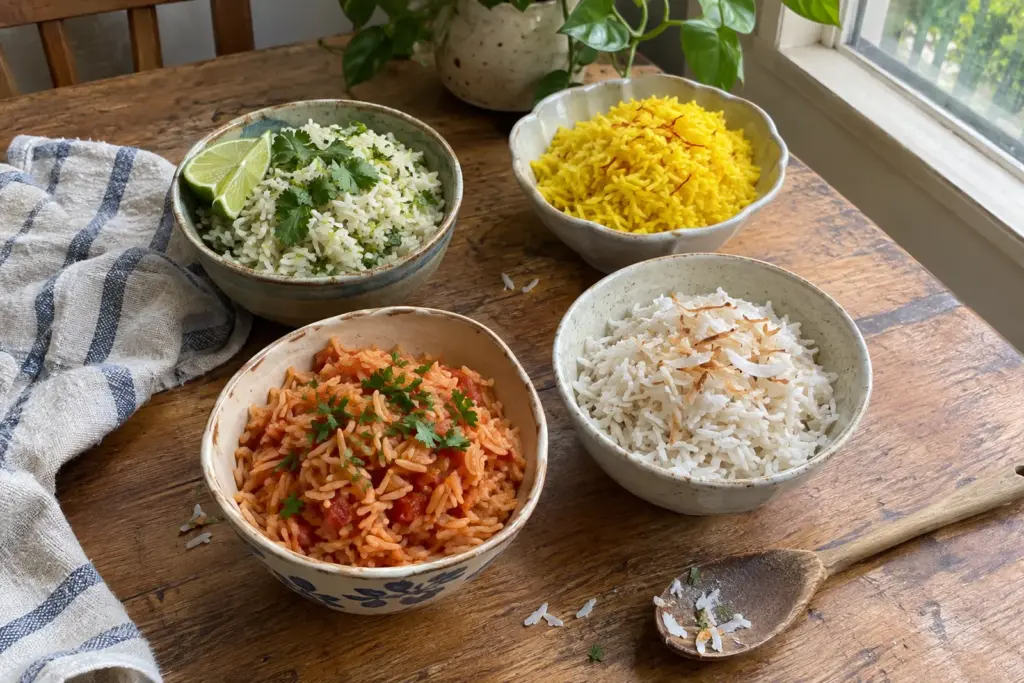
The same pot method takes lemon, saffron, coconut or soy sauce, so rice turns into a very different side dish each time. All 20 recipes cook in one pot or one skillet in 10 to 50 minutes.
1 Which Rice Side Dish Complements Your Main Dish?
A plain pot of rice adds starch and nothing else, so the useful question is what the main dish is missing. Grilled meat and fish arrive smoky or rich and want lime, herbs or tomato.
Roasts and braises come with gravy and want a toasted, savory pilaf. Curries and spicy food want something creamy or sweet such as coconut.
The rice you pick changes how the pot behaves:
- Long-grain white rice is the default because it cooks into separate, fluffy grains.
- Jasmine cooks softer and a little stickier with a floral smell, which suits coconut and lime.
- Basmati stays drier and more separate, which suits herbs and curries.
- Brown rice keeps its bran layer, so it needs more liquid and more than twice the time.
- Arborio and other short-grain rices release starch and turn creamy, which is right for risotto and too gluey for these pilafs.
Brown rice, quinoa and farro all change the timing when they replace jasmine rice, so read the package before you swap.
Almost every pot uses the same 1:2 ratio: 1 cup of long-grain white or jasmine rice to 2 cups of liquid, and 2 ¼ cups for brown rice, from the USA Rice cooking chart. The two basmati pots use the same 1:2 for unsoaked grains, and the tomato and coconut pots split their 2 cups between broth and puree or coconut milk and water.
If time decides your pick, the 20 pots sort by the simmer, the rest and the longest step beside them, without the wait for water to boil.
- 10 to 15 minutes: ginger sesame fried rice (10), cauliflower rice pilaf and pineapple fried rice (15). The fried rices start with rice that is already cooked, and the cauliflower has no rice to simmer.
- 20 minutes: cilantro lime, cilantro mint, Mexican street corn, coconut jasmine, jasmine with cashews and raisins, and peas and carrots rice.
- 30 to 35 minutes: lemon herb pilaf, garlic butter Parmesan, sundried tomato and basil, tomato and herb, turmeric coconut, cumin with chickpeas, carrot turmeric and spinach and feta rice (all 30), and the Turkish vermicelli pilaf (35).
- 40 to 50 minutes: Spanish saffron rice (40) and mushroom and thyme brown rice (50), because the brown rice alone simmers 40 to 45 minutes.
2 How Do You Cook Fluffy Rice Every Time?
Gummy, wet rice and hard, dry rice almost always trace back to the liquid amount, to lifting the lid, or to skipping the rest, and you can avoid all three. One method cooks every white-rice pot, so you only have to learn it once.
- Measure by volume. Use 1 cup of white rice to 2 cups of liquid, or 2 ¼ cups for brown rice, and measure both with the same cup.
- Rinse the right rice. Rinse jasmine, basmati and brown rice in a sieve until the water runs nearly clear. Enriched U.S. long-grain white rice goes in unrinsed, because washing removes the added nutrients (Montana State University Extension).
- Boil, stir once, cover. Bring the liquid and salt to a boil, add the rice, stir once and cover with a tight lid on the lowest heat.
- Leave the lid alone. White, jasmine and basmati rice need 15 to 18 minutes and brown rice needs 40 to 45, and each peek lets out the steam that cooks the top layer.
- Rest, then fluff. Keep the lid on for 5 minutes off the heat, then fluff with a fork so the grains separate. Done means no liquid left and a tender grain.
3 Which Rice Sides Go with Grilled Meat, Fish and Tacos?
Grilled meat, fish and tacos arrive smoky, salty or rich, and these rices answer with acid and fresh herbs. Add the lime, lemon and herbs after the rice is cooked, since they lose their brightness if they simmer in the pot.
1. Lemon Herb Rice Pilaf
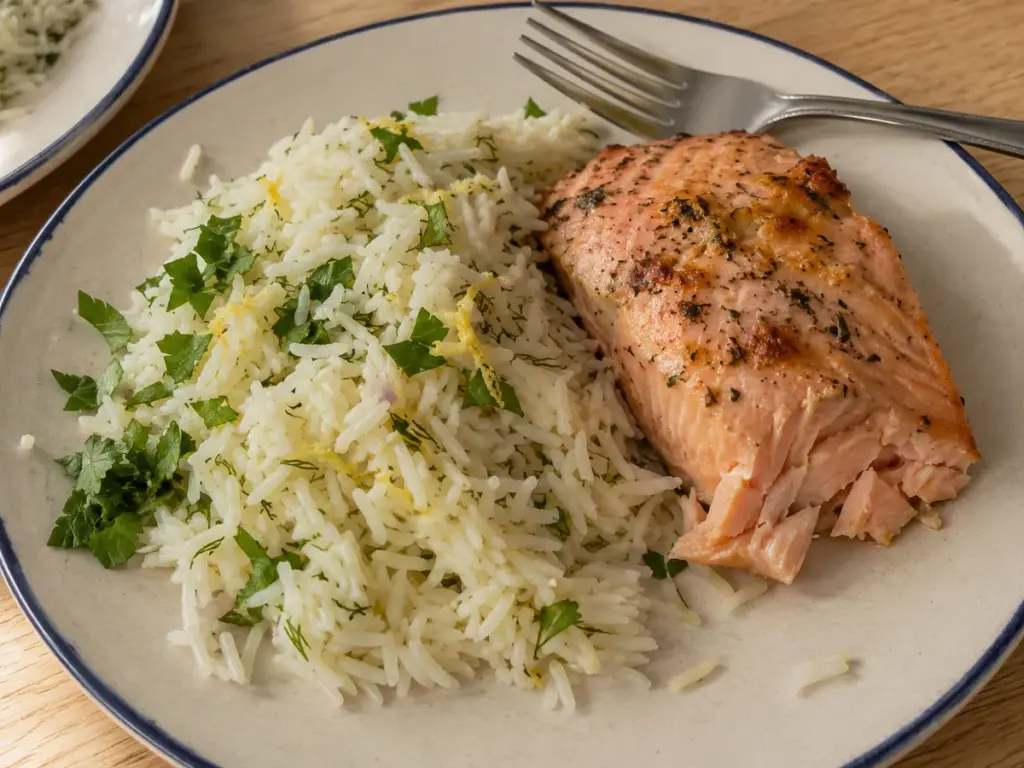
When you rinse basmati until the water runs nearly clear, the surface starch that glues long grains together goes down the drain. Zest gives the lemon flavor without adding liquid, so it goes in with the parsley and dill once the rice is fluffed, and you taste before you salt because boxed broth often carries enough.
Ingredients (for about 4 side servings)
- 1 cup basmati rice, rinsed until the water runs nearly clear
- 2 cups vegetable broth (low-sodium, so you control the salt)
- 1 tablespoon olive oil
- 1 small onion, finely chopped
- 2 garlic cloves, minced
- Zest of 1 lemon
- 2 tablespoons chopped parsley
- 1 tablespoon chopped fresh dill
- ½ teaspoon salt, less if the broth is salted, and black pepper
Instructions (about 30 minutes)
- Cook the onion in the olive oil in a medium saucepan over medium heat for 3 to 4 minutes, until translucent.
- Add the garlic for 1 minute, then the rinsed rice for 2 minutes, stirring until the grains look glossy.
- Pour in the broth, bring to a boil, cover and simmer on low for 15 minutes.
- Rest the pot covered and off the heat for 5 minutes, then fluff and stir in the zest, parsley, dill, salt and pepper.
Basmati grains are long and brittle, so after the toasting step stir only twice: once when the broth goes in and once when you fluff. Extra stirring snaps the grains and releases starch, which is what turns a pilaf gluey.
Brands of basmati differ, and some packages ask for less water than the 2 cups used here, so follow your package if it says otherwise and keep the 5-minute rest.
Swaps
- Use tarragon for an anise note like the dill, or basil for a sweeter, milder pot.
- Lime zest goes in the same amount as the lemon zest and gives a sharper citrus note.
Baked salmon and grilled chicken kebabs are the usual partners, and air fryer lemon garlic shrimp repeats the same lemon and garlic if you want a quick protein.
2. Cilantro Lime Rice
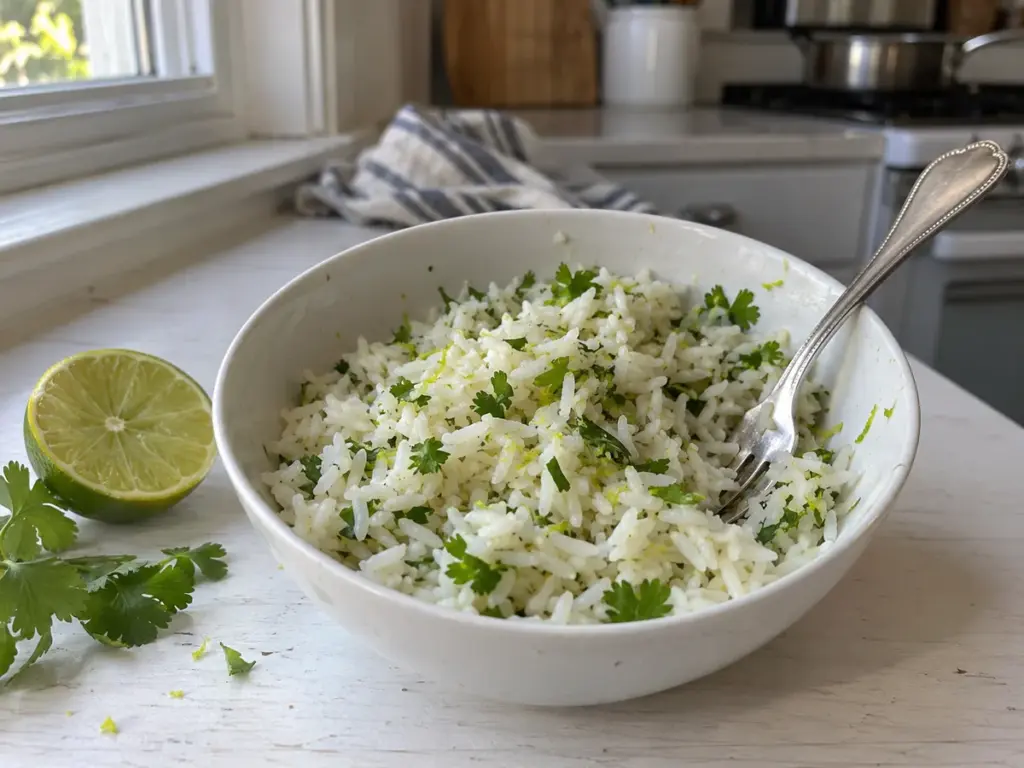
Jasmine rice cooks soft and a little sticky, which is what you want under fajita peppers or next to grilled fish, where it soaks up the juices. Lime juice and cilantro go in once the rice is fluffed.
If cilantro tastes like soap to you, chopped parsley fills the same green role. The Instant Pot version of this rice has its own recipe, with timing set for the pressure cooker.
Ingredients (for about 4 side servings)
- 1 cup jasmine rice, rinsed until the water runs nearly clear
- 2 cups water
- 1 tablespoon neutral oil
- ½ teaspoon salt
- ¼ cup chopped cilantro
- 1 lime, zested and juiced
- 1 garlic clove, minced (optional)
Instructions (about 20 minutes)
- Rinse the rice until the water runs nearly clear, then drain.
- Bring the water to a boil with the oil and salt, add the rice, stir once, cover and simmer on low for 15 minutes.
- Rest the pot covered and off the heat for 5 minutes.
- Fluff the rice, then stir in the garlic if using, the zest, the juice and the cilantro, and taste for salt and lime.
Lime zest carries more lime aroma than the juice, and the juice supplies the sourness, so the pot needs both. Stir them in after fluffing and taste a forkful before adding more, because rice keeps absorbing salt and acid as it sits.
The optional garlic clove goes in raw for a sharp bite.
Swaps
- Green onions can fill in for the cilantro, adding a mild onion bite instead of an herb taste.
- Lemon juice gives a rounder, less sharp acid than lime, so stir it in after fluffing and taste as you would with the lime.
The rice belongs under burrito bowls, tacos and fajitas, where it soaks up juices while the lime cuts through beans, cheese and sour cream.
3. Cilantro Mint Rice
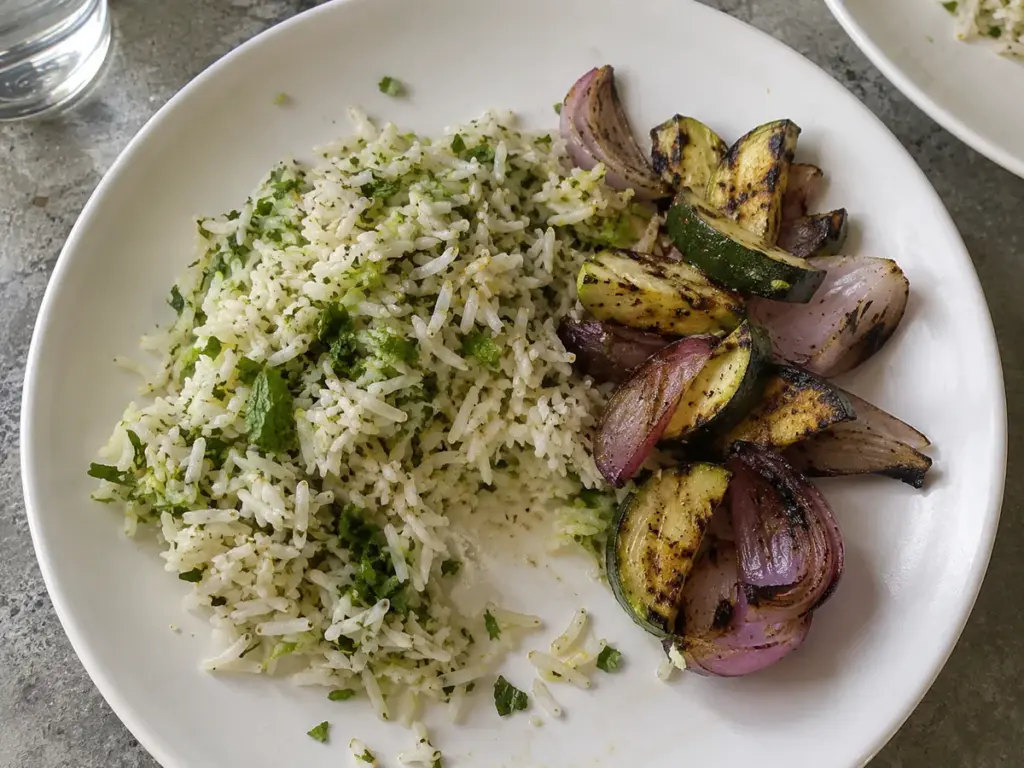
Mint and cilantro together taste cooler and greener than either herb alone, and that coolness is what your rice needs next to a hot curry or charred vegetables. Chop both herbs just before you fold them in, because cut mint darkens within minutes.
Ingredients (for about 4 side servings)
- 1 cup basmati rice, rinsed until the water runs nearly clear
- 2 cups water
- ½ teaspoon salt
- 1 tablespoon unsalted butter
- ¼ cup chopped cilantro
- ¼ cup chopped mint leaves
- 1 tablespoon lime juice
Instructions (about 20 minutes)
- Rinse the rice until the water runs nearly clear.
- Combine the rice, water and salt in a medium saucepan, bring to a boil, cover and simmer on low for 15 minutes.
- Rest the pot covered and off the heat for 5 minutes.
- Fluff the rice with the butter, then fold in the cilantro, mint and lime juice and adjust the salt.
Pick the mint leaves only, because the stems are tougher and chew like twigs in soft rice. Butter melted through the hot grains carries the herb oils to every forkful.
Acid slowly turns bright green herbs olive-colored, so the lime juice goes in last. For a make-ahead pot, cool the rice quickly and refrigerate it within 2 hours, reheat the portion you will eat to 165°F, and stir in the butter, herbs and lime just before serving.
Swaps
- When mint is hard to find, parsley or basil brings a different green note, and either one goes in after the rest.
4. Mexican Street Corn Rice (Esquites Style)
Esquites is street corn served in a cup, with the kernels cut off the cob and tossed with mayonnaise, cotija, lime and chili powder. This rice folds the same dressing into a pot of long-grain rice, and the char on the corn gives you the grilled flavor.
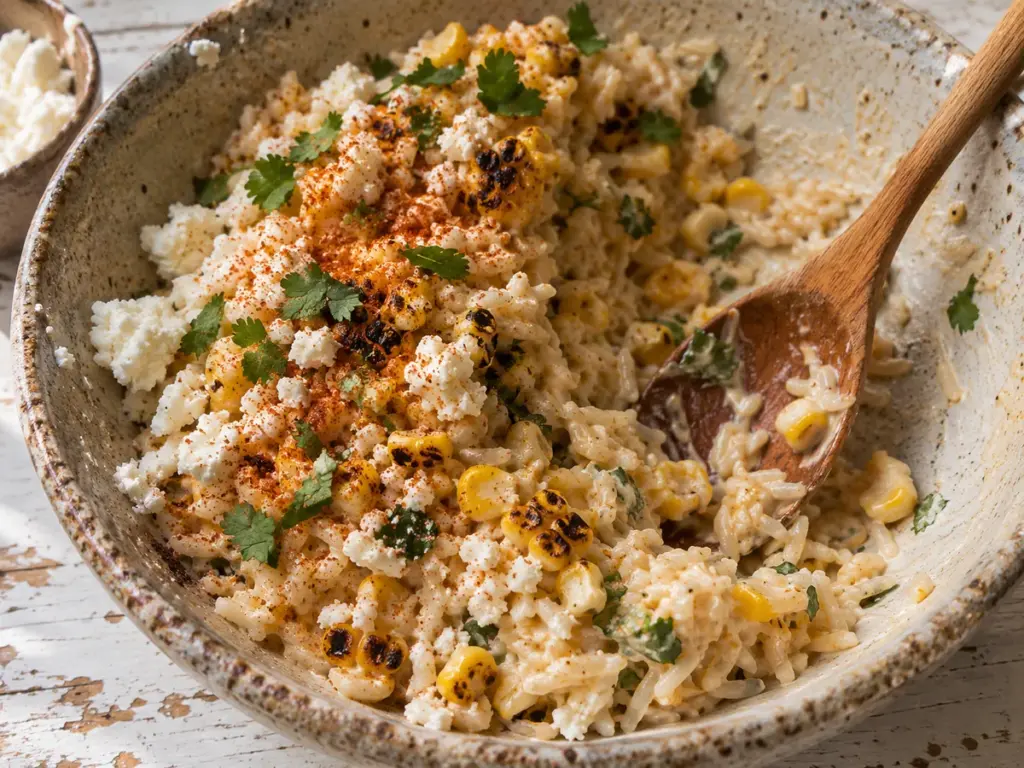
Corn chars when it sits undisturbed in a hot skillet, so you stir it only every minute or so. Once the rice meets the mayonnaise it is a perishable dish, so serve it warm and refrigerate leftovers within 2 hours, or within 1 hour when it is above 90°F at a cookout.
Ingredients (for about 4 side servings)
- 1 cup long-grain white rice
- 2 cups water or low-sodium chicken broth
- 1 ½ cups corn kernels, from about 2 ears or thawed frozen
- 1 tablespoon vegetable oil
- ¼ cup mayonnaise
- ¼ cup crumbled cotija cheese
- 1 teaspoon chili powder
- 1 tablespoon lime juice
- Salt to taste, and ¼ cup chopped cilantro (optional)
Instructions (about 20 minutes)
- Bring the rice and water or broth to a boil, cover, simmer on low for 15 minutes and rest off the heat for 5 minutes.
- While it cooks, heat the oil in a skillet over medium-high heat and cook the corn for about 5 minutes, stirring now and then, until charred in spots.
- Mix the rice, corn, mayonnaise, cotija, chili powder and lime juice in a large bowl and season with salt.
- Top with cilantro and serve warm.
Frozen corn works all year if you thaw it and pat it dry first, because wet kernels steam in the skillet instead of charring. Let them sit a full minute between stirs so the cut sides touch the hot pan and pick up brown spots.
Swaps
- Greek yogurt replaces the mayonnaise for a lighter, tangier rice that is still creamy.
- If you cannot find cotija, feta stays crumbly and grated Parmesan melts into the warm rice; both are salty.
- A pinch of smoked paprika in place of the chili powder moves the flavor from heat toward smoke.
At a cookout, serve it beside grilled chicken, carne asada or tacos, where the creamy, tangy dressing does the work of a sauce.
4 Which Rice Sides Suit Roasts, Chicken and Braises?
Roasts and braises bring pan juices and gravy, so you want pilafs that carry flavor of their own in the toasted grains, aromatics and broth while still soaking up sauce.
5. Spanish Saffron Rice
Saffron gives up its color and floral smell to warm liquid, not to dry rice, so you steep the threads in a quarter cup of hot broth before they meet the pot.
A pot of long-grain rice like this is simpler than paella, which uses short-grain rice in a wide, shallow pan. Serve it with something sharp and crunchy, such as a tomato and olive salad.
Ingredients (for about 8 side servings)
- 2 cups long-grain white rice
- 4 cups chicken or vegetable broth
- ½ teaspoon saffron threads, steeped in warm broth
- 2 tablespoons olive oil
- 1 small onion, finely chopped
- 3 garlic cloves, minced
- ½ teaspoon smoked paprika
- Salt to taste and chopped parsley
Instructions (about 40 minutes)
- Warm ¼ cup of the broth, add the saffron and let it steep for 10 minutes.
- While the saffron steeps, cook the onion in the olive oil over medium heat for 3 to 4 minutes, then add the garlic and paprika for 1 minute.
- Stir in the rice for 2 minutes, then add the remaining 3 ¾ cups broth and the saffron liquid, stir once and bring to a gentle boil.
- Cover and simmer on low without lifting the lid, 18 to 20 minutes, then rest off the heat for 5 minutes.
- Fluff the rice, season with salt and sprinkle with parsley.
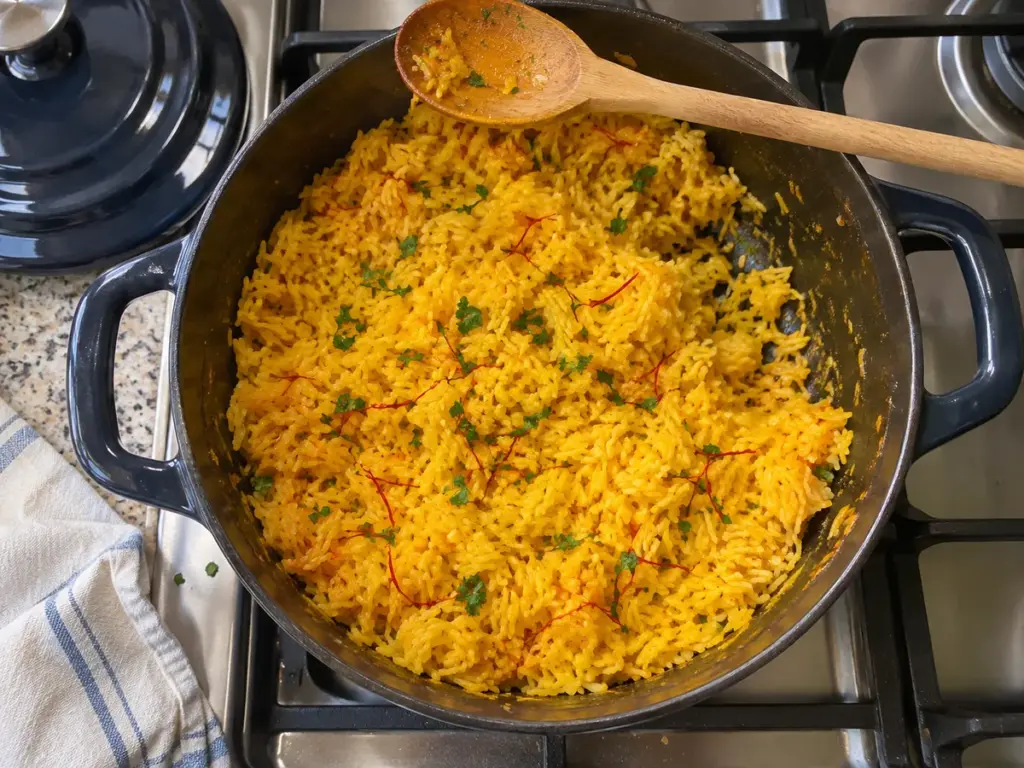
Crush the saffron threads lightly between your fingers before they go into the warm broth, because broken threads give up more color. The 10 minutes of steeping turn the liquid a deep gold and flavor the whole pot.
For 2 cups of rice, use a large saucepan with a tight lid so the grains have room to swell.
Swaps
- Vegetable broth in place of chicken broth keeps the pot vegetarian.
- Turmeric, the usual saffron stand-in, gives the color but tastes earthy where saffron tastes floral, so use a pinch.
Roast chicken and grilled shrimp suit it, and the pot also works as the base for paella-style plates: cook shrimp or chicken separately and set them on top. Smoked paprika is there for warmth, so stay at ½ teaspoon and let the saffron lead.
6. Garlic Butter Parmesan Rice
Garlic scorches in butter in well under a minute, so you keep the pan at medium heat and add the rice right away to cool it down and coat each grain. The Parmesan goes in after the rest and off the heat, where it melts into the steam without clumping.
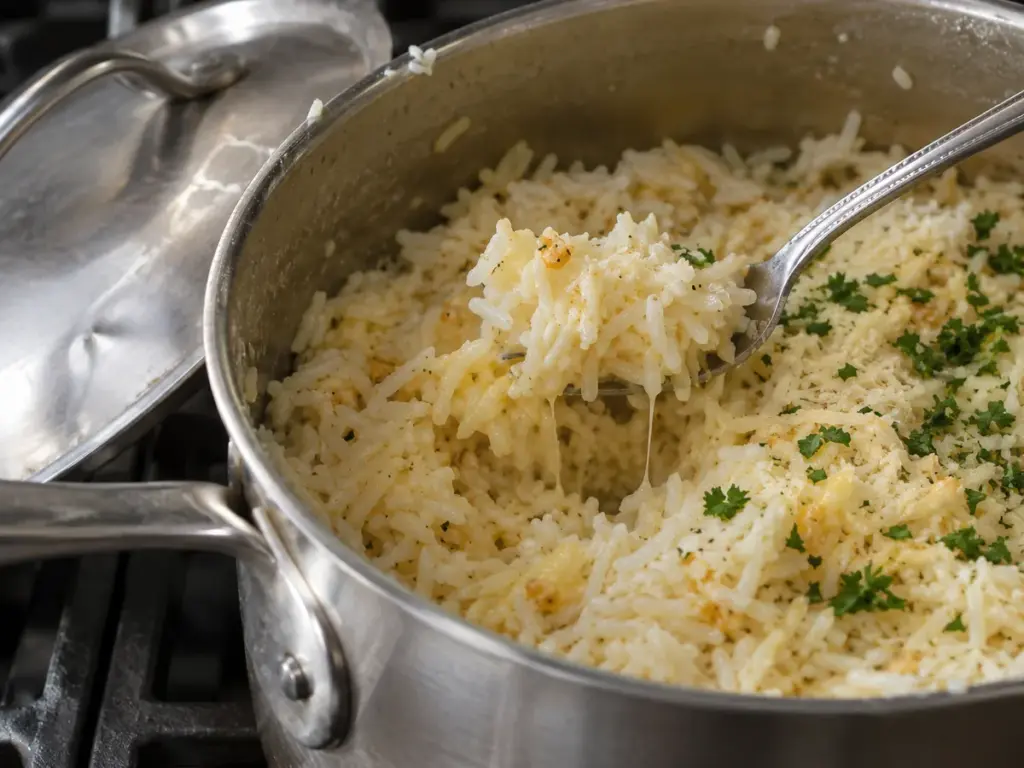
Taste before you add the salt, because the Parmesan and any broth are both salty.
Ingredients (for about 4 side servings)
- 1 cup long-grain white rice
- 2 tablespoons unsalted butter
- 3 garlic cloves, minced
- 2 cups water or low-sodium chicken broth
- ½ cup freshly grated Parmesan cheese
- ½ teaspoon salt and ¼ teaspoon black pepper
- Chopped parsley (optional)
Instructions (about 30 minutes)
- Melt the butter in a medium saucepan over medium heat and cook the garlic for 1 minute, stirring so it does not brown.
- Stir in the rice for 2 minutes, until every grain is coated.
- Add the water or broth, salt and pepper, bring to a boil, cover and simmer on low for 15 to 18 minutes.
- Rest off the heat for 5 minutes, then stir in the Parmesan until it melts, fluff and top with parsley.
Pre-grated Parmesan is often coated with an anti-caking agent and melts less smoothly, so grate a wedge if you can. If the garlic browns in the butter, start the pan over: scorched garlic tastes bitter, and no amount of cheese covers it.
Swaps
- Pecorino Romano gives a sharper, saltier finish, so use less salt.
- In a dairy-free pot, nutritional yeast stands in for the Parmesan with a cheesy taste but no creamy melt.
- For a lower-carb pot, make the cauliflower rice pilaf in item 18, which cooks in 5 to 7 minutes.
The rice is already buttery and salty, so serve it with a plain steamed or roasted vegetable like green beans or broccoli and keep the second side light.
7. Mushroom and Thyme Brown Rice
Brown rice keeps its bran layer, so it takes 2 ¼ cups of liquid per cup of rice and 40 to 45 minutes, against 15 to 18 minutes for white rice, according to the USA Rice cooking chart. You start the rice first and cook the mushrooms during its last 10 minutes.
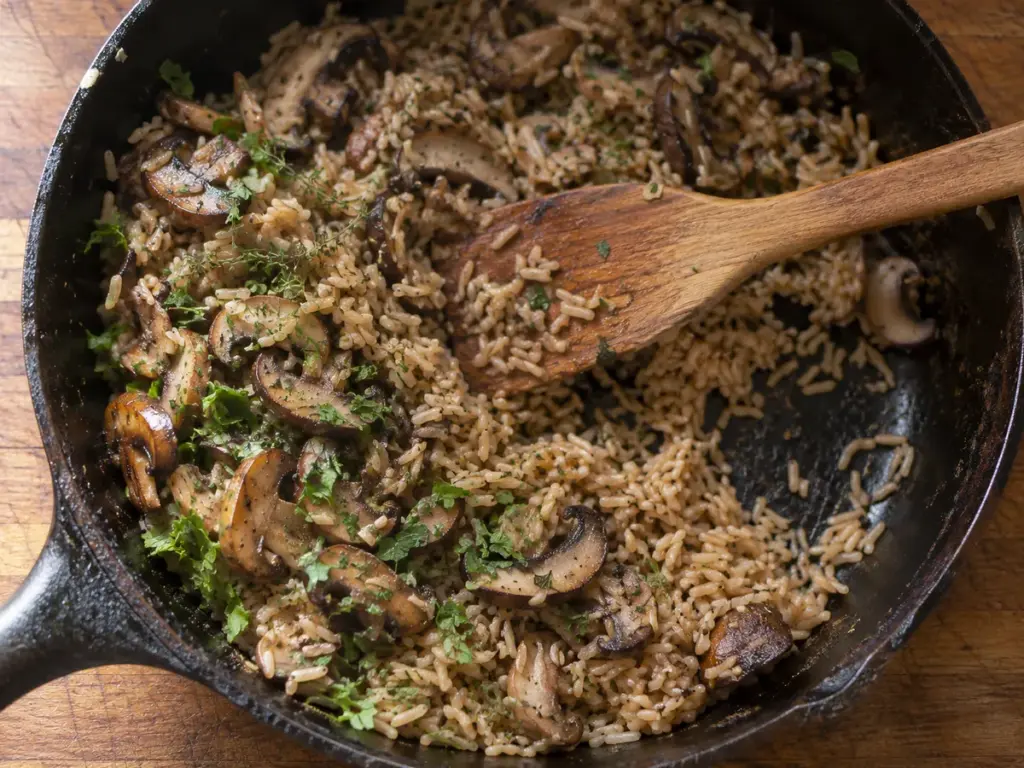
Mushrooms release their water before they brown, so you give them 5 to 7 minutes in a roomy skillet and the moisture evaporates. The same mushrooms and thyme suit wild rice, which also takes maple butternut squash and a cranberry pecan salad.
Ingredients (for about 5 side servings)
- 1 cup brown rice, rinsed and drained
- 2 ¼ cups vegetable broth (or water)
- 2 tablespoons olive oil
- 8 ounces cremini mushrooms, cleaned and sliced
- 3 garlic cloves, minced
- 1 tablespoon fresh thyme leaves
- ½ teaspoon salt and ¼ teaspoon black pepper
- Chopped parsley (optional)
Instructions (about 50 minutes)
- Rinse the rice, bring the broth to a boil, add the rice, cover and simmer on low for 40 to 45 minutes.
- Meanwhile, cook the mushrooms in the oil in a large skillet over medium heat for 5 to 7 minutes, until they release their liquid and start to brown.
- Add the garlic for 1 minute, then the thyme, salt and pepper.
- Rest the rice covered for 5 minutes, fluff it, fold in the mushrooms and top with parsley.
Wipe or brush the mushrooms clean instead of soaking them, since they soak up water like a sponge and then take longer to brown. Keep them in one even layer in the skillet: crowded mushrooms steam, and the 5 to 7 minutes in the steps assumes a roomy pan.
Brown rice firms up as it chills, so reheat leftovers with a splash of water under a lid.
Swaps
- Shiitake or portobello mushrooms give a deeper savory flavor than cremini, and white button mushrooms are milder.
- Rosemary or oregano tastes stronger than thyme, so use less.
- One teaspoon of dried thyme equals the tablespoon of fresh.
With a fried egg or a spoonful of beans on top, this pot becomes a light vegetarian main. Next to roast chicken it plays the side, and the mushrooms bring the savory depth that a gravy would otherwise supply.
8. Turkish Rice with Vermicelli (Şehriyeli Pilav)
In şehriyeli pilav, the Turkish pilaf, thin wheat vermicelli (şehriye) is browned in butter before the rice goes in, and the browned strands give the pot its nutty smell and its name. Break the vermicelli into short pieces so you get some in every spoonful, and stop at golden, because past that point it tastes bitter.
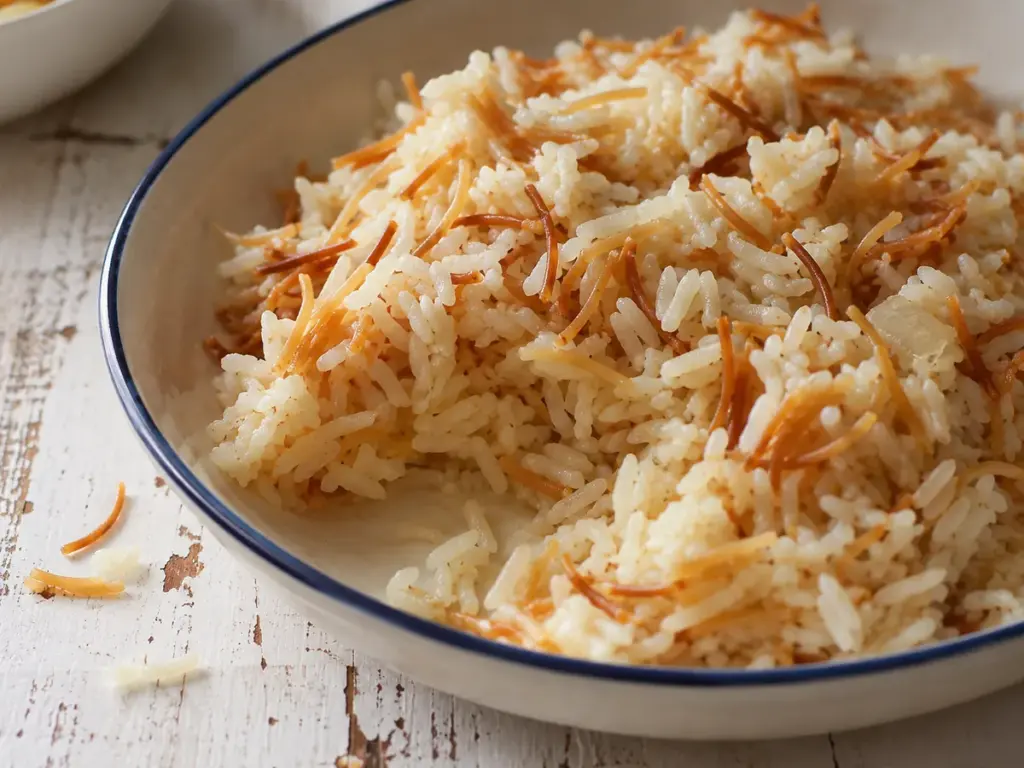
The 10-minute rest at the end lets steam finish the grains, so you get a pilaf that does not clump.
Ingredients (for about 4 side servings)
- 1 cup long-grain white rice
- ½ cup vermicelli, broken into small pieces
- 2 tablespoons unsalted butter
- 1 small onion, finely chopped (optional)
- 2 cups hot water or chicken broth
- ½ teaspoon salt
Instructions (about 35 minutes)
- Melt the butter over medium heat and cook the vermicelli, stirring, for about 3 minutes until golden.
- Add the onion, if using, and cook for 3 minutes until translucent.
- Stir in the rice for 1 minute so it is coated with butter.
- Add the hot water or broth and the salt, bring to a boil, cover and simmer on low for 15 to 18 minutes.
- Rest off the heat, covered, for 10 minutes, then fluff with a fork.
Hot water or broth keeps the pot from losing heat when it meets the buttery rice, so the grains start cooking at once and stay separate. Watch the vermicelli for the color of toasted bread: pale strands taste raw and dark strands taste bitter.
Swaps
- Broken thin spaghetti browns the same way and is the practical vermicelli substitute, and orzo toasts the same way too.
- Heated vegetable broth in place of the hot water keeps the pot vegetarian and tastes deeper.
The wheat pasta means this pilaf is not gluten-free, so do not serve it to guests who avoid wheat. It suits grilled chicken, kebabs and stews, where the buttery noodles and rice soak up the pan juices.
9. Sundried Tomato and Basil Rice
Sun-dried tomatoes are salty and tangy, so cook this rice in low-sodium broth and taste before you add any salt. Oil-packed tomatoes go straight into the pot, and dry-packed ones need a soak in hot water until they turn pliable.
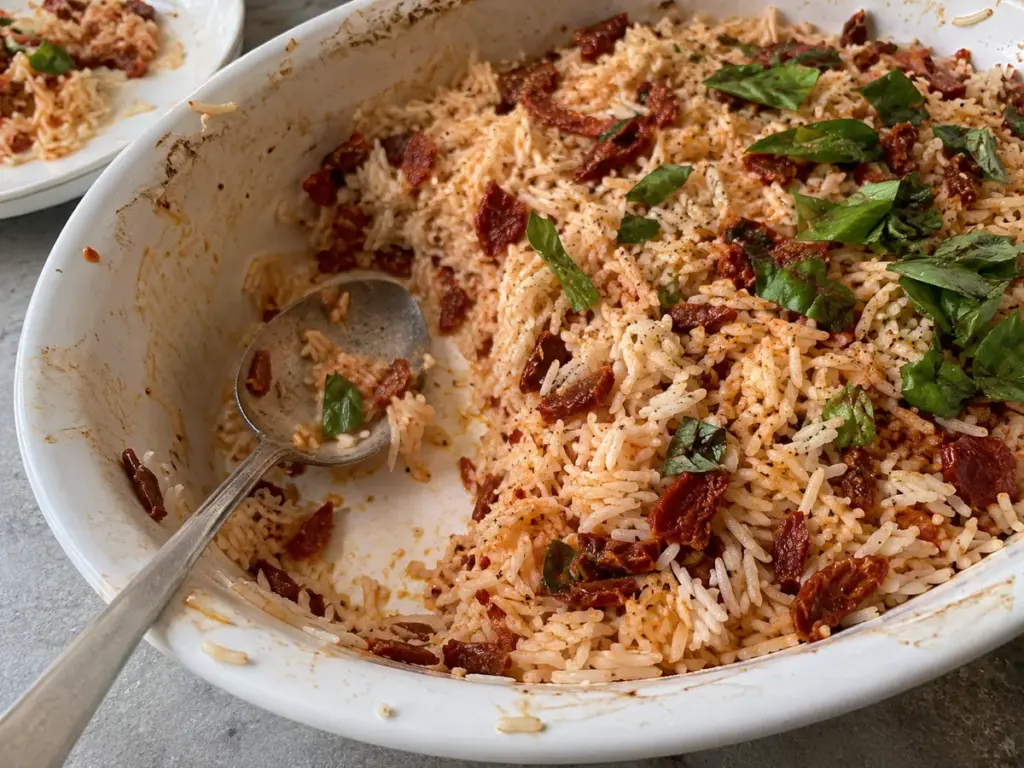
Fold in the basil after the rest, and add salt only after tasting.
Ingredients (for about 4 side servings)
- 1 cup long-grain white rice
- 2 cups low-sodium vegetable or chicken broth
- ⅓ cup sun-dried tomatoes, finely chopped (oil-packed, or dry-packed soaked in hot water until pliable)
- 2 tablespoons olive oil
- 2 garlic cloves, minced
- ¼ cup chopped fresh basil
- ½ teaspoon salt (to taste) and ¼ teaspoon black pepper
Instructions (about 30 minutes)
- Cook the garlic in the olive oil over medium heat for 1 minute without browning it.
- Stir in the rice for 2 minutes, then add the broth, tomatoes and pepper and bring to a boil.
- Cover and simmer on low for 15 to 18 minutes, then rest off the heat for 5 minutes.
- Fluff the rice, fold in the basil and add salt only if it needs it.
Chop the tomatoes fine enough for every forkful, because large pieces turn chewy in the pot.
Swaps
- Start with the same ⅓ cup of roasted red peppers, drained and chopped fine, for a milder, sweeter pot.
- Parsley or cilantro goes in after the rest like the basil and gives a different herbal note.
- When you use oil-packed tomatoes, a spoonful of the jar oil can replace part of the olive oil and carries tomato flavor into the garlic and rice.
Served with grilled meats or roasted vegetables, it carries enough flavor to need no sauce, and a bowl of it can also stand on its own as a light vegetarian meal.
10. Tomato and Herb Rice
Rice cooked in tomato puree and broth turns orange-red and picks up a mild acidity, much like Mexican red rice (arroz rojo) without the chili. The puree goes into the garlic and oil for 2 to 3 minutes first, which cooks off its raw, canned taste.
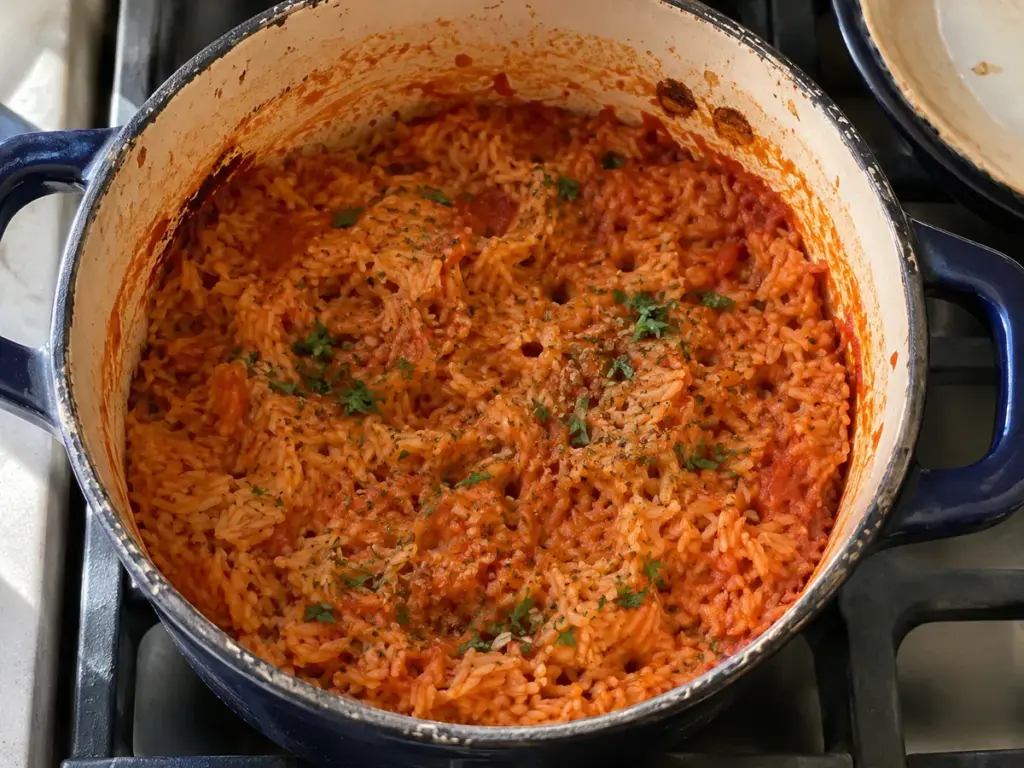
Add the fresh parsley at the end.
Ingredients (for about 4 side servings)
- 1 cup long-grain white rice
- 1 ½ cups vegetable or chicken broth
- ½ cup tomato puree
- 1 tablespoon olive oil
- 2 garlic cloves, minced
- 1 teaspoon dried oregano
- 2 tablespoons chopped parsley
- ½ teaspoon salt and ¼ teaspoon black pepper
Instructions (about 30 minutes)
- Cook the garlic in the olive oil over medium heat for 1 minute.
- Stir in the tomato puree, oregano, salt and pepper and cook for 3 minutes.
- Add the rice and stir to coat, then pour in the broth and bring to a boil.
- Cover and simmer on low for 15 to 18 minutes, then rest off the heat for 5 minutes.
- Fluff the rice and stir in the parsley.
Keep the total liquid at 2 cups per cup of rice however you adjust the tomato. The 1 ½ cups of broth plus ½ cup of puree already match the 1:2 ratio.
Dried oregano goes in with the puree so its oils warm in the pan.
Swaps
- Brown rice needs ¼ cup more broth, 1 ¾ cups in all beside the ½ cup of puree, and 40 to 45 minutes of simmering.
- Use the same ½ cup of canned crushed tomatoes for a chunkier pot; they cook with the garlic and oregano for the same 3 minutes.
- Basil or cilantro can take the place of the oregano and parsley, added after you fluff the rice.
5 Which Rice Sides Stand Up to Curries and Spicy Food?
Curry, jerk-style chicken, spiced beans and anything cooked with chilies need something creamy, sweet or earthy beside them, and coconut milk, turmeric, cumin and dried fruit all do that job.
11. Turmeric Coconut Rice
In Indonesia, rice cooked with turmeric and coconut milk is nasi kuning, a yellow rice served at celebrations. Grilled chicken skewers, fried plantains and mango salsa are the usual partners for yellow rice, and the coconut version takes the plantains especially well.
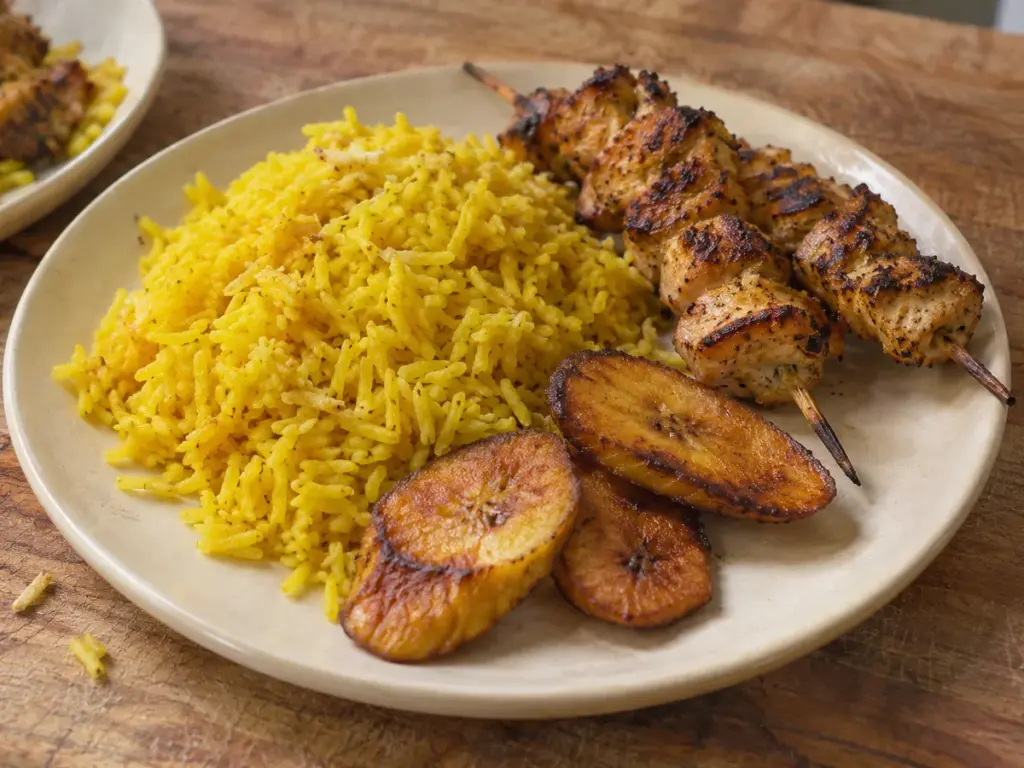
You cook the fresh ginger and turmeric in the oil for a minute before the rice goes in, which draws out their flavor and avoids a chalky taste. Coconut milk scorches on the bottom of the pot if the heat stays high, so keep the heat low once it boils.
Ingredients (for about 4 side servings)
- 1 cup long-grain white rice
- 1 cup full-fat coconut milk, stirred smooth
- 1 cup water
- 1 teaspoon turmeric powder
- 1 tablespoon fresh ginger, peeled and finely grated
- ½ teaspoon salt
- 1 tablespoon vegetable oil
Instructions (about 30 minutes)
- Heat the oil over medium heat and cook the ginger and turmeric for about 1 minute, until fragrant.
- Stir in the rice to coat the grains.
- Add the coconut milk, water and salt, stir once and bring to a gentle boil.
- Cover and simmer on low for 15 to 18 minutes without lifting the lid.
- Rest off the heat, covered, for 10 minutes, then fluff.
Swaps
- Replacing the cup of water with vegetable broth makes the liquid half coconut milk and half broth, which gives a milder rice.
- Ground ginger stands in for the fresh ginger but tastes duller and less bright.
Spicy dishes and grilled vegetables are the plates this rice was made for, because the coconut cools the heat while the turmeric keeps the bowl from looking plain.
12. Coconut Jasmine Rice
Coconut sweetness softens citrus and heat, which is why this rice sits well beside grilled chicken with lime, such as cilantro lime chicken, and beside Caribbean-style dishes.
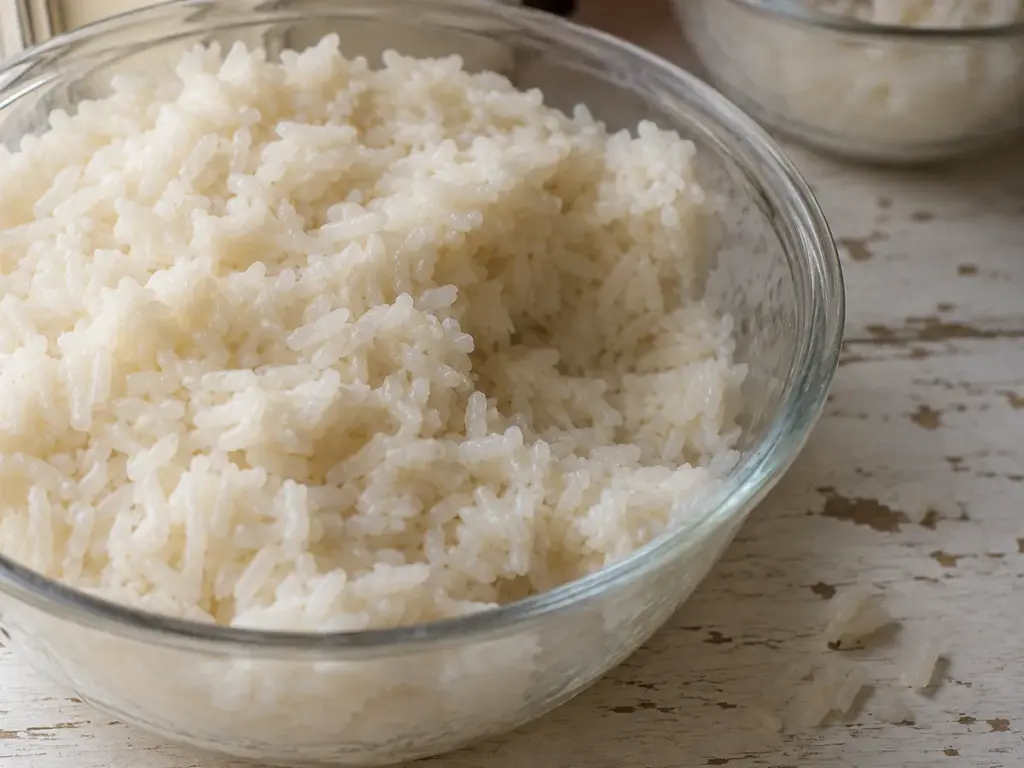
A tablespoon of brown sugar rounds out the coconut without making the rice a dessert. Jasmine's slightly sticky grains hold on to sauce, so you get more from it than from basmati when the plate has a gravy or curry.
Ingredients (for about 4 side servings)
- 1 cup jasmine rice, rinsed until the water runs nearly clear
- 1 cup full-fat coconut milk, stirred smooth
- 1 cup water
- 1 tablespoon brown sugar
- ½ teaspoon salt
Instructions (about 20 minutes)
- Rinse the rice until the water runs nearly clear and drain it well.
- Combine the rice, coconut milk, water, brown sugar and salt in a medium saucepan and bring to a gentle boil, uncovered, over medium heat.
- Reduce the heat to low, cover and simmer for 15 minutes.
- Rest off the heat, covered, for 5 minutes, then fluff with a fork.
Jasmine and coconut both carry fragrance, so the single tablespoon of brown sugar only lifts the coconut and does not make the rice sweet.
Swaps
- Maple syrup or honey can take the place of the brown sugar for a different sweetness; start with the same 1 tablespoon and taste.
Caribbean-style plates such as jerk chicken or grilled shrimp, and a vegetable curry, are where this rice does the most work, since the coconut softens heat and citrus.
13. Cumin-Spiced Rice with Chickpeas
Ground cumin and coriander need about 30 seconds in hot oil before the rice goes in, because the fat carries their flavor, and if you wait longer they scorch bitter. The chickpeas are folded in at the end so they warm through without breaking down.
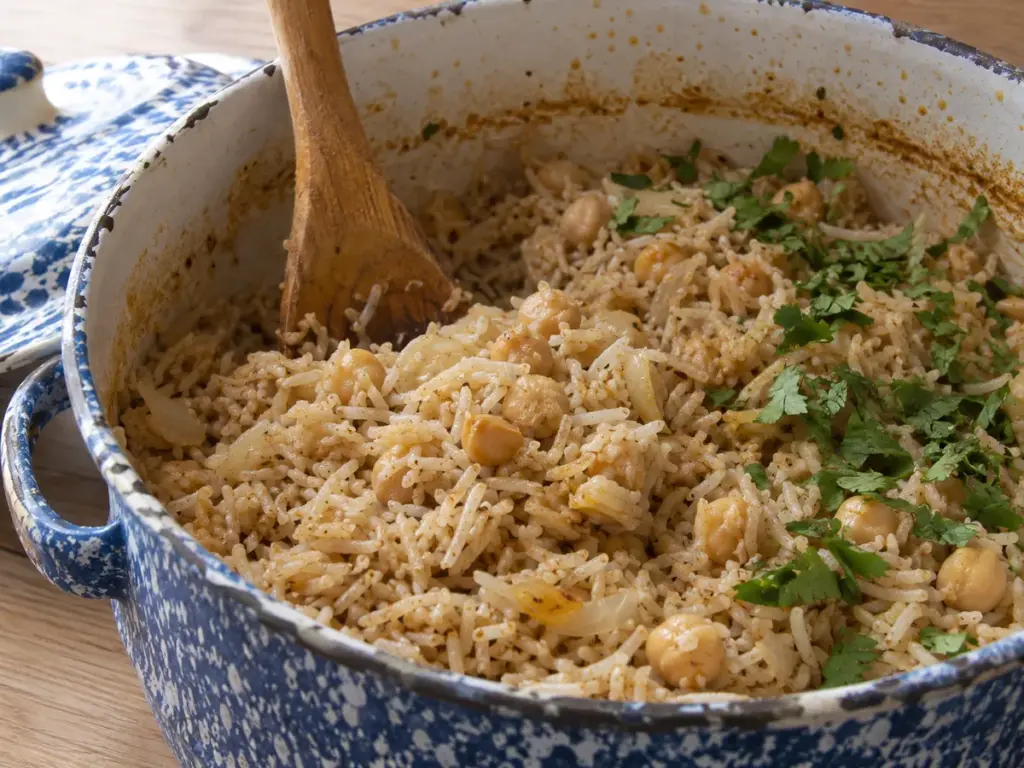
A 15-ounce can of chickpeas turns the pot into a light vegetarian main.
Ingredients (for about 4 side servings)
- 1 cup long-grain white rice
- 2 cups water
- 1 tablespoon vegetable oil
- 1 small onion, finely chopped
- 2 garlic cloves, minced
- 1 teaspoon ground cumin
- ½ teaspoon ground coriander (optional)
- ½ teaspoon salt
- 1 can (15 ounces) chickpeas, drained and rinsed
- Chopped cilantro (optional)
Instructions (about 30 minutes)
- Cook the onion in the oil over medium heat for 3 to 4 minutes, add the garlic for 1 minute, then stir in the cumin and coriander for 30 seconds.
- Add the rice and salt and stir for 1 to 2 minutes so the grains toast lightly.
- Pour in the water, bring to a boil, cover and simmer on low for 15 minutes without lifting the lid.
- Fold in the chickpeas, cover and rest off the heat for 5 minutes.
- Fluff the rice and garnish with cilantro.
Canned chickpeas sit in salty liquid, so drain and rinse them to lower the sodium and keep the pot from turning starchy. They are already cooked, which is why they go in after the simmer and only need to warm through.
Swaps
- Canned black beans or cooked lentils replace the chickpeas: rinse the beans as you would the chickpeas, and fold either one in after the simmer, since both only need to warm through.
- A pinch of turmeric adds color and a layered spice note.
As a side it fits roasted vegetables and other plates that want an earthy, filling starch.
14. Carrot Turmeric Rice with Fresh Cilantro
Finely grated carrot cooks down into the grains, so you taste a little orange color and sweetness in every forkful. The turmeric needs 30 seconds in the oil first, because raw powder tastes chalky.
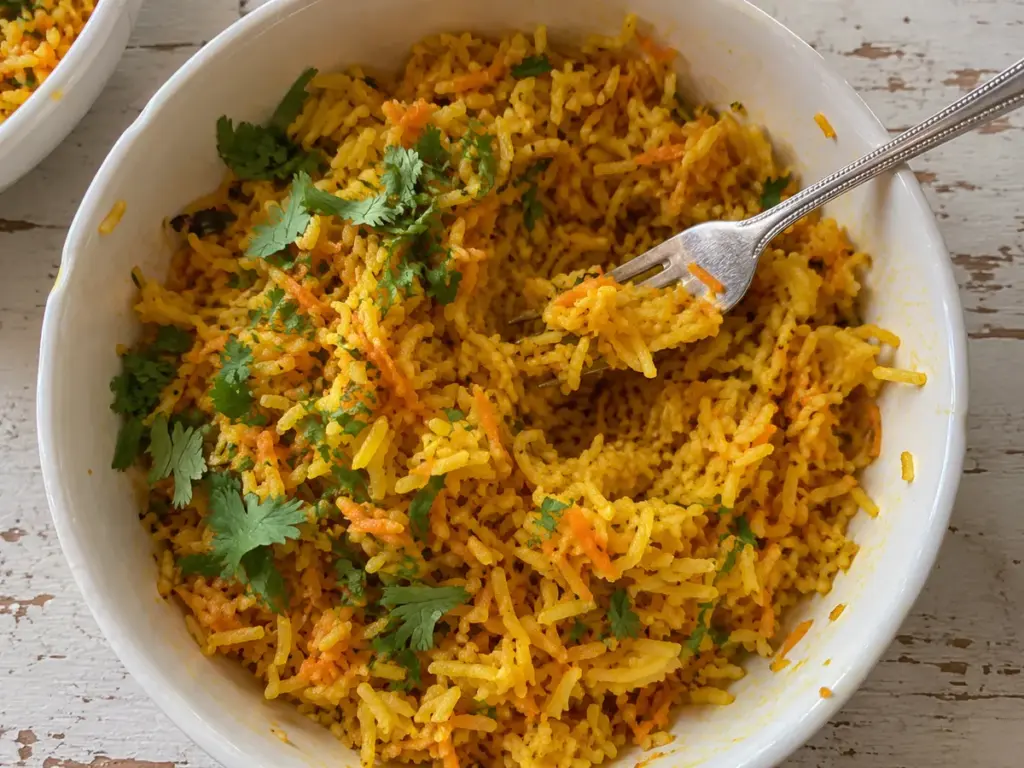
Scatter the cilantro right before you serve.
Ingredients (for about 4 side servings)
- 1 cup long-grain white rice
- 1 large carrot, finely grated
- 1 teaspoon turmeric powder
- 2 cups water or vegetable broth
- 1 tablespoon olive oil or neutral oil
- ½ teaspoon salt
- ¼ cup chopped cilantro
Instructions (about 30 minutes)
- Cook the grated carrot in the oil over medium heat for about 3 minutes, until slightly soft.
- Stir in the turmeric for 30 seconds.
- Add the rice and stir to coat, then pour in the water or broth, add the salt and bring to a boil.
- Cover and simmer on low for 15 to 18 minutes, then rest off the heat for 5 minutes.
- Fluff the rice and sprinkle with cilantro.
Grate the carrot on the small holes so the shreds soften into the grains in the 3 minutes before the turmeric goes in. The carrot goes in first, since heat draws out its sweetness and gives the rice its orange color.
Swaps
- Finely chopped sweet potato gives a denser, sweeter bite than the carrot; cut it small so it softens.
- Ground cumin in place of the turmeric brings a different warm spice, and the rice keeps the carrot's orange but loses the deeper gold.
15. Jasmine Rice with Cashews and Raisins
Persian and Middle Eastern pilafs often combine toasted nuts and dried fruit, and cashews with golden raisins make an easy version. Raisins soaked in warm water for 10 minutes turn plump and soft in the warm rice.
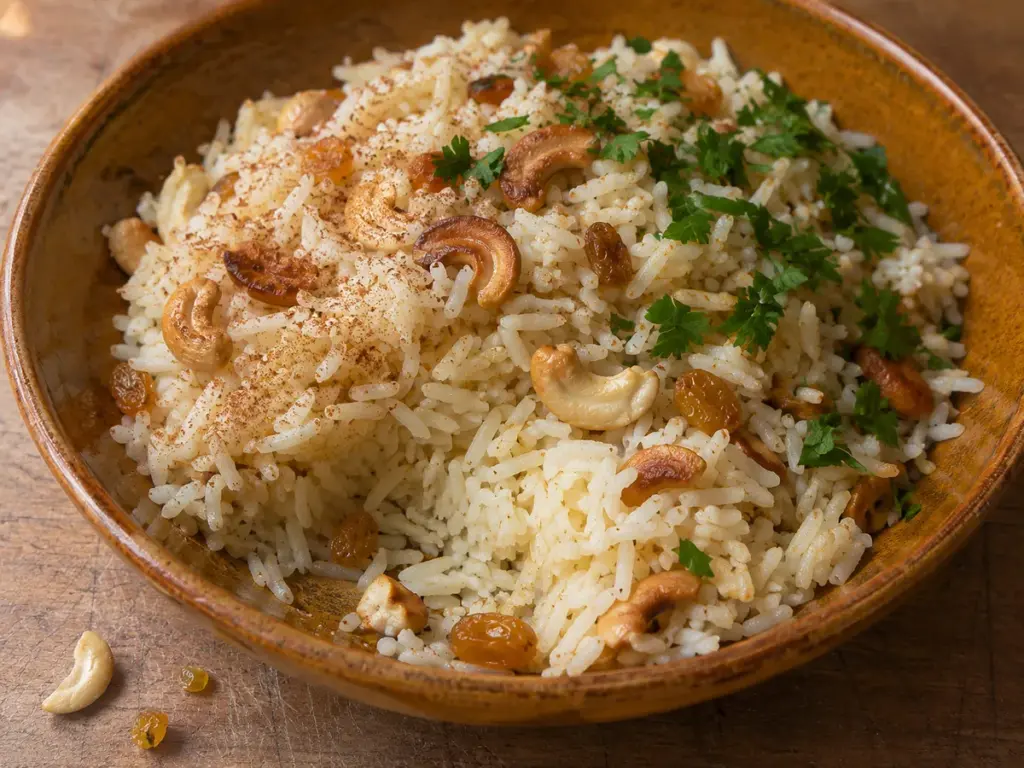
Cashews go from pale to golden within a few minutes in butter, so pull the pan at the first brown edges.
Ingredients (for about 4 side servings)
- 1 cup jasmine rice, rinsed until the water runs nearly clear
- 2 cups water
- ½ cup cashews, whole or halved
- ⅓ cup golden raisins, soaked in warm water and drained
- 2 tablespoons unsalted butter
- ½ teaspoon salt
- ¼ teaspoon ground cinnamon (optional)
- Chopped parsley or cilantro
Instructions (about 20 minutes)
- Rinse the rice until the water runs nearly clear, bring the water and salt to a boil, add the rice, cover and simmer on low for 15 minutes.
- While it simmers, soak the raisins in warm water for 10 minutes and drain them.
- Toast the cashews in the butter over medium heat for 3 to 5 minutes until golden, then add the raisins and cinnamon for 1 minute.
- Rest the rice covered and off the heat for 5 minutes, then fluff it, fold in the cashew mixture and sprinkle with herbs.
Golden raisins are milder and sweeter than dark ones, and soaking them for 10 minutes plumps them so they turn soft and juicy in the rice. The cinnamon is optional and works best in a small pinch, since it should read as warmth, not as dessert.
Swaps
- Pistachios or almonds give a different crunch than the cashews, and pistachios add green color.
- Dried cranberries or chopped dried apricots can replace the golden raisins: cranberries taste tarter and apricots tangier.
Cashews are tree nuts, so tell anyone with a nut allergy before serving.
6 Which Rice Sides Bring Their Own Vegetables or Use Up Leftover Rice?
Spinach, peas, carrots and cauliflower are already in these pots, so your plate needs less on the side, and the two fried rices are the fastest way to turn refrigerated cooked rice into dinner.
16. Spinach and Feta Rice
Spinach goes in after the heat is off, and you only need 3 to 4 minutes under the lid to wilt it without turning it drab. The idea is close to Greek spanakorizo, spinach cooked with rice and lemon.
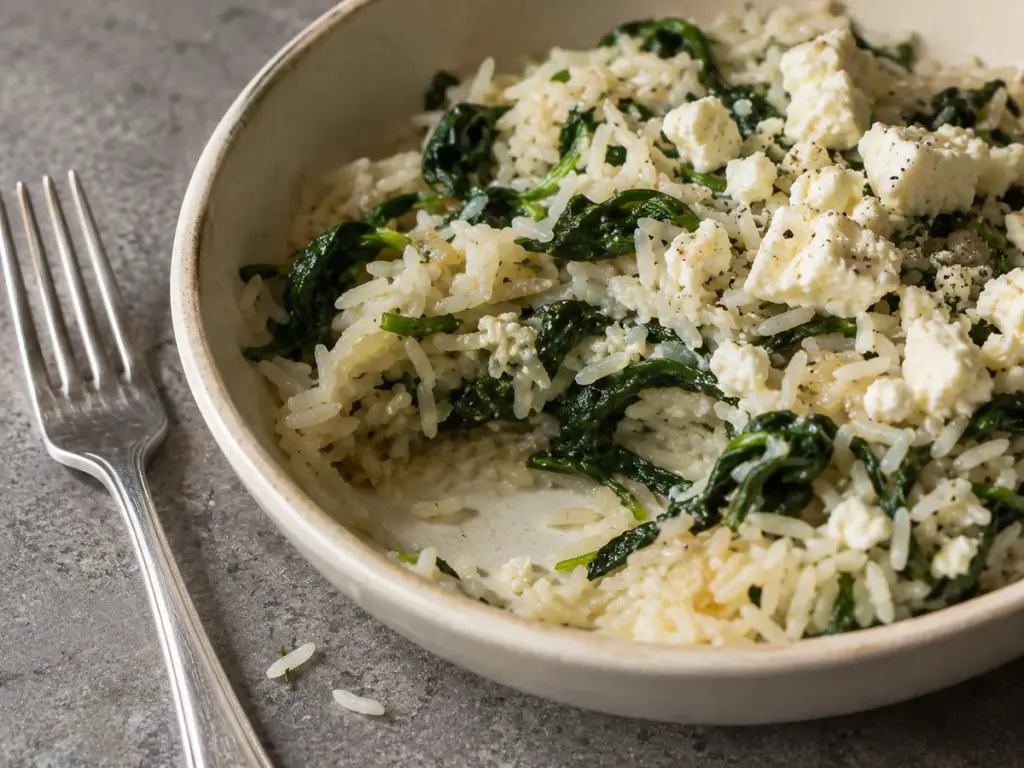
Feta is salty, so wait to season until you have stirred it in.
Ingredients (for about 4 side servings)
- 1 cup long-grain white rice
- 2 cups vegetable broth
- 2 tablespoons olive oil
- 1 small onion, finely chopped
- 2 garlic cloves, minced
- 3 cups fresh spinach, washed and roughly chopped
- ½ cup crumbled feta
- Juice of ½ lemon, ¼ teaspoon black pepper and salt to taste
Instructions (about 30 minutes)
- Cook the onion in the oil over medium heat for 3 to 4 minutes, then add the garlic for 1 minute.
- Stir in the rice for 2 minutes.
- Add the broth and pepper, bring to a boil, cover and simmer on low for 15 minutes.
- Take the pot off the heat, stir in the spinach, cover and let it wilt for 3 to 4 minutes.
- Fluff the rice, stir in the feta and lemon juice and season with salt if needed.
Fresh spinach shrinks to a small fraction of its volume as it wilts, which is why 3 cups of leaves fit in the pot.
Swaps
- Kale or Swiss chard make a heartier pot than spinach; slice them small and give them a few extra minutes under the lid.
- Goat cheese or ricotta gives a creamier, milder pot than feta.
- If you use frozen spinach, thaw it and squeeze it dry first, because otherwise it adds water to the rice.
The lemon goes in at the end so it stays bright against the salty feta.
17. Peas and Carrots Rice Medley
Nothing in this pot is spicy or sharp, so it works when you are feeding children or picky eaters. Dice the carrots small, about ¼ inch, so they soften in the 5 minutes they get in the skillet while the rice cooks.
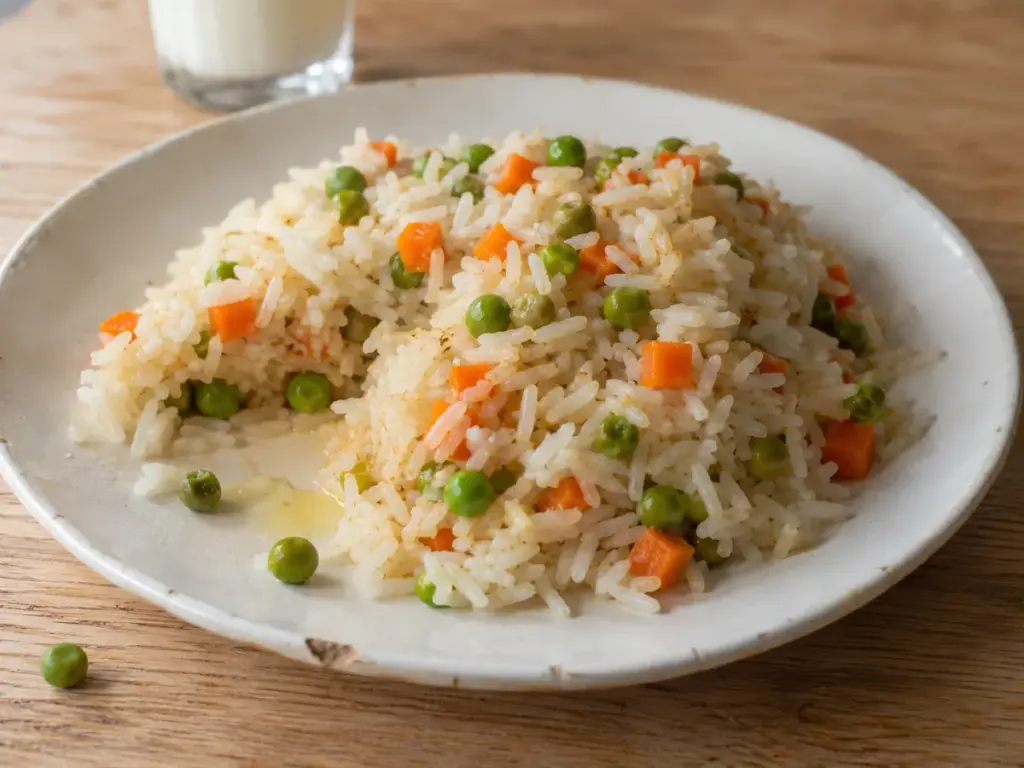
Fresh and frozen peas need the same 2 to 3 minutes just to heat through, so they go into the skillet after the carrots have softened, and overcooked peas turn gray-green and soft.
Ingredients (for about 4 side servings)
- 1 cup long-grain white rice
- 2 cups water
- 1 cup fresh or frozen peas, thawed if frozen
- 1 cup carrots, peeled and diced into ¼-inch cubes
- 2 tablespoons butter or olive oil
- ½ teaspoon salt and ¼ teaspoon black pepper
Instructions (about 20 minutes)
- Bring the rice and water to a boil, cover, simmer on low for 15 minutes and rest off the heat for 5 minutes.
- Meanwhile, cook the carrots in the butter or oil over medium heat for about 5 minutes, until they start to soften.
- Add the peas and cook for 2 to 3 minutes, until heated through.
- Fluff the rice, stir in the vegetables and season with salt and pepper.
Swaps
- Frozen mixed vegetables save the chopping; heat them through in the skillet before they join the rice.
- Stir in parsley, dill or chives at the end for freshness.
18. Cauliflower Rice Pilaf with Almonds and Cranberries
This pilaf has no rice in it, so it works as a low-carb side. One medium head of cauliflower, grated into rice-sized pieces, makes about 4 cups and cooks in 5 to 7 minutes, with no rice to simmer or rest.
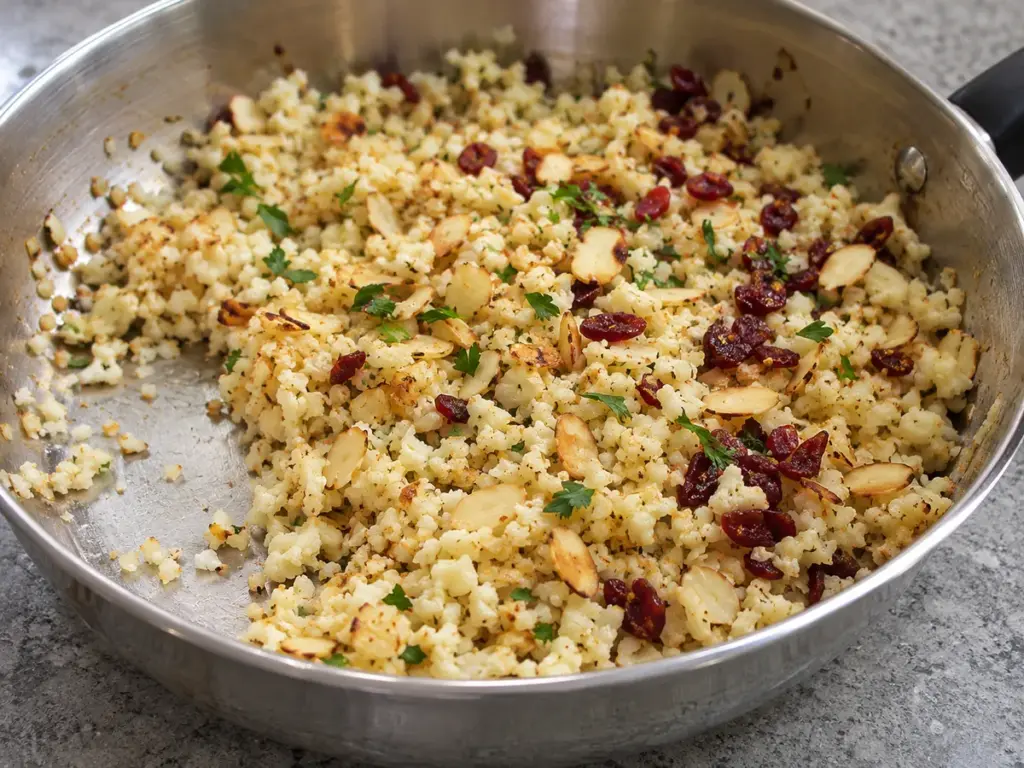
Stop cooking while you can still feel a little bite, because grated cauliflower turns watery and soft quickly.
The toasted almonds add crunch and the cranberries add sweetness. Grated cauliflower also carries a one-skillet chicken dinner.
Ingredients (for about 4 cups of grated cauliflower)
- 1 medium head cauliflower, grated (about 4 cups)
- ½ cup sliced almonds
- ⅓ cup dried cranberries, chopped if large
- 2 tablespoons olive oil
- 1 small onion, finely chopped
- 2 garlic cloves, minced
- ¼ teaspoon ground cinnamon
- ½ teaspoon salt, ¼ teaspoon black pepper and 2 tablespoons chopped parsley
- ¼ cup vegetable or chicken broth (optional)
Instructions (about 15 minutes)
- Toast the almonds in a dry skillet over medium heat for about 3 minutes, until golden, and set them aside.
- Cook the onion in the oil over medium heat for 3 to 4 minutes, then add the garlic and cinnamon for 1 minute.
- Add the cauliflower and the broth, if using, and cook, stirring often, for 5 to 7 minutes until softened with some bite left.
- Take the skillet off the heat, stir in the almonds and cranberries, season with salt and pepper and top with parsley.
Grate the cauliflower on a box grater or pulse it in a food processor in short bursts, stopping when the pieces look like rice. Frozen riced cauliflower sheds water, so cook it in a wide, hot skillet until the pan is dry before the almonds go in.
Swaps
- Pecans or walnuts take the place of the almonds and toast in the dry skillet the same way.
- Golden raisins or chopped dried apricots are less tart than the cranberries.
- Finely chopped broccoli replaces the cauliflower with a similar cooking time.
This pilaf does not keep as well as the rice pots, because grated cauliflower softens and weeps in the fridge. Reheat it in a dry skillet, and serve it beside poultry or fish.
19. Ginger Sesame Fried Rice
Fried rice starts with rice that was cooked, cooled and refrigerated within 2 hours (1 hour above 90°F), because cooked rice can carry spores of Bacillus cereus that make a toxin when it cools slowly (NC State Extension). The chilled grains are also drier, so they fry into separate pieces and do not steam into a paste.
Toasted sesame oil is a seasoning oil, so it goes in with the soy sauce at the end and the vegetable oil does the frying. Scramble the eggs first and set them aside so they stay in soft pieces.
Ingredients (for about 4 side servings)
- 3 cups cooked white rice, chilled (overnight is best)
- 2 large eggs, beaten
- ½ cup frozen peas and diced carrots
- 1 tablespoon toasted sesame oil
- 1 tablespoon vegetable oil
- 1 tablespoon fresh ginger, finely grated
- 3 garlic cloves, minced
- 3 scallions, sliced, whites and greens separated
- 2 teaspoons soy sauce
- ½ teaspoon salt and ¼ teaspoon black pepper
Instructions (about 10 minutes)
- Heat the vegetable oil in a wok or large nonstick skillet over medium-high heat, scramble the eggs for about 1 minute until just set, and move them to a plate.
- Cook the ginger and garlic in the same pan for 30 seconds, then the scallion whites for 30 seconds.
- Raise the heat to high, add the cold rice and the frozen peas and carrots, break up the clumps and stir-fry for 4 to 5 minutes until everything is steaming hot, at least 165°F, and some grains crisp.
- Drizzle in the sesame oil and soy sauce, return the eggs and toss to coat.
- Off the heat, stir in the scallion greens, salt and pepper.
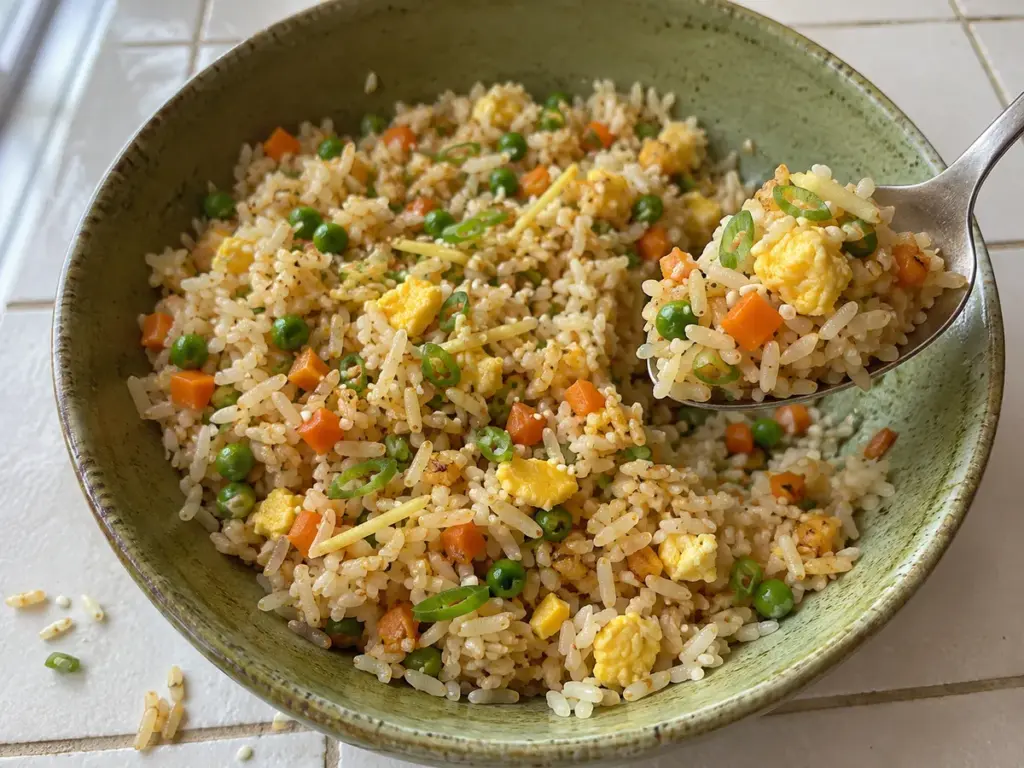
A wok or the widest skillet you own works best, because the rice needs contact with hot metal to crisp, and a crowded pan steams it. If you cook rice only for this dish, spread it in a thin layer on a sheet pan and refrigerate it within 2 hours so it dries and chills fast.
Swaps
- Avocado or olive oil replaces the sesame oil, but the nutty flavor goes with it.
- Cold jasmine or brown rice works in place of white rice when you chill it within 2 hours of cooking, and brown rice stays chewier.
- Chives or chopped leeks can stand in for the scallions.
Sesame oil, eggs and soy sauce are all major allergens, so tell guests what is in the pan.
20. Pineapple Fried Rice
The curry powder is what moves this fried rice toward the Thai pineapple fried rice (khao pad sapparot) style, and the cashews supply the crunch. You chill the cooked jasmine rice the same way as for any fried rice, within 2 hours of cooking and refrigerated.
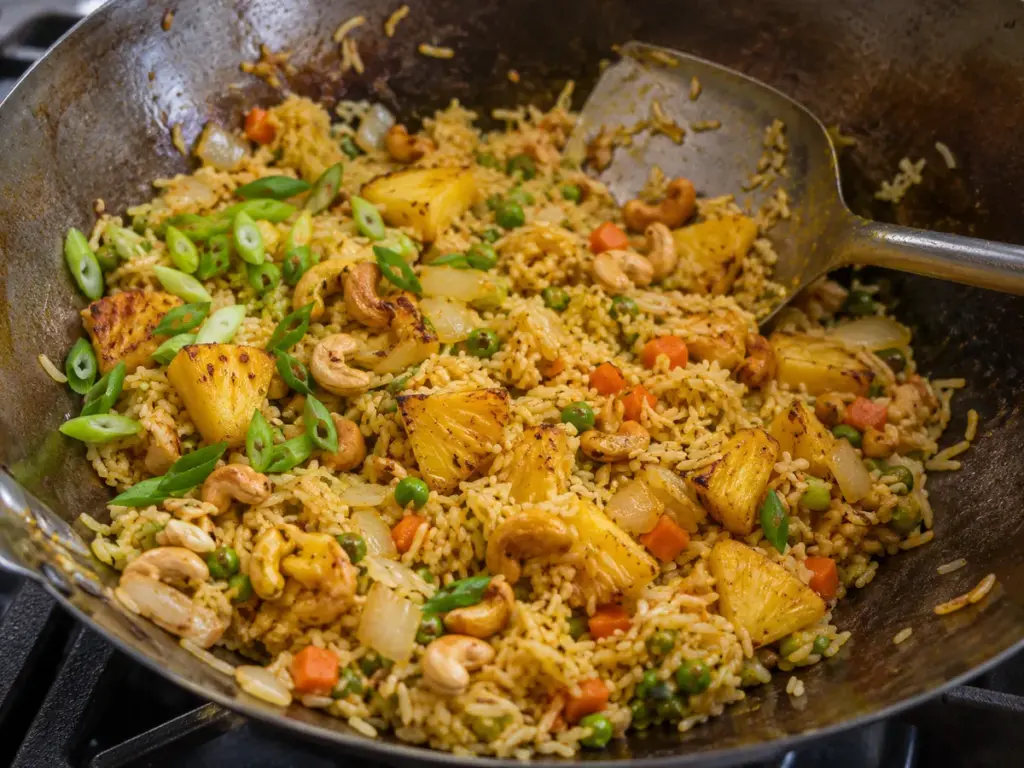
Pineapple goes in near the end, because wet fruit makes the rice soggy.
Ingredients (for about 4 side servings)
- 3 cups cooked jasmine rice, chilled (overnight is best)
- 1 cup fresh pineapple chunks
- ½ cup cashews
- 2 tablespoons vegetable oil
- 1 small onion, diced
- 2 garlic cloves, minced
- ½ cup frozen peas and carrots
- 2 tablespoons soy sauce
- 1 teaspoon curry powder
- 2 green onions, sliced, plus salt and black pepper
Instructions (about 15 minutes)
- Cook the onion in the oil in a large skillet over medium heat for about 3 minutes.
- Add the garlic and curry powder for 1 minute, then the peas and carrots for 2 to 3 minutes.
- Raise the heat to medium-high, add the rice and break up clumps, stirring for about 3 minutes until it is heated through.
- Fold in the pineapple and cashews, pour in the soy sauce and cook for 2 minutes.
- Top with the green onions and adjust the salt and pepper.
Curry powder is a blend, so brands differ in heat and turmeric; add it in the pan with the garlic and taste before adding more.
Swaps
- Canned pineapple chunks work in place of fresh when they are packed in juice and drained well.
- Peanuts or almonds give a different crunch than the cashews, and peanuts are a separate major allergen, so tell guests.
7 Which Swaps Work in Most of These Rice Sides?
A few changes work in nearly every pot, so each recipe lists only the swaps that belong to its own dish.
- Brown rice replaces white or jasmine at 2 ¼ cups of liquid per cup of rice and 40 to 45 minutes, so start it first and add herbs, cheese and vegetables at the end.
- Chicken broth makes a richer pot than vegetable broth, but the pot is no longer vegetarian.
Smaller swaps cover the fat, the garlic, the herb, the grain, the coconut milk and the fried rices:
- Oils trade places: olive, avocado or coconut oil replaces neutral vegetable oil, and melted butter replaces olive oil, with a richer taste.
- Dairy-free pots: olive oil or a plant-based spread replaces butter, though the buttery flavor goes, and some spreads contain milk ingredients, so read the label.
- Dried garlic is a starting amount: use about ⅛ teaspoon of garlic powder per clove, so ¼ to ⅜ teaspoon for the 2 or 3 cloves in these pots, stir it in with the rice and taste.
- Parsley fills the green role for anyone who finds cilantro soapy.
- Quinoa or farro replace the rice in pilaf-style pots such as the mushroom and thyme, sundried tomato and spinach and feta pots, with a different texture; follow the package for rinsing, liquid and time.
- In the turmeric coconut and coconut jasmine pots, light coconut milk, or milk with a drop of coconut extract, gives a lighter, thinner rice.
- Both fried rices take tamari labeled gluten-free in place of the soy sauce, or coconut aminos with a label check for gluten.
- Cooked shrimp, chicken or tofu turn either fried rice into a main; heat cooked meat to 165°F.
8 Is Brown Rice a Better Choice Than White Rice for These Sides?
Per 100 grams cooked, brown long-grain rice has about four times the fiber and three times the magnesium of enriched white long-grain rice, while the enriched white rice has more iron and folate because those two are added after milling (USDA FoodData Central: white and brown).
| Per 100 g cooked | White, enriched | Brown |
|---|---|---|
| Calories | 130 kcal | 123 kcal |
| Fiber | 0.4 g | 1.6 g |
| Magnesium | 12 mg | 39 mg |
| Iron | 1.2 mg | 0.56 mg |
| Folate | 58 mcg | 9 mcg |
Calories are nearly equal, so the trade is fiber and minerals against time: brown rice simmers 40 to 45 minutes against 15 to 18 for white. Any pot above that cooks in 2 cups of liquid can use brown rice at 2 ¼ cups and 40 to 45 minutes, with the herbs, cheese and vegetables added at the end.
FDA says that cooking rice in 6 to 10 parts water and draining it cuts inorganic arsenic by 40 to 60 percent, depending on the rice, but it also removes 50 to 70 percent of the folate, iron, niacin and thiamine added to enriched white rice, and that rinsing has a minimal effect on arsenic (FDA). Pots that absorb all their liquid, like these, keep those nutrients.
9 How Much Rice Should You Cook for a Crowd?
A side serving is ¾ cup cooked, and 1 cup of dry white rice cooks to about 3 cups, which feeds four (Montana State University Extension). Brown rice swells to about 4 cups from the same cup, which covers five.
| Servings | Dry white rice | Cooked rice | Liquid at 1:2 |
|---|---|---|---|
| 4 | 1 cup | 3 cups | 2 cups |
| 8 | 2 cups | 6 cups | 4 cups |
| 12 | 3 cups | 9 cups | 6 cups |
| 16 | 4 cups | 12 cups | 8 cups |
Scale your liquid with the rice at the same ratio and pick a pot with room to spare: 3 cups of rice and 6 cups of water already fill 9 cups before the rice swells. A large batch may need a few extra minutes, so test a grain at the end of the simmer before the rest.
Each fried rice needs 3 cups of cooked rice, which is 1 cup of dry rice per pan.
10 How Long Does Uncooked Rice Keep?
Keep dry rice in an airtight container in the pantry. USDA FoodKeeper gives unopened white or wild rice 2 years and unopened brown rice 1 year.
Once a bag is open, either kind keeps 1 year in the pantry or 6 months in the refrigerator.
11 Can You Make These in a Rice Cooker or an Instant Pot?
Many of them work in a rice cooker, with three changes.
- Measure with your cooker's cup. The cup that comes with a Zojirushi rice cooker holds 180 milliliters, which is ¾ of a US cup (Zojirushi), and other brands differ, so measure rice and water with the cup that came with your cooker and follow the fill lines in the bowl.
- Soften the aromatics first. Cook onion, garlic and spices in a skillet or on the cooker's sauté setting, then add the rice and liquid.
- Finish after the click. Stir in lemon, lime, cheese and herbs after the cooker clicks off, as you would on the stove.
The Instant Pot version of cilantro lime rice uses 1 cup of water per cup of rice, 4 minutes at high pressure and a 10-minute natural release.
12 Which Rice Side Goes with Which Main Dish?
Start from the main dish and pick the rice that supplies what it lacks.
- For baked fish, choose lemon herb pilaf, garlic butter Parmesan rice, spinach and feta rice or carrot turmeric rice.
- For roast chicken, choose Spanish saffron rice, mushroom and thyme brown rice, garlic butter Parmesan rice or spinach and feta rice.
- For tacos, fajitas and grilled meat, choose cilantro lime rice or Mexican street corn rice.
- For curry and spicy dishes, choose turmeric coconut rice, coconut jasmine rice or cilantro mint rice.
- For kebabs and stews, choose Turkish rice with vermicelli or sundried tomato and basil rice.
- For pork chops, choose the peas and carrots rice medley.
- For grilled chicken, choose lemon herb pilaf, carrot turmeric rice or pineapple fried rice.
- For grilled shrimp, choose Spanish saffron rice, coconut jasmine rice or pineapple fried rice.
- For vegetarian dinners, roasted vegetables and beans, choose cumin rice with chickpeas, mushroom and thyme brown rice, sundried tomato and basil rice or tomato and herb rice.
13 How Do You Season Rice So It Is Not Bland?
Rice takes on the flavor of its cooking liquid, so season the liquid, then taste the finished pot. Most recipes here use ½ teaspoon of salt for each cup of rice, or broth in place of water.
Regular broth carries its own salt, so you should taste the pot before you add more, and choose low-sodium broth when cheese, soy sauce or sun-dried tomatoes go in.
You toast the rinsed rice in butter or oil for 1 to 2 minutes in the pilafs, which gives a nuttier taste and coats every grain. Lime, lemon and fresh herbs go in after the rest, because they lose their brightness when they simmer.
14 What Do You Do When the Rice Goes Wrong?
Three problems come up when you cook these pots, and each has a quick fix.
- Scorched bottom comes from heat that stayed too high after the lid went on. Take the pot off the heat and spoon out the top, and leave the stuck layer behind.
- Too salty comes from salted broth plus cheese or soy sauce. Stir in unsalted cooked rice, and use low-sodium broth next time.
- Clumpy fried rice comes from warm, freshly cooked rice or a crowded pan. Chill the rice first and fry it in a wide pan.
15 Which of These Rice Sides Contain Common Allergens?
FDA names nine major food allergens: milk, eggs, fish, crustacean shellfish, tree nuts, peanuts, wheat, soy and sesame, and sesame joined the list on January 1, 2023 (FDA). Nine of the 20 pots contain at least one of them.
- Garlic butter Parmesan rice contains milk. Use olive oil and nutritional yeast.
- Cilantro mint rice contains milk. Use olive oil for the butter.
- Spinach and feta rice contains milk. Leave out the feta.
- Mexican street corn rice contains milk and egg. Skip the cotija and use egg-free mayonnaise.
- Turkish rice with vermicelli contains wheat and milk. Use olive oil and leave out the vermicelli.
- Cauliflower rice pilaf contains tree nuts. Use pumpkin seeds for the almonds.
- Jasmine rice with cashews and raisins contains tree nuts and milk. Use sunflower seeds and olive oil.
- Ginger sesame fried rice contains egg, soy, wheat and sesame. Use tamari labeled gluten-free, and leave out the eggs and sesame oil.
- Pineapple fried rice contains tree nuts, soy and wheat. Use tamari labeled gluten-free and sunflower seeds.
Broth, soy sauce and mayonnaise carry their own allergens, so read each label on packaged ingredients.
16 How Do You Store and Reheat Cooked Rice Safely?
Warning
Refrigerate cooked rice within 2 hours of cooking, or within 1 hour when the room is above 90°F, because Bacillus cereus spores survive cooking and make a toxin when rice cools slowly.
The toxin is not destroyed by reheating, so the fix is fast cooling, not extra cooking (NC State Extension). Spread large batches in a shallow layer or divide them into small containers so the middle chills quickly, and never leave rice in a switched-off rice cooker, oven or microwave overnight.
- Refrigerator: FSIS gives all cooked leftovers, rice included, 3 to 4 days.
- Freezer: USDA FoodKeeper lists cooked rice at 6 months, and rice and vegetable dishes without meat or egg at 1 to 2 months, so freeze pots with cheese, egg or meat for the shorter time.
Heat only the portion you plan to eat to 165°F, measured with a food thermometer, and add a splash of water and a lid so the steam loosens the grains.
Cool the rice in shallow containers, then freeze it flat in zip bags in single portions so it thaws fast. Thaw it overnight in the refrigerator, or reheat it from frozen with a splash of water under a lid, until it reaches 165°F.
Rice dressed with mayonnaise, cheese or soy sauce keeps to the same clock. For a make-ahead pot, the brown rice pilaf with herbs and toasted pine nuts is written for reheating and uses the same 2 ¼ cups of broth per cup of brown rice as the mushroom and thyme brown rice.
17 Which Rice Sides Hold Up Best in the Refrigerator?
The tomato, turmeric, cumin and coconut pots get their flavor from ingredients cooked into the rice, so they change least in the refrigerator.
The lime, mint, basil, lemon and spinach pots lose their fresh herb taste first, so keep a fresh handful of herbs or zest to stir in after reheating.
The street corn, cauliflower and fried rices do not wait well: the dressing and the grated cauliflower turn watery, and fried rice is best the day it is made.
Frequently Asked Questions
1 cup of raw white rice makes about 3 cups cooked, according to Montana State University Extension, which is four servings at ¾ cup each. Brown rice makes about 4 cups. The saffron rice uses 2 cups of rice, so it serves eight.
Mushy rice has too much liquid or was stirred after boiling, which releases starch, so measure again and leave it alone under the lid. Hard rice needs more steam: add 2 to 3 tablespoons of water, cover tightly and cook on the lowest heat for 5 more minutes.
Long-grain white, jasmine and unsoaked basmati trade places at the same 1:2 ratio and 15 to 18 minutes. Brown rice needs 2 ¼ cups of liquid per cup and 40 to 45 minutes, so start it earlier. Arborio and other short-grain rices turn creamy and sticky in a pilaf.
Every pot made with vegetable broth or water is meatless, and chicken broth is only an option in some. Parmesan is usually made with animal rennet, so strict vegetarians look for a cheese labeled vegetarian. Rice is naturally gluten-free, but the Turkish vermicelli rice contains wheat pasta and both fried rices use soy sauce, which usually contains wheat, so use tamari labeled gluten-free. Butter, cheese or mayonnaise appears in the garlic Parmesan, cilantro mint, cashew, Turkish, street corn and spinach rices.
Rinse jasmine, basmati and brown rice until the water runs nearly clear, and skip the rinse for enriched U.S. long-grain white, which loses added nutrients in the water (Montana State University Extension). FDA adds that rinsing washes iron, folate, thiamine and niacin off polished and parboiled rice and has a minimal effect on arsenic.
A pilaf toasts the rice, often with onion, garlic or noodles, in fat before it simmers in seasoned broth, while plain steamed rice cooks in water alone. The lemon herb, saffron, Turkish and mushroom pots here follow the pilaf method.
The cumin rice with a 15-ounce can of chickpeas and the mushroom brown rice are the filling ones. Spinach and feta rice with a fried egg also works.
Avoid it. Reheat only the portion you plan to eat, because repeated reheating and cooling passes the rice through temperatures where bacteria and toxins can grow (NC State Extension). Bring that portion to 165°F.
Sources
- USA Rice: rice cooking chart (liquid ratios and times)
- Zojirushi: how to measure rice in a rice cooker
- Montana State University Extension: rice fact sheet (rinsing, yield, storage)
- USDA FSIS: leftovers and food safety
- NC State Extension: safety of leftover rice
- USDA FoodKeeper: cooked rice and leftovers, refrigerator and freezer times
- USDA FoodData Central: white long-grain rice, enriched, cooked
- USDA FoodData Central: brown long-grain rice, cooked
- FDA: what you can do to limit exposure to arsenic
- FDA: sesame is the ninth major food allergen

Andrew Gray is a seasoned food writer and blogger with a wealth of experience in the restaurant and catering industries. With a passion for all things delicious, Andrew has honed his culinary expertise through his work as a personal chef and caterer.
His love for food led him to venture into food writing, where he has contributed to various online publications, sharing his knowledge and insights on the culinary world. As the proud owner of CooksCrafter.com, Andrew covers a wide range of topics, including recipes, restaurant reviews, product recommendations, and culinary tips.
Through his website, he aims to inspire and educate fellow food enthusiasts, offering a comprehensive resource for all things food-related.