Short Answer
The best side dishes for fish and chips are mushy peas, tartar sauce and a lemon-dressed slaw.
- A plate of fried fish and fried potatoes needs something soft and green plus something sharp.
- Add malt vinegar and one cold pickle.
- Leave out a second fried starch.
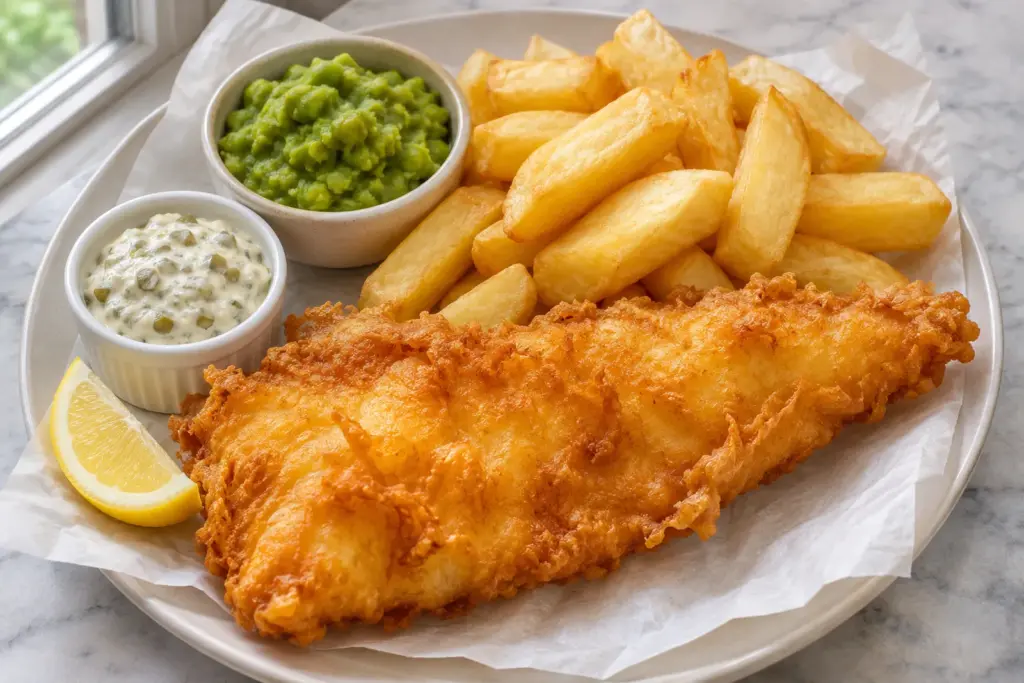
Fish and chips already puts two fried foods on your plate, a crisp batter and thick-cut chips (what Americans call steak fries), and the cod or haddock underneath is lean and mild. Give the plate acid and something green, not a second fried starch, and let the sauces and pickles supply the sharpness the fish lacks.
1 What Goes Well with Fish and Chips?
The batter is crisp and oily, the chips are salty with soft centers, and the fish is mild, which leaves three gaps on your plate: acid, something green and a cold crunch. A second fried potato or a creamy dip puts more oil on a plate that is already oily.
Cod is the classic fish and haddock is the other common choice. If the counter has neither, tilapia and other lean cod stand-ins fry the same way, because they are mild too.
Malt vinegar is a brown vinegar brewed from malted barley, and a splash over the chips is the sharpest part of the plate. If your shelf has none, malt vinegar stand-ins keep that edge.
| Side | Job | What it adds to the plate |
|---|---|---|
| Mushy Peas | Soft green | A coarse, sweet mash that takes a splash of vinegar |
| Tartar Sauce | Acid | Cold, creamy brine from pickles, capers and lemon |
| Curry Sauce | Warm sauce | A mild, slightly sweet dip for the chips |
| Watercress with Lemon | Raw green | Peppery leaves and lemon where the plate has no raw vegetable |
| Baked Beans | Warm sauce | Sweet beans in tomato sauce against salty batter |
| Coleslaw with Lemon Dressing | Cold crunch | Thin cabbage in a light lemon dressing |
| Pickled Onions | Acid | A sharp, crunchy bite between mouthfuls of fish |
| Tomato and Cucumber Salad | Cold crunch | Juicy, vinegar-dressed slices against hot fried food |
Choose one sauce for the chips, because tartar sauce is cold and sharp while curry sauce is warm and mild.
Tartar Sauce Plate
The sauce is cold and sharp from pickles, capers and lemon, so it brightens the fish, and you can pair it with the lemon slaw and the pickled onions.
It is a mayonnaise sauce, so if you serve a creamy slaw beside it, the plate turns heavy, and the slaw needs the lemon dressing.
Curry Sauce Plate
The sauce is warm, mild and slightly sweet, so it turns the chips into the main attraction and sits well with cold pickled onions or a tomato salad.
A dark curry sauce poured over the fish softens the batter, so it goes on the chips only.
2 Which Sauces Go with Fish and Chips?
The fish and the chips arrive plain apart from salt, so you season most of the plate with the sauce. Fried shrimp usually gets cocktail sauce or remoulade, but fish and chips takes tartar sauce, which cuts the oil with brine and lemon.
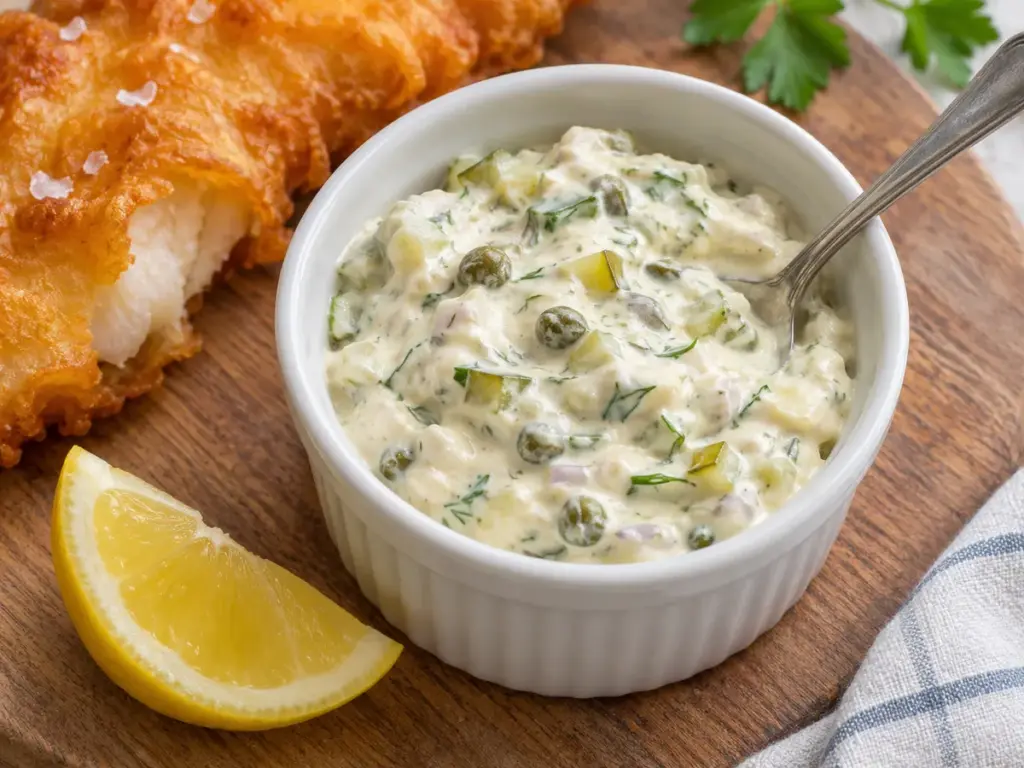
1. Tartar Sauce
Tartar sauce is mayonnaise folded with chopped pickles, capers and lemon, and the brine and acid are what cut through hot batter. Chop the pickles fine so every spoonful carries some. If you have no capers, chopped green olives or pickled peppers add the same briny bite.
Make the tartar sauce ahead and let the flavors settle in the fridge.
Full recipe: Tartar Sauce Recipe from Natasha's Kitchen
2. Curry Sauce
A mild curry sauce for the chips is smooth and slightly sweet, closer to gravy than to a hot restaurant curry. Carrots give the sauce its sweetness, and a smaller dose of chili powder keeps it mild enough for chips. Spoon it over the chips and keep it off the fish, so the batter stays crisp.
Full recipe: Curry Sauce Recipe (Instant Pot and Stovetop) from Swasthi's Recipes
3 Which Vegetables Go with Fish and Chips?
Vegetables work best soft or raw on this plate, because the batter already supplies the crunch.
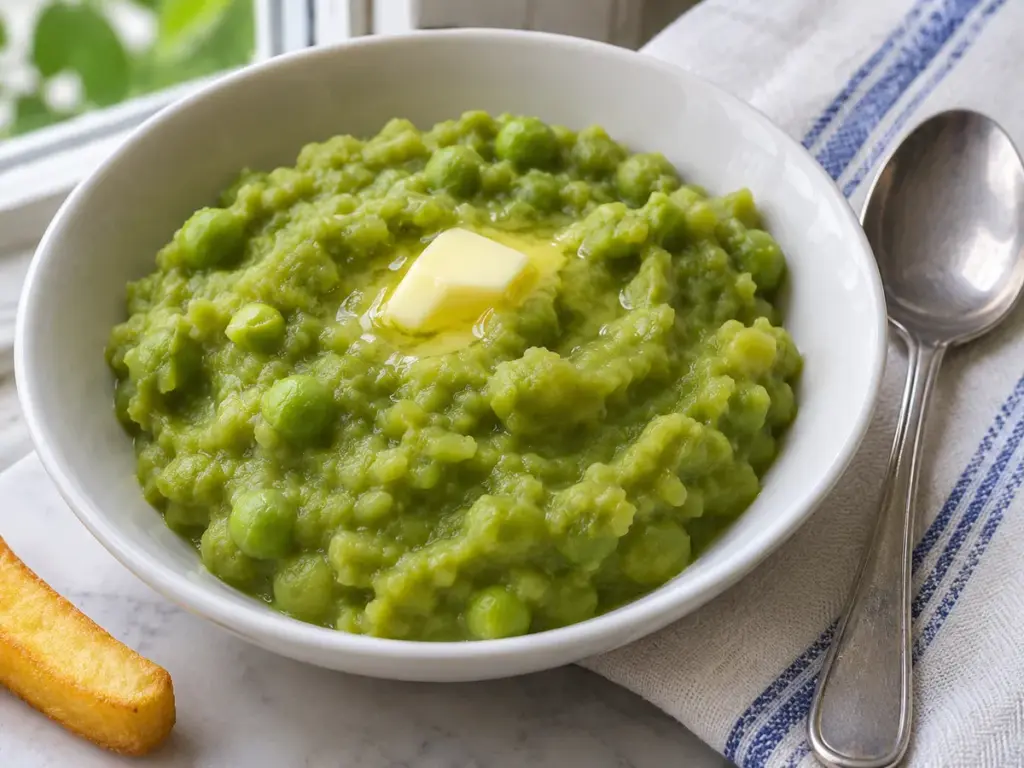
3. Mushy Peas
Traditional mushy peas start with dried marrowfat peas that soak overnight and then simmer until they collapse, and the texture should stay coarse and spoonable, not smooth. If you use ordinary green peas with cream instead, they need no soaking. Stir a splash of malt vinegar into your peas just before you eat them, and they pick up the sharp edge they are known for.
Full recipe: Mushy Peas from Allrecipes
4. Watercress with Lemon
Watercress is a peppery leaf, and lemon juice gives a home plate the acid it lacks. Dress it just before serving, because oil and lemon wilt the leaves.
Full recipe: Lemony Watercress Salad from Sunset
5. Baked Beans
Canned baked beans in tomato sauce are a common British partner for chips, and their sweetness plays against the salty batter. If you start from dried beans, tomatoes, muscovado sugar and English mustard, the beans turn richer than the canned kind, but they need an overnight soak and about 1 hour 30 minutes of simmering.
Tip
Serve a small spoonful beside the chips, because beans that run under the fish soften the batter.
Full recipe: How to Make Baked Beans from Lovefood
4 Which Cold Sides Cut Through the Batter?
A cold, sour side gives you something to reset against between mouthfuls of hot fish.
6. Coleslaw with Lemon Dressing
Thin cabbage in a lemon dressing, rather than a heavy mayonnaise one, gives the plate a clean crunch against the soft chips. Toss it just before the fish comes out, because dressed cabbage loosens as the salt and acid pull water from it. Add toasted sunflower and pumpkin seeds if you want a nutty bite.
Full recipe: Simple Healthy Slaw from Cookie and Kate
7. Pickled Onions
Chip shops serve small whole onions pickled in malt vinegar, and the sharp bite is what cuts the oil between mouthfuls of fish. If you slice red onions thin and pickle them in vinegar and sugar, they are ready in 30 minutes, which is quicker and milder and suits a weeknight plate.
Full recipe: Quick-Pickled Onions from Cookie and Kate
8. Tomato and Cucumber Salad
Juicy tomato and crisp cucumber in a vinegar dressing give you something cold against hot fried fish. If you salt the cucumber slices and drain them before you dress the salad, it does not pool water around the chips. Thin red onion adds more bite.
Full recipe: Cucumber Tomato Salad (Quick & Easy) from Wholesome Yum
5 What Temperature Should the Fish Reach?
Food Safety
The USDA says to cook fish to an internal temperature of 145°F.
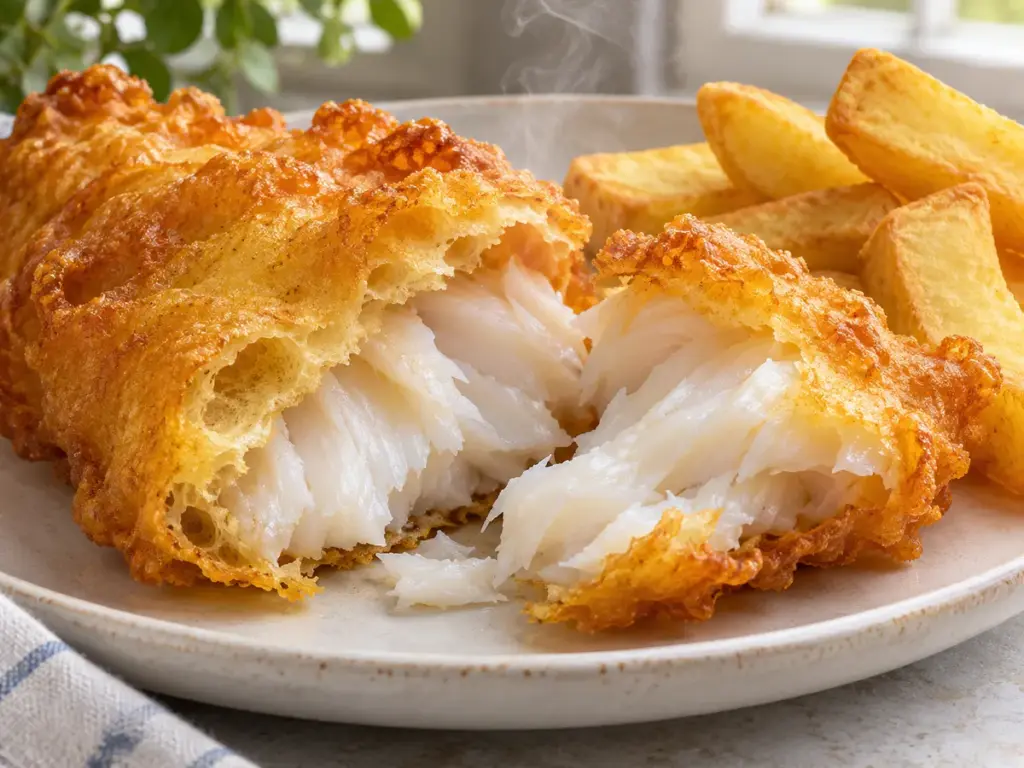
Batter browns on the outside before a thick fillet cooks through, so slide an instant-read thermometer into the thickest part. If the batter is already deep gold and the center reads below 145°F, finish the fillet on a rack in the oven instead of leaving it in the oil, so the crust does not burn. Fish pie is the other oven route, and its mashed potato topping means you serve peas or greens and no chips at all.
6 Which Sides Should You Skip with Fish and Chips?
Four extras put a second round of fried starch, peas, pickle or warm sauce on the plate:
- A second fried starch. Sweet potato fries, potato wedges and scalloped potatoes repeat the chips, and the plate has no room for another heavy potato.
- A second pea side. A minted pea salad next to mushy peas puts peas on the plate twice.
- A second pickle. Bread and butter pickles beside pickled onions give you two sweet-sour bites that taste alike.
- Two warm sauces. Curry sauce and baked beans are both sweet and saucy, so pick one.
7 How Do You Time the Plate?
The cold sides need the most lead time, and the fish comes last because it must go to the table while the batter is still crisp.
- Start the onions in vinegar. Slice them and let them sit, because they need 30 minutes, and shred the cabbage but leave it undressed.
- Chill the tartar sauce and cucumber. Mix the sauce, salt and drain the cucumber, and keep both cold until the fish is ready.
- Hold the peas and one warm sauce. Mushy peas, and either curry sauce or baked beans, hold on a low burner while the rest cooks.
- Keep the chips on a rack. Cook the chips and hold them in a warm oven, or make thinner air-fried fries if you have no deep fryer.
- Fry the fish last. Fry in small batches, check for 145°F, dress the slaw and watercress, and serve at once.
Sources

Andrew Gray is a seasoned food writer and blogger with a wealth of experience in the restaurant and catering industries. With a passion for all things delicious, Andrew has honed his culinary expertise through his work as a personal chef and caterer.
His love for food led him to venture into food writing, where he has contributed to various online publications, sharing his knowledge and insights on the culinary world. As the proud owner of CooksCrafter.com, Andrew covers a wide range of topics, including recipes, restaurant reviews, product recommendations, and culinary tips.
Through his website, he aims to inspire and educate fellow food enthusiasts, offering a comprehensive resource for all things food-related.