
Short Answer
Vegetable side dishes cook in an oven, a skillet, a steamer or on the grill, and these 20 take 3 minutes (sautéed spinach) to 35 minutes (lentil and beet salad).
- Garlic roasted broccoli is the easiest start: one baking sheet, 18 to 22 minutes at 425°F.
- Seven use the oven, seven a skillet or steamer, four need little or no cooking and two use the grill.
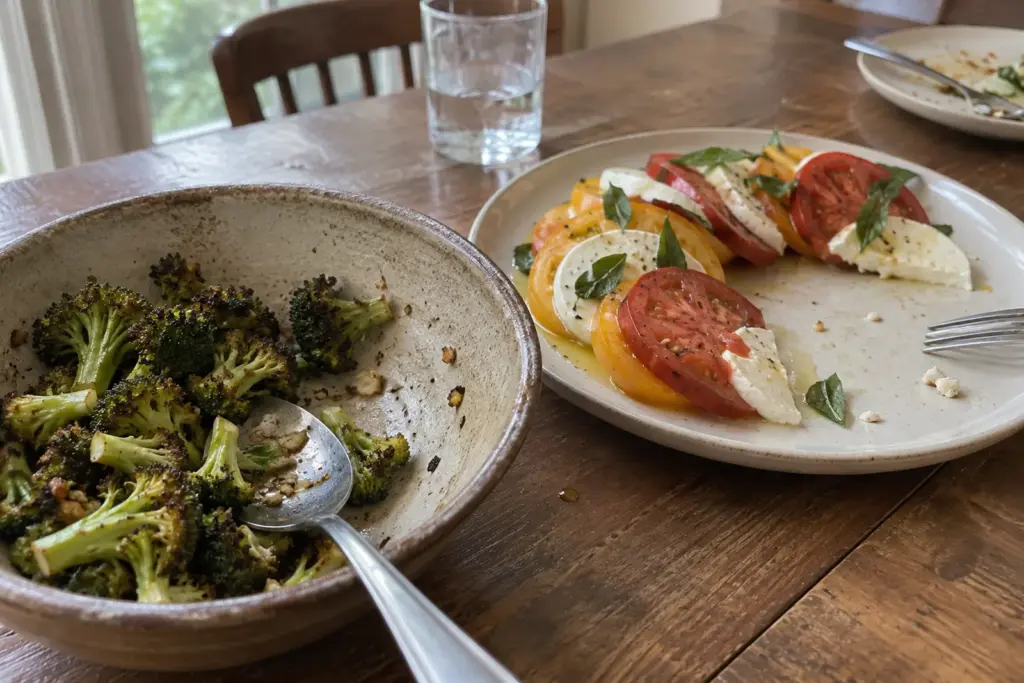
Each of these 20 side dishes gives a main dish what it lacks, such as crunch beside something soft, acid beside something rich or color beside a beige dinner. They are sorted by how they cook, because on a weeknight you usually have the oven, one burner or the grill free, and rarely more than one.
1 Which Vegetable Side Should You Make Tonight?
Your free appliance narrows the 20 faster than taste does. Pick the method that matches the oven, burner or grill you have free, then the vegetable that suits your main dish.
Oven (7 sides)
- Garlic Roasted Broccoli: 425°F, 18 to 22 minutes; best beside roast chicken, pasta, pork chops
- Honey-Glazed Carrots: 400°F, 20 to 25 minutes; best beside lamb chops, roast chicken, plain pork
- Roasted Brussels Sprouts with Balsamic Glaze: 400°F, 20 to 25 minutes; best beside pork, turkey, chicken thighs
- Roasted Sweet Potato Wedges: 425°F, 25 to 30 minutes; best beside burgers, grilled chicken, pork chops
- Spiced Roasted Cauliflower Florets: 425°F, 25 to 30 minutes; best beside rice dishes, lamb, chicken
- Roasted Butternut Squash with Sage: 400°F, 25 to 30 minutes; best beside turkey, pork roast, ham steak
- Warm Lentil and Roasted Beet Salad: oven and stove, about 35 minutes; best beside roast chicken, sausages, a vegetarian plate
Skillet or steamer (7 sides)
- Lemon Parmesan Green Beans: skillet, 6 to 9 minutes; best beside meatloaf, baked fish, roast beef
- Creamy Garlic Mashed Cauliflower: steamer and blender, 10 to 12 minutes of steaming; best beside steak, meatloaf, pot roast
- Sautéed Spinach with Garlic and Lemon: skillet, 3 to 4 minutes; best beside salmon, steak, eggs
- Glazed Baby Carrots with Dill: skillet, 11 to 14 minutes; best beside roast chicken, turkey, pork loin
- Crispy Sautéed Cabbage with Apples: skillet, 16 to 17 minutes; best beside pork chops, sausages, roast chicken
- Simple Steamed Asparagus with Lemon Butter: steamer, 3 to 5 minutes; best beside salmon, eggs, chicken
- Sautéed Mushrooms with Thyme and Garlic: skillet, 9 to 11 minutes; best beside steak, pork chops, chicken
Little or no cooking (4 sides)
- Italian-Style Caprese Salad: no cooking, about 10 minutes of slicing; best beside grilled chicken, pasta, burgers
- Green Pea and Mint Salad: no cooking (or 1 to 2 minutes of boiling), about 10 minutes; best beside grilled lamb, grilled fish
- Cucumber and Radish Salad with Yogurt Dressing: no cooking, 10 minutes of chilling; best beside grilled meats, spiced dishes
- Zucchini Noodles with Cherry Tomatoes and Basil: no cooking, about 10 minutes; best beside shrimp, grilled chicken
Grill (2 sides)
- Grilled Vegetable Antipasto: grill, 4 to 5 minutes per side, plus 30 minutes in the marinade; best beside crusty bread, cheese, grilled sausages
- Grilled Corn on the Cob with Chili Lime Butter: grill, 10 to 12 minutes; best beside burgers, grilled chicken, ribs
When one oven has to feed a whole table, 400°F is the setting to build around, because the honey carrots, the Brussels sprouts, the butternut squash and the beets in the lentil salad all roast at it. The broccoli, sweet potato wedges and cauliflower need 425°F, so you can give them a second rack or a second pass.
The carrots, sweet potatoes and butternut bring their own sweetness, which doubles up when your main dish is already glazed.
2 Which Vegetable Sides Roast in the Oven?
Dry heat of 400 to 425°F browns the sugars on the cut faces of a vegetable, and that browning is most of the flavor. A crowded pan traps steam, which leaves the pieces soft and gray, so spread every pan in a single layer with space between the pieces and use two sheets when one looks full.
You get even browning by cutting pieces to the same size, drying washed vegetables before you oil them and stirring or turning once at the halfway point. Parsnips, fennel and radishes follow the same rules, and oven-roasted fennel with lemon and dill sits in the same 400 to 425°F range.
1. Garlic Roasted Broccoli
Broccoli roasted at 425°F for 18 to 22 minutes comes out with dark, crisp tips and stalks that still hold a little bite. The garlic goes on raw and minced so it coats the florets in the oil, and any clump that lands on bare pan burns well before the broccoli is done.
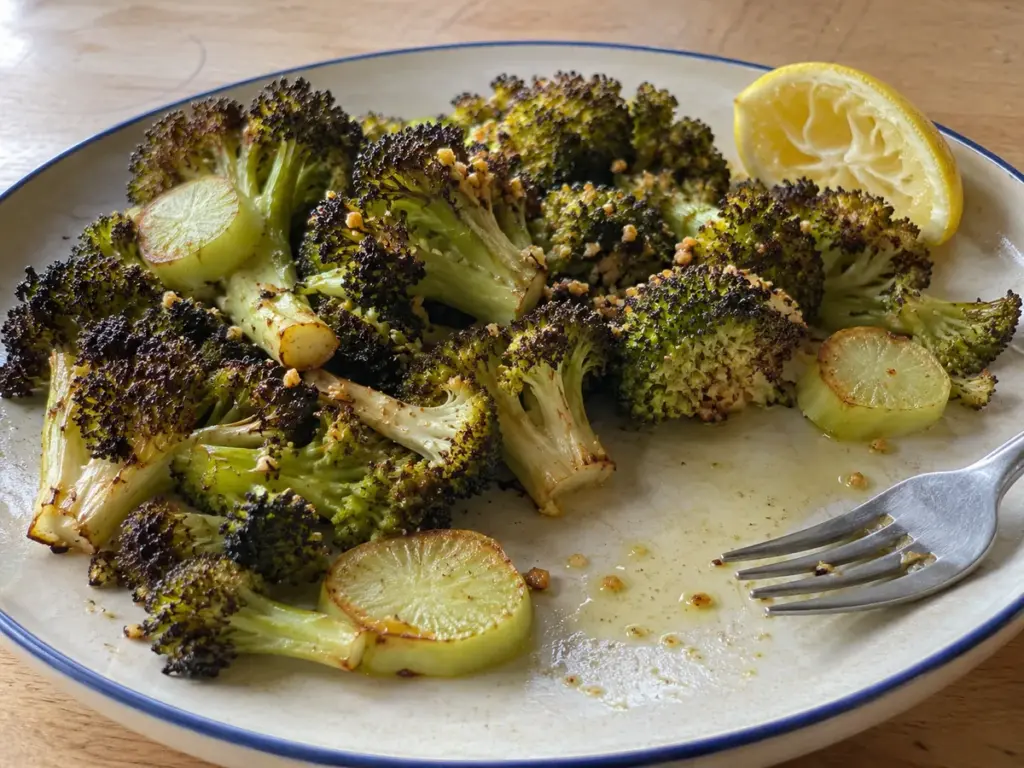
Cut the florets to about the size of a walnut, because tiny ones scorch while big ones stay raw in the middle. If you squeeze lemon over the pan after roasting, the broccoli tastes brighter, and a drizzle of peanut satay sauce turns it into a warm side for rice and grilled chicken.
Ingredients (for 1 large head of broccoli)
- 1 large head broccoli, cut into bite-sized florets
- 3 tablespoons extra-virgin olive oil
- 4 cloves garlic, minced
- ½ teaspoon salt
- ¼ teaspoon black pepper
- Lemon wedges (optional)
Instructions
- Heat the oven. Preheat the oven to 425°F and line a baking sheet with parchment paper or lightly grease it.
- Coat the florets. Toss the broccoli with the oil, garlic, salt and pepper until every piece shines.
- Spread them out. Scatter the florets on a baking sheet in one layer with a little space around each piece.
- Roast. Cook for 18 to 22 minutes, stirring halfway, until the tips are dark gold and crisp.
- Finish. Move to a serving dish and squeeze lemon over the top if you like.
The stalk is the sweetest part of the head, so peel off its tough outer skin and slice it into thin slices that roast beside the florets.
Soft, gray florets mean the pan was crowded or the broccoli went in wet, so dry the washed head with a towel before you oil it.
If some florets look nearly black at 18 minutes while the stalk slices are still firm, take the small florets out first and give the rest a few more minutes.
Swaps
- Cauliflower florets take the same oil and seasoning but need 25 to 30 minutes, as in recipe 5.
- Red pepper flakes: a pinch tossed in with the oil adds heat, and the lemon still goes on after roasting.
2. Honey-Glazed Carrots
A pound of carrots with 2 tablespoons of honey turns sticky at the edges in 20 to 25 minutes at 400°F. Peel the carrots and cut them to the same thickness, since thin sticks blacken while thick ones are still firm when the pan comes out.
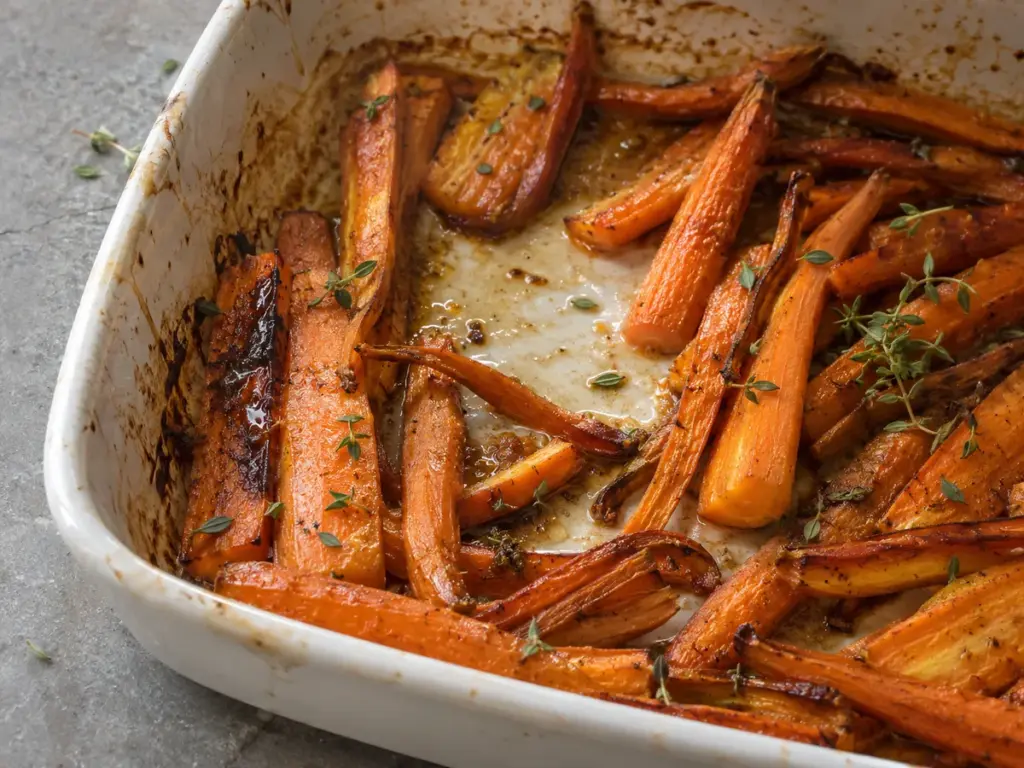
The thyme goes on after the first toss so its leaves stay green. Because the honey supplies the sweetness, these carrots belong beside plain meat such as salt-and-pepper lamb chops, and not beside a main that is already glazed.
Ingredients (for 1 pound of carrots)
- 1 pound carrots, peeled and cut into sticks or rounds
- 2 tablespoons honey
- 1 tablespoon olive oil
- 1 teaspoon fresh thyme leaves
- ½ teaspoon salt
- ¼ teaspoon black pepper
Instructions
- Heat the oven. Preheat the oven to 400°F and line a baking sheet with parchment paper.
- Coat the carrots. Toss them with the oil, honey, salt and pepper, then mix in the thyme.
- Roast. Spread the carrots in one layer and roast for 20 to 25 minutes, stirring once, until tender and browned at the edges.
- Glaze. Pour the glaze left in the bowl over the hot carrots and serve warm.
Honey scorches wherever it touches bare metal, so toss the carrots in the bowl, not on the pan.
Swaps
- Parsnips cut to the same width roast on the same sheet and taste earthier than carrots.
- Sweet potatoes cut to the same width also share the sheet, but their sugars brown sooner, so check them a few minutes early.
3. Roasted Brussels Sprouts with Balsamic Glaze
Halved sprouts turn dark and crisp on the cut face in 20 to 25 minutes at 400°F, while the outer leaves char at the tips. Choose sprouts of similar size and halve the big ones, so that you pull the whole pan out at once.
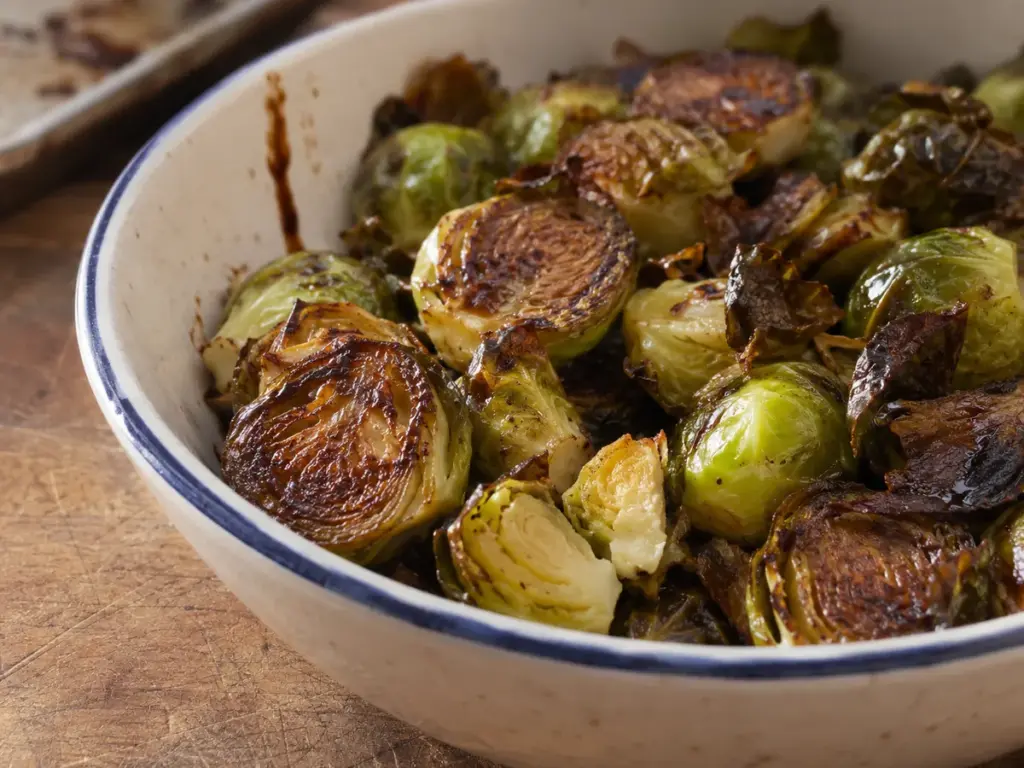
The glaze is ¼ cup of balsamic vinegar simmered for 5 to 7 minutes with a tablespoon of honey or maple syrup until it coats a spoon, and it goes on after roasting, because sugar in a hot oven burns before the sprouts brown.
Ingredients (for 1 pound of Brussels sprouts)
- 1 pound Brussels sprouts, trimmed and halved
- 2 tablespoons extra-virgin olive oil
- Salt and black pepper
- ¼ cup balsamic vinegar
- 1 tablespoon honey or maple syrup
Instructions
- Heat the oven. Preheat the oven to 400°F and line a baking sheet with parchment paper or lightly grease it.
- Toss. Coat the sprouts with the oil, salt and pepper and set them cut side down in one layer on a baking sheet.
- Roast. Cook for 20 to 25 minutes, turning once, until deeply browned and crisp at the edges.
- Make the glaze. While they roast, simmer the vinegar and honey in a small saucepan for 5 to 7 minutes until syrupy.
- Finish. Drizzle the warm glaze over the sprouts and toss gently.
Loose outer leaves fall off while you trim and halve the sprouts, and in the oven they become crisp, dark chips at the edge of the pan.
Sprouts cooked past tender turn gray-green and smell strongly of sulfur, so take the pan out when the cut faces are dark and a knife slides in with little resistance.
Make the glaze ahead and warm it gently, then roast the sprouts just before dinner, because steam trapped under a lid softens the crisp edges within minutes.
Swaps
- Broccolini or asparagus roasts the same way, but thinner stalks finish sooner, so check them first.
- Apple cider vinegar, one of the common stand-ins for balsamic vinegar, replaces the ¼ cup, reduced the same way with the same 1 tablespoon of honey, and the glaze tastes tangier.
4. Roasted Sweet Potato Wedges
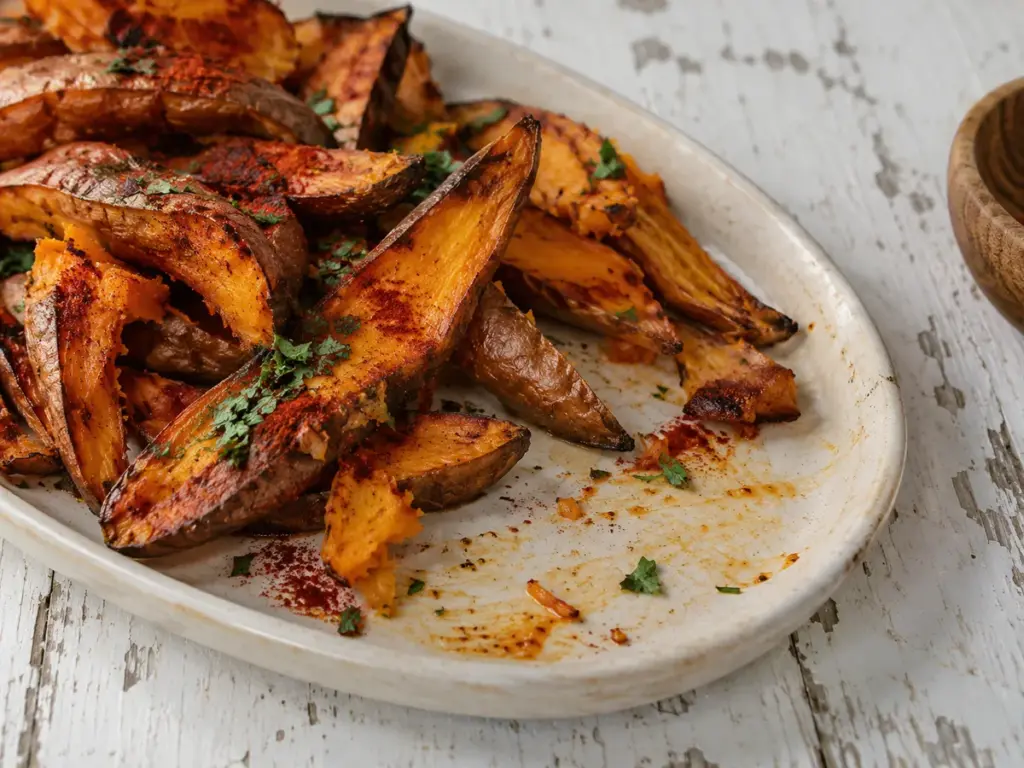
Sweet potato sugars brown fast, so a crowded pan or thin wedges scorch before the center softens. Wedges cut about ½ inch thick, with space between them and a turn at the halfway mark, get crisp edges and a soft, creamy middle in 25 to 30 minutes at 425°F.
Smoked paprika and cumin add a savory warmth that keeps the plate from tasting like dessert.
Ingredients (for 2 large sweet potatoes)
- 2 large sweet potatoes, peeled and cut into ½-inch wedges
- 2 tablespoons olive oil
- 1 teaspoon smoked paprika
- ½ teaspoon ground cumin (optional)
- ½ teaspoon salt
- ¼ teaspoon black pepper
- Chopped parsley (optional)
Instructions
- Heat the oven. Preheat the oven to 425°F and line a baking sheet with parchment paper.
- Season. Toss the wedges with the oil, paprika, cumin, salt and pepper.
- Spread them out. Lay the wedges on a baking sheet with space between each one.
- Roast. Cook for 25 to 30 minutes, turning halfway, until crisp outside and tender inside.
- Serve. Sprinkle with parsley if you like and serve warm.
Scrub the potatoes under running water and leave the skin on if you like; the skin crisps at the edges and saves the peeling.
A gap between wedges lets steam escape so the edges can crisp.
Swaps
- Curry powder in place of the cumin gives the wedges a curry-style warmth.
- Cinnamon with a pinch of chili powder in place of the paprika and cumin makes a sweet-spicy version.
- Butternut squash or carrots cut into similar wedges roast on the same sheet.
5. Spiced Roasted Cauliflower Florets
The flat faces that sit on the pan brown deepest, so cut a few thick slices from the head as well as florets of one size, and roast them at 425°F for 25 to 30 minutes. A teaspoon of curry powder and half a teaspoon of cumin turn the cauliflower golden and savory.
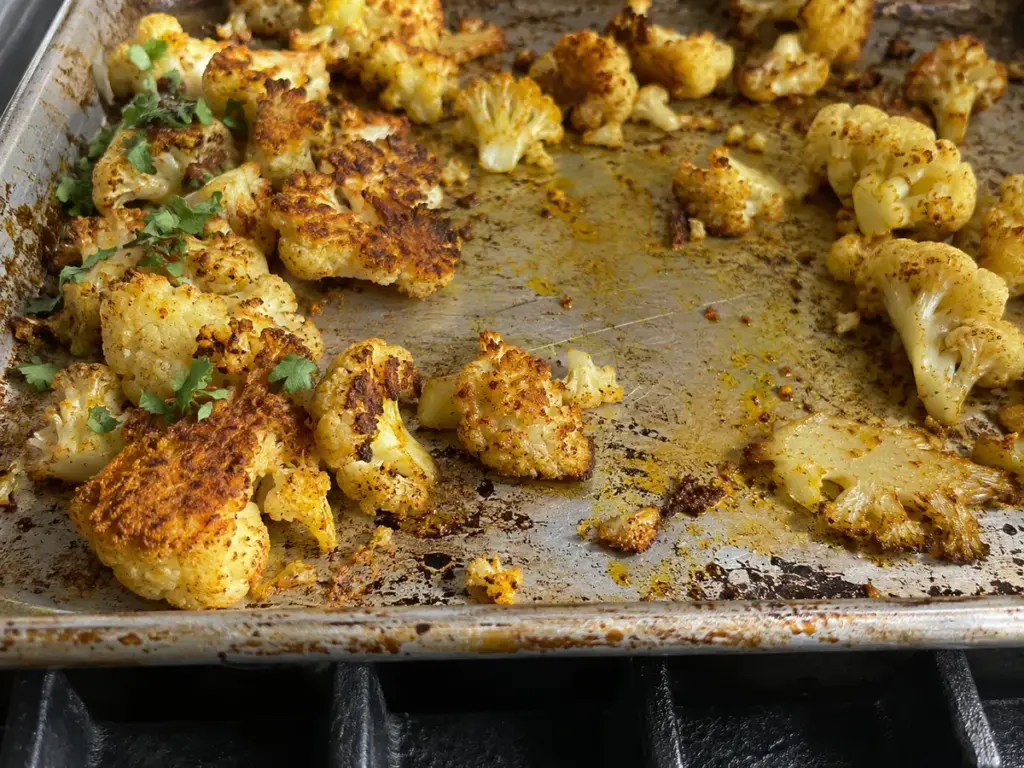
Lemon juice goes on after roasting, because juice in the oven would steam the pan.
Cauliflower also takes a glaze, such as the maple, soy and ginger coating on miso-glazed cauliflower, which roasts at the same oven temperature.
Ingredients (for 1 large head of cauliflower)
- 1 large head cauliflower, cut into bite-sized florets
- 2 tablespoons olive oil
- 1 teaspoon curry powder or turmeric
- ½ teaspoon ground cumin
- ½ teaspoon salt
- ¼ teaspoon black pepper
- 1 tablespoon lemon juice
- Chopped cilantro or parsley (optional)
Instructions
- Heat the oven. Preheat the oven to 425°F and line a baking sheet with parchment paper or a silicone mat.
- Coat. Toss the florets with the oil, curry powder, cumin, salt and pepper.
- Roast. Spread them in one layer and roast for 25 to 30 minutes, stirring halfway, until golden with crisp edges.
- Finish. Drizzle with the lemon juice, toss and top with herbs.
Cauliflower holds more water than broccoli, so leave an inch or two between pieces and let the first side brown before you stir.
Swaps
- Smoked paprika or garam masala in place of the curry powder gives a smoky or a warm-spiced pan.
- Turmeric alone adds color and little flavor, which makes curry powder the better choice when you want taste.
- A splash of apple cider vinegar takes the lemon's place, and goes on after roasting too.
- Broccoli florets or Brussels sprouts roast on the same sheet; check the broccoli at 18 minutes.
6. Roasted Butternut Squash with Sage
When you peel butternut, cut the neck from the round bulb first, stand each piece flat and use a sharp vegetable peeler, then scoop the seeds from the bulb. Cubes about 1 inch wide roast in 25 to 30 minutes at 400°F and are done when the edges are caramelized and a fork goes in with no resistance.
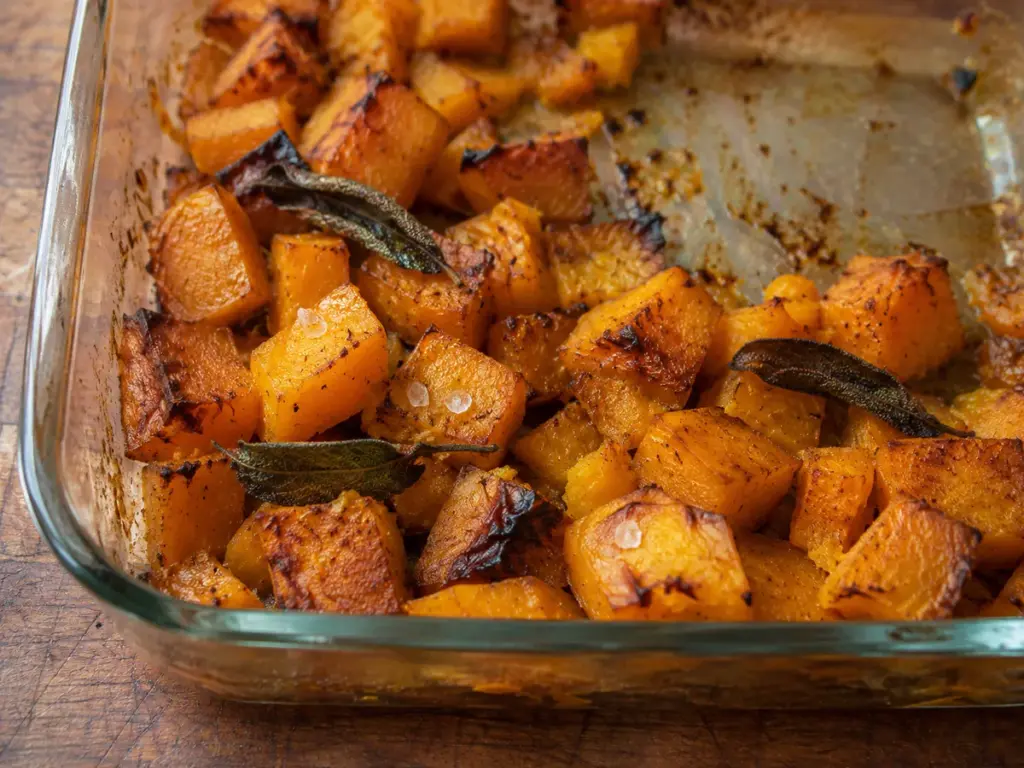
Sage leaves crisp and turn savory in the oil, but the ones at the pan edge scorch, so tuck them in among the cubes. It holds well on a holiday table because it needs no last-minute work.
Ingredients (for 1 medium butternut squash)
- 1 medium butternut squash, peeled, seeded and cut into 1-inch cubes
- 2 tablespoons extra-virgin olive oil
- 1 tablespoon fresh sage leaves
- ½ teaspoon salt
- ¼ teaspoon black pepper
Instructions
- Heat the oven. Preheat the oven to 400°F and line a baking sheet with parchment paper or lightly grease it.
- Coat. Toss the cubes with the oil, salt and pepper.
- Roast. Spread them in one layer, scatter the sage among them and roast for 25 to 30 minutes, stirring halfway, until tender and caramelized at the edges.
- Serve. Move to a dish while still warm.
Swaps
- Pre-cut cubes from the store roast the same way, so use them when peeling is the step you want to skip.
- Rosemary or thyme can stand in for the sage, with the rosemary chopped fine because its leaves are sturdier.
- Sweet potato cubes or acorn squash wedges roast on a separate sheet and get a fork test at 25 minutes.
- Smoked sea salt adds a faint smoky note in place of plain salt.
3 Which Vegetable Sides Cook Fast on the Stove?
A skillet gives you more control than an oven, because you can hear and see the vegetable change. The sizzle quiets while moisture leaves the pan and gets louder once browning starts, and a wide pan matters more than a hot one, since crowded vegetables steam in their own water.
Most of these sides take under 15 minutes of cooking, so start them after the main dish is resting and serve them straight from the pan.
7. Lemon Parmesan Green Beans
Limp green beans come from a covered or crowded pan; uncovered in a hot skillet, 5 to 7 minutes keeps them bright and snappy, with a few blistered spots. The garlic and lemon zest go in for the last 1 to 2 minutes only, because garlic browns fast in oil and turns bitter, and zest loses its fragrance when it cooks long.
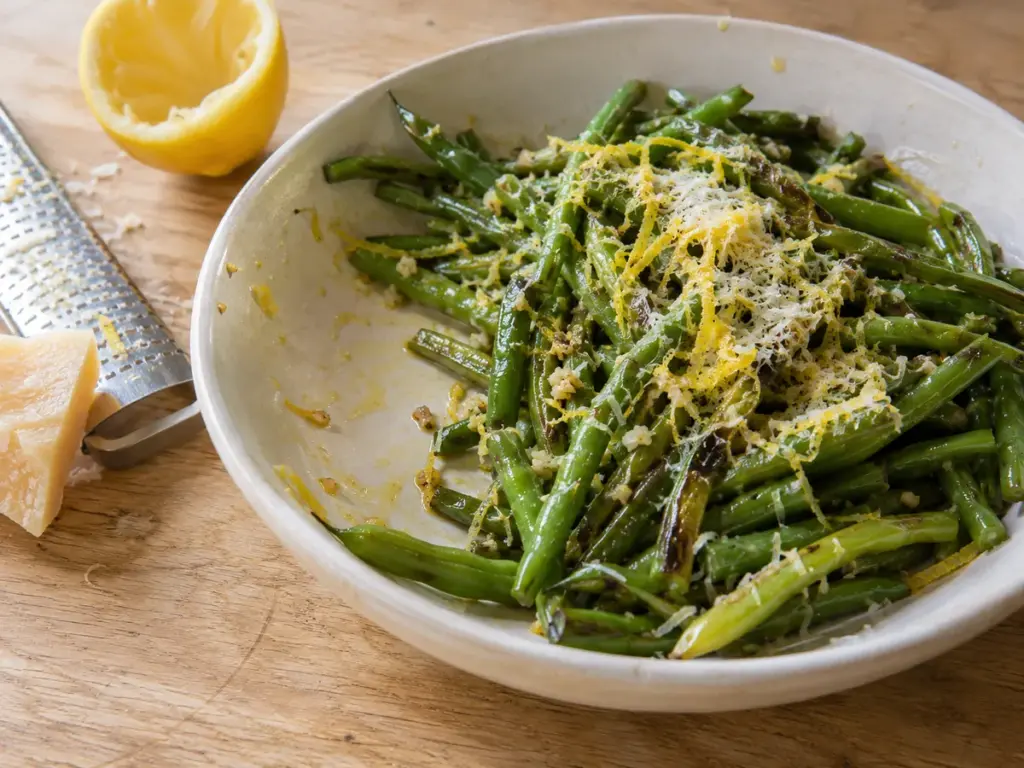
Total pan time is 6 to 9 minutes. Grate the Parmesan fine so it softens into the warm beans.
Ingredients (for 1 pound of green beans)
- 1 pound fresh green beans, trimmed
- 2 tablespoons extra-virgin olive oil
- 1 teaspoon lemon zest
- 1 garlic clove, minced
- ¼ teaspoon salt
- ¼ teaspoon black pepper
- ¼ cup grated Parmesan
Instructions
- Heat the pan. Warm the oil in a large skillet over medium-high heat until it shimmers.
- Cook the beans. Add the green beans and stir often for 5 to 7 minutes until tender-crisp.
- Add the aroma. Stir in the garlic and zest for 1 to 2 minutes without letting the garlic brown.
- Season and top. Add the salt and pepper, move to a dish and sprinkle the Parmesan on right away so it softens.
Dry the washed beans before they go into the oil, because water on the surface spits in the hot pan and cools it.
The lemon zest adds fragrance and the beans add the snap that soft meatloaf and baked fish lack.
Swaps
- Pecorino Romano goes in at the same amount, and since it is saltier, you can leave out the extra salt.
- Asparagus or snap peas take the same oil, garlic and zest if you have no green beans.
- Thin haricots verts finish sooner than standard green beans, so taste one at the 3-minute mark and pull the pan while it still snaps.
8. Creamy Garlic Mashed Cauliflower
Cauliflower mashes smooth only when a fork slides through the florets with no resistance, which takes 10 to 12 minutes of steaming. Steamed florets hold water, so shake them in the colander and wait a minute, or the mash turns soupy.
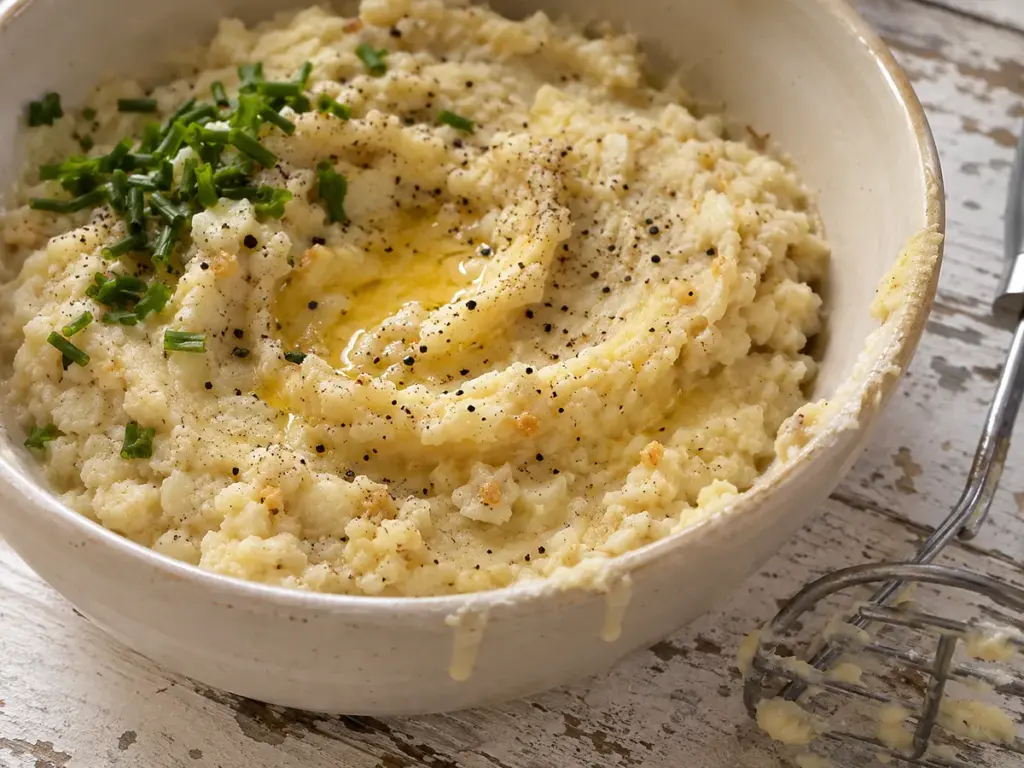
The butter-sautéed garlic goes in with ¼ cup of heavy cream or milk, added a little at a time until the mash is as loose as you like. A food processor makes it silky, and a potato masher leaves it rustic. It fills the spot mashed potatoes take beside steak, meatloaf or pot roast.
Ingredients (for 1 large head of cauliflower)
- 1 large head cauliflower, cut into florets
- 3 tablespoons unsalted butter
- 3 cloves garlic, minced
- ¼ cup heavy cream or milk
- ½ teaspoon salt
- ¼ teaspoon black pepper
- Chopped chives or parsley (optional)
Instructions
- Steam. Steam the florets for 10 to 12 minutes until very tender, then drain them well.
- Cook the garlic. While they steam, melt the butter over medium heat and cook the garlic for 1 to 2 minutes until fragrant but not browned.
- Blend. Put the cauliflower, garlic butter, cream, salt and pepper in a food processor or bowl and puree or mash until smooth.
- Serve. Taste, add more cream if the mash is stiff and top with chives.
If the mash still comes out loose, cook it in a dry pan for a minute or two while you stir, and the extra moisture steams off.
Swaps
- Roasted garlic replaces the sautéed cloves for a sweeter, milder flavor.
- Heavy cream or milk both work at ¼ cup: cream makes the richer mash and milk a lighter one, so add either a little at a time.
- Grated Parmesan adds a savory edge, and nutritional yeast does the same without dairy.
9. Sautéed Spinach with Garlic and Lemon
Wet leaves are the whole problem with sautéed spinach, because washed spinach carries water and steams into a limp pile, so drain it well or spin it dry. Dry leaves cook in 2 to 3 minutes and are done the moment the last ones wilt, so the pan comes off the heat while a few stems still look bright.
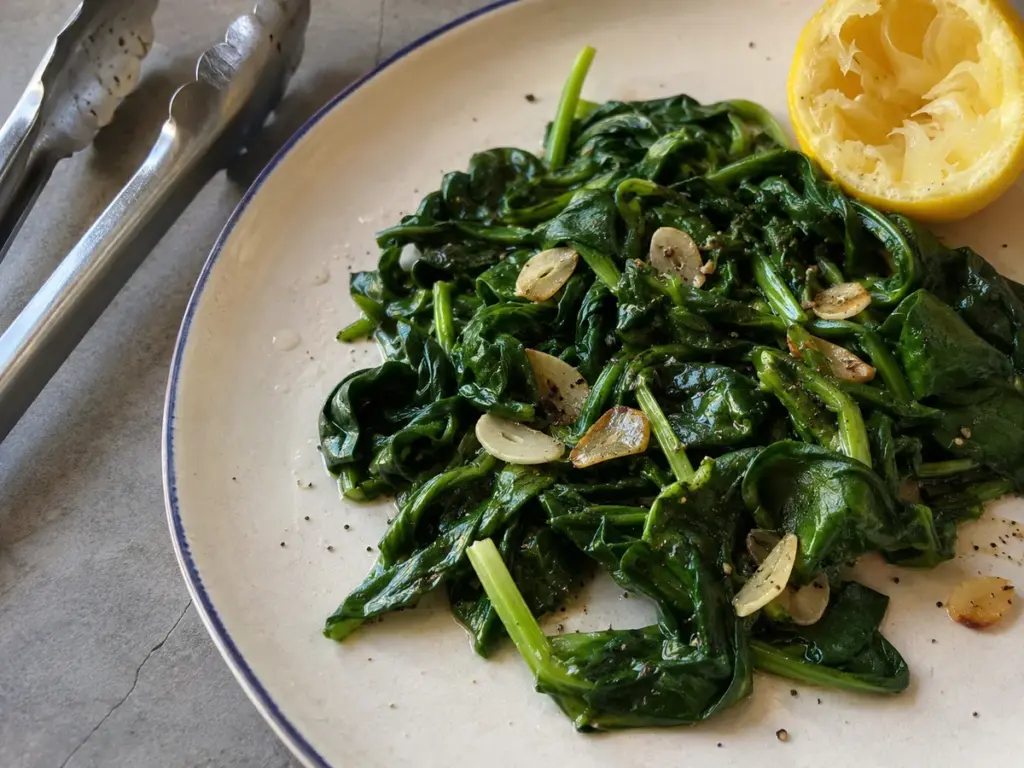
A pound of raw leaves fills a large skillet, which is why it goes in by the handful, each batch wilting to make room for the next. The garlic cooks in the oil for 30 seconds to 1 minute first.
Lemon juice goes on after the heat is off, because acid on a hot pan turns the green dull. Serve it at once, since spinach that waits in the pan weeps liquid and turns your plate into a soggy pile.
Ingredients (for 1 pound of spinach)
- 1 pound fresh spinach, washed and drained well
- 2 tablespoons olive oil
- 3 garlic cloves, minced
- 1 tablespoon lemon juice
- ¼ teaspoon salt
- ⅛ teaspoon black pepper
Instructions
- Heat the oil. Warm the oil in a large skillet over medium heat until it shimmers.
- Cook the garlic. Add the garlic for 30 seconds to 1 minute until fragrant.
- Wilt the spinach. Add the leaves in batches and stir for 2 to 3 minutes total until tender and mostly wilted.
- Finish. Take the pan off the heat, season, add the lemon juice and toss.
Bagged spinach marked pre-washed needs no extra rinse, but it still has to be dry before it goes into the pan.
Swaps
- Baby kale or Swiss chard can stand in for the spinach; heartier greens need more time in the pan, so cook chard stems for a few minutes before the leaves go in.
- A splash of white wine vinegar takes the lemon's place, and still goes in off the heat.
10. Glazed Baby Carrots with Dill
A quarter cup of water does the cooking and leaves the butter and honey behind as a glossy coat: it steams the carrots tender under the lid, then boils away, and the whole pan takes 11 to 14 minutes. Take the lid off for the last 1 to 2 minutes and stir often, because the glaze scorches in seconds once the water is gone.
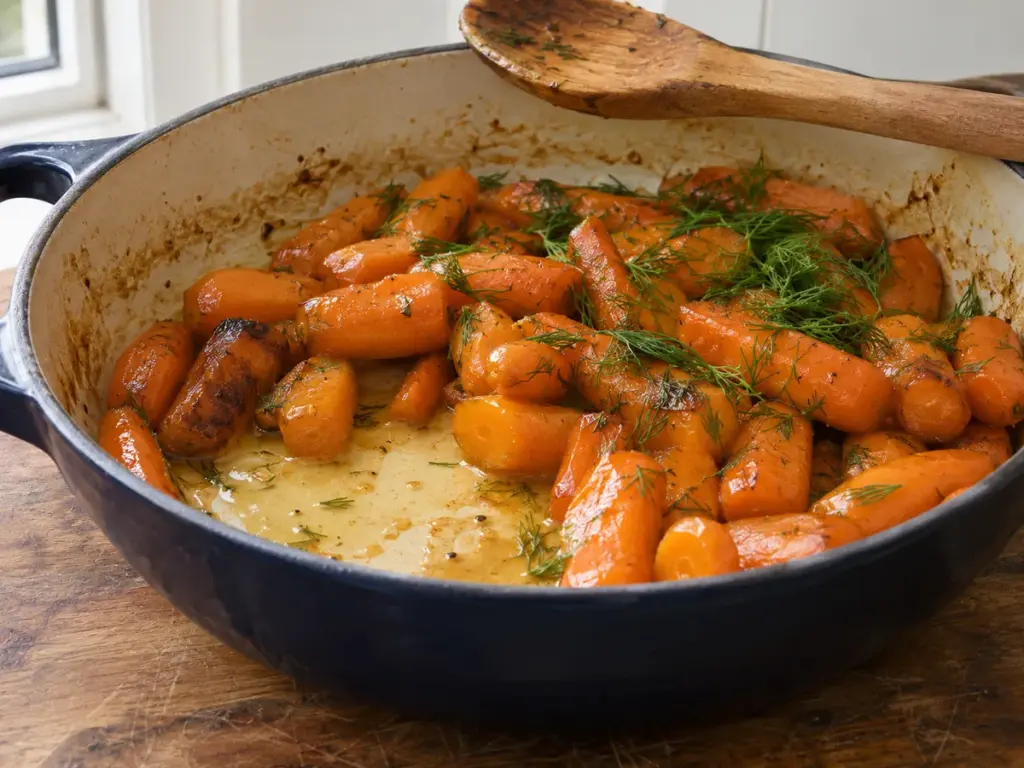
Dill goes in off the heat, since heat dulls its flavor. Bagged baby carrots are cut from larger carrots, so they are even in size and need no peeling.
Ingredients (for 1 pound of baby carrots)
- 1 pound baby carrots
- 2 tablespoons unsalted butter
- 2 tablespoons honey
- ¼ cup water
- ½ teaspoon salt
- ¼ teaspoon black pepper
- 2 tablespoons chopped fresh dill
Instructions
- Coat. Melt the butter in a large skillet over medium heat and stir the carrots in until buttery.
- Add the liquid. Drizzle in the honey and water, then sprinkle with salt and pepper.
- Simmer. Cover, lower the heat and cook for 10 to 12 minutes, stirring now and then, until the carrots are tender.
- Reduce. Uncover and cook over medium-high heat for 1 to 2 minutes, stirring, until the liquid turns to a glaze.
- Finish. Stir in the dill off the heat and serve warm.
If the glaze looks thin once the carrots are tender, raise the heat for the last minute and keep stirring, because the water has to boil off before the butter and honey coat the carrots.
If the water runs out before the carrots soften, add a splash and cover the pan again, since a dry pan scorches the honey.
Swaps
- Tarragon stands in for the dill, and goes in off the heat in the same way.
- Regular carrots cut into sticks cook in about the same time as baby carrots, though they need peeling first.
11. Crispy Sautéed Cabbage with Apples
Cabbage browns in a skillet only when it sits still, so the first 5 minutes after it goes in are for leaving it alone. A tablespoon of olive oil with 2 tablespoons of butter lets the pan run hot without burning the butter. A medium head is a lot for one skillet, which makes the biggest pan you own the right choice, because a crowded pan steams the cabbage.
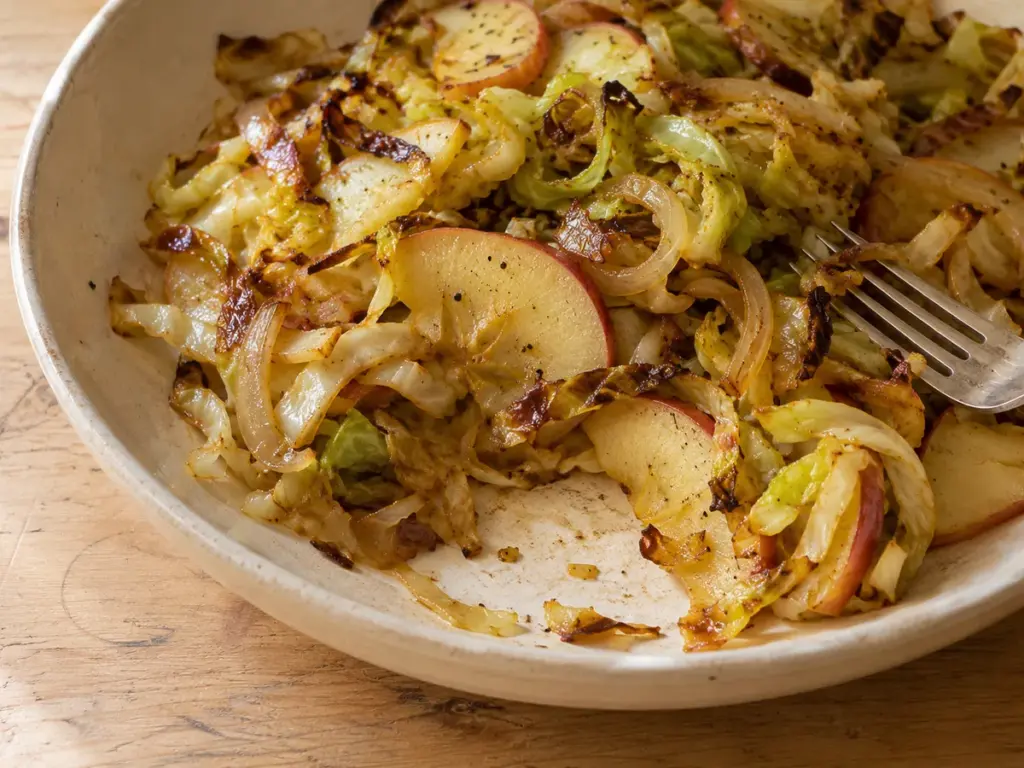
Firm apples such as Granny Smith or Honeycrisp go in for the last 3 to 4 minutes so they soften but keep their shape, and a teaspoon of cider vinegar at the end balances the sweetness. The whole pan takes 16 to 17 minutes.
Ingredients (for 1 medium head of cabbage)
- 1 medium head green cabbage, thinly sliced
- 2 medium firm apples, cored and thinly sliced
- 2 tablespoons unsalted butter
- 1 tablespoon olive oil
- 1 small onion, thinly sliced
- ½ teaspoon salt
- ¼ teaspoon black pepper
- 1 teaspoon apple cider vinegar
Instructions
- Heat the fat. Melt the butter with the oil in a large skillet over medium-high heat.
- Soften the onion. Cook the onion for about 3 minutes.
- Brown the cabbage. Add the cabbage in an even layer and leave it for 5 minutes, then toss and cook 5 minutes more until crisp-tender.
- Add the apples. Stir in the apples, salt and pepper and cook 3 to 4 minutes until tender but still holding their shape.
- Finish. Take off the heat, drizzle with the vinegar and toss.
Salt goes in with the apples, after the cabbage has browned, because salt added earlier draws out water and the cabbage steams.
Core the cabbage and slice it thin: thick ribbons stay raw in the center while thin ones brown at the edges.
A browned pan with a splash of vinegar suits sausages and pork chops, which are rich enough to want the acid.
Swaps
- Napa or red cabbage can replace the green, and napa is more tender, so shorten the browning time.
- Pears give a softer sweetness than apples.
- Smoked paprika adds depth next to the cider vinegar.
12. Simple Steamed Asparagus with Lemon Butter
Snap or cut off the woody base first, which is usually the bottom inch or two. Asparagus then steams in 3 to 5 minutes, and you know it is ready when the spears turn bright green and a knife tip slides in with only a little resistance.
Pencil-thin spears need about 3 minutes and thick ones the full 5.
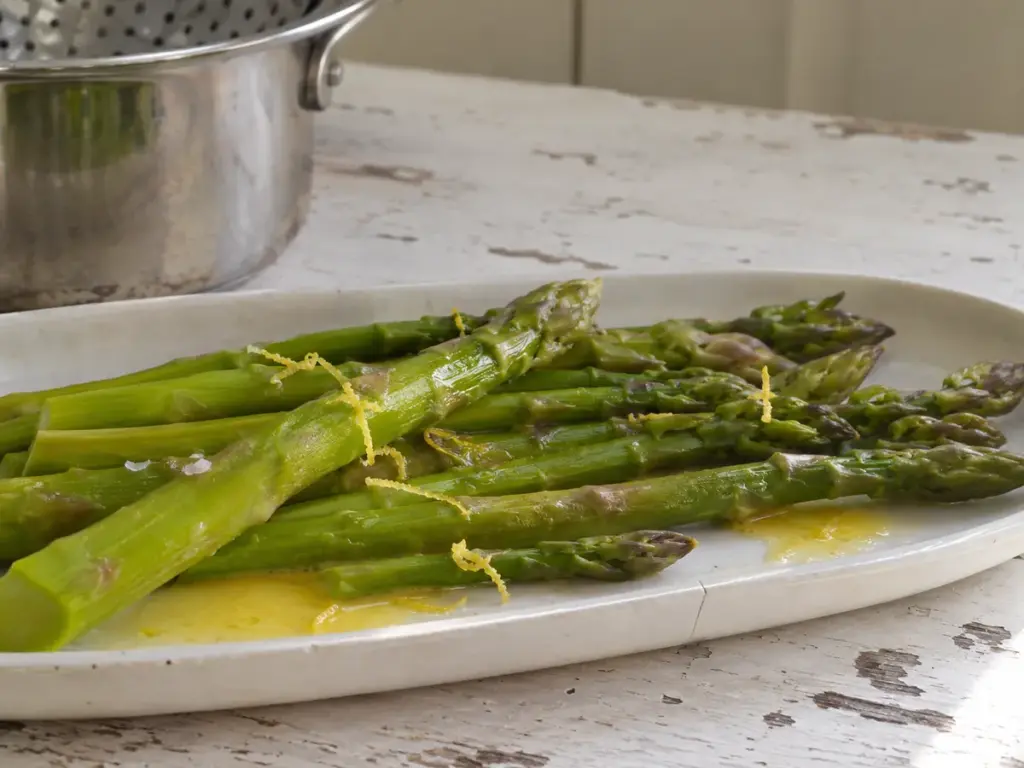
The basket holds the spears above about an inch of boiling water, so they cook in steam alone. The melted butter and lemon go on afterward, because the hot spears carry the sauce across every piece. A minute too long makes asparagus limp and olive-colored, so lift it as soon as it turns bright.
Ingredients (for 1 pound of asparagus)
- 1 pound asparagus, trimmed
- 3 tablespoons unsalted butter, melted
- 1 tablespoon lemon juice
- Salt and black pepper
Instructions
- Boil the water. Bring about 1 inch of water to a boil in a large pot with a steamer basket set above it.
- Steam. Add the asparagus, cover and steam for 3 to 5 minutes until bright green and just tender.
- Dress. Move the spears to a dish, pour over the butter and lemon juice and season with salt and pepper.
- Serve. Toss gently and serve while warm.
Thick spears can also roast in the air fryer, which takes about 7 to 9 minutes at 400°F for crisp tips.
Lemon juice dulls the green of asparagus the longer it sits on the hot spears, so dress them just before serving.
Peel the lower third of thick spears if the skin feels stringy, after you snap off the base.
Swaps
- Chopped parsley or dill can go on beside the lemon or instead of it.
- Red pepper flakes add a little heat to the butter.
13. Sautéed Mushrooms with Thyme and Garlic
Mushrooms are mostly water, and they brown only when that water has somewhere to go, which takes a wide skillet, medium-high heat and a single layer left alone for about 3 minutes. They then release their liquid for 4 to 5 minutes and brown as it evaporates.
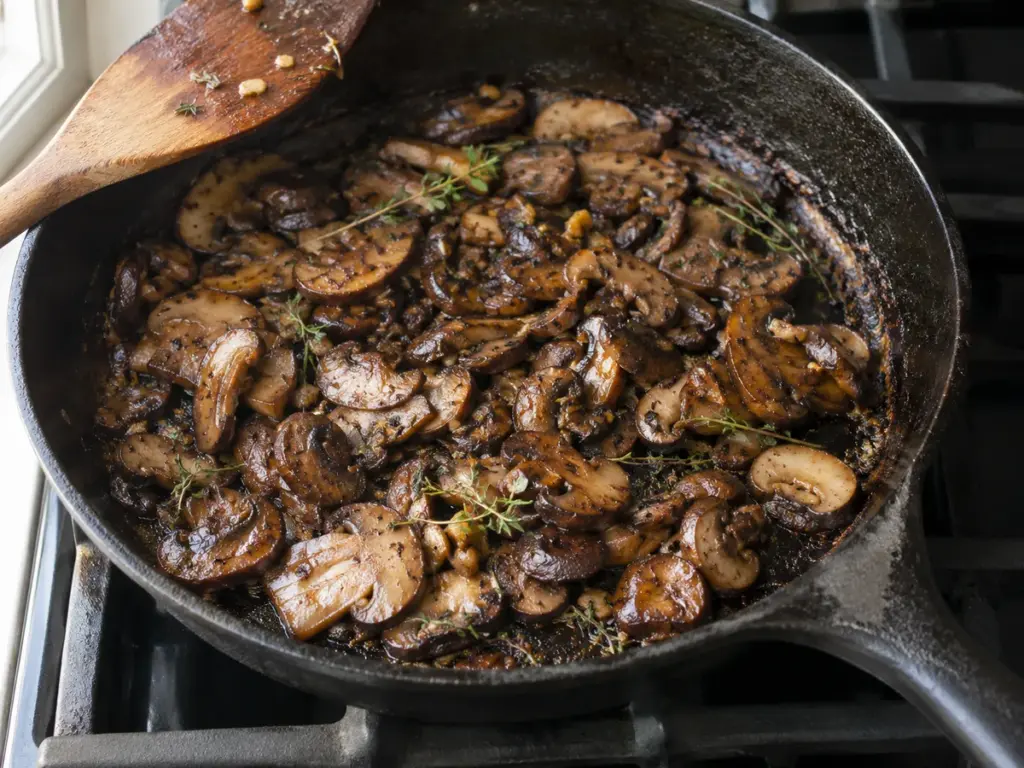
Salt goes in at the end, because salt early pulls out more water and delays the browning. The garlic and thyme join for the last 1 to 2 minutes so the garlic does not burn. Button and cremini are the same species, and cremini are the browner, deeper-flavored strain, so choose them when you want a meatier taste.
Ingredients (for 1 pound of mushrooms)
- 1 pound mushrooms, sliced (button, cremini or a mix)
- 2 tablespoons unsalted butter or olive oil
- 3 cloves garlic, minced
- 1 teaspoon fresh thyme leaves, plus more for garnish
- ½ teaspoon salt
- ¼ teaspoon black pepper
- 1 tablespoon chopped parsley (optional)
Instructions
- Brown. Heat the fat in a large skillet over medium-high heat, add the mushrooms in a single layer and leave them for about 3 minutes.
- Turn. Stir and cook 4 to 5 minutes more until the liquid is gone and they brown.
- Add the aroma. Stir in the garlic and thyme for 1 to 2 minutes.
- Season. Add the salt and pepper, cook 1 minute more and finish with parsley.
Rinse the mushrooms quickly under running water and pat them dry, because surface water has to cook off before browning starts. Do not soak them.
Spoon the mushrooms over steak, pork chops, toast or a grain bowl, since their savory juices work as a sauce.
Swaps
- Cremini, shiitake or oyster mushrooms give a different texture than button mushrooms; shiitake stems are tough, so cut them off before you slice the caps.
4 Which Vegetable Sides Need Little or No Cooking?
The caprese, pea, cucumber and zucchini salads need a knife, a bowl and a few minutes, and they leave your oven free for the main dish; only frozen peas need 1 to 2 minutes of boiling.
They taste best when the vegetables are at their peak, so you make the tomato salad in summer and the pea and cucumber salads whenever the freezer or the crisper has what they need. Raw tomatoes and cucumbers turn watery as they sit, so dress them close to serving.
14. Italian-Style Caprese Salad with Heirloom Tomatoes
Caprese depends on the tomatoes, so make it when yours are ripe and smell sweet at the stem. Slice 3 to 4 medium heirlooms about ¼ inch thick with a serrated knife and cut 8 ounces of fresh mozzarella to match.
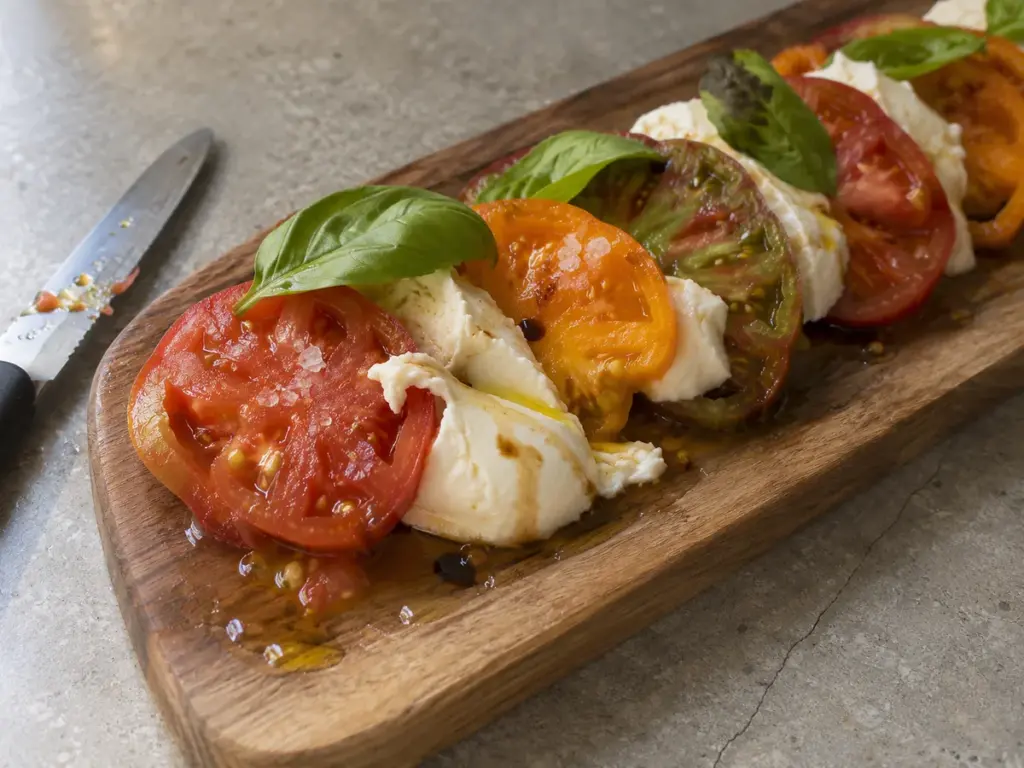
Tomatoes taste best at room temperature because cold dulls their aroma, while the mozzarella should stay in the refrigerator until you build the plate. Salt pulls juice out of tomato slices, so you should season at the table, and add the basil leaves last so they stay green.
The balsamic is optional, and a little goes a long way over the oil.
Ingredients (for one large plate)
- 3 to 4 medium heirloom tomatoes, sliced ¼ inch thick
- 8 ounces fresh mozzarella, sliced
- ½ cup fresh basil leaves
- 3 tablespoons extra-virgin olive oil
- 1 to 2 tablespoons balsamic vinegar
- ½ teaspoon salt
- ¼ teaspoon black pepper
Instructions
- Layer the tomatoes. Overlap the tomato slices on a large plate in a single layer.
- Add the cheese. Set the mozzarella slices over the tomatoes.
- Add the basil. Scatter the basil over the top, torn or whole.
- Dress. Drizzle with the oil and balsamic, then season with salt and pepper and serve.
FoodKeeper says to keep tomatoes at room temperature until they ripen and then use them within 7 days, because refrigeration can dull their flavor.
Cut tomatoes and fresh mozzarella are perishable, so the plate follows the same 2-hour rule as any leftovers: refrigerate within 2 hours, or within 1 hour when the room is above 90°F, per FSIS.
Swaps
- Halved cherry tomatoes or vine-ripened tomatoes can take the heirlooms' place.
- Burrata makes a creamier plate than mozzarella.
- Arugula or mint stands in for the basil.
- Red wine vinegar or lemon juice gives lighter acidity than balsamic.
15. Green Pea and Mint Salad
Two cups of green peas, 2 tablespoons of chopped mint and a dressing of oil and lemon make a salad that takes about 10 minutes. Frozen peas are sold already blanched, so thawing them under cold water works, and 1 to 2 minutes in boiling water followed by a cold rinse makes them more tender and keeps them bright green.
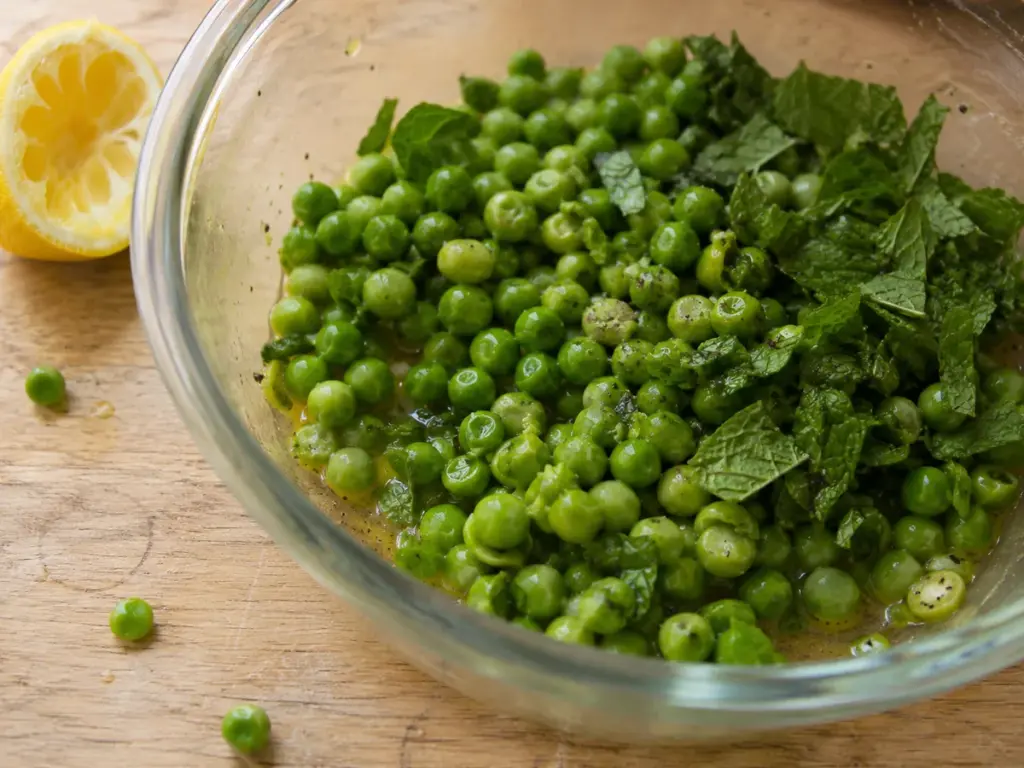
Mint darkens soon after it is chopped, so chop it just before you toss the salad. The mint and lemon cut through rich meat, which is why this salad suits grilled lamb and fish. A bag of frozen peas keeps it available all year, and a bag of frozen spinach becomes creamed spinach with garlic.
Ingredients (for 2 cups of peas)
- 2 cups fresh or frozen green peas
- 2 tablespoons chopped fresh mint
- 2 tablespoons extra-virgin olive oil
- 1 tablespoon lemon juice
- ¼ teaspoon salt
- ⅛ teaspoon black pepper
Instructions
- Prepare the peas. Boil frozen peas for 1 to 2 minutes, drain and rinse under cold water. Rinse fresh peas and drain them well.
- Combine. Mix the peas and mint in a medium bowl.
- Dress. Whisk the oil, lemon juice, salt and pepper, pour it over and toss gently.
- Rest. Leave the salad for 5 to 10 minutes, then serve chilled or at room temperature.
Acid dulls the bright green of peas the longer the two sit together, so whisk the dressing in a separate bowl and pour it on close to serving.
Swaps
- Snow peas or sugar snap peas replace the green peas when you want more crunch; slice them thin.
- Basil can take the place of the mint.
16. Cucumber and Radish Salad with Yogurt Dressing
Radishes give this salad a peppery crunch, and cucumbers add cool water, which is also its weak point, because wet slices thin the yogurt dressing within minutes. Pat large cucumber slices dry with a paper towel, or choose Kirby cucumbers, which hold less water.
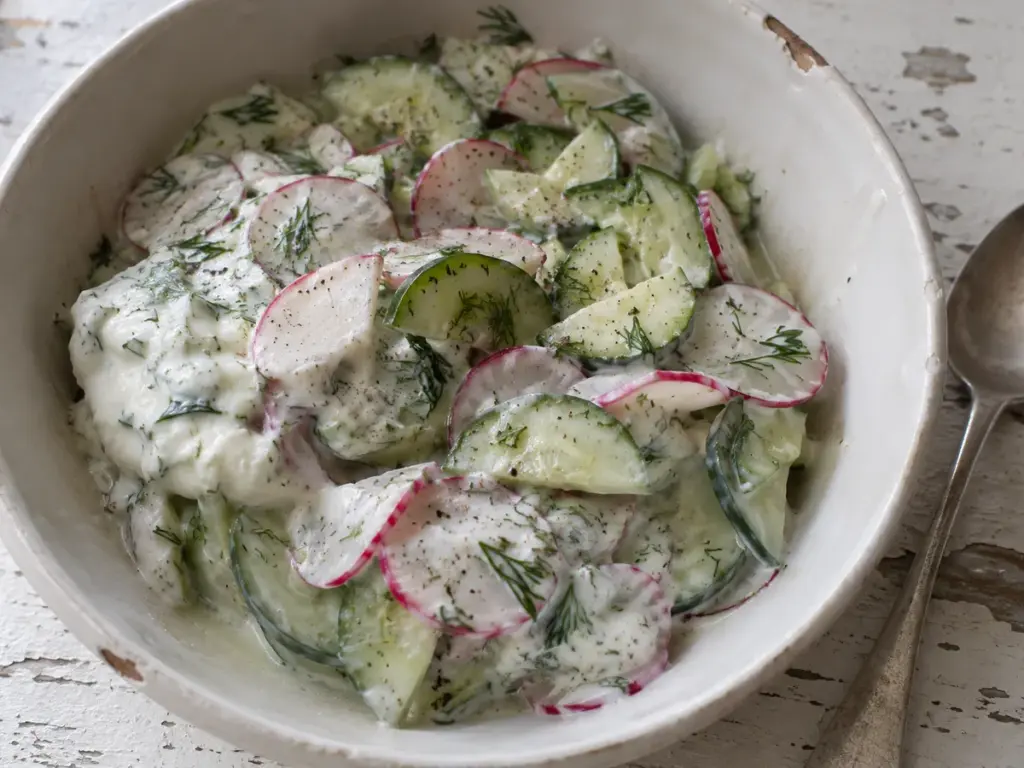
Plain yogurt thickens the dressing when it is full-fat, and Greek yogurt makes it thicker still. Whisk the yogurt, lemon juice, garlic and dill first, then fold in the vegetables shortly before serving, because salt keeps pulling water from the slices.
Ingredients (for 1 large cucumber)
- 1 large cucumber, thinly sliced
- 6 to 8 radishes, thinly sliced
- 1 cup plain yogurt
- 1 tablespoon chopped fresh dill
- 1 tablespoon lemon juice
- 1 garlic clove, minced or grated
- Salt and black pepper
- 1 tablespoon olive oil (optional)
Instructions
- Combine the vegetables. Mix the cucumber and radish slices in a large bowl.
- Make the dressing. Whisk the yogurt, lemon juice, garlic, dill, salt and pepper until smooth, adding the oil if you use it.
- Dress. Pour the dressing over the vegetables and stir gently until coated, then adjust the seasoning.
- Chill. Chill at least 10 minutes and serve cold.
Scrub the cucumber under running water with a clean brush, and scoop the seeds from a large one, because the seed cavity is the wettest part.
The dressing keeps on its own in the refrigerator, but once the vegetables meet it, plan to serve the bowl that day.
Grilled meats and spiced dishes need the cool, tangy dressing to balance their heat.
Swaps
- Thinly sliced fennel or jicama can replace the radishes, with a crunch that is milder and less peppery.
17. Zucchini Noodles with Cherry Tomatoes and Basil
Zucchini noodles release water as soon as they meet salt, so salt them only when the bowl is about to reach the table. You can spiralize three medium zucchini in a couple of minutes, so the whole bowl with the tomatoes and basil takes about 10 minutes, and a vegetable peeler makes wide ribbons that hold up better than thin spirals.
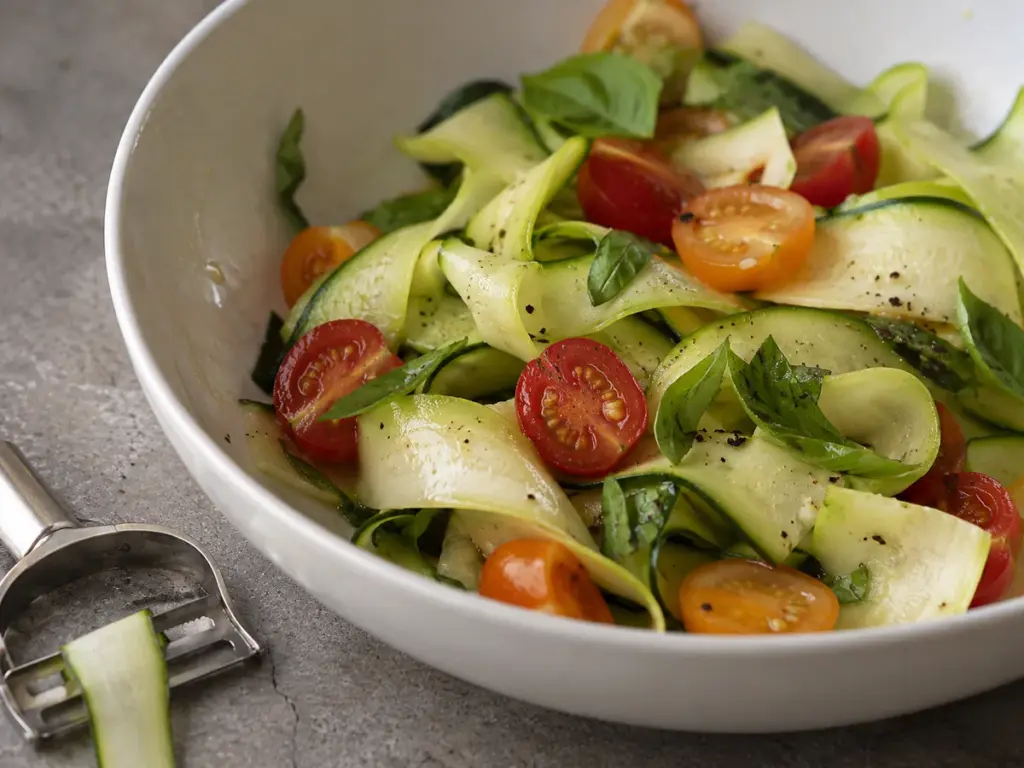
Leave them raw for crunch, or give them 1 to 2 minutes in a hot pan for a warm version. Buttery shrimp juices dress the strands, which is why zucchini noodles sit on the plate with garlic butter shrimp.
Ingredients (for 3 medium zucchini)
- 3 medium zucchini, spiralized or peeled into ribbons
- 1 cup cherry tomatoes, halved
- ¼ cup fresh basil leaves, chopped
- 2 tablespoons extra-virgin olive oil
- 1 teaspoon lemon juice
- ¼ teaspoon salt
- ¼ teaspoon black pepper
Instructions
- Cut the zucchini. Spiralize the zucchini or peel it into ribbons and put them in a large bowl.
- Add the rest. Add the tomatoes and basil.
- Dress. Drizzle with the oil and lemon juice and toss gently, then season.
- Serve. Eat right away, or hold it up to 10 minutes. For a warm version, sauté the zucchini 1 to 2 minutes before adding the tomatoes and basil.
Spread the spiralized zucchini on a towel for a few minutes before you dress it, and the towel soaks up the water the strands release.
Swaps
- Yellow squash or cucumber replaces the zucchini if that is what you have.
- Halved roasted tomatoes give the bowl a richer taste than raw ones.
- Mint can take the basil's place.
5 Which Vegetable Sides Suit the Grill or a Make-Ahead Plate?
Grilled corn needs a hot grill and goes to the table right away, while the antipasto improves after 30 minutes on the counter, then kept refrigerated, and the lentil salad improves after a rest on the counter. Choose the corn for a cookout and the other two when you want the side finished before the main dish is on the table.
18. Grilled Vegetable Antipasto
Eggplant, zucchini, two bell peppers and a red onion go on a medium-high grill for 4 to 5 minutes per side, long enough for grill marks and tender centers. Cut the eggplant into ½-inch rounds and the zucchini into ¼-inch strips, and you will take them off the grill at the same time.
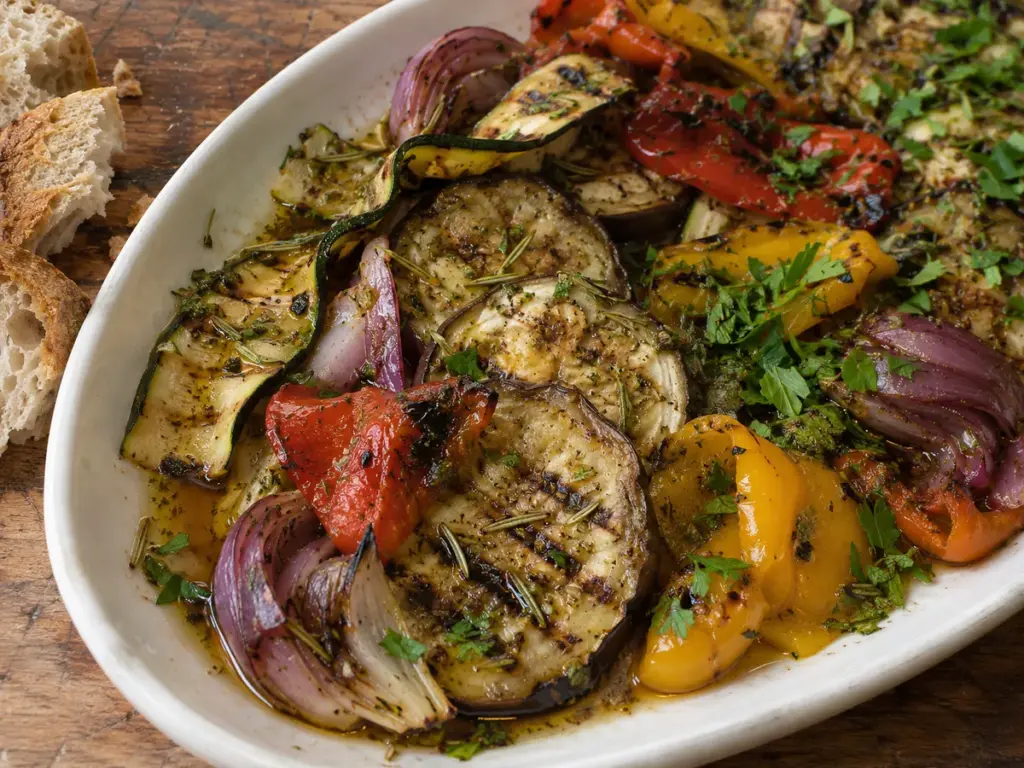
The marinade of olive oil, balsamic vinegar, garlic, rosemary and oregano goes on while the vegetables are still warm, and they soak it up over 30 minutes on the counter. The antipasto goes into the refrigerator after that.
Ingredients (for 1 eggplant, 2 zucchini, 2 bell peppers and 1 red onion)
- 1 medium eggplant, sliced into ½-inch rounds
- 2 medium zucchini, sliced lengthwise into ¼-inch strips
- 1 red bell pepper, cut into large pieces
- 1 yellow bell pepper, cut into large pieces
- 1 small red onion, cut into wedges
For the marinade
- ¼ cup extra-virgin olive oil
- 3 tablespoons balsamic vinegar
- 2 cloves garlic, minced
- 1 teaspoon chopped fresh rosemary
- 1 teaspoon dried oregano
- ½ teaspoon salt
- ¼ teaspoon black pepper
- 2 tablespoons chopped parsley
Instructions
- Heat the grill. Heat the grill or a grill pan to medium-high.
- Grill. Brush the vegetables with some of the oil, season lightly and grill 4 to 5 minutes per side until tender with grill marks, then let them cool slightly.
- Marinate. Whisk the rest of the oil with the vinegar, garlic, rosemary, oregano, salt and pepper, pour it over the vegetables in a shallow dish and leave them on the counter for 30 minutes, then refrigerate.
- Serve. Top with parsley and serve from the refrigerator.
Brush the vegetables lightly with oil before they reach the grate, because a heavy coat drips onto the fire and flares up.
Raw garlic in oil is a botulism risk at room temperature, so refrigerate the antipasto within 2 hours, or within 1 hour above 90°F, and finish it within 3 to 4 days (NCHFP and FSIS).
Swaps
- Yellow squash or extra zucchini can fill in for the eggplant or peppers.
- Thyme or oregano takes the rosemary's place in the marinade.
- Lemon juice takes the vinegar's place in the marinade.
19. Warm Lentil and Roasted Beet Salad
Green or brown lentils simmer uncovered in 3 cups of water or broth for 20 to 25 minutes, and they are done when they are tender but still hold their shape, which is the moment you drain them.
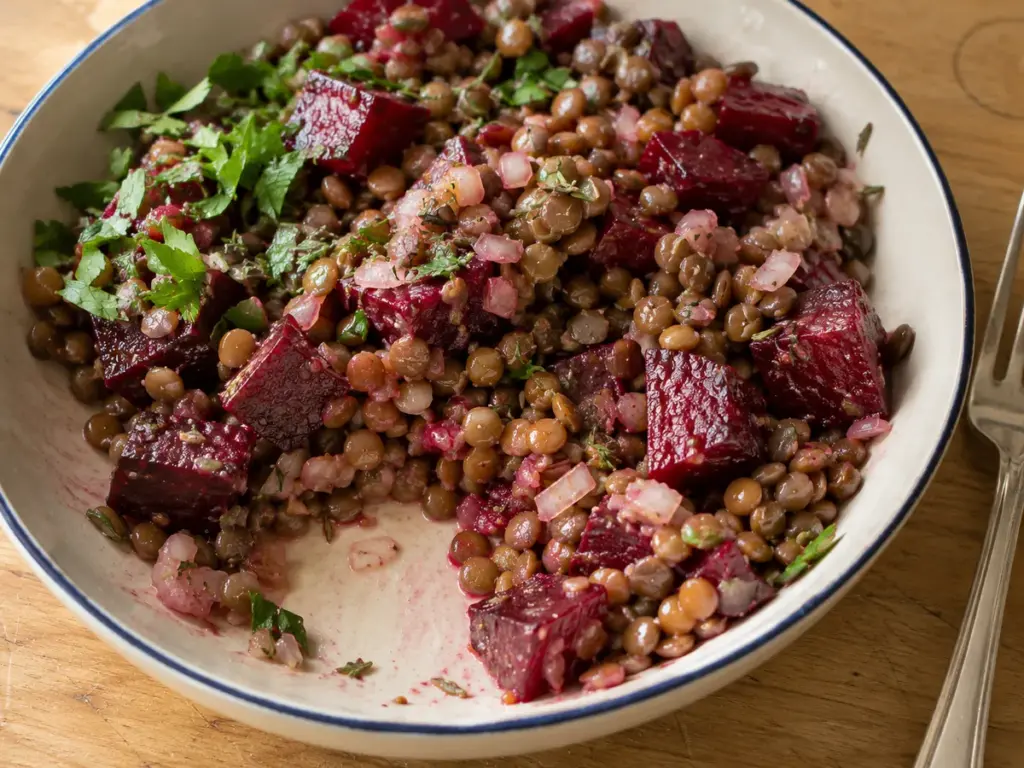
Beets cut into 1-inch cubes roast at 400°F for 30 to 35 minutes, until a knife slides in, so both cook at the same time and the whole salad is ready in about 35 minutes.
Toss the lentils with the mustard vinaigrette while they are still warm, because warm lentils soak up the dressing. Add the beets last, since they stain everything pink. Lentils and beets together also make a vegetarian plate.
Ingredients (for 3 beets and 1 cup of lentils)
- 3 medium beets, peeled and cut into 1-inch cubes
- 1 cup green or brown lentils, rinsed
- 3 cups water or vegetable broth
- 3 tablespoons extra-virgin olive oil, divided
- 1 tablespoon Dijon mustard
- 2 tablespoons apple cider vinegar
- 1 small shallot, minced
- ½ teaspoon salt
- ¼ teaspoon black pepper
- 1 tablespoon chopped parsley
- 1 teaspoon fresh thyme leaves (optional)
Instructions
- Roast the beets. Heat the oven to 400°F, toss the beets with 1 tablespoon of the oil, salt and pepper and roast on a baking sheet for 30 to 35 minutes, turning halfway, until tender.
- Cook the lentils. Meanwhile simmer the lentils in the water or broth, uncovered, for 20 to 25 minutes until tender but not mushy, then drain.
- Whisk the dressing. Whisk the remaining 2 tablespoons of oil with the mustard, vinegar, shallot, salt and pepper.
- Combine. Toss the warm lentils with the dressing, fold in the beets and adjust the seasoning.
- Finish. Top with parsley and thyme and serve warm or at room temperature.
Green and brown lentils hold their shape, while red lentils collapse into a purée, so keep red ones out of this salad.
Beet juice stains cutting boards and fingertips, so wipe up as you cut and add the beets last.
Swaps
- Quinoa replaces the lentils, and farro adds chew but contains gluten.
- Roasted carrots or sweet potatoes replace the beets for a sweeter salad that does not turn pink.
- Crumbled feta or goat cheese adds tang when dairy is fine.
20. Grilled Corn on the Cob with Chili Lime Butter
Husked corn set straight on medium-high grates cooks in 10 to 12 minutes, turned every couple of minutes so the kernels char in spots without drying out. The chili lime butter is ¼ cup of softened butter mixed with a tablespoon each of chili powder and lime juice, and it goes on the moment the ears leave the grill, when the heat melts it into the gaps between kernels.
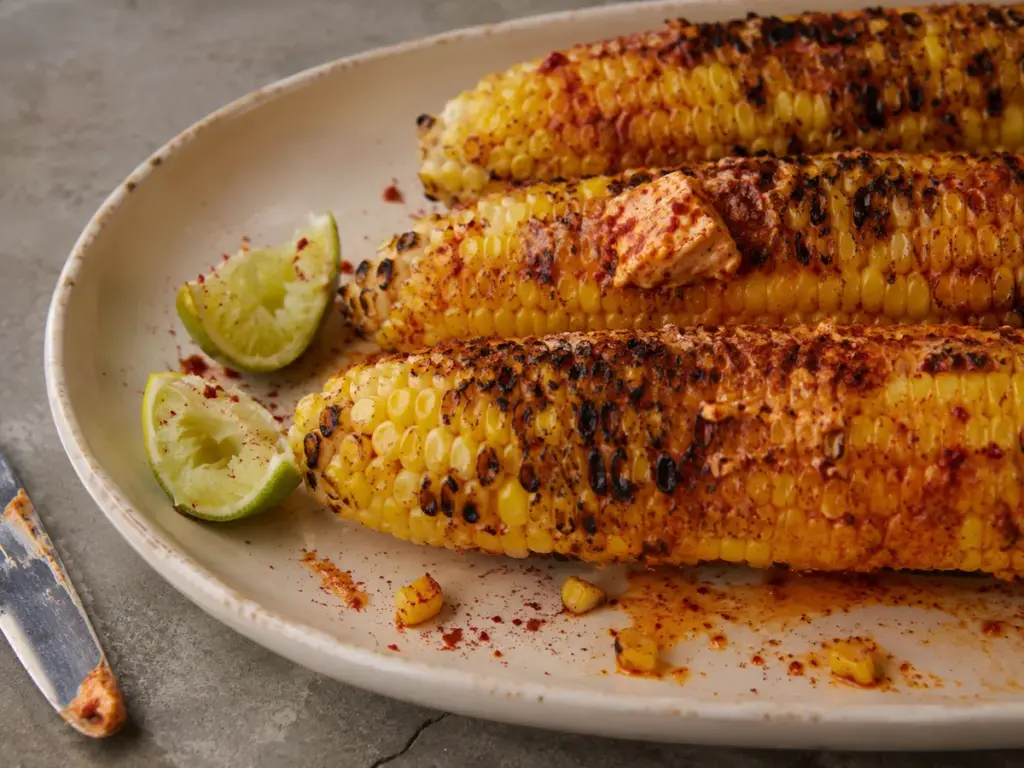
A teaspoon of honey rounds off the heat. You can mix the butter ahead and keep it in the refrigerator, then let it soften before brushing. Set out extra lime wedges for squeezing.
Ingredients (for 4 ears of corn)
- 4 ears fresh corn, husked
- ¼ cup unsalted butter, softened
- 1 tablespoon chili powder
- 1 tablespoon fresh lime juice
- ½ teaspoon salt
- ¼ teaspoon black pepper
- 1 teaspoon honey (optional)
- Lime wedges
Instructions
- Grill. Heat the grill to medium-high and cook the corn directly on the grates for 10 to 12 minutes, turning, until tender with light char.
- Mix the butter. Mash the butter with the chili powder, lime juice, salt, pepper and honey until smooth.
- Brush. Brush the butter over each ear right after it comes off the heat.
- Serve. Serve hot with lime wedges.
FoodKeeper lists fresh corn on the cob at only 1 to 2 days in the refrigerator, so buy the ears the day you grill.
Kernels cut from leftover cobs keep 3 to 4 days in the refrigerator and fold into salads or rice.
Swaps
- Smoked paprika or cayenne can take the chili powder's place, and cayenne runs hotter.
- Lemon juice can stand in for the lime.
- Chopped cilantro or parsley gives a fresh finish.
6 Which Vegetable Sides Work for a Holiday Table or a Crowd?
For a crowd, sort the sides by when each one needs you at the stove:
- Roast ahead at 400°F: the honey carrots, Brussels sprouts and butternut squash share one oven setting, and the carrots and squash are still good served warm instead of hot.
- Serve cold or at room temperature: the antipasto from the refrigerator, the lentil and beet salad at room temperature, the pea salad and the caprese leave the oven and burners free when the main dish comes out.
- Cook at the last minute: the spinach, asparagus and mushrooms take 11 minutes or less each and lose color or texture if they wait, so keep them for the final stretch.
Most of these recipes start from 1 pound of vegetables, and the roasted ones shrink as they lose water. For a larger group, roast on two sheet pans and avoid piling the same food onto one.
7 Which Main Dish Goes With Which Vegetable Side?
Match the side to what the main dish lacks: acid for rich meat, crunch for soft food, sweetness for plain meat.
- Steak, pot roast and roast beef: sautéed mushrooms and creamy mashed cauliflower add savory juices and a soft base.
- Pork chops and sausages: crispy cabbage with apples and Brussels sprouts with balsamic glaze bring sweetness and acid to rich meat.
Poultry and lamb take sweeter or herbier sides.
- Roast chicken and turkey: honey carrots, glazed baby carrots with dill and garlic roasted broccoli keep the plate simple.
- Lamb: spiced cauliflower and the pea and mint salad echo the spices and cut the fat.
Fish, shrimp and anything off the grill want fresh sides.
- Salmon and baked fish: asparagus with lemon butter, sautéed spinach and lemon Parmesan green beans add lemon and green color.
- Burgers, ribs and grilled chicken: grilled corn, sweet potato wedges and caprese add char, sweetness and juice.
- Shrimp and pasta: zucchini noodles with tomatoes and basil suit shrimp, and garlic roasted broccoli suits pasta.
8 Which Vegetable Sides Give You the Most Fiber and Vitamin C?
The numbers below come from USDA FoodData Central and give grams of fiber and milligrams of vitamin C per 100 grams of the cooked vegetable.
| Cooked vegetable | Fiber (g) | Vitamin C (mg) |
|---|---|---|
| Lentils, boiled | 7.9 | 1.5 |
| Green peas, boiled | 5.5 | 14.2 |
| Broccoli, boiled | 3.3 | 64.9 |
| Sweet potato, baked | 3.3 | 19.6 |
| Butternut squash, baked | 3.2 | 15.1 |
| Green beans, boiled | 3.2 | 9.7 |
| Carrots, boiled | 3.0 | 3.6 |
| Brussels sprouts, boiled | 2.6 | 62.0 |
The other eight, from Brussels sprouts down to zucchini, in the same units:
- Spinach, boiled: fiber 2.4 g, vitamin C 9.8 mg
- Corn, boiled: fiber 2.4 g, vitamin C 5.5 mg
- Cauliflower, boiled: fiber 2.3 g, vitamin C 44.3 mg
- White mushrooms, boiled: fiber 2.2 g, vitamin C 4.0 mg
- Asparagus, boiled: fiber 2.0 g, vitamin C 7.7 mg
- Beets, boiled: fiber 2.0 g, vitamin C 3.6 mg
- Cabbage, boiled: fiber 1.9 g, vitamin C 37.5 mg
- Zucchini, boiled: fiber 1.0 g, vitamin C 12.9 mg
Lentils and peas lead on fiber, while broccoli and Brussels sprouts both pass 60 milligrams of vitamin C and cauliflower reaches 44.3.
The values are for boiled or baked vegetables, so roasted or sautéed batches will differ somewhat.
9 Can You Make These Vegetable Sides Dairy-Free, Vegan or Gluten-Free?
Most recipes need one or two swaps.
- Honey (carrots, Brussels sprouts glaze, baby carrots): maple syrup or agave in equal amounts.
- Butter (mashed cauliflower, baby carrots, asparagus, cabbage, mushrooms, corn): olive oil or plant-based butter.
- Cream (mashed cauliflower): unsweetened almond or coconut milk.
- Parmesan (lemon Parmesan green beans): nutritional yeast.
- Yogurt (cucumber and radish salad): dairy-free yogurt.
Oil is the swap that fits every recipe that uses olive oil: avocado oil or another mild cooking oil goes in at the same amount. Avocado oil has a higher smoke point than extra-virgin olive oil, which helps in the 400 to 425°F roasts, and melted coconut oil adds a faint coconut taste.
Pantry swaps that fit several recipes are listed once here.
- Garlic powder replaces fresh garlic at about ⅛ teaspoon per clove, a starting amount; toss it with the oil on the broccoli and add it with the salt or the thyme in the spinach and mushrooms.
- Lime juice or zest replaces lemon juice or zest in the broccoli, cauliflower, green beans, spinach, asparagus and pea salad, and lemon replaces lime on the corn; taste before adding more.
- Parsley is the herb that fits most pans: it takes the place of dill in the baby carrots and the cucumber salad, of mint in the pea salad and of basil in the zucchini noodles.
- Rosemary or a pinch of dried thyme replaces fresh thyme in the honey carrots and the mushrooms; chop the rosemary fine, because its leaves are sturdier.
The caprese keeps its mozzarella, so choose the pea or zucchini salad when the table is dairy-free.
None of the 20 recipes has a wheat ingredient, so each has no wheat as written; check the labels on broth, Dijon mustard and balsamic vinegar, and leave off the crusty bread that goes beside the antipasto.
10 How Do You Wash and Handle Vegetables Safely?
The FDA advises four habits for fresh produce:
- Wash all produce under running water, and skip soap, detergent and produce wash.
- Scrub firm produce such as cucumbers with a clean brush, then dry it with a clean towel.
- Use a separate cutting board for produce you will eat raw and for raw meat, poultry and seafood.
- Keep pre-cut or packaged produce in the refrigerator at 40°F or below.
Bagged greens labeled pre-washed or ready-to-eat need no extra rinse, and cooking thoroughly lowers the risk further, which is why the no-cook salads deserve the most care.
11 Can You Use Frozen Vegetables for These Sides?
Frozen peas work in the pea and mint salad as written, and frozen broccoli, cauliflower and green beans can go into the oven or skillet.
Ice on frozen florets melts into the pan, so cook them straight from the freezer in a single layer; thawing first releases more water onto the sheet.
Expect softer edges than fresh vegetables give, and keep frozen vegetables out of the cucumber, caprese and zucchini noodle salads, which depend on crisp raw texture.
12 How Do You Store and Reheat Vegetable Sides?
Warning
Refrigerate cooked vegetable sides within 2 hours of cooking, or within 1 hour when the room is above 90°F, and reheat leftovers to 165°F.
FSIS says leftovers keep 3 to 4 days in the refrigerator, and its safe temperature chart lists 165°F for reheated leftovers. You can bring roasted vegetables back to crisp on a hot sheet pan or in an air fryer, where dry heat does the work, and raw florets cook in the basket as in air fryer broccoli and cauliflower.
Spinach, asparagus and mashed cauliflower reheat gently in a covered pan or the microwave with a splash of water or cream. The caprese, the cucumber salad and the zucchini noodles turn watery overnight, so treat those three as same-day dishes.
13 How Long Do Raw Vegetables Keep Before You Cook Them?
FoodKeeper counts these times from the day you buy the vegetable, and the refrigerator times apply unless a line says otherwise.
- 1 to 2 days: corn on the cob.
- 3 to 4 days: asparagus.
- 3 to 5 days: broccoli, Brussels sprouts, cauliflower, green beans and peas.
- 3 to 7 days: loose spinach and mushrooms.
- 4 to 7 days: zucchini (4 to 5), cucumbers (4 to 6) and eggplant (4 to 7).
- 10 days to 4 weeks: radishes 10 to 14 days, cabbage and beets 1 to 2 weeks, carrots 2 to 3 weeks and baby carrots 4 weeks.
- Pantry, not refrigerator: sweet potatoes 2 to 3 weeks and whole winter squash 2 to 6 weeks.
- Room temperature: tomatoes until ripe, then 7 days.
Bagged spinach lasts 2 days once the bag is open.
Sources
- USDA FSIS: leftovers and food safety
- USDA FSIS: safe minimum internal temperature chart
- NCHFP: garlic in oil
- USDA FoodKeeper
- FDA: selecting and serving produce safely
- FoodData Central: broccoli, boiled
- sweet potato, baked
- green peas, boiled
- lentils, boiled
- butternut squash, baked
- green beans, boiled
- carrots, boiled
- Brussels sprouts, boiled
- FoodData Central: spinach, boiled
- corn, boiled
- cauliflower, boiled
- mushrooms, boiled
- asparagus, boiled
- beets, boiled
- cabbage, boiled
- zucchini, boiled

Andrew Gray is a seasoned food writer and blogger with a wealth of experience in the restaurant and catering industries. With a passion for all things delicious, Andrew has honed his culinary expertise through his work as a personal chef and caterer.
His love for food led him to venture into food writing, where he has contributed to various online publications, sharing his knowledge and insights on the culinary world. As the proud owner of CooksCrafter.com, Andrew covers a wide range of topics, including recipes, restaurant reviews, product recommendations, and culinary tips.
Through his website, he aims to inspire and educate fellow food enthusiasts, offering a comprehensive resource for all things food-related.